Crypto Donations Tax Benefits: How Giving Crypto Can Save You Money
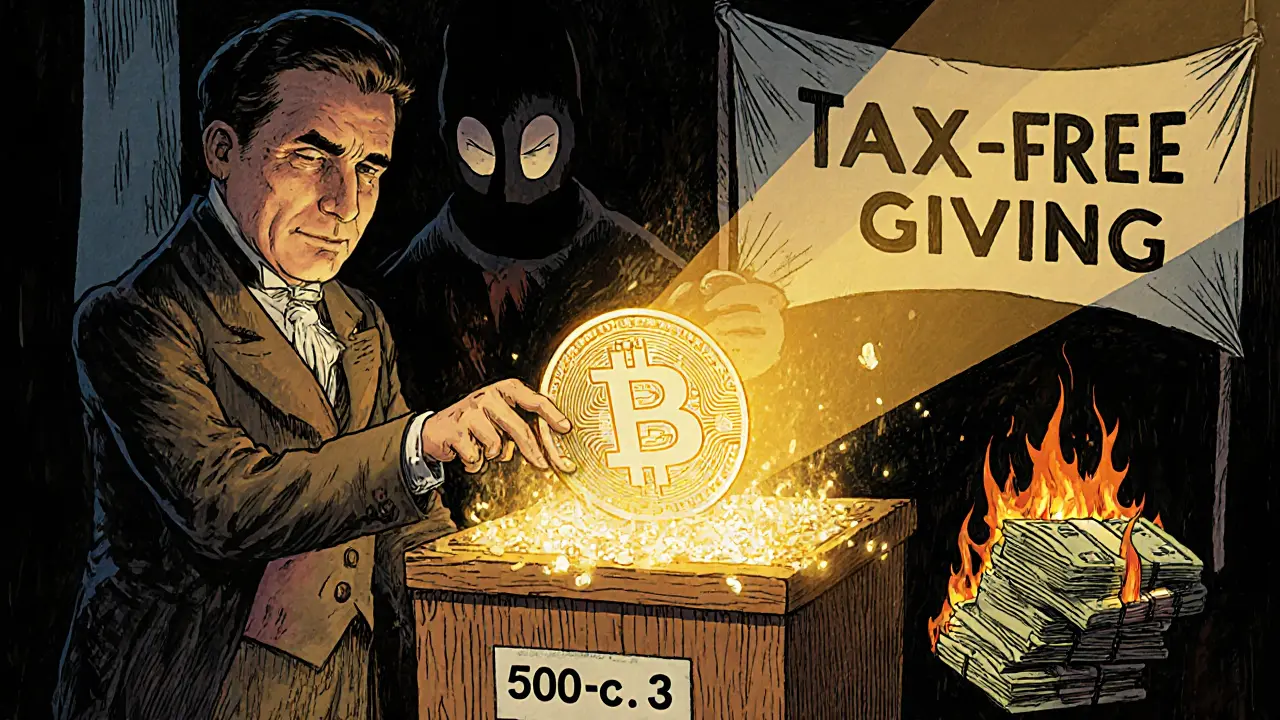
When you donate crypto donations, digital assets given to qualified charities that trigger tax advantages under U.S. and some international laws. Also known as blockchain donations, it lets you support nonprofits while keeping more of your gains. Unlike selling crypto first—where you’d owe capital gains tax—donating it directly lets you skip that tax entirely. The IRS treats crypto as property, not currency, so giving it away is like donating stocks: you get a deduction based on its fair market value, and you don’t pay tax on the appreciation. That’s a double win: the charity gets full value, and you keep more cash in your pocket.
This isn’t just theory. People who donated Bitcoin in 2023 to charities like the Water Project or the Electronic Frontier Foundation saved thousands by avoiding capital gains. If you bought ETH for $1,000 and it’s now worth $8,000, selling it means paying tax on $7,000 in gains. But donate it? No capital gains tax. You still claim a $8,000 deduction (if you itemize). The same rule applies to tokens, NFTs, and stablecoins—so long as the recipient is a 501(c)(3) or equivalent. You don’t need to wait for a bull market to benefit. Even in a downturn, donating low-value crypto still gives you a deduction equal to its current price. And if you’ve held it over a year, the deduction is even stronger—you’re not limited to your cost basis.
But it’s not automatic. You need proper records: the date you acquired the crypto, its value at acquisition, its value on the donation date, and proof the charity received it. Some platforms like The Giving Block or BitGive make this easy by handling the transfer and issuing receipts. Others? You’re on your own. Always get a written acknowledgment from the charity. No receipt? No deduction. Also, don’t confuse crypto donations with crypto rewards or airdrops—those are taxable income. This only works when you’re giving away assets you already own, not earning new ones.
And it’s not just for U.S. taxpayers. Countries like Canada and the UK also offer similar benefits, though rules vary. Portugal, for example, doesn’t tax crypto gains at all—so donating there is even simpler. But if you’re in Japan, where crypto is strictly regulated, or Pakistan, where mining is now legal but donations aren’t clearly defined, check local rules first. The crypto tax deduction, the legal mechanism that allows individuals to reduce taxable income by donating cryptocurrency to approved organizations is powerful, but only if you follow the steps right.
Some people think crypto donations are only for big investors. Not true. Even a small donation of $50 in SOL or USDC can save you $10–$20 in taxes if you’ve held it long enough. And if you’re into DeFi, you can donate LP tokens or staking rewards—just make sure they’re not still locked or subject to vesting. The key is timing: donate before you sell, not after. And never use exchange wallets to donate—move your crypto to a personal wallet first. Exchanges don’t issue donation receipts, and you’ll lose the deduction.
Below, you’ll find real guides on how to donate safely, which charities accept crypto, how to document everything, and what happens if you accidentally send to the wrong address. You’ll also see how platforms like Gemini and Uniswap fit into this process, and why some crypto projects—like those with dead tokens or no liquidity—can’t be donated at all. This isn’t about speculation. It’s about smart giving. Let’s get you set up right.