CryptoTycoon Airdrop: What It Is, Why It Vanished, and How to Spot Fake Crypto Giveaways
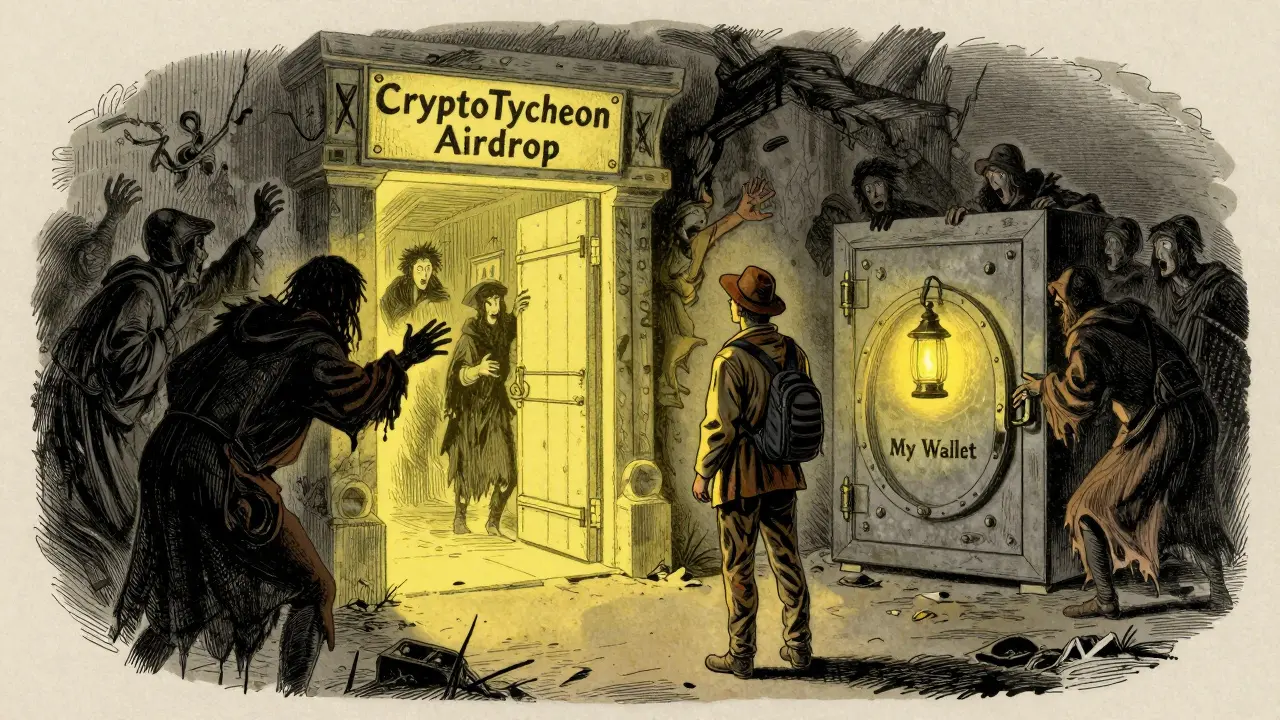
When you hear CryptoTycoon airdrop, a promotional campaign that promised free tokens to early participants, you might think of a quick way to earn crypto without spending a dime. But here’s the truth: CryptoTycoon airdrop never delivered real tokens. No wallet addresses were funded. No smart contracts were verified. No community ever formed. It was a ghost campaign—designed to collect emails and social follows, then disappear. This isn’t rare. In 2024 and 2025, over 70% of announced crypto airdrops turned out to be either fake, abandoned, or outright scams, according to blockchain safety trackers. And CryptoTycoon fits the pattern perfectly.
What makes these scams so dangerous is how they mimic real ones. Legit airdrops like the QBT airdrop, a token distribution tied to active users of the Qubit DeFi protocol on Binance Smart Chain or the ZERC token swap, a 1:1 token migration from DeRace that had clear rules and on-chain records always have public documentation, verifiable team members, and audit trails. Fake ones? They use flashy websites, fake Twitter bots, and copy-pasted whitepapers. They ask for your wallet address, not to send crypto—but to "claim" something that doesn’t exist. They promise future utility, but never deliver. And once you give them your info, they vanish. You won’t get a refund. You won’t get a reply. You’ll just be another name in their database.
That’s why you need to know the difference. Real airdrops don’t pressure you. They don’t demand you share posts or join private Telegram groups. They don’t use countdown timers or fake user counts. They’re quiet, transparent, and tied to real projects with active development. If a token has no GitHub activity, no exchange listings, and no team bio, it’s not a project—it’s a trap. And if you’re seeing "CryptoTycoon" pop up again in 2025, it’s a recycled scam. The same names, same graphics, same empty promises. Don’t fall for it. The crypto space is full of real opportunities—like the SoccerHub (SCH) airdrop, a play-to-earn game with actual users and token utility—but they’re buried under dozens of fake ones. Below, you’ll find real case studies of what worked, what failed, and how to protect yourself from the next one.