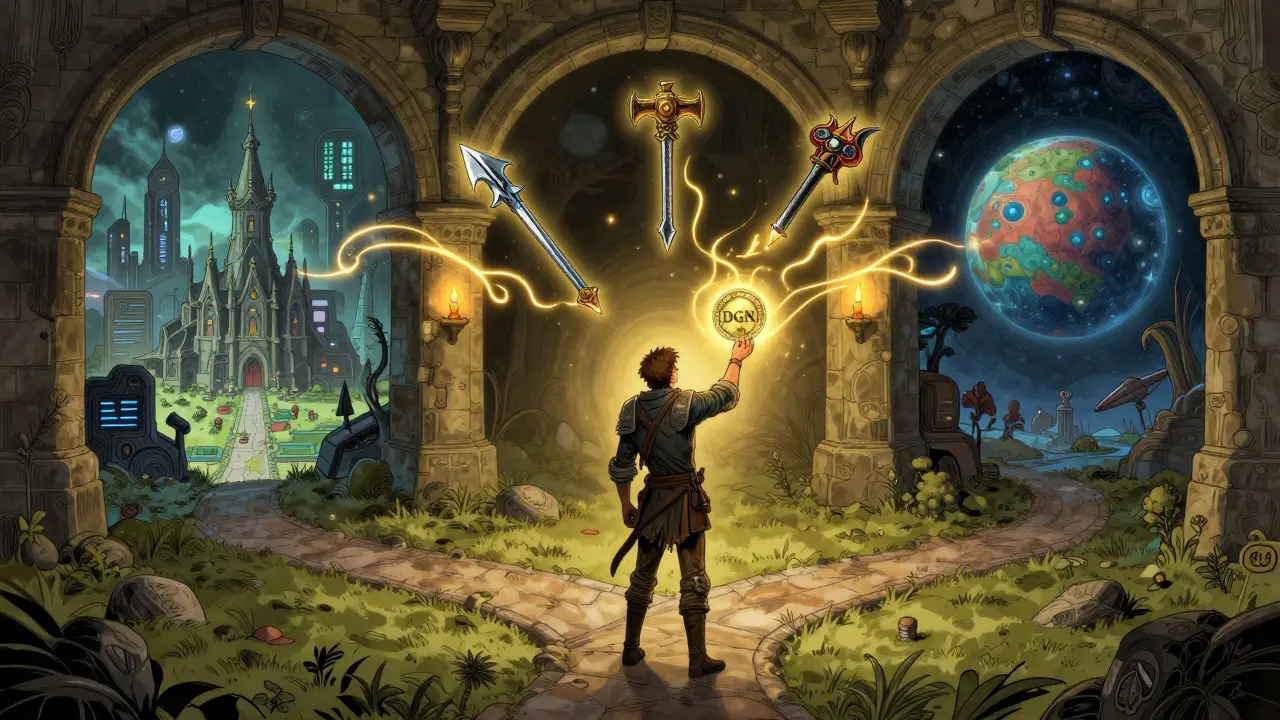
Dungeon Chain: What It Is, Why It Matters, and What You Should Know
When you hear Dungeon Chain, a blockchain-based gaming platform that ties in-game progress to crypto rewards. Also known as Dungeon Chain Game, it tries to merge traditional RPG elements with decentralized finance—letting players earn tokens by completing quests, battling monsters, and upgrading gear. But here’s the catch: most projects like this don’t last. Many launch with hype, promise big returns, then vanish when the early investors cash out. Dungeon Chain isn’t unique in that pattern—it’s part of a wave of GameFi projects that tried to turn gaming into a financial asset.
GameFi isn’t just about playing games. It’s about owning your progress. Tokens like those in Dungeon Chain are meant to represent in-game value you can trade, stake, or use across platforms. But without real utility, strong communities, or ongoing development, those tokens become digital ghosts. Look at the posts below—projects like StarSharks, SoccerHub, and HYPERSKIDS all started with big promises. Some had charity angles, others had celebrity backers. Most ended with 99% price drops and abandoned Discord servers. Dungeon Chain fits right into that story.
What separates the survivors from the failures? Real gameplay. Transparent tokenomics. A team that actually shows up. If Dungeon Chain had those, you’d see active player counts, regular updates, or partnerships with bigger names. Instead, what you’ll find in the posts here are red flags: low trading volume, no verified team, tokens locked in whale wallets, and airdrop claims that don’t check out. This isn’t about one project. It’s about learning how to spot the difference between a game and a gamble.
You’ll see posts about other crypto games, airdrops, and exchanges that promise easy money—but they all lead back to the same question: is this worth your time, or just your wallet? The truth is, most of these projects are built on hype, not habit. The ones that stick around? They make playing fun first, earning second. And that’s the lesson hiding in every post below.