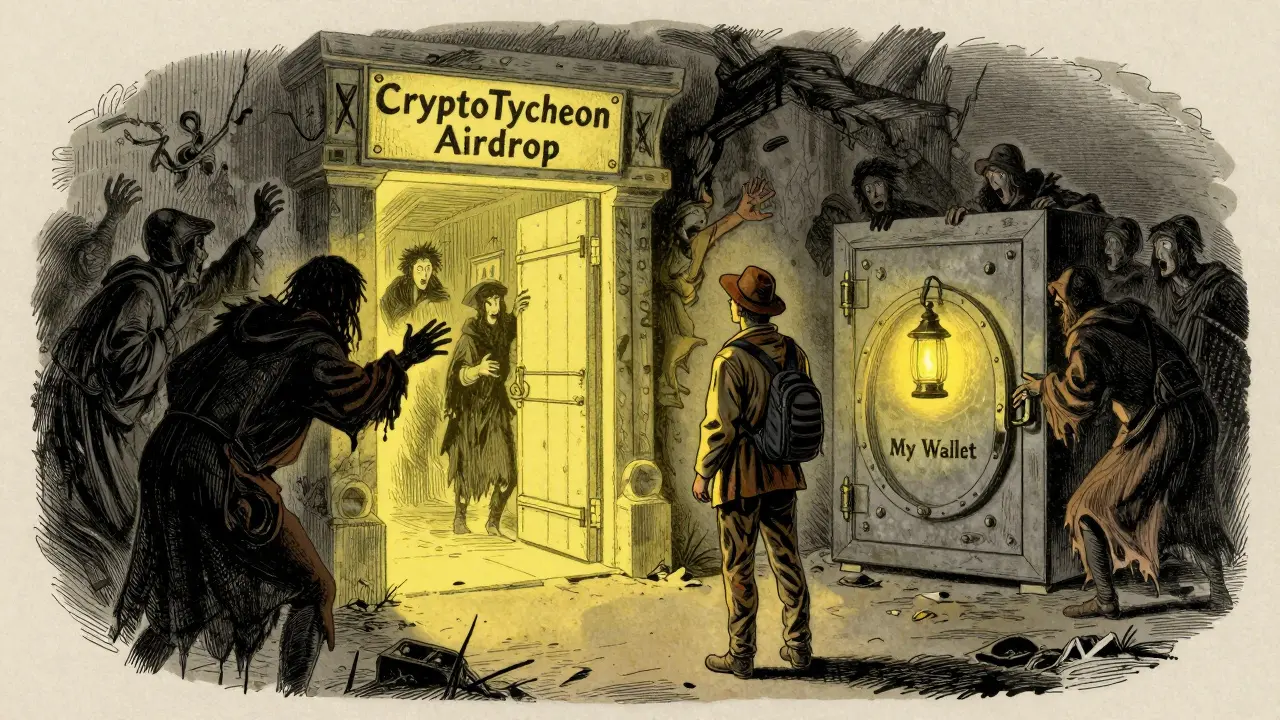
Fake Airdrop Warning: How to Spot and Avoid Crypto Scams
When you hear about a fake airdrop, a fraudulent crypto giveaway designed to steal your private keys or personal info. Also known as crypto scam airdrop, it often looks just like a real one—until you realize you’ve given away access to your wallet. Real airdrops don’t ask for your seed phrase. They don’t send you links to sign in with MetaMask. They don’t require you to send a small amount of crypto first to "unlock" the free tokens. If it asks for any of that, it’s not a gift—it’s a trap.
Scammers copy real project names like CoinMarketCap, Binance, or even legitimate airdrops like Swash or SoccerHub. They use fake websites, cloned social media profiles, and bots pretending to be moderators. You might see a post saying "Claim your 10,000 YAE tokens now!"—but as we saw with the YAE airdrop, a non-existent token promoted by fraudsters pretending to be Cryptonovae, no such thing exists. Same with SteakBank Finance (SBF), a platform that never ran an official airdrop, yet dozens of fake claims still circulate. These aren’t mistakes—they’re organized scams targeting people who don’t know how to verify legitimacy.
How do you tell the difference? Check the official project website. Look for announcements on their Twitter or Discord from verified accounts. Real airdrops are announced weeks in advance, with clear rules, deadlines, and no pressure. If it’s "limited time only" or "only 100 spots left," that’s a classic scam tactic. Also, check if the token even exists on CoinGecko or CoinMarketCap. If it doesn’t, and the website looks like it was made in 2021 with stock photos, walk away. You don’t need to chase free tokens. The ones worth having will find you without asking for your password.
Some scams even pretend to be charity tokens like $HYPERSKIDS, a Solana token that claimed to help Ugandan children but vanished after crashing 99.96%. They use emotion to lower your guard. But real charity projects don’t need you to send crypto to claim rewards. They don’t promise returns. They don’t need your wallet connected. If it sounds too good to be true, it is—and someone’s already taken your money.
The posts below show you exactly how these scams play out. From fake exchanges like Oviex and Stars X Exchange to dead tokens like Papu Token and Karatgold Coin, you’ll see the same patterns over and over: no team, no utility, no future. These aren’t just bad investments—they’re designed to disappear after they steal from you. By the time you realize what happened, the wallet is empty and the site is gone. Don’t be the next one. Learn how to spot them before you click.