Interchain Gaming: How Blockchain Games Connect Across Chains
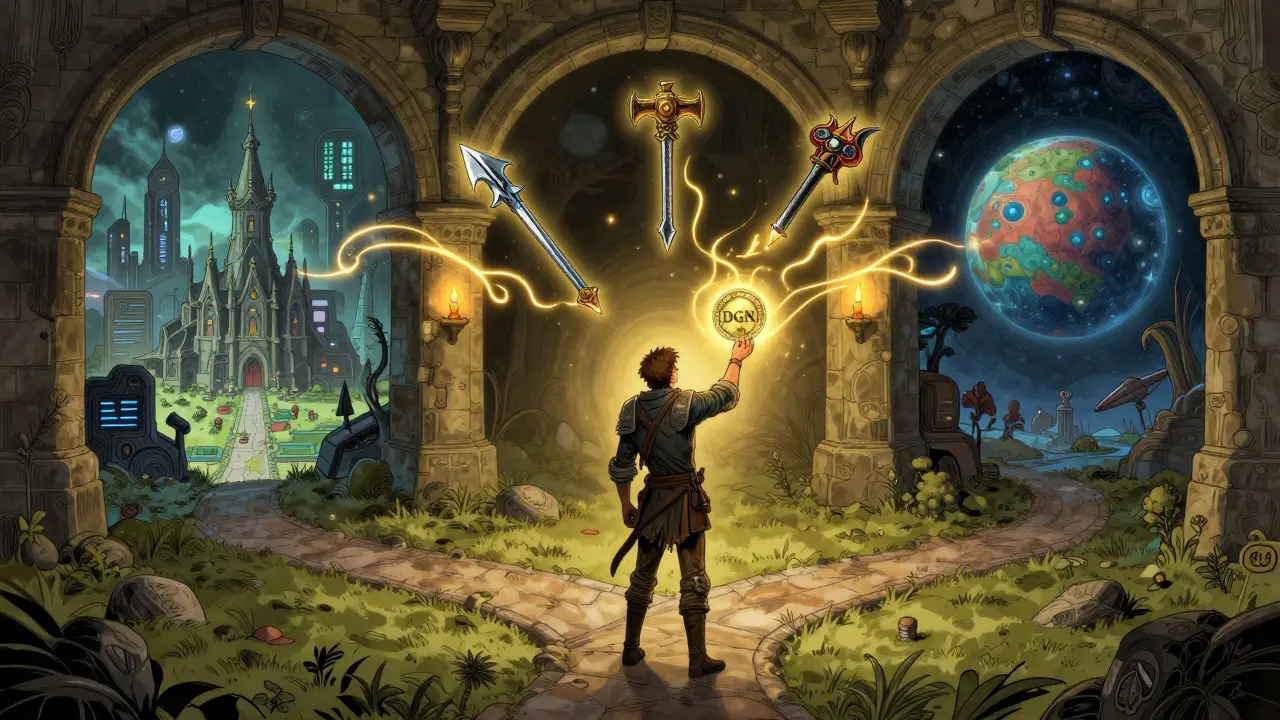
When you play a game on interchain gaming, a system where blockchain-based games share assets, identities, and economies across different networks. Also known as cross-chain gaming, it means your sword from a Solana game can show up in a Polygon-based RPG — no cloning, no copying, just real ownership moving where you want it. This isn’t sci-fi. It’s happening now, but most people still think NFTs in games are just profile pictures with flashy animations. The truth? The best interchain games don’t care about hype. They care about whether your gear works outside its home chain.
Interchain gaming needs three things to work: a way to prove you own something (like a weapon or skin), a way to move it safely between chains, and a reason for another game to accept it. That’s where cross-chain NFTs, digital items that can be transferred and recognized across multiple blockchain networks come in. Projects like GameFi, blockchain-based games that combine play-to-earn mechanics with decentralized ownership are testing this. Some let you bring your character from one world to another. Others let you stake your NFTs in one chain to earn rewards usable in another. But most fail. Why? Because they treat interoperability like a marketing buzzword, not a technical challenge. If your NFT can’t be verified by the receiving game’s smart contract, it’s just a JPEG with a blockchain URL.
Real interchain gaming doesn’t need a billion-dollar budget. It needs clear rules. Think of it like trading cards across different leagues. If you have a rare card from the NBA, can you use it in a soccer video game? Only if both sides agree on what the card means — its stats, its rarity, its history. That’s what interoperability is: shared understanding. The most promising projects are building open standards, not walled gardens. They’re letting players move assets without asking permission from a central company. That’s why you’ll see posts here about failed games like StarSharks and Cryptomeda — they promised cross-chain play but never delivered the tech. And you’ll also see real examples, like Uniswap v2 on Soneium, where entertainment tokens are being traded across ecosystems with fees under $0.10. That’s the future: simple, cheap, and usable.
What’s next? If you’re tired of buying NFTs that only work in one game, you’re not alone. The next wave of interchain gaming won’t be about flashy graphics or celebrity endorsements. It’ll be about reliability. Can your item survive a chain upgrade? Can it be used in a new game six months from now? Can you sell it without jumping through five hoops? The posts below dig into exactly that — the games that actually let you own your stuff, the chains that talk to each other, and the scams hiding behind the word "interoperable." You’ll find out what’s alive, what’s dead, and what’s worth your time.