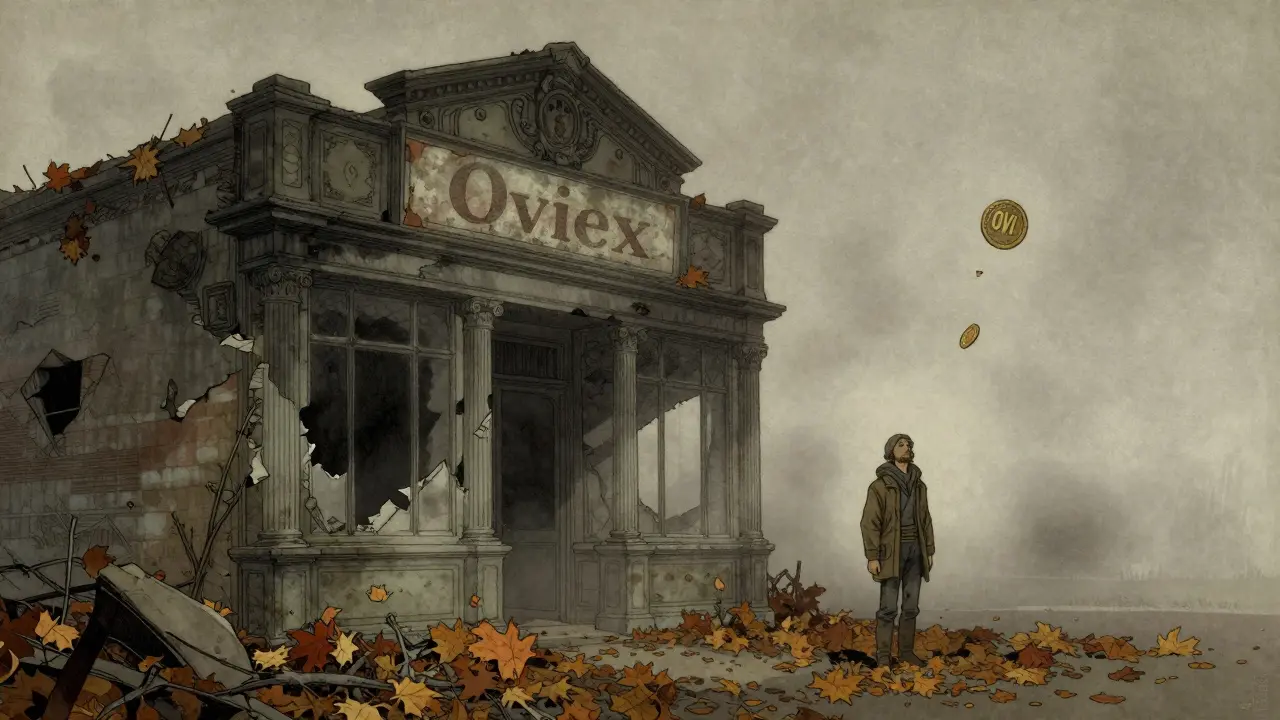
Oviex Token: What It Is, Why It's Missing, and What to Watch Instead
When people search for Oviex token, a crypto asset that appears on some listings but has no active development, community, or trading volume. It's not a scam in the traditional sense—it's more like a ghost. No team, no roadmap, no updates. Just a token name floating in the void of blockchain directories. This isn't rare. Hundreds of tokens like this pop up every year, often copied from real projects or spun up by bots to trick new investors into checking prices that don't exist.
What you're really looking for when you find something like Oviex token is clarity. Is this a project that’s alive? Does it have users? Is anyone trading it? If the answer is no to any of those, it’s not an investment—it’s a digital footnote. Real tokens, like ARPA, a blockchain used for secure computation in enterprise applications, or xSUSHI, a staking reward token that earns value from trading fees on SushiSwap, have clear use cases, public activity, and measurable adoption. They don’t rely on hype. They solve problems. Oviex token doesn’t even pretend to.
There’s a pattern here. The crypto space is full of dead tokens—Intexcoin, Golden Magfi, Hebeto, MMS—all with zero supply or zero volume. They show up on exchanges because listing costs nothing. But if you can’t buy it, sell it, or use it, it’s not crypto. It’s a placeholder. The real work happens in projects that publish code, update their websites, and respond to community questions. That’s where value lives.
If you’re looking for something with substance, focus on tokens with transparent teams, active GitHub repos, and real trading volume. Skip anything that sounds like a name slapped on a contract with no story behind it. The market doesn’t reward mystery—it rewards proof. Below, you’ll find deep dives into tokens that actually work, scams that look real, and how to spot the difference before you lose money.