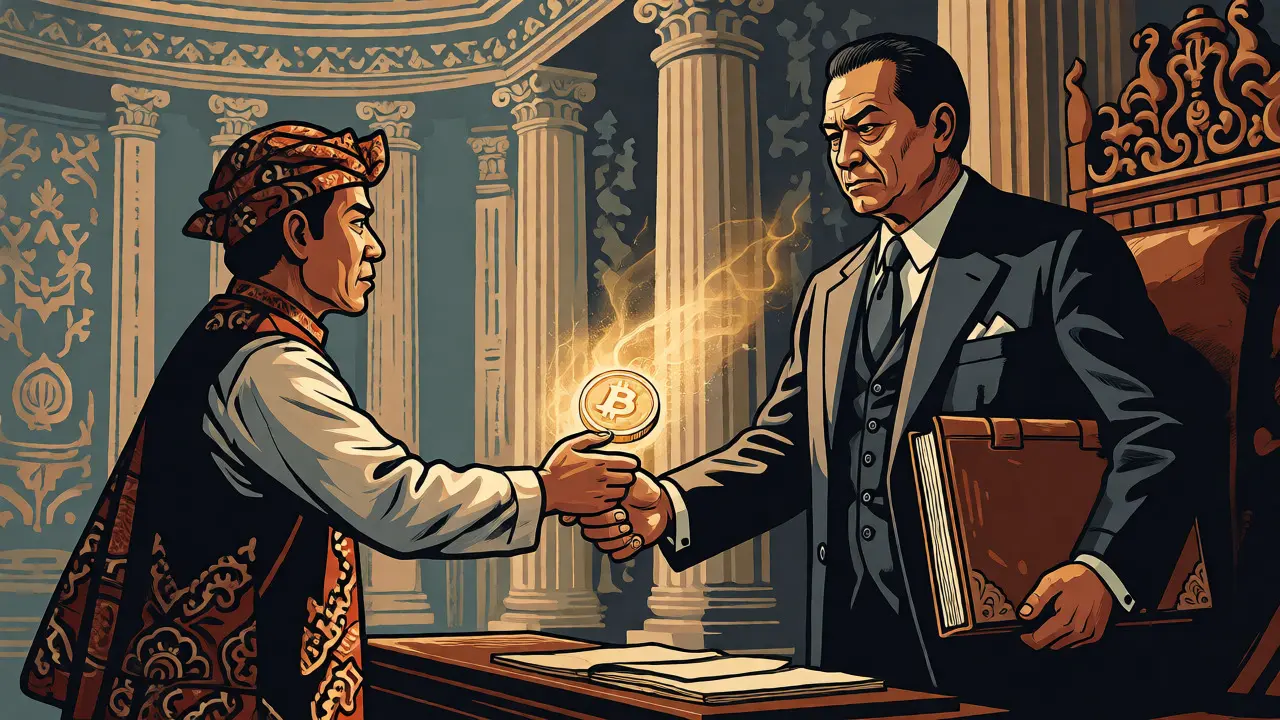
For years, if you wanted to trade Bitcoin in Jakarta, you didn't go to a bank or the stock exchange. You went to a commodity market. That’s because Bappebti, the Indonesian Commodity Futures Trading Supervisory Body, treated crypto like gold or coffee beans-just another tradable commodity. But that era is officially over. As of January 10, 2025, the baton has been passed from Bappebti to the Financial Services Authority (OJK). This isn't just a paperwork shuffle; it’s a fundamental reclassification of what crypto means for your money and your legal protections in Southeast Asia’s largest economy.
| Feature | Bappebti Era (Pre-2025) | OJK Era (Post-Jan 2025) |
|---|---|---|
| Classification | Commodity | Digital Financial Asset |
| Primary Regulator | Ministry of Trade | OJK (Financial Services Authority) |
| Key Regulation | Regulation No. 8/2021 & 13/2022 | OJK Regulation No. 27/2024 |
| Focus | Physical Market Trading Rules | Investor Protection & Financial Stability |
| Bank Role | Minimal direct oversight | Bank Indonesia involved in payment systems |
Why the Switch Happened
You might wonder why Indonesia bothered changing the rules when the market was already booming. Under Bappebti’s watch, Indonesia saw massive growth, hitting over 17 million crypto investors by the end of 2023. Transaction volumes skyrocketed past IDR 650 trillion in 2024. But treating a volatile digital asset like a physical commodity left gaps. It didn’t account for the complex risks inherent in financial instruments, like leverage, derivatives, and systemic market failures.
The real driver behind this change is the P2SK Law (Law No. 4 of 2023 on Financial Sector Development and Strengthening). Passed by the House of Representatives back in December 2020, this legislation laid the groundwork to consolidate all financial oversight under one roof. The logic is simple: if crypto acts like money or an investment, it should be regulated like money or an investment, not like a sack of rice.
What Changes for Traders and Platforms
If you are an existing user or running a local exchange, do you need to panic? Not necessarily. The transition was designed to be smooth. OJK Regulation No. 27 of 2024 ensures that licenses and registrations held under Bappebti remain valid during the handover. However, the operational standards are tightening.
- Stricter Compliance: Exchanges now face scrutiny similar to traditional banks and securities firms. Think anti-money laundering checks and capital adequacy requirements.
- Asset Approval: Bappebti had approved around 501 cryptocurrencies by mid-2023. OJK will likely apply more rigorous criteria for listing new tokens, focusing on utility and liquidity rather than just technical existence.
- Infrastructure Integration: The clearing house and storage managers established late in Bappebti’s tenure are now integrated into the broader national financial infrastructure.
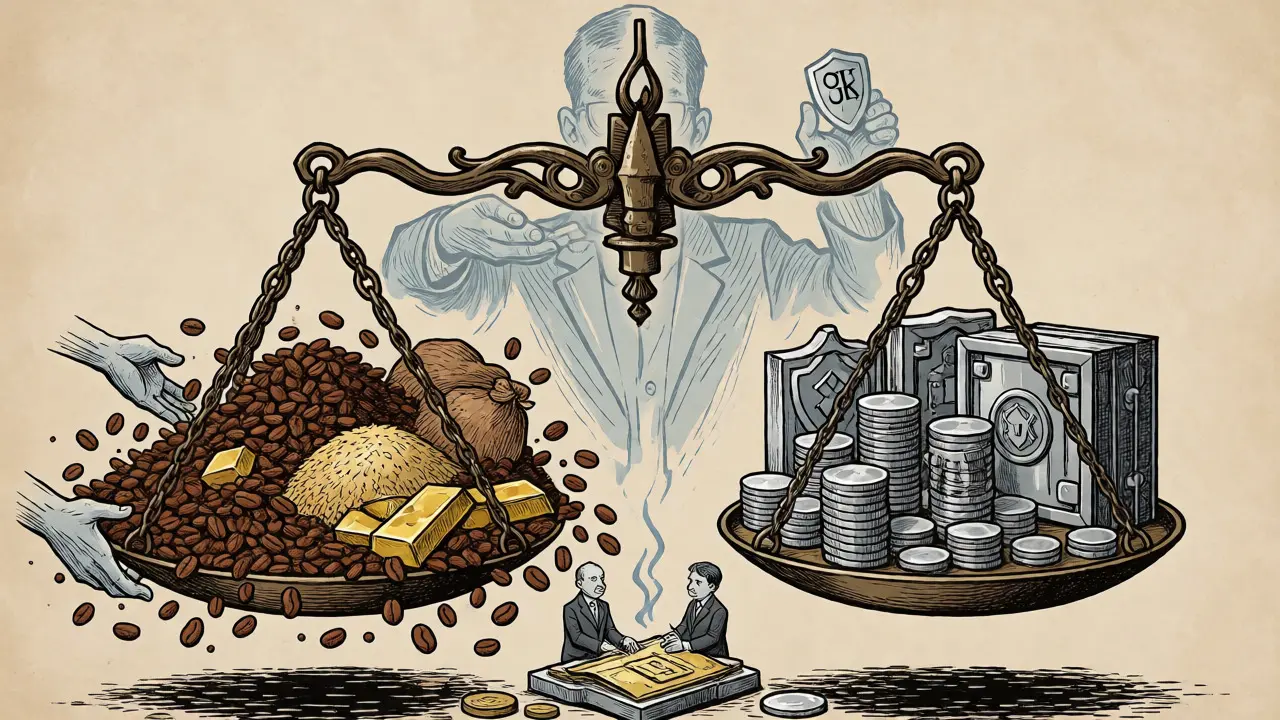
The Dual Regulator Dynamic
Here is where it gets interesting. While OJK takes charge of trading and investor protection, Bank Indonesia (BI) retains authority over the payment system aspects of digital assets. This creates a dual-regulatory structure. If you use crypto to buy goods, BI cares about the settlement layer. If you trade crypto for profit, OJK cares about your safety and the market integrity.
This split reflects a sophisticated understanding of blockchain technology. It separates the "money" function from the "asset" function. For businesses, this means you might need to navigate two different sets of guidelines depending on whether you are facilitating payments or offering investment products.

Impact on International Investors
Global crypto firms have long eyed Indonesia as a high-growth frontier. The shift to OJK makes the country more attractive to institutional players. Why? Because international investors trust financial regulators more than commodity boards. Aligning with global financial standards helps foreign exchanges understand compliance expectations without deciphering obscure trade ministry circulars.
However, this comes with higher barriers to entry. The "wild west" days of easy market entry are fading. New entrants must prove they can meet the robust capital and governance standards expected of financial service providers. This could lead to consolidation, where smaller local exchanges merge or exit, leaving room for well-capitalized domestic giants and compliant international platforms.
Looking Ahead: DeFi and NFTs
Bappebti’s framework struggled to categorize newer innovations like Decentralized Finance (DeFi) protocols and Non-Fungible Tokens (NFTs). They didn’t fit neatly into "commodity." OJK, with its mandate over Digital Financial Innovation (DFI), is better equipped to handle these nuances. We can expect future regulations to specifically address smart contract risks and NFT ownership rights, areas that were largely gray zones under the old regime.
The move signals that Indonesia intends to integrate crypto deeply into its formal financial architecture. It’s no longer a side bet; it’s part of the main game.
Is my existing crypto license still valid after the transfer to OJK?
Yes. OJK Regulation No. 27 of 2024 explicitly preserves existing licenses, registrations, and approvals issued by Bappebti. This ensures continuity for traders and exchanges, preventing market disruption while the full integration process completes.
Does Bank Indonesia regulate crypto trading?
Not directly. OJK regulates the trading and investment activities of crypto assets. Bank Indonesia maintains oversight over the payment system aspects, ensuring that digital assets used for transactions align with monetary policy and payment stability goals.
Why did Indonesia move crypto regulation from Bappebti to OJK?
The shift was mandated by the P2SK Law (Law No. 4 of 2023). The goal was to reclassify crypto from a commodity to a financial asset, allowing for stronger investor protections and alignment with international financial standards managed by the Financial Services Authority.
Can I still trade Bitcoin in Indonesia?
Absolutely. Trading remains fully legal and active. The regulatory body changed, but the ability to buy, sell, and hold major cryptocurrencies like Bitcoin, Ethereum, and Solana continues under the new OJK framework.
What are the risks for small crypto exchanges in this new era?
Small exchanges may face higher compliance costs due to stricter capital and governance requirements under OJK. This could lead to market consolidation, where smaller players either merge with larger entities or exit the market if they cannot meet the new financial services standards.
finally someone gets it that treating crypto like a bag of coffee beans was just plain weird lol
this shift to ojk is exactly what the market needed to stop feeling like a wild west casino and start acting like actual finance im so hyped for this legit change
Oh wow, this is actually such great news!! I mean, seriously, having one clear regulator instead of two different ones fighting over who owns Bitcoin? That’s huge!
I’ve been worried about my local exchange getting shut down randomly because of some obscure trade rule but now with OJK in charge, it feels way more stable?? Like, finally we can sleep at night knowing our assets aren't going to vanish into thin air due to bureaucratic confusion!!
Plus, if they are tightening compliance, maybe the scams will finally die out?? Fingers crossed!! 🤞🤞
It is fascinating how the reclassification from commodity to financial asset fundamentally alters the ontological status of the token itself, shifting its identity from a tangible good subject to physical delivery constraints to an intangible instrument of value transfer governed by fiduciary duty and systemic risk management. The move away from Bappebti signifies a philosophical pivot where the state no longer views digital currency as merely another tradable resource akin to palm oil or coal, but rather recognizes it as a complex layer within the broader architecture of monetary policy and investor protection frameworks.
This transition suggests that regulators are finally acknowledging the inherent volatility and leverage risks that define cryptocurrency markets, which were previously obscured by the simplistic lens of commodity trading regulations. By integrating these assets under the Financial Services Authority, Indonesia is effectively admitting that the previous regulatory framework was insufficient to address the nuanced realities of decentralized finance, thereby creating a more robust environment for institutional capital to enter without the fear of arbitrary administrative interference.