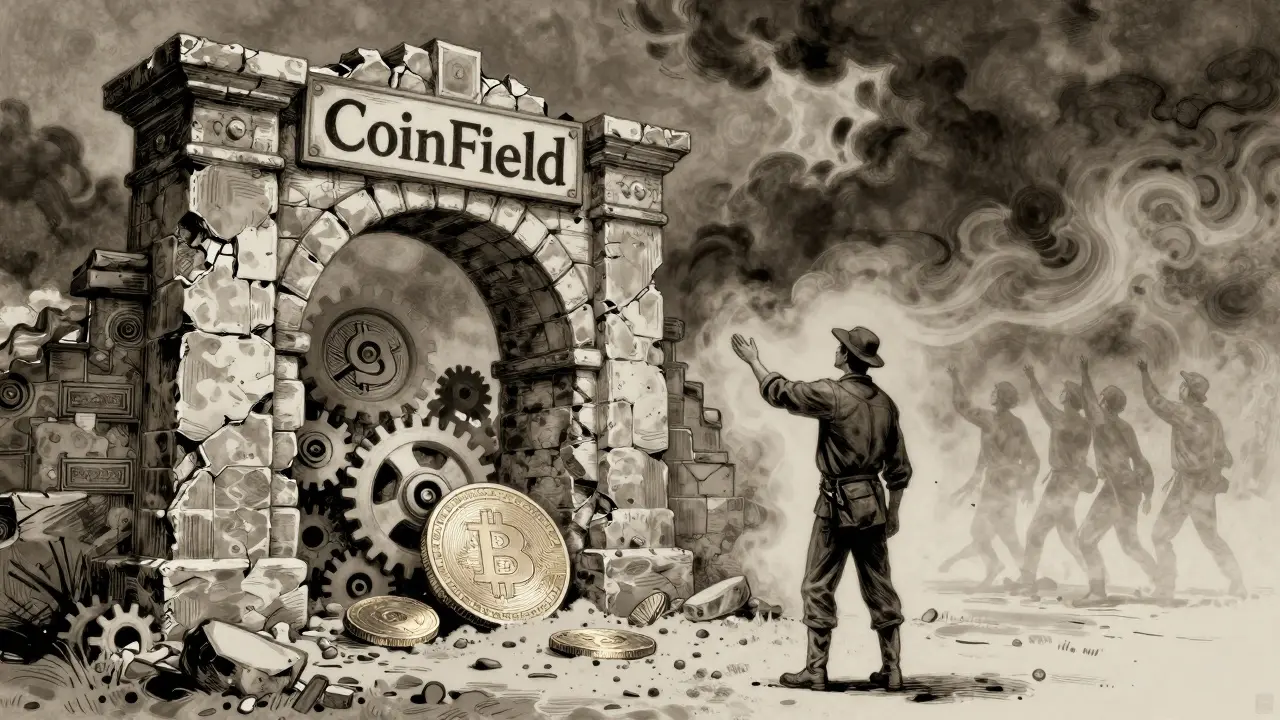
CoinField was once promoted as a user-friendly crypto exchange with support for 28 cryptocurrencies, low fees, and a proprietary SOLO card for spending digital assets. But today, it’s not a platform - it’s a warning. If you’re considering CoinField, stop. This isn’t a review of a flawed service. This is a post-mortem of an exit scam that left thousands of users locked out with no way to recover their money.
What Happened to CoinField?
CoinField launched in January 2018, positioning itself as a Canadian-based exchange with European compliance standards. It offered Bitcoin, Ethereum, Litecoin, Tether, and other major coins. It had a clean interface, two-factor authentication, and KYC checks that looked legit. For a while, users trusted it. But behind the scenes, things were falling apart. By late 2023, users started reporting the same thing: withdrawals stopped. Emails went unanswered. Support tickets vanished into thin air. Then, on December 20, 2023, Cryptowisser - one of the most trusted crypto exchange review sites - officially labeled CoinField a scam and moved it to their "Exchange Graveyard." That’s not a minor flag. That’s a death certificate. The platform didn’t shut down with a notice. It didn’t offer refunds. It didn’t even send an email. One day, the website showed Error 522. The next, it was gone. Users in Canada, the U.S., and Europe found their accounts frozen. Their Bitcoin, Ethereum, and USDT? Trapped. Forever.How the Scam Worked
CoinField didn’t just fail - it was designed to fail. The pattern matches other notorious crypto exchange collapses like FTX and QuadrigaCX. First, they attracted users with low fees: 0.15% maker, 0.25% taker. Competitive? Yes. But not enough to justify the risk. Then they pushed their own token, SOLO, encouraging users to deposit and trade it. They even offered a plastic card linked to SOLO balances - a shiny lure to make users feel like they were part of something real. They claimed to support six fiat currencies and offered OTC trading. They even sold White Label exchange solutions to other businesses. All of this created an illusion of legitimacy. But here’s the truth: no legitimate exchange lets users sit on funds for months without processing withdrawals. No legitimate exchange vanishes without a trace. When users tried to cash out, they were met with delays. Then excuses. Then silence. Some users reported being locked out after just a few weeks. Others waited six months. No one got their money back.User Reports: Real Stories, Real Losses
On Reviews.io, CoinField has a 2.5 out of 5 rating from 237 reviews. But look closer. The recent ones aren’t complaints - they’re cries for help. One user from Ontario wrote: "I deposited $8,000 in ETH in April 2023. I tried to withdraw in August. No response. I’ve sent 12 emails. Nothing. I even called my bank to reverse the transaction. They said they can’t touch crypto exchanges. I lost everything." Another from Germany said: "I used CoinField for over a year. I trusted them. I even referred three friends. Now I can’t log in. The site says ‘Error 522.’ I checked the domain registration. It’s owned by a shell company in the Seychelles." Some reviews mention a new site: "coinfield.us.com." They claim withdrawals worked there. But those reviews are marked "unverified" - and for good reason. The original CoinField domain was shut down. The new one? No registration history. No contact info. No legal entity. It’s a copycat. A trap.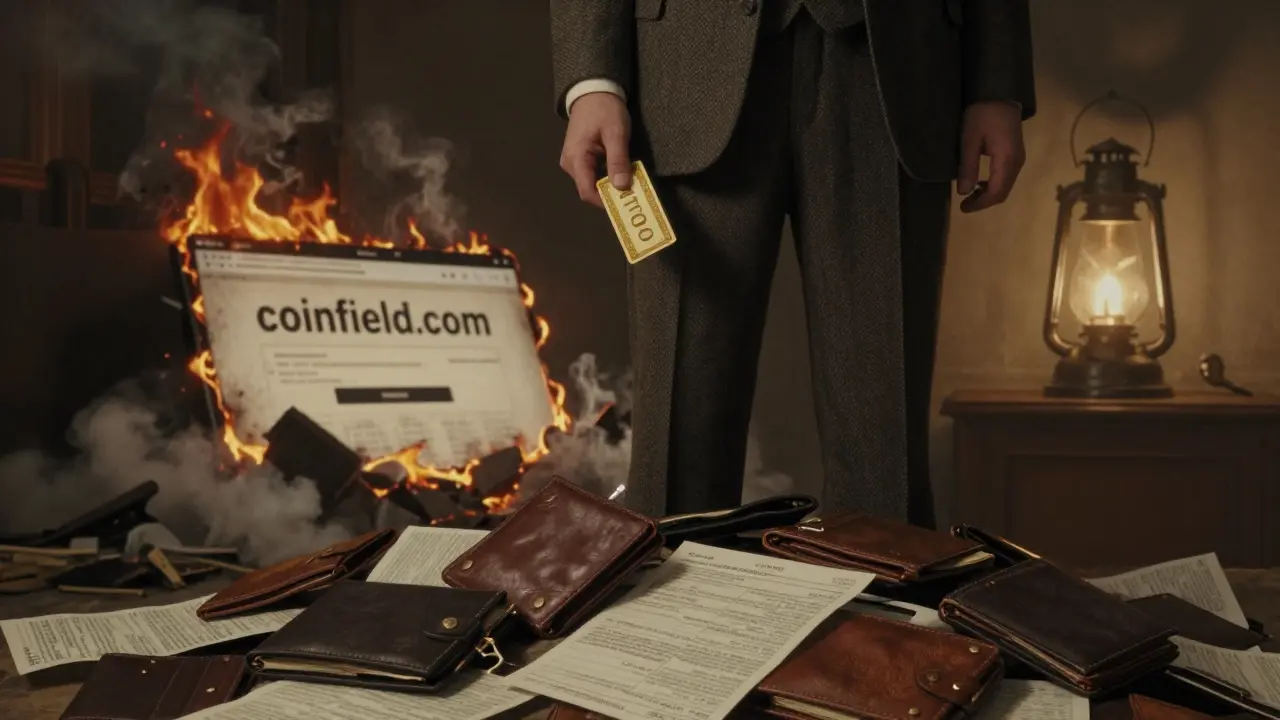
Security? What Security?
CoinField claimed to use encryption and 2FA. But security isn’t just about tech. It’s about accountability. A real exchange doesn’t disappear. A real exchange has a public team. A real exchange has a physical address. CoinField had none. The founders? Surya Chowdhury and Alex Lightman. Public profiles? Sparse. LinkedIn? Inactive. No interviews. No press releases after 2021. No regulatory filings in Canada or the EU. Just a website and a promise. And here’s the kicker: CoinField never published proof of reserves. No third-party audit. No transparency. That’s not negligence - it’s a red flag the size of a billboard.How It Compared to Other Exchanges
Before its collapse, CoinField tried to compete with bigger names like Binance and Kraken. But here’s the reality: even the smallest reputable exchange gives you one thing CoinField never did - access to your funds. Compare CoinField to FameEX. FameEX charges a flat 0.10% fee - lower than CoinField’s 0.25%. But FameEX doesn’t vanish. It has customer support. It has audits. It has a track record. CoinField’s biggest "advantage" was the number of coins it supported: 28. But that’s meaningless if you can’t withdraw any of them. More coins don’t make a platform safe. They just make it more attractive to scammers.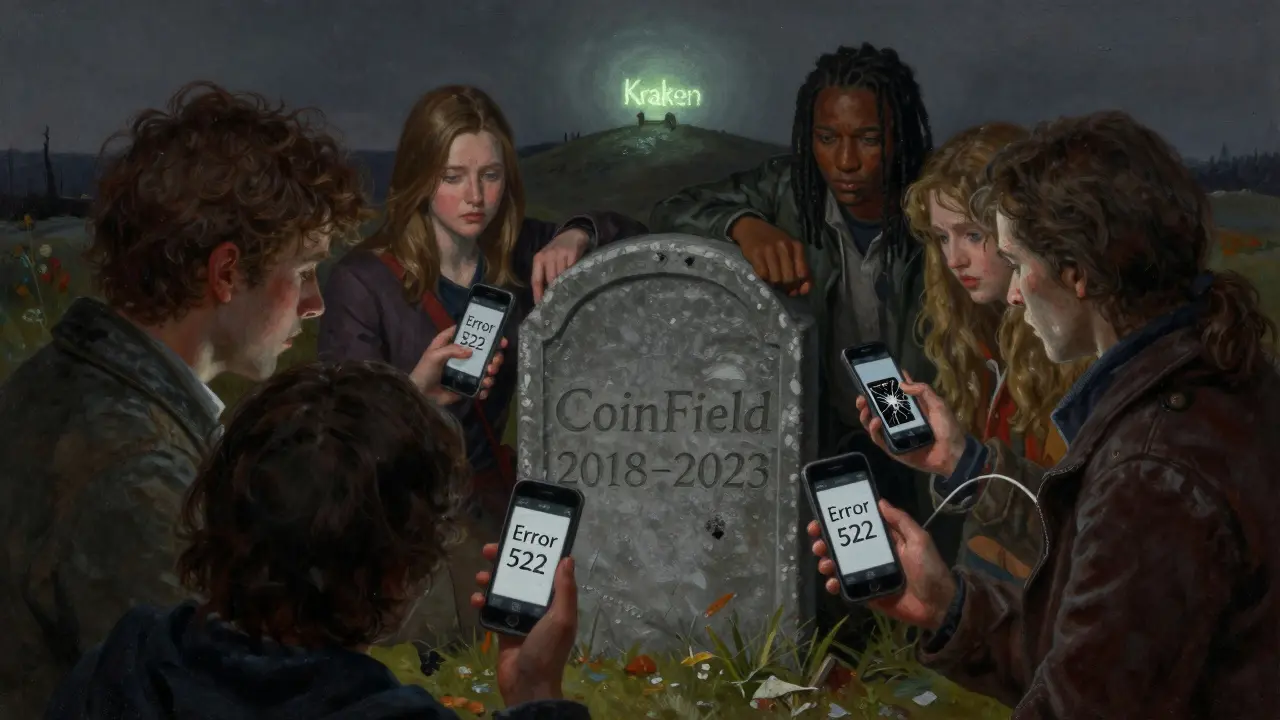
What You Should Do Now
If you used CoinField and still have funds there: you’re likely out of luck. But don’t give up. Here’s what you can try:- File a report with your local financial regulator (e.g., FINTRAC in Canada, SEC in the U.S.)
- Report the scam to Cryptowisser and other crypto watchdogs
- Check if your bank or payment processor can help trace the transaction
- Join user groups on Reddit or Telegram - others are in the same boat
- Never, ever use "coinfield.us.com" or any similar site. It’s a clone.
Why This Keeps Happening
CoinField isn’t an exception. It’s the rule. In 2022 alone, over $1.2 billion vanished from crypto exchanges that collapsed. Most were unregulated. Most had no audits. Most had anonymous teams. The crypto space is full of innovation. But it’s also full of predators. If an exchange promises high returns, has no clear leadership, or doesn’t let you withdraw easily - it’s not a platform. It’s a Ponzi. Don’t let the shiny interface fool you. Don’t let the low fees trick you. Don’t let the SOLO card tempt you. If you can’t withdraw your crypto, you don’t own it. You’re just holding a digital IOU from someone who doesn’t plan to pay you back.Final Warning
CoinField is dead. Not dormant. Not under maintenance. Dead. The money is gone. The team is gone. The website is gone. The only thing left are the stories of people who trusted them. If you’re reading this and thinking, "I’ll just try one more time," don’t. The next site you click on will be another ghost. Another graveyard. Another loss. The lesson isn’t about CoinField. It’s about trust. In crypto, your private keys are your only safety. If you don’t control them, you don’t own your money. And if you’re storing it on an exchange with no name, no team, and no track record - you’re already losing.Is CoinField still operational?
No. CoinField ceased operations in December 2023. The original website no longer works, and the platform has been officially labeled a scam by Cryptowisser. Any website claiming to be CoinField now is a copycat designed to steal more funds.
Can I get my money back from CoinField?
The chances are extremely low. Most users who deposited funds into CoinField have not recovered any money. There is no official recovery process, and the company’s leadership has disappeared. Reporting the scam to financial regulators may help others avoid the same fate, but individual fund recovery is unlikely based on similar past cases like FTX and QuadrigaCX.
Was CoinField regulated?
CoinField claimed to follow Canadian and European compliance rules, but no public records show it was licensed by any financial authority. No regulatory filings exist under its name in Canada, the EU, or the U.S. Legitimate exchanges publish their licenses - CoinField did not.
What were CoinField’s fees?
CoinField charged 0.15% for maker orders and 0.25% for taker orders. Bitcoin withdrawals cost 0.0015 BTC. While these fees were within industry range, they became irrelevant once withdrawals stopped working. Fees don’t matter if you can’t access your funds.
Did CoinField have a mobile app?
Yes, CoinField offered a mobile app called CoinField Pro. But like the website, the app no longer functions. Users reported it crashing or showing login errors after the platform shut down. Even if you still have the app installed, it cannot connect to any live servers.
What should I look for in a safe crypto exchange?
Look for: a clear company name and team, a physical headquarters, published audits, a history of at least five years, and verified user reviews about successful withdrawals. Avoid exchanges that don’t list their leadership, hide their location, or push their own tokens. If you can’t withdraw your crypto easily, you don’t own it.
Man, I lost $5k to this thing back in '22. I thought I was being smart using a "Canadian" exchange. Turns out "Canadian" just meant they used a Vancouver PO box. I still check the domain every month like a fool. No luck. Just ghosts.
Of course it was a scam. Did you see the SOLO card? That’s not a product - that’s a psyop. They knew exactly who to target: people who think crypto is about status, not sovereignty. The card was the bait. The 2FA? Just a prop. The real security was making you feel safe while they drained the vault.
I’m so sorry everyone who got burned. I know how it feels - that sinking feeling when you realize you trusted a website with your life savings. But listen: you’re not alone. There are groups on Telegram with 12k+ people who lost everything. We’re pushing for class actions. We’re documenting every email, every transaction. If you’re reading this and still have funds trapped - DM me. I’ll help you file with FINTRAC. You didn’t fail. They stole.
There are grammatical inconsistencies in the original post - specifically, the inconsistent use of em dashes and Oxford commas. But the substance is correct. CoinField was a textbook exit scam. No proof of reserves, no regulatory filings, no public team. The only thing they proved was how easily people confuse aesthetics with legitimacy. A clean UI doesn’t mean a secure backend.
It's fascinating, really, how the entire crypto ecosystem has become a kind of postmodern theater - where trust is performative, transparency is theatrical, and accountability is a mythologized concept. CoinField didn't merely collapse; it revealed the ontological fragility of centralized digital asset custody. One must ask: if your assets exist only in the domain of another's server, do they truly exist at all?
For anyone still thinking about using CoinField or any similar exchange: check the WHOIS. If the domain is registered through a privacy service in Seychelles or the Marshall Islands, walk away. Even Binance, which has its own issues, publishes its legal entity and jurisdiction. CoinField didn’t even pretend. And the "coinfield.us.com" clone? That’s not phishing - that’s a full-on identity theft operation. Don’t touch it.
US citizens lost millions. No one’s doing anything. The SEC is asleep. The DOJ is busy with TikTok. This is why we need a crypto police force. Not regulators - cops. Real ones with badges. These scammers need prison time, not fines.
Interesting case study in regulatory arbitrage - leveraging jurisdictional opacity to mask insolvency. The SOLO token was a classic liquidity trap: incentivized circulation to inflate perceived utility while backend reserves were non-existent. The absence of on-chain proof of reserves is not merely negligence - it’s a structural vulnerability endemic to centralized exchanges with anonymous ownership. The real failure was the user base’s failure to demand on-chain transparency.
Another American gets scammed because they didn't know to use a hardware wallet. You think you're safe with an exchange? You're just giving your keys to a stranger. If you don't control your keys, you're not owning crypto - you're renting it. And rent can be taken away. Always. Forever.
It's not about CoinField. It's about the human condition. We crave validation. We want to belong. So we hand our wealth to a website with a logo and a 2FA prompt - and call it progress. We confuse technology with transcendence. We think if it's digital, it's sacred. But money is just paper. And if you let someone else hold it, you've already lost. CoinField didn't steal your crypto. You gave it away because you were tired of being responsible.
If you’re reading this and you’re still feeling guilty or ashamed - don’t. You didn’t do anything wrong. You trusted a system that was built to exploit trust. The real criminals are the ones who designed it. But here’s the good news: you’re now wiser. And that’s power. Start learning about self-custody. Join a local crypto meetup. Talk to people. You’re not alone. And you’re not broken. You’re just learning.
LOL so CoinField was the crypto version of a 2008 timeshare scam with a better UI? I’m shocked. Who even uses these platforms? Did they think the SOLO card was gonna get them into clubs? "Hey bae, check my crypto card" - yeah right. Next they’ll launch a NFT of a crying cat named "Regret"
they knew. they all knew. the devs, the marketers, the card designers - they were in on it. this wasn’t incompetence. it was a heist. and now the whole crypto space is paying for it. every time someone says "crypto is risky" - it’s because of guys like this. i’m gonna start a petition to ban anyone who ever worked at coinfield from ever touching crypto again. #burnthemall
Trust is the first casualty in crypto. Not the market. Not regulation. Trust. CoinField didn’t take money - it took faith. And faith, once broken, is harder to rebuild than any blockchain.
i know someone who lost $12k. she cried for a week. now she’s learning to use ledger. i told her: "you didn’t lose crypto. you lost a lesson. and now you’re stronger." she’s gonna start a blog. called "i trusted the card" lol. but seriously - this is why we need education. not just warnings.
bro just use coinbase. it’s boring. it’s slow. but your money is there. why risk it for 0.1% lower fees? you’re not saving money - you’re gambling with your life savings. and you know what? i don’t blame you. i did it too. but i learned. now i only use exchanges that have been around longer than my last relationship.
coinfield? oh yeah i heard about that. they had that card right? lol i thought it was a joke at first. then i saw the reviews. man. people really fell for that. i mean come on. if you cant withdraw after 2 weeks - its a scam. duh. why even bother? just use binance. its free and its real.
To everyone who lost money: I see you. I’ve been there. I’m not here to preach. I’m here to say - your pain matters. Join the CoinField Victims Group on Reddit. We’re organizing legal help, writing to Congress, and building a public archive of every victim’s story. Your voice isn’t lost. It’s just waiting to be heard. And we’re going to make sure it echoes.
While the emotional impact of this incident is undeniable, the systemic implications are more significant. Centralized exchanges, by their very architecture, introduce counterparty risk. The CoinField collapse is not an anomaly - it is an inevitability under the current model. The only sustainable path forward is non-custodial ownership. Until users demand it, the cycle will repeat. This is not a failure of regulation - it is a failure of user agency.
Actually, I just got an email from someone claiming to be a "CoinField Recovery Team" - asked for my private key and a $500 fee to unlock my funds. Classic. I forwarded it to the FTC. Don’t fall for it. The only recovery is learning.