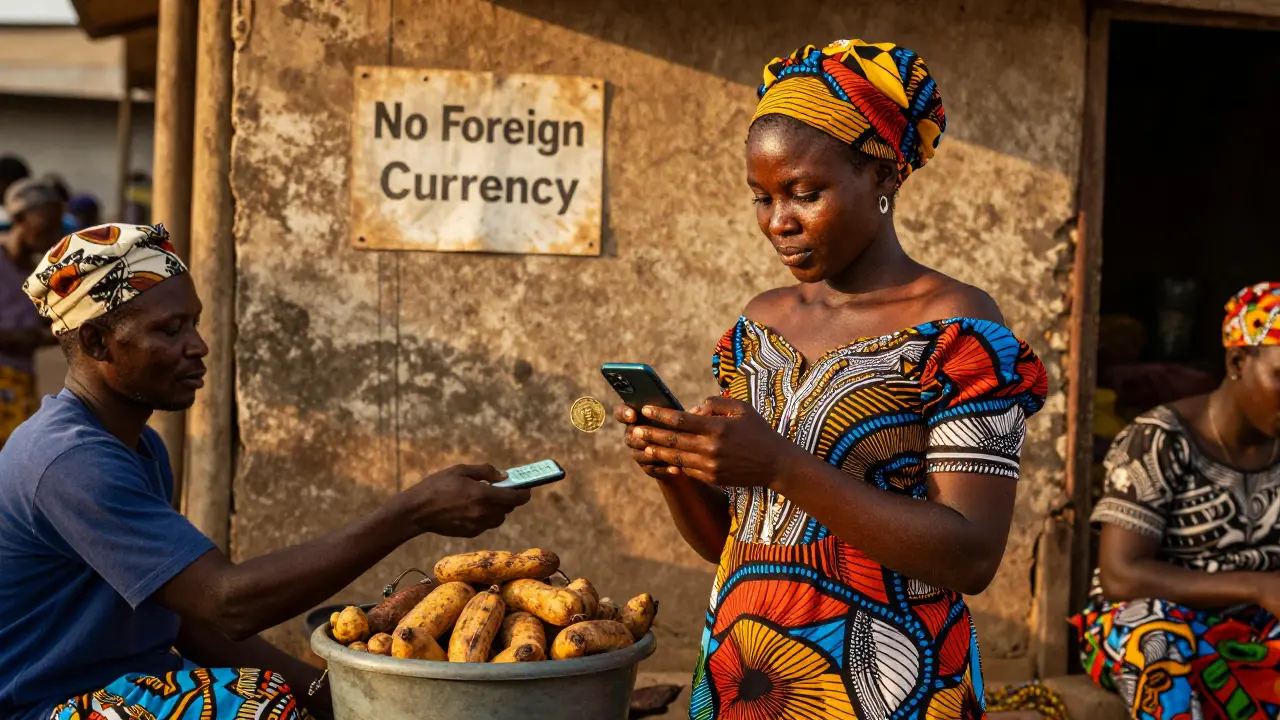
Nigeria Crypto Savings Calculator
How Crypto Saves You Money
With Nigeria's inflation at 24% and remittance fees up to 8%, crypto provides real savings. This calculator shows:
- 1 Estimated savings on remittances
- 2 Value of naira vs USDT after inflation
- 3 Real-world usage scenarios
Potential Savings
- Remittances: Crypto saves up to 8% vs traditional banks
- Daily use: USDT maintains value against naira inflation (24%)
- Savings: Avoid losing 75% of value over 9 years (2016-2025)
By 2025, crypto adoption in Nigeria isn’t just a trend-it’s a survival strategy. With inflation hitting 24% and the naira losing over 75% of its value against the dollar since 2016, millions of Nigerians have turned to Bitcoin, Ethereum, and stablecoins not because they’re tech enthusiasts, but because they have no other choice. Traditional banks won’t let them move money abroad. Savings in naira evaporate by the week. Remittances cost up to 8% to send home. Crypto became the only tool that worked.
Why Nigeria Became a Crypto Powerhouse
Nigeria didn’t become the second-most crypto-adopted country in the world by accident. It happened because the system failed its people. About 36% of Nigerian adults are unbanked. Even those with bank accounts can’t easily access foreign currency or send money internationally without jumping through layers of red tape. When the Central Bank of Nigeria (CBN) banned banks from serving crypto businesses in 2021, people didn’t stop using crypto-they just moved it underground. Peer-to-peer (P2P) trading exploded. Platforms like Binance P2P became lifelines. By mid-2023, Nigeria was already handling over $59 billion in crypto transactions in just one year. That number didn’t drop after the CBN lifted its ban in late 2023-it skyrocketed. Why? Because people finally had legal access to exchanges again. Licensed platforms like Quidax and Yellow Card could now operate openly. Banks could finally process crypto-related payments. Confidence returned. What makes Nigeria different from the U.S. or Europe? In developed countries, people buy crypto as an investment. In Nigeria, people buy it to eat. A 2025 survey found that over 8% of all crypto transactions in Sub-Saharan Africa were under $10,000-far higher than the global average of 6%. These aren’t institutional trades. These are mothers buying rice with USDT. Freelancers getting paid in Bitcoin. Students sending money to relatives overseas without paying $50 in fees.The Regulatory Shift That Changed Everything
The real turning point came in late 2023, when the CBN reversed its 2021 ban. For the first time, Nigerian crypto exchanges could open bank accounts. They could process withdrawals. They could partner with local payment processors. This wasn’t just policy-it was economic recognition. The government realized crypto wasn’t going away. It was already the de facto financial system for millions. By 2025, the Nigeria Inter-Bank Settlement System (NIBSS) partnered with Zone’s blockchain network to modernize interbank transfers. This wasn’t about replacing banks-it was about making them faster and cheaper. Fraud dropped. Settlement times went from days to seconds. It was the first time a central bank in Africa integrated blockchain directly into its core infrastructure. The message was clear: crypto isn’t the enemy. It’s the upgrade. Moniepoint, a Nigerian fintech startup that lets small vendors accept digital payments, became a $1 billion unicorn after securing funding from Google and others. Its success wasn’t just because of mobile money-it was because crypto integration let users convert naira to USDT instantly, hedge against inflation, and send money across borders without delays. That’s innovation born from necessity.How Nigerians Actually Use Crypto
Most new users start with Binance P2P. They deposit naira, buy USDT or USDC, and store it on their phone. That’s it. No wallets. No private keys. Just a simple app. After a few weeks, they learn about self-custody-how to use Trust Wallet or MetaMask. Community Telegram groups and WhatsApp channels become their personal tutors. Someone posts: “Don’t share your seed phrase.” Another replies: “I lost $200 last month because I clicked a fake link.” Freelancers and remote workers are the biggest adopters. A graphic designer in Lagos gets paid $500 a month from a client in California. Without crypto, that’s $40 in fees, a week-long wait, and a chance the bank will freeze the account. With USDT? Instant deposit. Zero fees. No questions asked. Stablecoins are the real heroes here. Bitcoin is volatile. USDT isn’t. People use USDT like digital cash. They buy groceries. Pay for data bundles. Send money to family in Ghana. One Reddit user wrote: “I saved my daughter’s school fees in USDT last year. The naira dropped 30% in two months. My savings didn’t.” DeFi is still niche. Only 12% of users have tried lending or staking. Most don’t understand it. But interest is growing. Younger users are experimenting with yield farms. Older users stick to holding stablecoins. The divide isn’t age-it’s exposure.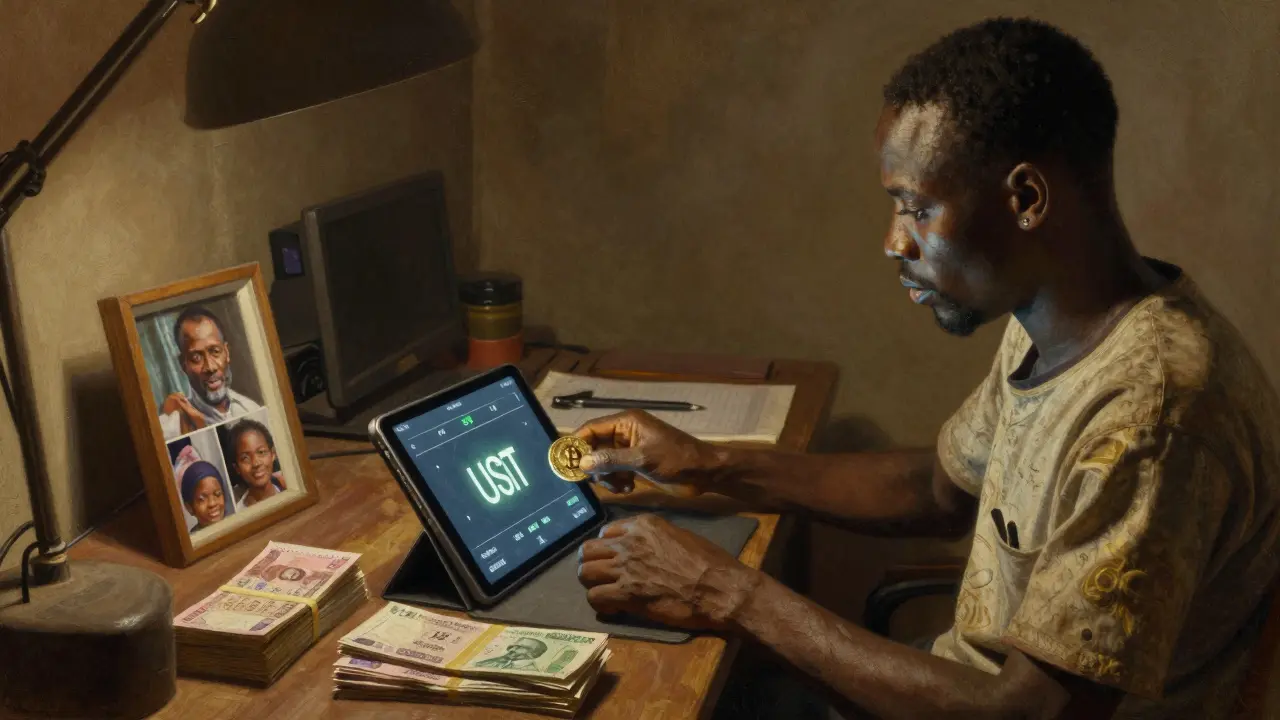
The Risks Are Real
Crypto isn’t magic. It has risks. Exchange downtime during market spikes is common. Binance P2P servers sometimes crash when the naira tanks. Users panic. They can’t sell. Others fall for fake apps that steal private keys. Scams are everywhere. A 2025 report from Chainalysis showed Nigeria had the highest number of crypto-related fraud cases in Africa. Regulatory uncertainty still lingers. The CBN lifted the ban, but it hasn’t issued clear licensing rules for crypto firms. What if they reverse course again? What if they ban P2P trading? What if they force exchanges to collect KYC data that makes it impossible for low-income users to trade? And then there’s the internet. Not everyone has reliable data. In rural areas, 4G is spotty. A crypto transaction needs a stable connection. If your phone dies, your money’s stuck. No bank will help you recover it.What’s Next for Nigeria’s Crypto Future
The path forward isn’t about banning crypto. It’s about building on what’s already working. Nigeria’s population is 220 million. Over 22 million already use crypto. That’s 10.3%-and growing fast. Projections suggest 15% of the population will be active crypto users by 2027. The Central Bank is exploring a digital naira, but early tests show low adoption. People don’t trust it. Why? Because it’s still tied to the same failing system. Crypto doesn’t ask for permission. It doesn’t need a government stamp to work. More fintechs are coming. Local startups are building crypto-based savings apps that auto-convert naira to USDT weekly. Others are creating micro-loans paid out in stablecoins. Schools in Lagos are teaching crypto basics in economics class. The government isn’t leading-but it’s no longer blocking. The real question isn’t whether crypto will survive in Nigeria. It’s whether the rest of the world will finally see what Nigerians already know: when traditional finance fails, people don’t wait for permission. They build their own system.
How to Get Started With Crypto in Nigeria
If you’re new to crypto in Nigeria, here’s how most people do it:- Download Binance or Yellow Card from the App Store or Google Play.
- Verify your phone number and ID. It takes 10 minutes.
- Deposit naira via bank transfer or mobile money.
- Buy USDT (Tether). It’s the most stable and widely accepted.
- Store it in the app for now. Don’t move it to a wallet until you’re comfortable.
- Use it to pay for services, send money, or hold it until the naira drops again.
FAQ
Why is crypto so popular in Nigeria compared to other African countries?
Nigeria has the largest economy in Africa, a young, tech-savvy population, and severe economic instability-high inflation, currency devaluation, and restricted access to foreign currency. These conditions forced millions to seek alternatives. Other African countries have crypto users too, but none have combined population size, digital access, and economic pressure like Nigeria. It’s not just preference-it’s necessity.
Can I still use crypto if my bank blocks transactions?
Yes. Even before the CBN lifted its ban in 2023, Nigerians used P2P platforms like Binance and Paxful to trade crypto directly with other users. You can still deposit naira via mobile money, bank transfer, or even cash agents. Many exchanges partner with local payment providers that bypass traditional banking restrictions. Crypto doesn’t need your bank to work.
Is it safe to hold crypto in Nigeria?
It’s safer than keeping cash at home or savings in naira right now. But security matters. Use trusted apps like Trust Wallet or MetaMask. Never share your seed phrase. Enable two-factor authentication. Avoid public Wi-Fi when transacting. Scams are common, but so are educational communities. Learn from them. Most losses happen from human error-not crypto itself.
Do I need a bank account to use crypto in Nigeria?
No. You can buy crypto using mobile money services like MTN Mobile Money or Airtel Money. Some platforms let you deposit cash through local agents. You can also receive crypto directly from freelancers or remitters without ever touching a bank. While a bank account helps, it’s not required.
What’s the best crypto to use in Nigeria?
USDT (Tether) is the most popular because it’s pegged to the U.S. dollar and stable. Bitcoin is used for larger savings or remittances. Ethereum is growing for DeFi, but most users stick to stablecoins for daily use. Avoid altcoins unless you know what you’re doing-they’re too volatile for everyday needs.
Will the government ban crypto again?
It’s unlikely. The CBN already reversed its ban because crypto was too widespread to stop. Now, with blockchain being integrated into national payment systems and fintechs like Moniepoint becoming unicorns, banning crypto would hurt the economy. The government’s focus has shifted from blocking to regulating. They want to tax it, not kill it.
This is beautiful. 💔 People aren’t buying crypto because it’s cool-they’re buying it because the system burned their savings alive. I keep thinking about how much of our ‘financial literacy’ is just privilege in disguise. If your currency evaporates like morning dew, you don’t need a whitepaper-you need survival. 🌍
The assertion that crypto adoption in Nigeria is driven solely by economic necessity is an oversimplification. While inflation and currency devaluation are significant factors, the underlying infrastructure-mobile penetration, youth demographic, and informal economy dynamics-must be acknowledged as co-contributors. Moreover, the term 'survival strategy' risks romanticizing systemic failure.
I cried reading this. Not because I’m emotional-though I am-but because this is the most honest story of human resilience I’ve seen in years. Imagine waking up and realizing your life savings are worth less than yesterday’s bread. And then, out of nowhere, your phone becomes your bank, your dignity, your future. This isn’t tech. This is magic forged in fire. I wish the world paid attention before it’s too late for everyone else. 🕊️
This is exactly why I tell my friends back home: don’t wait for permission to build a better system. Nigeria didn’t ask for approval. They just started using what worked. USDT isn’t a gamble-it’s insurance. And if you’re still waiting for a bank to save you, you’re already behind.
The part about mothers buying rice with USDT hit me hardest. No flashy tech talk. Just real people doing what they have to do. Quiet strength.
They didn’t adopt crypto they rebuilt finance with their fingers and phones and desperation and no one gave them a medal
I’m so proud of how Nigerian communities are teaching each other. No corporate training. No ads. Just strangers on WhatsApp saying ‘don’t share your seed phrase’ like it’s a sacred rule. That’s the real innovation right there. ❤️
I’ve been watching this unfold for years and honestly? This is the first time I’ve seen a developing nation leapfrog colonial financial systems without waiting for permission. The CBN didn’t lead-they got out of the way. And that’s the lesson for every government: stop trying to control what you can’t stop. Help people build what they already are.
Let’s be real this isn’t about finance it’s about white people pretending they invented innovation when Africans have been surviving off the grid for centuries. Crypto? We were using barter and trust long before your blockchain was a word in a textbook. Now you want to patent it?
If you’re new to crypto in Nigeria start with USDT. Don’t overcomplicate it. Use Binance P2P. Join a local Telegram group. Ask one question a day. Learn from someone who lost money. That’s how you survive. And yes it’s scary-but so is watching your rent go up 40% in a month. You choose your battle.
This is all part of the globalist agenda. Crypto is being pushed to destabilize sovereign currencies. Nigeria’s government is either complicit or clueless. Soon your naira won’t be the only thing collapsing. The dollar’s next. Mark my words.
USDT for rice. That’s the whole story.