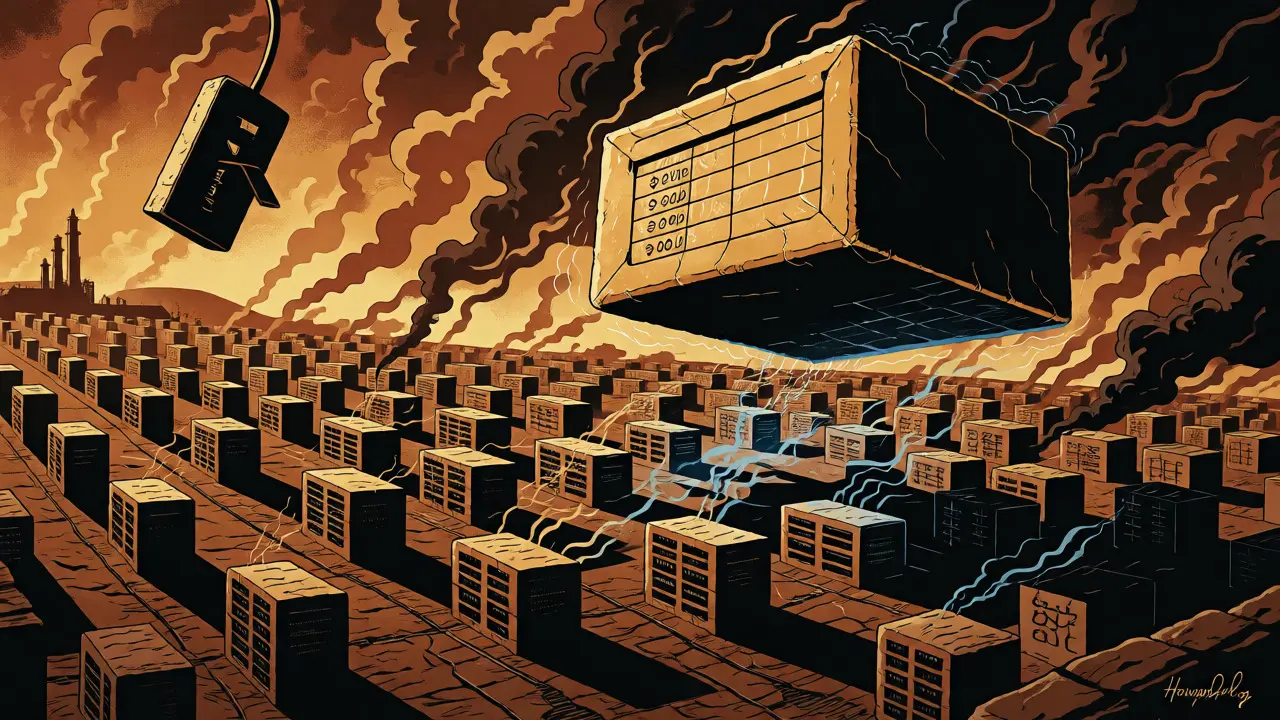
Imagine turning on a light switch and knowing that the electricity powering it just contributed to a global crisis. That is the uncomfortable reality for Bitcoin, the digital asset that has grown from an obscure experiment in 2009 to a financial giant with a market cap exceeding $1.5 trillion by late 2026. While enthusiasts celebrate its decentralized nature, critics point to a staggering statistic: Bitcoin mining alone consumes roughly 150 terawatt-hours (TWh) of electricity annually. To put that in perspective, that is enough power to keep the entire country of Mexico running for a year. Is this energy price worth paying? Or are we witnessing the early days of a technological bubble that ignores ecological limits?
The Energy Hunger of Proof-of-Work
To understand why cryptocurrency burns so much fuel, you have to look under the hood at how it works. Most major cryptocurrencies, including Bitcoin, rely on a mechanism called Proof-of-Work (PoW). This system requires computers, known as miners, to solve complex mathematical puzzles to validate transactions and secure the network. The first miner to solve the puzzle gets rewarded with new coins. It sounds simple, but the competition is fierce. As more people join the race, the puzzles get harder, demanding more computational power and, consequently, more electricity.
According to the Cambridge Centre for Alternative Finance (CCAF), which tracks global mining data, the average electricity mix for Bitcoin mining in 2025 was about 43% renewable sources, 38% natural gas, 10% nuclear, and 9% coal. While the share of renewables is growing, the sheer volume of energy needed means that even a small percentage of fossil fuels results in massive emissions. Each single Bitcoin transaction emits approximately 672 kg of CO₂. That is equivalent to driving a gas-powered car for 1,600 kilometers. If you buy a coffee with Bitcoin, you might be thinking you are supporting innovation, but you are also contributing to a carbon footprint larger than many daily activities combined.
Beyond Carbon: Water, Land, and Noise
Carbon emissions grab the headlines, but they are not the only problem. A study published by the United Nations University Institute for Water, Environment and Health (UNU-INWEH) highlighted that cryptocurrency mining also drains significant water resources. Mining rigs generate intense heat, requiring cooling systems that often rely on evaporative cooling. In arid regions like parts of Texas or Arizona, this competes directly with agricultural needs and drinking water supplies.
Then there is the noise. If you live near a large-scale mining facility, you know the sound. Cooling fans operating 24/7 create a constant hum between 70 and 80 decibels. Residents in communities across the United States have reported sleep disturbances and stress linked to this industrial drone. Local ordinances are starting to push back, with some towns considering bans or strict zoning laws to protect residential quality of life. It is not just about what goes into the air; it is about what happens to the local environment where these digital gold mines sit.
| Feature | Proof-of-Work (e.g., Bitcoin) | Proof-of-Stake (e.g., Ethereum) |
|---|---|---|
| Energy Consumption | High (150+ TWh/year globally) | Low (<0.1 TWh/year after Merge) |
| Primary Resource | Electricity & Hardware | Capital Lockup (Staked Coins) |
| CO₂ Emissions per Tx | ~672 kg | <1 kg |
| Hardware Waste | High (ASICs become obsolete quickly) | Low (Standard servers suffice) |

The Shift to Greener Solutions
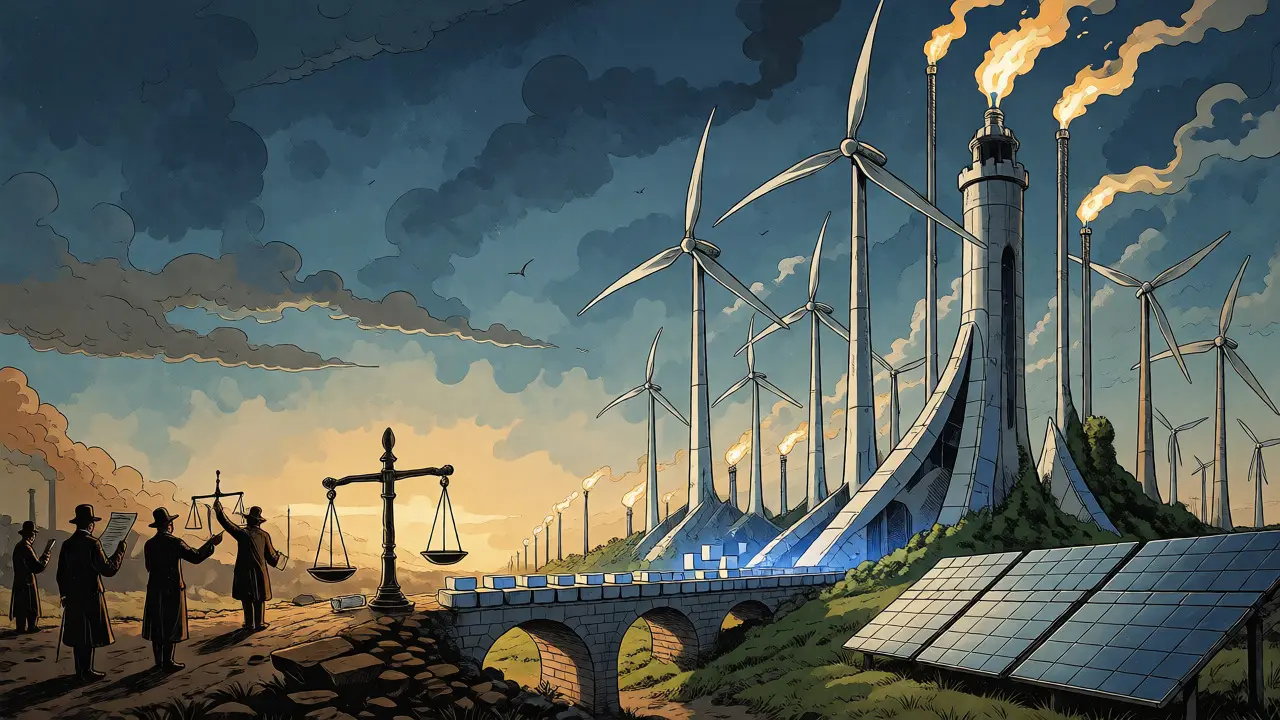
Not all hope is lost. The industry is evolving, driven by both regulatory pressure and economic incentives. One of the most significant shifts has been the migration toward renewable energy sources. Miners are increasingly setting up shop in places with abundant wind, solar, or hydroelectric power. Why? Because electricity is their biggest cost. If they can find cheap, clean power, they save money and reduce their carbon footprint simultaneously.
Companies like Marathon Digital and CleanSpark are leading this charge. They utilize flare gas capture technology, converting waste methane from oil fields into electricity for mining. This process prevents methane-a potent greenhouse gas-from entering the atmosphere while generating power. However, this transition isn't free. Connecting mining operations to solar farms or upgrading infrastructure costs millions. CleanSpark’s 2024 report noted over $220 million spent on such infrastructure in Texas alone. For smaller operators, these upfront costs are a steep barrier to entry.
Regulatory Headwinds and Market Responses
Governments are taking notice. In 2025, Kuwait banned cryptocurrency mining entirely due to strain on its national power grid. Meanwhile, the European Union implemented the Markets in Crypto-Assets (MiCA) regulation, which mandates environmental impact reporting for exchanges. Compliance has been tough; a Deloitte survey found that 78% of EU-based exchanges struggled to meet these new standards initially.
In the United States, the political landscape remains divided. Some states welcome mining for job creation and tax revenue, while others impose moratoriums due to environmental concerns. The Trump administration's relaxation of certain environmental regulations in 2024 created a patchwork of rules that confuse investors and operators alike. Major corporations are reacting too. Tesla resumed accepting Bitcoin payments in 2024 but only after verifying that the transactions used 100% renewable energy. PayPal, conversely, paused some crypto services citing unresolved environmental issues. These corporate moves signal that "green" credentials are becoming essential for mainstream adoption.
What Can You Do as an Investor?
If you care about the planet but want to participate in the digital economy, you have options. First, consider the type of cryptocurrency you hold. Assets using Proof-of-Stake (PoS) consensus mechanisms, like Ethereum (post-Merge), Cardano, and Solana, consume drastically less energy. Ethereum reduced its energy usage by 99.95% when it switched from PoW to PoS in 2022. This single change saved more energy than several small countries use in a year.
Secondly, look for projects committed to transparency. The Bitcoin Mining Council has seen 58.7% of its member companies commit to net-zero operations by 2030. Supporting firms that publish verified sustainability reports helps drive industry-wide change. Finally, stay informed. The narrative around crypto is shifting from pure speculation to responsible investment. Your choices matter because they influence where capital flows and which technologies survive.
Frequently Asked Questions
Is Bitcoin really worse for the environment than traditional banking?
It depends on how you measure it. Bitcoin uses significantly more energy per transaction than a credit card swipe. However, traditional banking relies on physical branches, ATMs, armored cars, and paper checks, all of which have hidden energy costs. Studies suggest that while Bitcoin's raw energy use is higher, the comparison isn't always apples-to-apples. Still, if you prioritize minimal energy use, digital assets on Proof-of-Stake networks are clearly greener than both Bitcoin and traditional finance.
Why do miners use so much electricity?
Miners use electricity to run powerful computers that solve complex math problems to verify transactions and secure the network. This process, called Proof-of-Work, is intentionally difficult to prevent fraud. As more miners compete, the difficulty increases, requiring more hardware and energy to maintain the same security level. It is essentially a digital arms race where energy equals security.
Can cryptocurrency ever be truly green?
Yes, but it requires technological evolution. Proof-of-Stake mechanisms already offer a low-energy alternative. For Proof-of-Work chains like Bitcoin, becoming "green" means sourcing nearly 100% of their electricity from renewables and capturing wasted heat or methane. Innovations like immersion cooling and strategic location selection near hydroelectric dams are helping. However, until the consensus mechanism changes or energy efficiency improves dramatically, a fully zero-carbon Bitcoin remains a distant goal.
Does mining actually help renewable energy adoption?
Sometimes. Miners can act as flexible loads, buying excess renewable energy when production is high and prices are low. This stabilizes the grid and makes renewable projects more financially viable. For example, solar farms often produce too much power during sunny days, which would otherwise be wasted. Miners can soak up this surplus, effectively subsidizing renewable infrastructure. Critics argue, however, that this should benefit local communities first before being diverted to crypto.
What is the future outlook for crypto's environmental impact?
The trend is moving toward sustainability. Regulatory frameworks like MiCA in Europe and potential US federal standards will force greater transparency and accountability. Technological shifts toward Layer-2 solutions and Proof-of-Stake alternatives are reducing the overall carbon intensity of the crypto sector. By 2030, analysts predict that while total energy use may rise due to market growth, the carbon footprint per dollar of value transferred will likely decrease significantly.