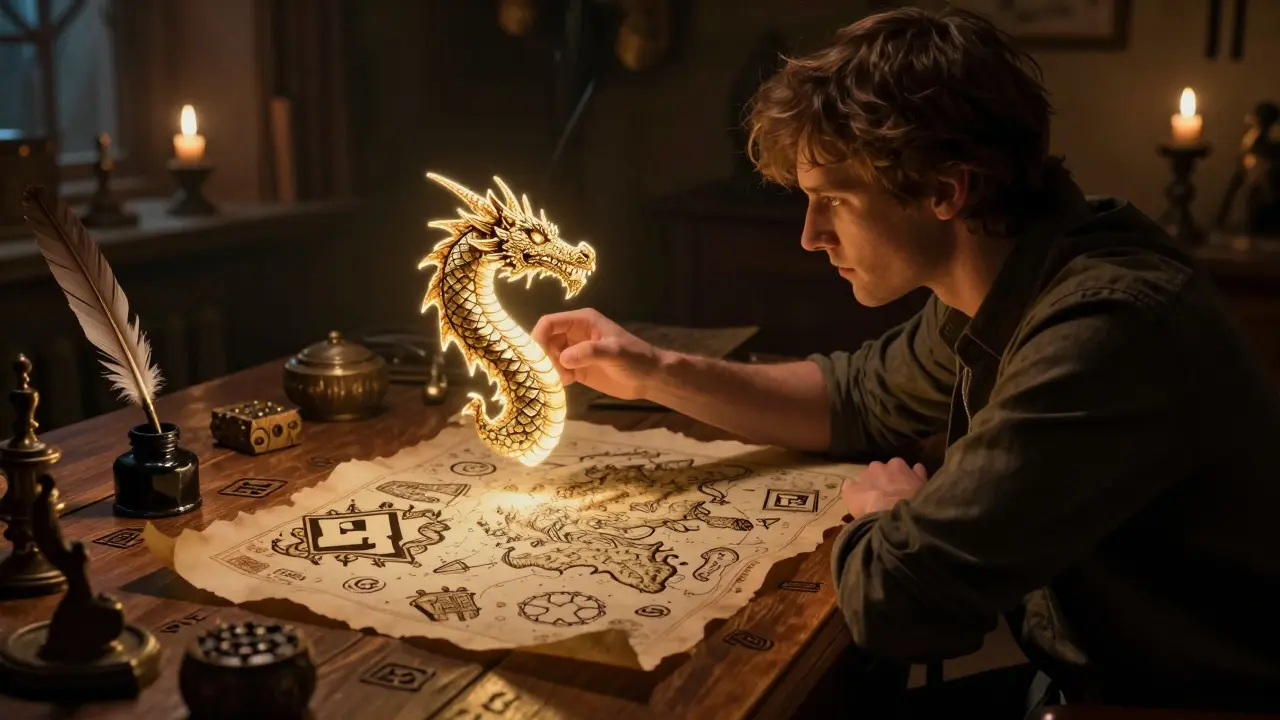
For years, gamers have spent hours, sometimes years, grinding for rare skins, weapons, or mounts-only to lose them forever when a server shuts down or a game gets discontinued. What if you could actually own those items? Not just have access to them, but truly own them like a physical collectible? That’s the promise of NFTs in gaming. And in 2025, it’s not about hype anymore-it’s about what’s actually working, what’s failing, and who’s still playing.
What NFTs Really Mean in Games
NFTs in gaming aren’t just digital trading cards. They’re blockchain-based proof of ownership for unique in-game items: a dragon skin that no one else has, a weapon forged only once, or a plot-critical item tied to your character’s story. Unlike traditional games where everything is locked inside the developer’s servers, NFTs live on public ledgers like Ethereum, Polygon, or Solana. That means you can move them outside the game-sell them on a marketplace, trade them with friends, or even use them in another game if the developers allow it. This isn’t theoretical. Games like Axie Infinity a blockchain-based game where players breed, battle, and trade digital creatures called Axies as NFTs and Splinterlands a collectible card game built on blockchain where each card is a unique NFT have shown that players will invest real money in digital items they can control. In 2024, Axie Infinity’s NFT marketplace processed over $1.2 billion in trades. That’s not gambling-it’s ownership.Play-to-Earn: The Double-Edged Sword
The biggest driver behind early NFT gaming was play-to-earn. The idea was simple: play the game, earn tokens or NFTs, cash them out. For players in countries with limited economic opportunities, this was life-changing. In the Philippines, thousands of players made enough from Axie Infinity to pay rent or feed their families. But here’s the catch: most play-to-earn games failed because they were designed like Ponzi schemes. Players had to buy NFTs just to start playing. The only way to profit was to recruit more players. When new players stopped joining, the economy collapsed. By 2023, dozens of these games vanished overnight. Today, the smart ones have changed. Instead of forcing players to spend money upfront, they’re making the core gameplay fun first. Games like Upland a blockchain-based virtual real estate game where players buy, sell, and trade digital properties mapped to real-world locations let you play for free. You earn NFTs as rewards for exploring, completing quests, or building communities-not just by buying your way in. That’s the shift: from "pay to play" to "play to own."Why Cross-Game NFTs Are the Real Game-Changer
The biggest missed opportunity in early NFT gaming was isolation. Your Axie couldn’t go into Splinterlands. Your sword from one game couldn’t be used in another. That’s like owning a physical baseball glove but only being allowed to use it in one stadium. That’s changing. In 2025, developers are building interoperability into their games. Imagine buying a legendary sword in one game, then using it as a cosmetic item in a VR shooter, or equipping it in a turn-based RPG. Companies like MetaverseGo a platform simplifying access to NFT-based games by streamlining wallet creation and blockchain interactions are making it easier to move between games without juggling ten different wallets. This isn’t just tech-it’s culture. Players don’t want to be locked into one game. They want their time and money to have lasting value. Cross-game NFTs turn your digital collection into a portfolio, not a graveyard.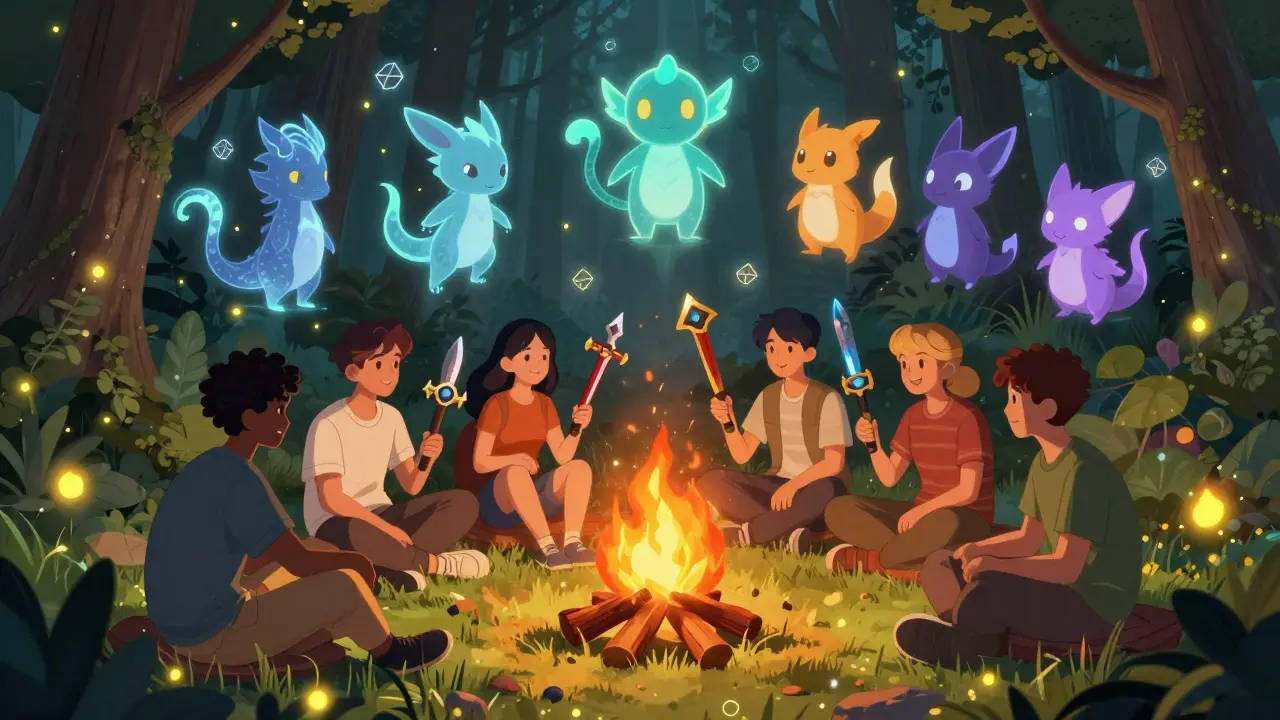
Mobile Is Where the Players Are
Over half of all gamers play on mobile. But early NFT games were built for desktops. They required crypto wallets, gas fees, and complex blockchain steps. Most players gave up before they even started. In 2025, that’s fixed. New tools let players link their phone number or email to a wallet behind the scenes. You don’t need to know what a private key is. You just tap "claim your item" and it’s in your inventory. Games like Farmers World a mobile-first blockchain game where players manage resources and trade NFT tools and animals now run smoothly on Android and iOS, with one-tap trading and instant asset transfers. Mobile isn’t just about convenience-it’s about scale. If NFTs are going to reach millions, they have to work on the device people already carry everywhere.Gen Z Is the Key-But Only If You Respect Them
In 2025, Gen Z makes up 32% of tech spending. They’re the first generation to grow up with digital ownership. They don’t care about flashy marketing. They care about authenticity, sustainability, and control. They’ll walk away if they feel like they’re being exploited. They’ll stick around if they feel like they’re part of something real. That’s why the most successful NFT games in 2025 aren’t pushing token sales. They’re building communities. They’re letting players vote on new features. They’re using DAOs-Decentralized Autonomous Organizations-to give players real say in how the game evolves. Blizzard’s CMO, Monica Austin, put it simply: "Players don’t want to be customers. They want to be co-creators." The games that win aren’t the ones with the most NFTs. They’re the ones that treat players like partners.The Pitfalls Still Holding NFT Gaming Back
Despite progress, NFT gaming still has deep problems. First, the UX is still clunky. If you’ve ever tried to connect a wallet, pay gas fees, or recover a lost key, you know how frustrating it is. Even small delays or errors scare off casual players. Second, regulators are watching. In the U.S. and EU, authorities are questioning whether NFTs are securities. If a game’s token can be traded for profit, it might be classified as an investment product-triggering legal headaches for developers. Third, the environmental myth still lingers. While Ethereum and other chains have moved to proof-of-stake (using 99.95% less energy than Bitcoin), many people still think NFTs are bad for the planet. That perception doesn’t go away just because the tech improved. And fourth-this is the big one-many games still put monetization before gameplay. If your game feels like a casino with graphics, players will leave. Fast.
What’s Working in 2025
The NFT games that are thriving in 2025 have one thing in common: they’re games first, blockchain second. - The Sandbox a metaverse platform where players build, own, and monetize virtual experiences using NFTs and cryptocurrency lets players create entire worlds and sell them as NFTs. The game itself is a creative sandbox, not a trading floor. - Alien Worlds a decentralized metaverse game combining NFTs, DAO governance, and mining mechanics uses NFTs as tools for mining resources, but the core loop is strategy and competition-not speculation. - Games like Illuvium a blockchain-based, open-world RPG with collectible creatures and NFT-based combat mechanics have AAA-quality graphics, deep lore, and cinematic storytelling-all powered by blockchain, not defined by it. These aren’t crypto experiments. They’re games that happen to use NFTs to give players real value.The Future: AI, VR, and True Ownership
What’s next? Two big trends are shaping the next phase. First, AI is personalizing NFT gaming. Imagine an NPC that remembers your past choices, or a weapon that evolves based on how you play. AI can generate unique NFT items for each player-no two are alike. Companies are already testing this in beta. Second, VR and AR are starting to matter. Over $2 billion has been spent on Meta Quest content since 2020. Playtime is up 30% year-over-year. NFTs in VR aren’t just skins-they’re your avatar’s entire identity. Your NFT sword, your NFT cloak, your NFT home-they all follow you into virtual spaces. But none of this matters if the game isn’t fun.Will NFTs Survive in Gaming?
Yes-but not as a gimmick. They’ll survive as a tool for true digital ownership. The future of NFTs in gaming isn’t about flipping digital sneakers for profit. It’s about letting you keep what you earn. It’s about letting you trade with friends across games. It’s about letting you own your time. The players who stick around aren’t speculators. They’re gamers who want more control. The developers who win aren’t the ones selling NFTs. They’re the ones building worlds worth staying in. The hype is over. The real work has just begun.Are NFTs in games just a scam?
No-not all of them. Early NFT games were often scams because they focused on making money from new players instead of delivering fun gameplay. But in 2025, the surviving projects are real games with solid mechanics, active communities, and actual player ownership. The difference is simple: if the game is fun even without NFTs, it’s likely legitimate. If you need to buy something to play, be skeptical.
Can I really make money playing NFT games?
Possibly, but don’t count on it. A small number of players earn enough to cover their costs or even make a profit-mostly in developing countries where play-to-earn has real economic impact. For most players, NFTs add value through ownership, not income. Think of it like collecting rare trading cards: you might sell one later, but you play because you enjoy it.
Do I need a crypto wallet to play NFT games?
Not always. Many newer mobile games hide the wallet behind the scenes. You sign in with your email or phone number, and the system handles the blockchain part for you. But if you want to trade your items outside the game or use them in other apps, you’ll eventually need a wallet like MetaMask or Phantom. The good ones make it easy to set up.
Are NFT games bad for the environment?
Most modern NFT games use blockchains that are far more energy-efficient than Bitcoin. Ethereum, Polygon, and Solana now use proof-of-stake, which cuts energy use by over 99%. The environmental concern is outdated for most NFT gaming today. Still, some players avoid them out of habit, so developers are starting to highlight their sustainability in marketing.
What’s the difference between NFTs and regular in-game items?
Regular in-game items are just data stored on a company’s server. If the company shuts down, you lose them. NFTs are stored on public blockchains. You control them with a private key. Even if the game disappears, you still own the NFT and can potentially use it elsewhere-or sell it on a third-party marketplace. It’s like owning a physical book versus borrowing one from a library.
Will big companies like EA or Activision adopt NFTs?
They’re watching closely. So far, they’ve avoided NFTs because of backlash from players and regulators. But they’re experimenting quietly-with cosmetic NFT skins, verified collectibles, and player-driven marketplaces. If a major studio launches a successful NFT game that doesn’t feel exploitative, the floodgates could open. But they won’t risk their brand unless it’s done right.
How do I get started with NFT gaming in 2025?
Start free. Try games like Upland or Alien Worlds-they let you play without spending money. Use a simple mobile app like MetaverseGo to avoid wallet confusion. Play for fun. If you enjoy it, you might earn something valuable. Don’t buy NFTs just because they’re expensive. Buy them because you love the game.
This is the most delusional take I’ve read all week. NFTs in games are just digital gambling with extra steps. You think owning a sword in a game means something? When the server shuts down, your ‘ownership’ vanishes like my last crypto investment.
Y’all are missing the forest for the trees. NFTs aren’t about flipping pixels-they’re about giving players agency. Imagine your favorite character’s gear surviving across games, across platforms, across years. That’s not tech-that’s legacy. And Gen Z? They’re already voting with their time. 🌱
The economic model remains fundamentally flawed. Utility without scarcity is meaningless. Liquidity without governance is chaos. The industry must prioritize tokenomics over aesthetics.
I grew up in India playing free-to-play mobile games. My whole family used to grind for skins. Now my cousin earns more from Alien Worlds than he does at his call center job. This isn’t hype-it’s survival. And yeah, the wallets are clunky, but apps like MetaverseGo are fixing it. Give it time.
Let’s be brutally honest: the entire NFT gaming ecosystem is a regulatory time bomb. If the SEC classifies any in-game asset as a security, you’re looking at class-action lawsuits, frozen assets, and developers fleeing to offshore jurisdictions. This isn’t innovation-it’s legal roulette with your digital possessions as the stake. And don’t even get me started on the KYC/AML compliance nightmares. The ‘play-to-own’ narrative is just a glossy veneer over a Ponzi structure dressed in blockchain.
Imagine your dragon skin evolves with your playstyle… and your best friend’s sword glows differently because you two teamed up 200 times 💫 That’s not NFTs-that’s magic. And I’m here for it. 🐉❤️
You Americans think this is new. In Nigeria, we’ve been trading virtual items since 2012. We don’t need your wallets. We just need trust. And you’re still scared of owning something real.
So now we’re supposed to believe that American devs are suddenly ethical? Please. NFTs are just Wall Street’s way of stealing from kids who can’t afford a PS5. This isn’t ownership-it’s exploitation with a blockchain label. And if you defend this, you’re part of the problem.
I remember when I first tried to claim my NFT in Upland. I was so confused. But then I watched a 5-minute video from a girl in Delhi who explained it like I was five. Now I trade with my cousin in Mumbai. It’s not about money-it’s about connection. And that’s beautiful.
They say Ethereum is green now? LOL. Who funded that study? The same people who told us crypto was decentralized. The truth is buried under whitepapers and PR teams. They’re just moving the scam from Wall Street to Web3. Wake up.
if u think nfts are the future u r living in a dream world. the only thing they own is your wallet and your sanity. stop wasting time
India doesn’t need your NFTs. We have real problems. Your blockchain games are a distraction for the privileged. Let us solve hunger before you sell us virtual swords.
One must consider the ontological implications of digital ownership: if an NFT exists on a distributed ledger, yet its utility is contingent upon the continued operation of a centralized game server, then is it truly owned-or merely licensed under a novel contractual framework? Furthermore, the emergent phenomenon of AI-generated, adaptive NFTs introduces epistemological uncertainty: can an item be said to be ‘owned’ if its form is dynamically altered by machine learning algorithms beyond the user’s control? And finally, the environmental argument, while often overstated, remains ethically significant-especially when considering the carbon footprint of consensus mechanisms still in use by lesser-known chains. The transition from ‘play-to-earn’ to ‘play-to-own’ may be rhetorically elegant, but without structural transparency, it risks becoming merely a rebranding of extractive capitalism.
Samuel just wrote a 300-word thesis. Meanwhile, the rest of us are trying to figure out how to connect our wallets without crying. The real innovation isn’t blockchain-it’s patience. And maybe a better UX.