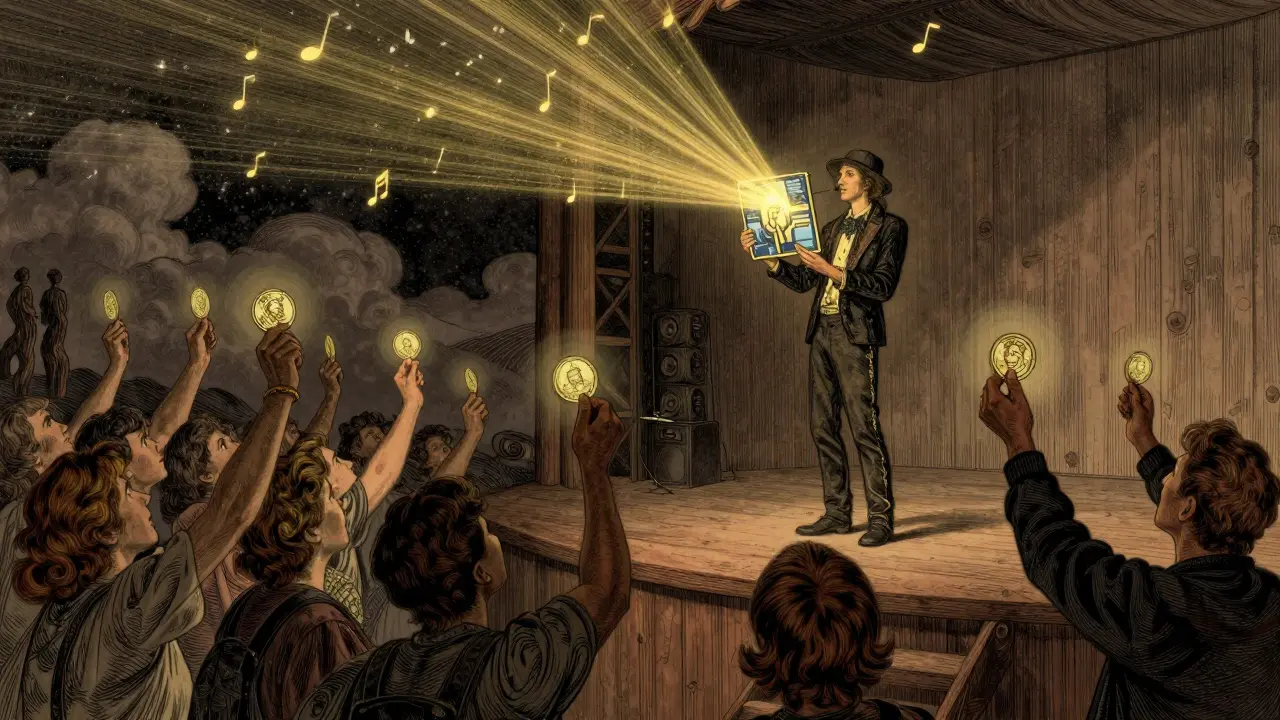
By 2025, NFTs in the music industry are no longer just digital collectibles. They’ve become a real tool for artists to cut out middlemen, get paid faster, and build deeper connections with fans. While the hype around $100,000 punk rock avatars has faded, the quiet revolution in how music is owned, sold, and streamed is just getting started.
How NFTs Are Fixing Music’s Broken Pay System
For decades, artists have been stuck with a system that takes 85% of their revenue before they see a dime. Streaming platforms like Spotify pay out around 13.3% of revenue to rights holders. Labels take their cut, distributors charge fees, and publishers delay payments for up to 18 months. NFTs change that.
When an artist releases an album as an NFT on platforms like Royal or Opulous, they keep 70-90% of the sale price. There’s no label. No distributor. No 12-month waiting period. Royalties are programmed directly into smart contracts. If a song streams on Spotify, the NFT holder gets paid automatically-within 72 hours. One independent artist on Reddit reported making more in one week from 500 NFT sales than they had in two years on Spotify.
Smart contracts also allow artists to earn from secondary sales. If someone resells their NFT album for double the price, the original artist gets 5-10% of that sale-forever. That’s something no traditional music contract can do.
The Three Main Types of Music NFTs Today
Not all music NFTs are the same. By 2025, three clear models have emerged:
- Royalty NFTs - These give fans partial ownership of song rights. Platforms like Royal and Opulous let you buy a slice of a track’s future streaming income. Average annual returns hover between 8-12%. A fan doesn’t need to be rich-some NFTs offer as little as 0.0001% of publishing rights, making it possible for hundreds of fans to own a piece of a hit song.
- Experience NFTs - These aren’t about music files. They’re about access. Owning one might get you backstage passes, a private Zoom session with the artist, or a VIP seat at a virtual concert. According to a 2024 Billboard study, fans who buy experience NFTs stick around 73% longer than those who just buy tickets.
- Collectible NFTs - These are digital art paired with music. Think of them like vinyl records, but digital. Sound.xyz and Catalog sell these as limited editions. Prices range from $1,500 to $6,000. They’re not meant for everyone-but they create hype, community, and proof of ownership.
Each model solves a different problem. Royalty NFTs fix money flow. Experience NFTs fix fan loyalty. Collectibles fix scarcity and status.
Which Blockchains Are Actually Used?
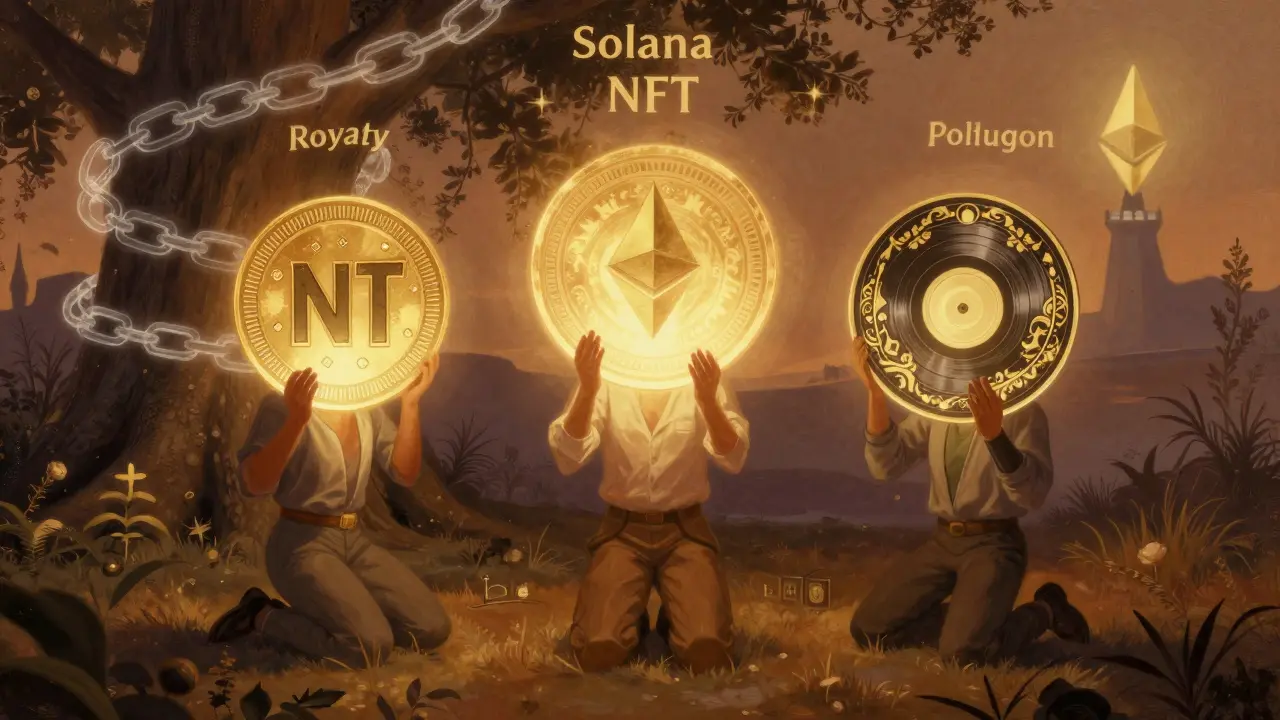
It’s not all Ethereum anymore. In 2025, the music NFT space runs on three chains:
- Ethereum - Still the leader, handling 62% of transactions. It’s secure and widely supported, but gas fees average $1.20 per transaction. That’s too high for small sales.
- Solana - Growing fast at 23% market share. Fees are under $0.01. Artists who sell $5 NFTs prefer this because they don’t lose half their profit to fees.
- Polygon - At 15%, it’s the quiet workhorse. Built on Ethereum but with near-zero costs. Platforms like Audius and Sound.xyz use it to make NFT drops easy for everyday fans.
Artists who care about accessibility are switching to Polygon or Solana. Those chasing prestige still use Ethereum. The choice isn’t about tech-it’s about who you’re trying to reach.
Real Artists, Real Results
Some artists have turned NFTs into sustainable careers.
3LAU, an electronic producer, made $11.7 million from his 2021 NFT album “Ultraviolet.” But what’s more impressive is what he does now: he still distributes quarterly royalty payments to NFT holders through smart contracts. That’s not a one-time sale-it’s an ongoing relationship.
Bandcamp, long known for supporting indie artists, integrated NFTs in late 2024. Since then, artists using both Bandcamp and NFTs have seen a 34% increase in revenue per user. Why? Because fans who buy NFTs don’t just stream-they invest. They share. They tell friends.
On the flip side, not every project works. Lil Pump’s 2022 NFT drop promised exclusive content, merch, and concert access. None of it happened. A class-action lawsuit followed, and he settled for $1.2 million. The lesson? If you promise something, deliver it. Blockchain doesn’t excuse bad faith.
Why Fans Still Don’t Get It (And How That’s Changing)
Here’s the hard truth: only 15% of music listeners own cryptocurrency. That’s a huge barrier. Most fans don’t know how to set up a MetaMask wallet. They get scared by “gas fees” or “private keys.”
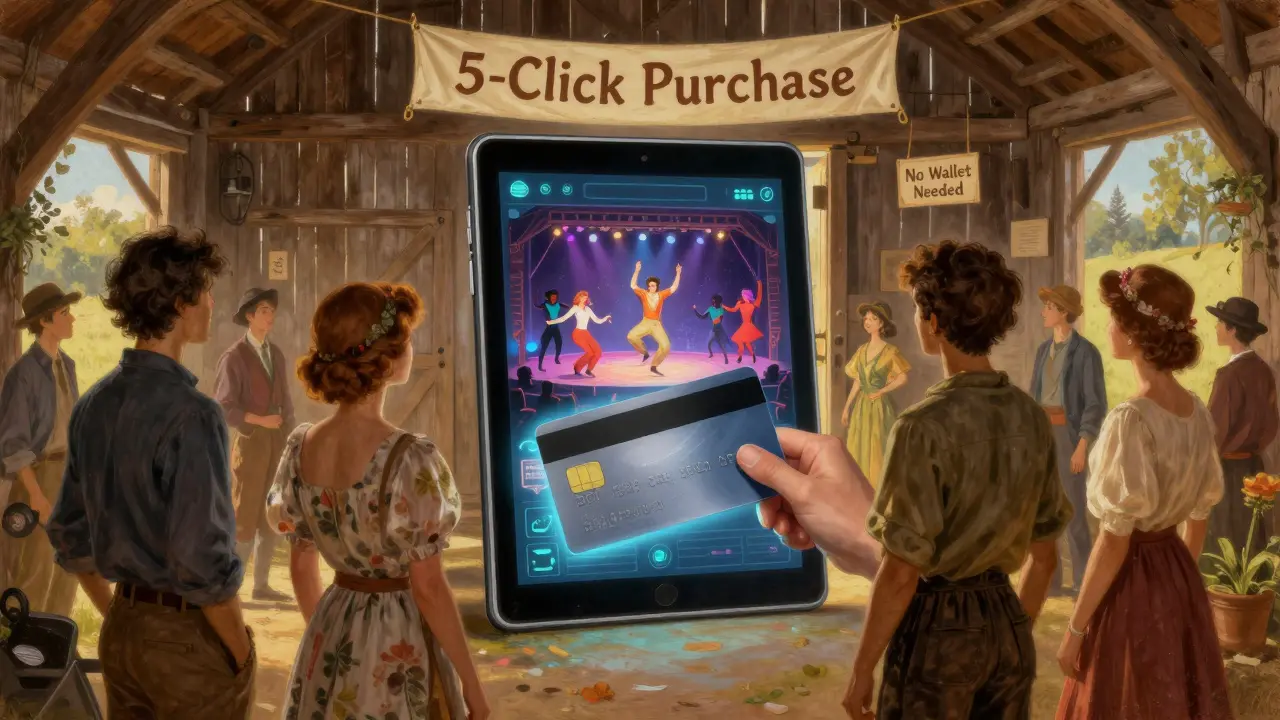
But platforms are fixing this. Sound.xyz now lets you buy an NFT with a credit card. Royal has a “try before you buy” demo. Audius lets you stream music for free and only requires a wallet if you want to earn royalties.
By 2026, the goal is a five-click purchase. No wallet setup. No crypto jargon. Just click “Buy Now” and get your song, your ticket, your share. That’s the next big leap.
The Big Challenges Still Left
Despite progress, three problems won’t go away:
- Copyright mess - Only 41% of music NFTs correctly document who owns what rights. A song might have multiple writers, producers, sample clearances. If one person mints an NFT without permission, lawsuits follow. The U.S. Copyright Office now requires platforms to verify ownership before minting.
- Tax confusion - The IRS treats NFT sales as barter transactions. If you sell an NFT for $500, you owe taxes on that $500-even if you reinvest it. Most artists don’t know this until April 15.
- Regulation - The EU’s MiCA framework gives some clarity. The U.S. has 63 pending bills. No one knows what will stick. Artists are stuck in legal limbo.
And then there’s the environmental myth. Ethereum’s 2022 Merge cut its energy use by 99.95%. Today, one music NFT on Polygon uses less power than a single Google search. The green argument doesn’t hold anymore.
What’s Next? The Road to 2027
The future isn’t about NFTs as standalone products. It’s about integration.
- AI personalization - Sony’s “Dream Machine” creates custom album art based on your listening habits. Your NFT isn’t just a song-it’s made for you.
- Metaverse concerts - Fortnite hosted 120 virtual concerts in 2024, pulling in $47 million in NFT ticket sales. The next big tour might not have a physical venue.
- Spotify + NFTs - Spotify’s 2025 partnership with Polygon lets your streaming history unlock NFT perks. If you’ve played a song 100 times, you get early access to its NFT drop.
- Industry standards - The Music Blockchain Alliance is building a universal royalty protocol. By Q2 2026, every platform should speak the same language.
The goal isn’t to replace Spotify. It’s to give artists a way to earn from fans who actually care. NFTs won’t make everyone rich. But they’re giving independent artists a real shot for the first time in decades.
Are music NFTs still worth buying in 2026?
Yes-if you’re buying for utility, not speculation. NFTs that give you royalty shares, concert access, or exclusive content are still valuable. NFTs that are just JPEGs with a song attached? Those are mostly dead. Focus on platforms like Royal, Opulous, or Sound.xyz that offer clear, trackable benefits.
Can I make money just by buying music NFTs?
You can, but it’s not easy. Royalty NFTs can generate 8-12% annual returns based on streaming numbers. But those returns depend on the song’s popularity. If the artist doesn’t promote it, the NFT won’t earn. Treat it like investing in a small business-not a lottery ticket.
Do I need a crypto wallet to buy music NFTs?
Not anymore. Platforms like Royal and Sound.xyz now let you buy NFTs with a credit card. Your wallet is created for you behind the scenes. You’ll still need to log in with an email, but you don’t need to understand blockchain to get started.
What happens if an artist deletes their NFT?
Nothing. The NFT lives on the blockchain forever. Even if the artist deletes their website or removes the file from their server, the ownership record stays. However, if the music file itself was hosted on a centralized server (not decentralized storage), it might disappear. Always check if the NFT uses IPFS or Arweave for permanent storage.
Are music NFTs better than streaming?
For artists? Absolutely. NFTs let them keep 70-90% of revenue. Streaming pays 13%. For fans? It depends. Streaming gives you access to millions of songs. NFTs give you access to a few, but with ownership, perks, and direct support. They’re not replacements-they’re complements.
So let me get this straight - we’re celebrating NFTs like they’re the second coming of the printing press but forget that 85% of fans still can’t tell the difference between a blockchain and a breakfast sandwich? This isn’t revolution - it’s just new packaging for the same old hustle. Artists deserve better than this crypto glitter on a turd.
Honestly? I love how this is turning music into something more personal. I bought a royalty NFT from a tiny indie artist last year - didn’t cost much, but now I feel like I’m part of her journey. She sent me a voice note thanking me. That’s the magic. Not the price tag. The connection. 🌟
u think nfts are fixin shit? bro the whole system is still rigged. 1% of artists get rich. rest get scammed by platforms that take 15% 'fee' then say 'its decentralized!' lmao. blockchain dont fix greed. it just makes it look fancy. #nftscam
The shift from Ethereum to Polygon/Solana is a non-trivial infrastructural optimization - especially when considering gas fee elasticity and transaction throughput in low-value microtransactions. The UX layer is still fragmented, but the protocol-level efficiency gains are statistically significant for direct-to-fan monetization models.
I just want to say - if you're an artist reading this, please don't feel pressured to go NFT. If your heart isn't in it, don't do it. But if you're excited about connecting with fans in a new way? Go for it. The tech is just a tool. The love is what matters. 💙
Let’s be honest - if you’re not minting on Ethereum mainnet with a 1/10000 supply and a 12% secondary royalty, you’re not even playing the game. Polygon? Please. That’s the equivalent of selling vinyl on eBay. Where’s the prestige? Where’s the exclusivity? The real collectors don’t care about ‘accessibility.’ They care about legacy.
Who’s really behind this? Big Tech + Wall Street. They want you to think you’re ‘owning’ something, but the metadata is hosted on AWS. The smart contracts are audited by firms that also advise the labels. This isn’t decentralization - it’s rebranding. The blockchain is just a shiny new ledger for the same corporate machine. Wake up.
So Lil Pump got sued… and yet 3LAU is still paying royalties quarterly? That’s the difference between a con artist and someone who actually believes in the model. One’s a scam. The other’s a business. Funny how the same tech can hold both.
You think fans care about ‘utility’? Please. They care about feeling special. They want to be the one who ‘got in early.’ That’s why collectibles still sell. That’s why people pay $6,000 for a JPEG. It’s not about the music - it’s about status. And if you deny that, you’re just pretending you don’t live in a capitalist hellscape.
In Nigeria, we’ve been sharing music through WhatsApp and USB drives for decades. NFTs are just the latest Western iteration of the same impulse - to own, to share, to be recognized. The medium changes. The human need doesn’t. I’m curious how this evolves in non-Western markets. Will we see Yoruba drum samples minted on Arweave? I hope so.
NFTs are dumb but also kind of cool? idk man. artists make money. fans get stuff. sounds good. why overthink it? just click buy
‘Buy with a credit card’? So they just turned crypto into another subscription service. Congratulations, you’ve made the revolution… boring.
all this talk about royalties but nobody talks about how most songs never make 100 streams. so your 8% return is $0.02. this is just gambling with extra steps.
Let’s not confuse utility with marketing. Royalty NFTs are essentially equity crowdfunding with a side of FOMO. The smart contracts don’t magically fix broken artist-label dynamics - they just shift the burden to the fan. If you’re not an accredited investor, you’re not an investor - you’re a donor.
This is the most honest breakdown of music NFTs I’ve seen. The real win isn’t the money - it’s the autonomy. Artists aren’t begging for playlist placements anymore. They’re building tribes. And tribes don’t just stream - they show up. They show out. They show love. That’s priceless. Keep going, indie creators. You’re doing something real.
I bought my first music NFT last month. Didn’t even know what a wallet was. Just clicked ‘buy now’ with my card. Got the song, a behind-the-scenes video, and a thank you note. Felt like I was part of something. Still don’t get all the tech stuff… but I get the feeling. That’s enough for me. 🎧❤️
Oh wow, ‘Spotify + NFTs’ - because nothing says ‘freedom for artists’ like letting the same corporation that pays 13.3% now gatekeep your NFT access. How poetic. Next, they’ll sell you a ‘verified fan’ badge so you can pay extra to hear your own favorite song. Capitalism: the gift that keeps on giving.