Russia Crypto Mining Compliance Checker
If you're thinking about mining cryptocurrency in Russia in 2025, you need to know one thing upfront: it's not illegal-but it's tightly controlled. The Russian government didn't ban crypto mining. Instead, it built a system to monitor, tax, and limit it. And if you don't follow the rules, you could face fines up to 2 million rubles-or have your equipment shut off remotely while you sleep.
What’s Legal and What’s Not
You can legally mine Bitcoin, Ethereum, or any other cryptocurrency in Russia-but only if you register. Since January 1, 2025, all mining operations above 6,000 kWh per month must be registered with the Federal Tax Service. That’s roughly the energy used by a small factory running 24/7. If you're mining at home with a few rigs and your monthly usage stays under that threshold, you don’t need to register. But you still owe taxes.Profits from mining are taxed at 15%. This rule kicked in in November 2024. It doesn’t matter if you’re an individual or a company-you pay. And if you don’t report your earnings? The penalty is steep: up to 20% of unreported income, plus back taxes and interest. The government already has tools to track this. All imported mining hardware must be labeled and entered into a national registry. They know what you own, where it’s plugged in, and how much power it uses.
Geographic Bans: Where You Can’t Mine
Not all of Russia is open for mining. Ten regions have a full ban that runs through March 15, 2031. These include Dagestan, Ingushetia, Kabardino-Balkaria, Karachay-Cherkessia, North Ossetia, Chechnya, and the occupied Ukrainian territories of Donetsk, Lugansk, Zaporizhzhia, and Kherson. The government says these areas have chronic energy shortages and can’t afford to divert power to miners.Three Siberian regions-Irkutsk, Buryatia, and Zabaikalsky-face seasonal bans. From November 15 to March 15 each year, mining is completely shut down. Why? Winter. Heating demands spike, and the grid can’t handle both homes and rigs running at full power. These bans started in January 2025 and will repeat every winter until at least 2031. If you’re planning to set up a mining farm in Siberia, you’ll need to plan for six months of downtime every year.
Power Shutdowns: The Real Threat
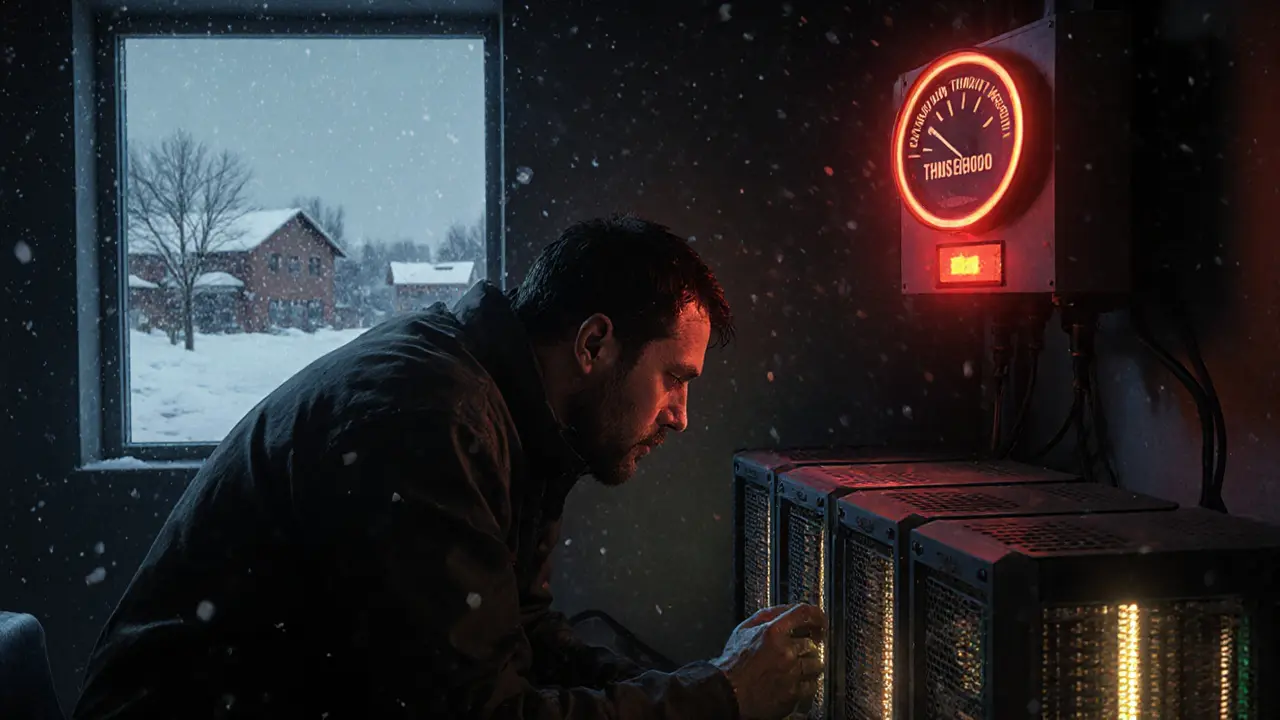
The most dangerous part of Russia’s crypto mining rules isn’t the fine-it’s the remote kill switch. Mining operations are classified as "fourth category" electricity consumers. That’s the lowest priority on the grid. When demand surges-during cold snaps, heatwaves, or industrial peaks-the government can instantly cut power to mining facilities without warning.There’s no appeal. No notice. No backup generator will save you. The system is designed to protect hospitals, schools, and residential buildings first. One miner in Krasnoyarsk lost over $80,000 in Bitcoin mining revenue in a single night when his farm was shut off during a regional energy crisis. He hadn’t registered his equipment. That’s the reality: even if you’re legal, you’re still expendable when the grid gets stressed.
Registration and Compliance: The 30% Problem
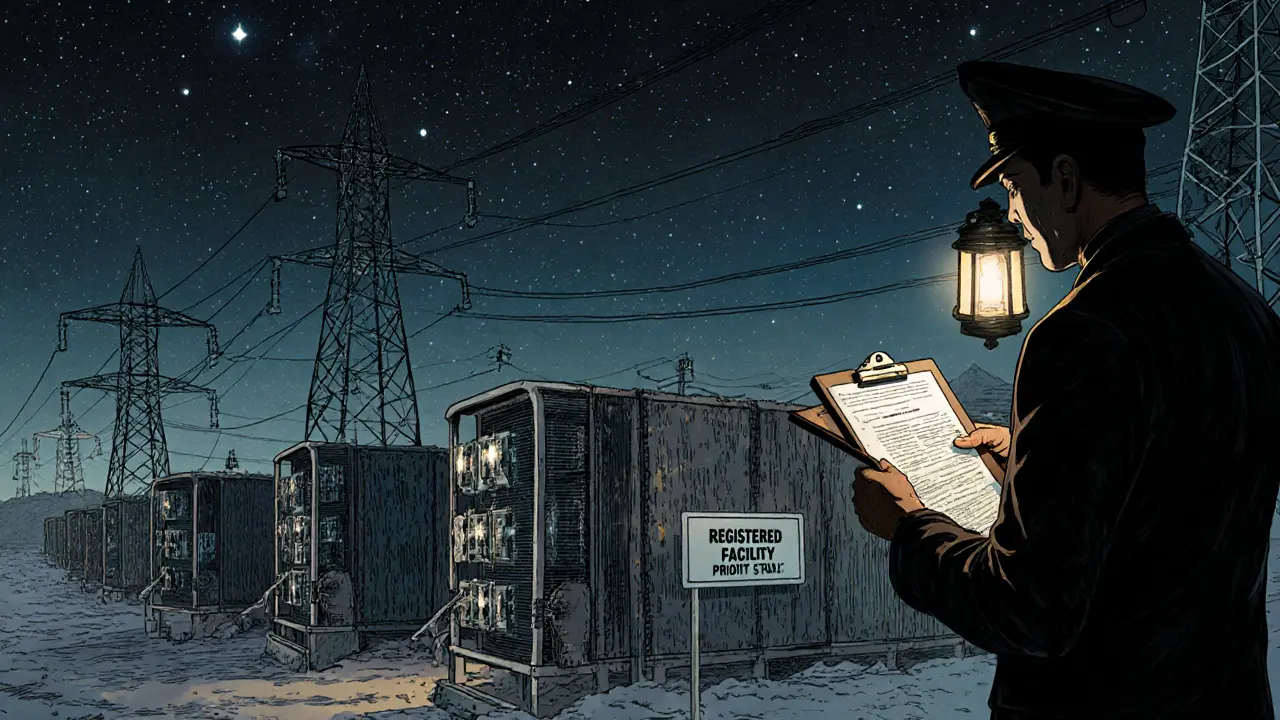
Here’s the catch: most miners aren’t complying. As of mid-2025, only about 30% of active mining operations in Russia are registered with the Federal Tax Service. That means 7 out of 10 miners are operating illegally-and they know it. The government admits this. Deputy Finance Minister Ivan Chebeskov said at the St. Petersburg Economic Forum: "Another two-thirds need to be cleaned up and entered into the register."The problem isn’t just ignorance. Many miners fear being tracked. Others think they can fly under the radar. But the government is catching up. The equipment registry now includes serial numbers, IP addresses of mining rigs, and power consumption logs. Authorities are cross-referencing utility bills with mining hardware imports. If your electricity bill suddenly spikes and you’re not registered? You’re flagged.
Penalties are getting harsher. Right now, fines for illegal mining range from 200,000 to 2 million rubles. But officials are pushing to make the maximum fine permanent. They’re also considering mandatory equipment confiscation. If you’re caught mining without registration, they can seize your ASICs and GPUs-and you won’t get them back.
What About Buying and Selling Crypto?
Mining is one thing. Spending crypto is another. In Russia, you can legally own Bitcoin, Ethereum, or any other digital asset. You can trade them on exchanges. You can even hold them as an investment. But you can’t use them to pay for groceries, rent, or services. The ruble is the only legal tender. If you try to pay a supplier in Bitcoin, it’s considered a violation of currency laws.Transactions over 600,000 rubles must be reported to tax authorities. That includes crypto sales, mining payouts, or peer-to-peer trades. The government tracks these through bank reporting systems and exchange compliance data. If you sell $10,000 worth of Bitcoin and don’t report it? You’re looking at fines, audits, and possibly criminal charges.
Why Is Russia Doing This?
Russia isn’t trying to kill crypto mining. It’s trying to control it. The country has cheap electricity, cold winters, and a large pool of tech-savvy workers. Mining is a way to turn those advantages into hard currency. The government wants to tax it, track it, and use it to strengthen the economy-without letting it destabilize the power grid or undermine the ruble.They’ve seen what happened in Kazakhstan and Iran: miners flooded in during energy crises, drained the grid, and caused blackouts. Russia doesn’t want that. So they created a system where mining is allowed-but only if it doesn’t interfere with daily life. It’s a trade-off: you get to mine, but you give up your autonomy.
Who’s Still Mining?
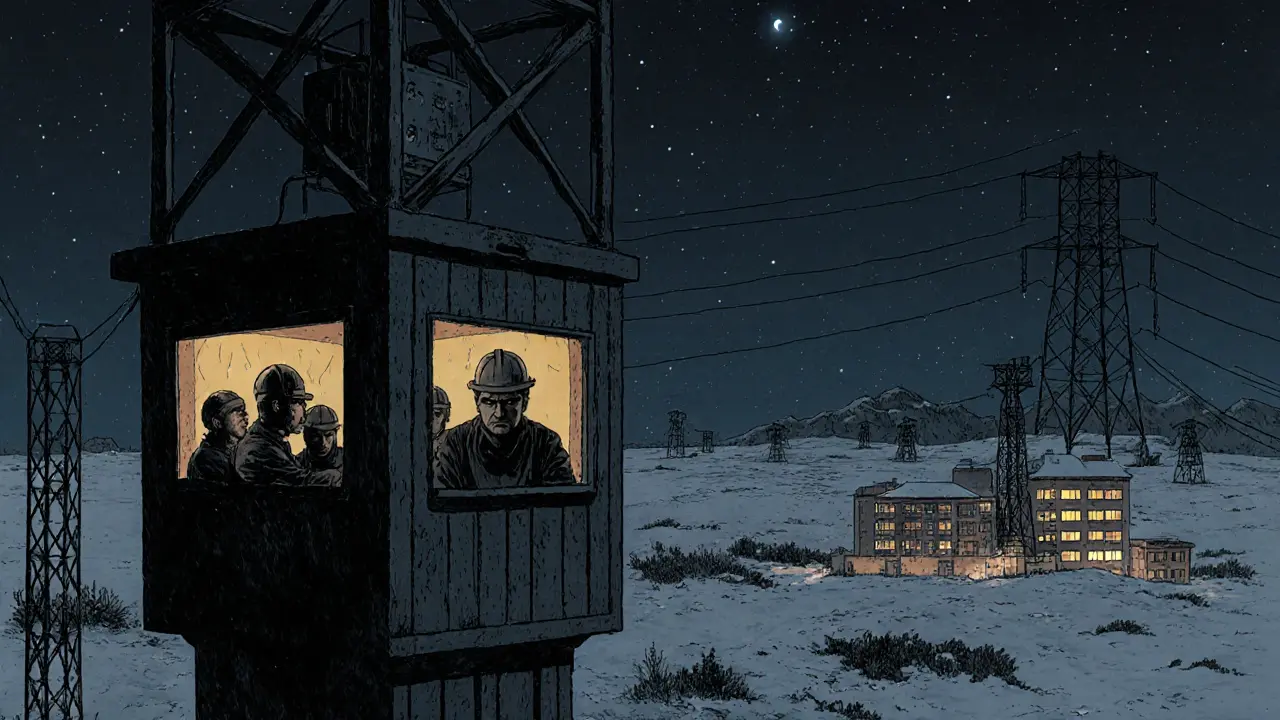
Despite the restrictions, mining is growing. Demand for industrial-scale rigs tripled in Q4 2024. Large operators are moving into regions with stable power and legal access-like Altai Krai, Omsk, and Krasnodar. Some are even building their own power plants to avoid grid dependency. Others are partnering with state-owned energy companies to get priority access.Individual miners are harder to track. Many are using small rigs in basements or garages, staying under the 6,000 kWh limit. But even they’re not safe. If their electricity usage spikes and they’re not registered, they can still be fined. The government doesn’t need proof of intent-just proof of usage.
What Should You Do?
If you’re considering mining in Russia:- Calculate your monthly power usage. If it’s under 6,000 kWh, you don’t need to register-but still report profits.
- Never mine in the banned regions. It’s not worth the risk.
- Register your equipment. Even if you think you’re safe, the registry is growing every month.
- Use a licensed Russian exchange to convert crypto to rubles. Avoid peer-to-peer trades over 600,000 rubles.
- Don’t rely on backup generators. They’re expensive, noisy, and won’t save you if the grid shuts you off remotely.
- Keep records. Save receipts for hardware, power bills, and crypto sales. You’ll need them for taxes.
There’s money to be made-but only if you play by the rules. And the rules are changing fast. What’s allowed today might be banned next winter.
Future Outlook
Russia’s crypto mining framework is one of the most detailed in the world. It’s not just about taxes or bans-it’s about control. The government has built a system that can track every rig, shut down every farm, and tax every dollar. And they’re not done yet.Expect more enforcement in 2026. More audits. More fines. Possibly even mandatory mining licenses. The six-year timeline for regional bans gives them time to monitor energy infrastructure. If power supply improves, some restrictions might ease. If not, they’ll stay. For now, mining in Russia is a high-risk, high-reward game. And the house always has the final switch.
Is crypto mining legal in Russia in 2025?
Yes, but only if you register your equipment with the Federal Tax Service and pay a 15% tax on profits. Mining under 6,000 kWh per month doesn’t require registration, but you still must report earnings. Unregistered mining is illegal and punishable by fines up to 2 million rubles.
Which regions in Russia ban crypto mining?
Ten regions have full bans until March 15, 2031: Dagestan, Ingushetia, Kabardino-Balkaria, Karachay-Cherkessia, North Ossetia, Chechnya, Donetsk, Lugansk, Zaporizhzhia, and Kherson. Three Siberian regions-Irkutsk, Buryatia, and Zabaikalsky-ban mining seasonally from November 15 to March 15 each year.
Can the Russian government turn off my mining rig?
Yes. All registered and unregistered mining operations are classified as "fourth category" electricity consumers, meaning they have the lowest priority on the national grid. During power shortages, authorities can remotely shut down mining equipment without notice to protect homes, hospitals, and critical infrastructure.
Do I need to pay taxes on crypto mining profits in Russia?
Yes. Since November 2024, all mining profits are taxed at 15%, regardless of whether you’re an individual or a business. You must report earnings to the Federal Tax Service. Failure to do so can result in penalties of up to 20% of unreported income, plus back taxes and interest.
Can I use cryptocurrency to pay for goods in Russia?
No. While owning and trading crypto is legal, using it to pay for goods or services is prohibited. The ruble is the only legal tender. Any transaction using crypto for payments is considered a violation of currency laws and may trigger tax audits or fines.
What happens if I get caught mining without registering?
You’ll face a fine between 200,000 and 2 million rubles. Authorities can also seize your mining equipment. The government tracks hardware through a national registry that logs serial numbers and power usage. Even if you’re using small rigs, if your electricity bill spikes and you’re not registered, you’re at risk.
Is it worth mining crypto in Russia right now?
It can be, but only if you’re prepared for the risks. Electricity is cheap, and the market is growing. But you’re subject to seasonal bans, remote shutdowns, and strict compliance rules. Only 30% of miners are registered, meaning most are operating illegally. If you’re not ready to follow the rules, the cost of getting caught far outweighs the potential profit.
So, mining is legal if you register and pay taxes? That’s actually reasonable. I expected worse. The 15% tax isn’t crazy, and the 6,000 kWh threshold makes sense for home miners. Just document everything, and you’re fine.
They’re not just tracking power usage-they’re building a digital surveillance state under the guise of energy policy. Every ASIC has a serial number? IP logs? That’s not regulation-it’s asset seizure prep. They’ll confiscate your rigs, then sell them to state-backed mining ops. This isn’t about taxes-it’s about control. You think you’re playing the game? You’re the pawn.
It's fascinating how Russia is balancing economic opportunity with national infrastructure stability. Many countries struggle with this tension. The fact that they've created clear, structured rules-even with strict enforcement-shows a level of governance rarely seen in crypto policy. This could serve as a model for other nations facing similar grid pressures.
So you can mine if you're quiet and don't use too much power. That's kind of wild. But also kind of fair. I'd do it if I lived there.
Interesting system but what about the people in Siberia They work hard and still lose half the year to winter bans. No support no compensation just shut down. The government says it's for heating but who really benefits from this
Remote kill switch. 15% tax. Registration. This isn't crypto freedom. It's state-sanctioned slavery with a tax ID. 💸⚡
So Russia built a prison with electricity and called it a policy. You can mine as long as you’re obedient, taxed, and never complain. Meanwhile the real winners are the state-owned energy companies who get to charge miners premium rates and laugh all the way to the bank. Brilliant. Just brilliant.
It’s wild how much this mirrors the early days of oil regulation-control the resource, tax the output, punish the rogue operators. Russia’s just applying old-school resource management to a new tech. Not perfect, but at least they’re trying to manage it instead of just banning it. Still, that kill switch is terrifying.
Man I wish the US had this kind of clarity. Here you get fined for not filing a 1099 or you get audited for using crypto to buy coffee. In Russia at least you know the rules. And if you’re smart? You play it clean. 🤝
The fact that they’re tracking hardware imports and power consumption shows real administrative capacity. Most governments just throw up their hands and say 'crypto is too hard to regulate.' Russia didn’t. They built a system. Even if it’s strict, it’s functional. That deserves respect.
Why are we even talking about this like its some kind of compromise Russia is not letting you mine they are letting you exist under their control. They own the grid they own the power they own your rigs. You're not a miner you're a tenant. And tenants don't get to vote on the rent
This is exactly what happens when you let amateurs dabble in something they don’t understand. The 30% registration rate? That’s not ignorance-it’s defiance. And defiance in the face of clear law? That’s not rebellion. It’s recklessness. These miners are asking to be punished.
So… mining’s legal but kinda not? Sounds like a lot of paperwork for a hobby.
What about people who just want to learn? If you’re testing a single rig at home under 6kWh, you’re still on the hook for taxes? That’s a barrier for newbies. Maybe they should have a ‘learning exemption’ for under 1kWh.
Wait so if you have 3 rigs at home and your bill goes up 500 bucks a month you get flagged? Thats kinda scary. I hope they have a grace period or something. Also i think they misspelled ASICs in the article lol
Honestly this feels like the most honest crypto policy I’ve seen. No bans, no crypto cash grabs, no fake ‘decentralized’ talk. Just: here’s the grid, here’s the tax, here’s what happens if you break the rules. If you can handle it, go for it. If not, don’t. Simple.
Imagine waking up to a dead rig because the government decided your ASICs were less important than your neighbor’s heater. That’s not regulation-that’s a horror movie. But hey, at least you got cheap power while it lasted. 💀⚡
Only 30 registered That’s the real story. Everyone thinks they’re smart enough to hide. They’re not. The registry is already eating them alive. You think you’re underground? You’re just a name on a spreadsheet waiting for a letter