
The U.S. government has launched its biggest crackdown yet on North Korea’s cryptocurrency theft operations - and it’s working. In 2025 alone, North Korean hackers stole over $2.1 billion in crypto, according to TRM Labs. That’s more than the entire GDP of some small countries. And it’s not random hacking. It’s a state-run machine, fueled by fake IT workers, stolen identities, and a global network of money launderers. The Office of Foreign Assets Control (OFAC) responded with a wave of sanctions targeting the people, companies, and crypto wallets behind it all.
How North Korea Steals Billions Using Fake IT Workers
North Korea doesn’t break into exchanges with malware. Instead, it hires people - or rather, pretends to. Thousands of North Korean workers, posing as freelancers or remote employees, are embedded in U.S. and global tech companies, especially in the crypto and Web3 space. They apply for jobs on platforms like Freelancer, RemoteHub, and WorkSpace.ru. Their resumes? Fake. Their GitHub profiles? Stolen from real developers. Their identities? Entirely manufactured. These workers aren’t just writing code. They’re scouting. They’re learning how companies secure their wallets, what tools they use, and where the weak spots are. Once they’ve gathered enough intel, they strike - stealing private keys, draining hot wallets, or planting backdoors. Some even demand ransoms in crypto, threatening to leak proprietary data unless they’re paid. One of the most common aliases used? "Joshua Palmer." Another? "Alex Hong." Both names have appeared across dozens of fraudulent profiles on LinkedIn, Upwork, and even internal company directories. Security researchers track these operations under names like Famous Chollima, Jasper Sleet, and UNC5267. All of them link back to the Workers’ Party of Korea.The Money Trail: From Crypto to Cash
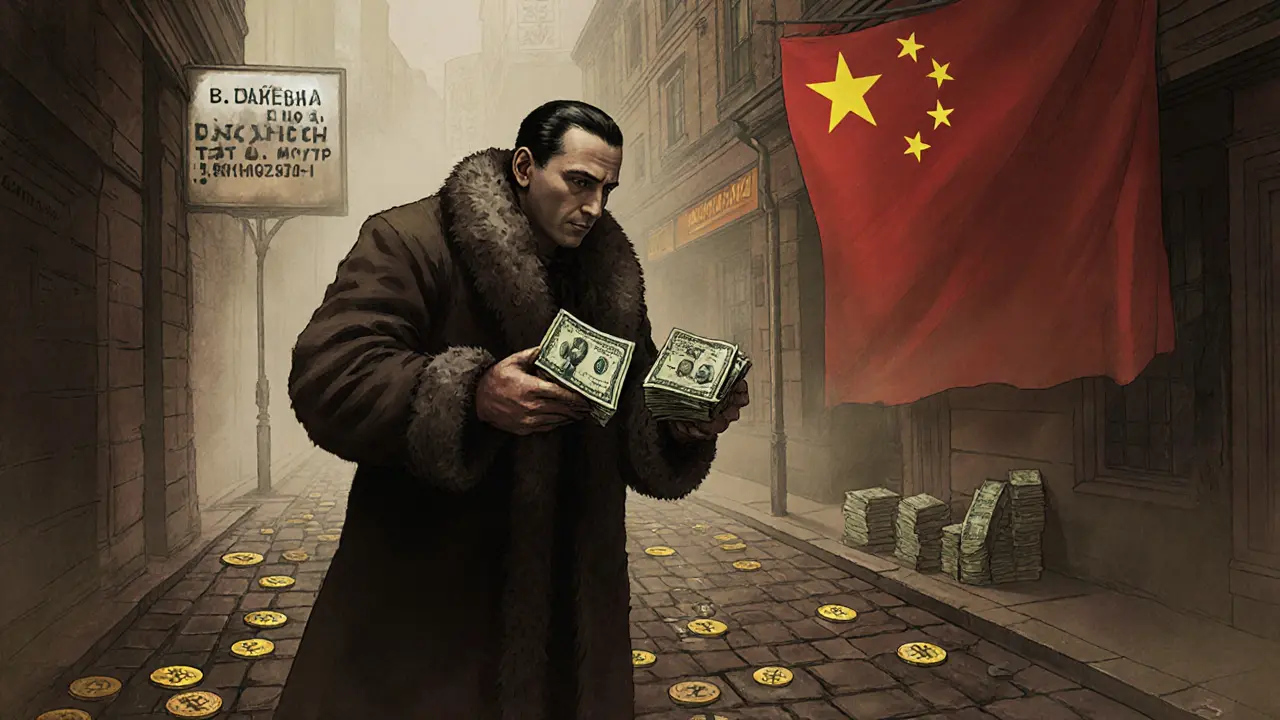
The stolen crypto doesn’t stay on the blockchain. It gets laundered. And it’s messy. Hackers use a mix of centralized exchanges, self-hosted wallets, and over-the-counter (OTC) brokers to convert digital assets into cash. They fragment funds across hundreds of wallets, making it harder to trace. Then, they move the money through intermediaries in Russia, the UAE, and China. One key player is Vitaliy Sergeyevich Andreyev, a Russian national sanctioned by OFAC in August 2025. He helped move nearly $600,000 in crypto for North Korean operative Kim Ung Sun - converting it into physical U.S. dollars. That cash? Likely funneled into weapons programs. Another entity, Shenyang Geumpungri Network Technology Co., Ltd, operated out of China and acted as a front for IT worker recruitment and payment processing. In June 2025, the Department of Justice filed a civil forfeiture complaint seeking over $7.7 million in seized assets - including USDC, ETH, and even NFTs - tied to this network. The wallets involved showed clear patterns: small, frequent transfers to obscure addresses, then sudden large withdrawals to sanctioned exchanges. The FBI and Homeland Security Investigations have since frozen dozens of these wallets and seized the underlying assets.Who’s Being Sanctioned - And Why
OFAC doesn’t just slap names on a list. They go after the entire pipeline. In 2025, they targeted:- Kim Ung Sun - A North Korean national directly involved in converting crypto to cash for weapons funding.
- Vitaliy Sergeyevich Andreyev - A Russian facilitator who helped move funds through shell companies.
- Shenyang Geumpungri Network Technology Co., Ltd - A China-based company that recruited and paid North Korean IT workers.
- Korea Sinjin Trading Corporation - A front for smuggling and financial operations.
- Korea Sobaeksu Trading Company - A new addition in October 2025, linked to sanctions evasion.
How This Affects U.S. Companies
If you run a crypto startup or a remote tech team, you’re a target. North Korean operatives don’t need to hack your network. They just need to get hired. And because so many companies rely on freelance platforms and don’t do deep background checks, they’re easy to slip into. The damage isn’t just financial. It’s reputational. One company in Austin lost $1.2 million in ETH after a fake developer with a forged GitHub profile gained access to their treasury wallet. Another in San Francisco had its internal codebase exfiltrated and held for ransom. The attackers demanded 50 BTC - and threatened to publish proprietary AI training data if they didn’t pay. The Treasury Department warns: "These schemes are not just theft - they’re espionage with a price tag." And they’re costing American businesses millions.The Global Response - And What’s Next
This isn’t just a U.S. problem. Japan and South Korea issued joint statements in August 2025, calling for coordinated action. The FBI, DOJ, DHS, and State Department are working with international partners to track IP addresses, freeze bank accounts, and shut down OTC brokers that knowingly handle DPRK funds. One broker in Dubai was sanctioned in late 2024 for moving $18 million in crypto linked to North Korea. Another in Moscow was raided in September 2025 after investigators traced a series of transactions back to a sanctioned wallet. Blockchain analysis firms like TRM Labs are now monitoring over 1,200 crypto addresses tied to DPRK-linked activity. They’re looking for behavioral patterns - like repeated use of the same wallet prefixes, or transfers that happen right after payroll cycles in U.S. companies. It’s not perfect, but it’s getting better.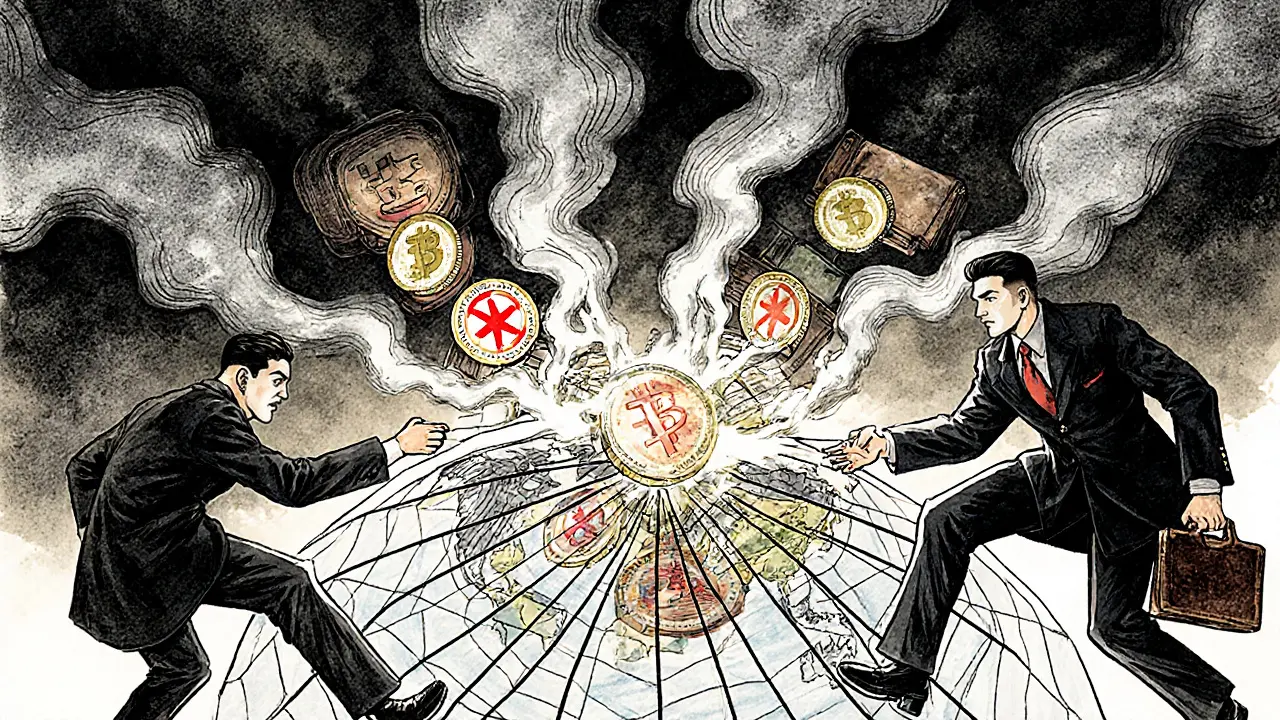
What Businesses Should Do Now
If you’re hiring remote developers - especially from freelance platforms - here’s what you need to do:- Verify identities - Don’t just check LinkedIn. Cross-reference GitHub commits, past employment, and professional references. Look for inconsistencies.
- Limit wallet access - Never give freelance workers access to production wallets. Use multi-sig and role-based permissions.
- Monitor for red flags - Workers who ask for payment in stablecoins, refuse video interviews, or have no verifiable past work? Walk away.
- Screen against OFAC lists - Use free tools like OFAC’s Sanctions List Search. Check names, addresses, and even email domains.
- Train your team - Phishing and fake job offers are the #1 entry point. Make sure your HR and engineering teams know the signs.
It’s wild to think that someone with a fake GitHub profile could cost a company over a million dollars. I’ve seen these profiles on Upwork - they look so real, with perfect grammar and staged project histories. It’s like digital impersonation on a corporate scale.
Companies need to treat remote hires like high-security clearances. Not just background checks - but behavioral audits, code review trails, and mandatory video interviews with third-party observers. This isn’t just IT security - it’s national infrastructure vulnerability.
This is why we need to stop treating crypto hiring like a gig economy free-for-all 🤯
Imagine hiring a ‘developer’ who’s actually a missile programmer in disguise. We’re not just losing money - we’re enabling regimes that want to burn the whole system down. Time to lock down those wallets and stop being so desperate for cheap labor.
fake news alert!! this whole thing is a distraction so the feds can justify more surveillance on normal people. who says these 'north korean hackers' even exist? maybe it's the NSA planting fake wallets to scare startups into buying their 'security solutions'.
and why is everyone so scared of a few guys on freelancer? sounds like corporate fear porn to me 😏
Let’s be real - this isn’t about crypto theft. It’s about America finally waking up to the fact that we’ve outsourced our national security to LinkedIn and Upwork.
Every time a company hires a ‘remote developer’ without a SSN check or a fingerprint scan, they’re literally handing a nuclear launch code to a regime that has no moral compass. If you’re not screening your devs against OFAC, you’re complicit. Period.
Interesting how the article frames this as a ‘state-run machine’ - but ignores the fact that the U.S. tech industry created the infrastructure that made this possible. Remote work, anonymous crypto payments, unverified freelance platforms - these weren’t accidents. They were features.
Now we’re surprised when the system gets weaponized? Classic.
People don’t realize how dangerous it is to trust a resume anymore. I’ve reviewed 300+ dev profiles in the last year - 12% had red flags. Ghost GitHub commits. Fake LinkedIn endorsements. One guy claimed he worked at Google for 5 years… but his first commit was 6 months ago.
It’s not paranoia. It’s pattern recognition. And if you’re not doing it, you’re the next target.
they always say 'trust but verify' but nobody verifies. i work at a startup and our cto just hired a guy from bangladesh who 'worked at meta' - no interview, no code test, just a paypal link. now our treasury wallet got drained. no one even noticed until the blockchain explorer pinged us.
we're all just waiting for the next blowup
This is the exact reason I started doing mandatory 30-minute live pair programming sessions with every new remote hire - even interns.
It’s not about testing their skills. It’s about confirming they’re real. No script. No pre-recorded video. Just a live screen share where they explain their own code. If they hesitate? Red flag.
One guy froze when I asked him to refactor a simple function. Turned out he was using a stolen profile from a guy in Seoul. He’d never touched a terminal before.
Yes. This is serious. We need to stop hiring people we don’t know. We need to check their names. We need to check their emails. We need to check their past jobs. We need to use multi-sig. We need to train our teams. We need to do this now.
It’s not hard. It’s just not done.
There is a profound irony here: we have built a global economy that prizes anonymity, decentralization, and frictionless access - and now we are being devoured by its own logic.
North Korea didn’t hack our systems. They exploited our faith in meritocracy. They weaponized our trust in the digital resume. They turned our ideals - open access, remote opportunity, global collaboration - into vectors of destruction.
This is not a cyberwarfare problem. It is a philosophical one. What do we value more: inclusion… or security?
And if we choose inclusion, are we prepared to pay the price in blood, in missiles, in lives?
OFAC’s list is a joke. They sanction names but leave the wallets open. And who’s to say these ‘North Korean’ actors aren’t just proxies for U.S. intel? Think about it - why are all the ‘sanctioned’ wallets suddenly frozen right after a crypto pump?
Also, ‘Joshua Palmer’? That’s a name from a 2008 indie film. This whole thing feels staged. Like a psyop to justify more blockchain surveillance.
They’re not stopping theft. They’re controlling the narrative.
We need to remember that behind every stolen wallet is a family in Pyongyang eating rice with salt because their government took their share.
This isn’t just about sanctions. It’s about justice. We can’t let our convenience become someone else’s weapon.
Let’s do better. Not because we’re afraid. But because we’re human.
i just hired a guy from ukraine for $15/hr. he’s great. i hope he’s not one of them. but how do i know?
in india we also have fake profiles everywhere. i once hired a guy who claimed to be from canada but his linkedin was full of bangalore addresses. same thing happening here. its not just north korea its global problem
no one checks anything anymore
Sanctions are symbolic. The real issue? The 87% of crypto startups that still allow single-sig wallets for contractors.
Fix the architecture. Not the names.
One cannot help but observe the profound dissonance between the rhetoric of global digital liberation and the grim reality of state-sponsored cyber predation.
What we are witnessing is not merely criminal activity, but a systemic failure of epistemic trust - a collapse in the foundational assumption that digital identities can be verified, that professional credentials can be authenticated, that remote collaboration is inherently benign.
When a nation-state weaponizes the very tools designed to empower individuals - freelance platforms, blockchain transparency, decentralized finance - we are not merely facing a security breach.
We are confronting the inversion of liberal modernity itself.
And yet, the response remains technocratic: freeze wallets, sanction names, issue press releases.
But who will audit the auditors? Who will verify the verification protocols? And when the next generation of AI-generated avatars, trained on thousands of real developers’ commits, infiltrates our core systems - will we even recognize the difference?
This is not a battle for crypto.
This is a battle for the soul of the digital age.