
People think hiding crypto in offshore accounts is a smart move. They believe blockchain’s anonymity protects them. But that’s a myth. Today, offshore crypto accounts aren’t hidden-they’re exposed. Every transaction leaves a trail. Every wallet address can be traced. And if you’re trying to avoid taxes, evade sanctions, or hide money from regulators, you’re not playing a game-you’re playing with fire.
How Offshore Crypto Accounts Get Traced
You don’t need to be a hacker to track crypto. Law enforcement uses tools that are already built into the blockchain itself. The blockchain is public. Every transfer is recorded forever. What changes isn’t the tech-it’s how smart people are at reading it. Take address clustering. This isn’t magic. It’s math. If you send Bitcoin from Wallet A to Wallet B, then later send from Wallet B to Wallet C, and Wallet C sends to an exchange you’ve used before, analysts link them all. One wallet isn’t anonymous. A group of wallets? Still not. They’re just parts of the same puzzle. Then there’s address reuse. People think using a new wallet for every transaction keeps them safe. But if you ever reuse an address-even once-you’ve given away your pattern. That one reused address becomes a fingerprint. Investigators look at who you sent money to, when, and how often. They build timelines. They find connections. And soon, what you thought was hidden becomes obvious. Dusting attacks are another trick. Someone sends you 0.00001 BTC-just enough to be ignored. You don’t notice. But when you later move that tiny amount to consolidate your funds, you reveal all your other wallets. Suddenly, your entire portfolio is visible. It’s like leaving a trail of breadcrumbs through a forest.What Happens When You Use Mixers or Tumblers
People turn to mixers like Tornado Cash or Blender.io because they think it hides their money. It doesn’t. It makes things worse. In August 2022, the U.S. Treasury sanctioned Tornado Cash. That didn’t just block the service-it made it illegal for any U.S. person to interact with it. Even if you didn’t know it was sanctioned. Even if you just sent a few dollars. You can still be fined. You can still be charged. Blender.io got hit the same way in May 2022 after it helped launder over $20 million stolen from the Ronin Bridge hack. The U.S. didn’t just freeze accounts-they went after the people who used it. And they didn’t stop there. They flagged every wallet that ever touched Blender.io. Now, any exchange that sees funds from those wallets will freeze them. Your money disappears. Your account gets flagged. Your name goes on a list. Mixers don’t erase your history. They just make it longer. And longer means more data for investigators to follow. Every time you mix, you create a new transaction pattern. And those patterns? They’re predictable. Algorithms spot them instantly.How Exchanges and Regulators Work Together
Crypto exchanges aren’t just platforms-they’re gatekeepers. Under the Bank Secrecy Act, any exchange operating in the U.S. must register with FinCEN. They must know who you are. They must track your transactions. And they must report anything suspicious. If you send crypto from an offshore wallet to a U.S.-based exchange, they’ll ask: Where did this come from? Did you declare it? Is this linked to a sanctioned entity? If you can’t answer, they freeze your funds. If you’ve used a mixer before? They’ll block you. If your wallet was ever flagged? You’re done. It’s not just the U.S. Australia’s AUSTRAC requires all crypto businesses to report suspicious activity. The EU has MiCA rules. The UK has FCA oversight. Even if your offshore account is in Panama or the Seychelles, if it ever touches a regulated exchange, you’re in the system. And exchanges don’t work alone. They share data. They use blockchain analytics firms like Chainalysis, Elliptic, and TRM Labs. These companies map out wallets, trace flows, and flag criminal behavior. They sell that data to governments. And governments use it to build cases.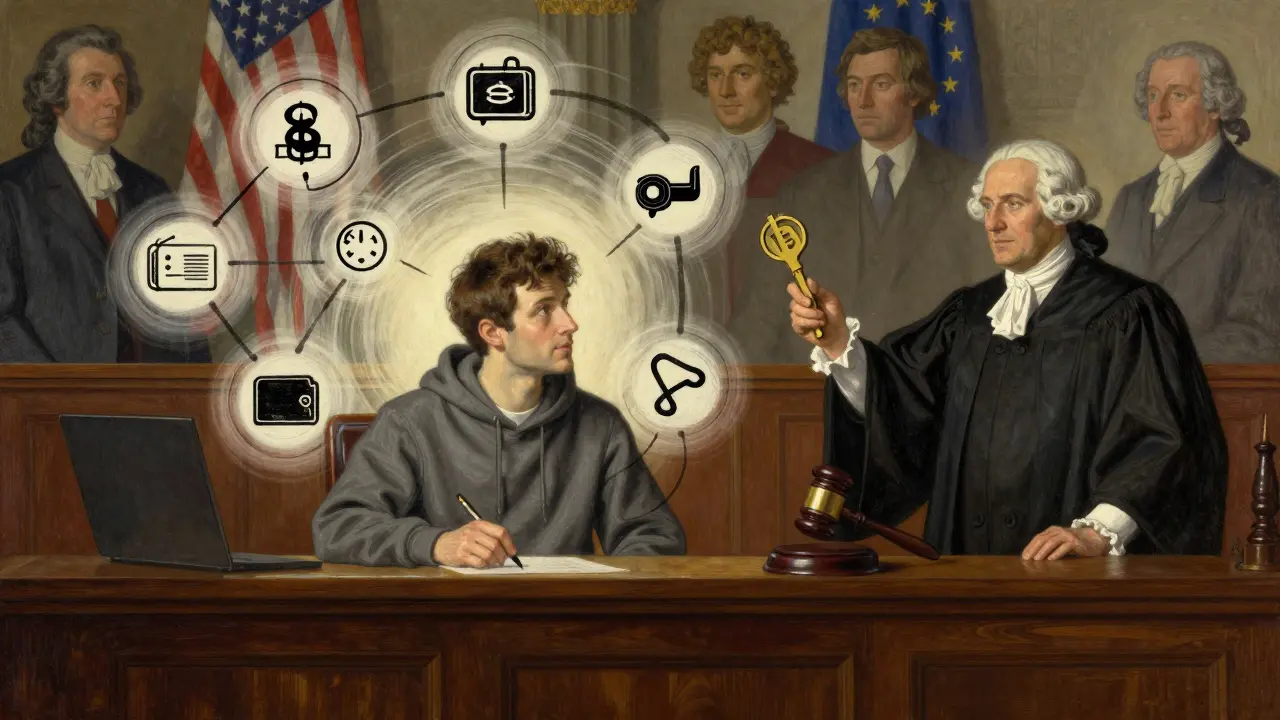
What You’re Really Risking: Fines, Jail, and Lost Assets
It’s not just about losing money. It’s about losing freedom. In 2023, a man in Texas was sentenced to 30 months in federal prison for using Tornado Cash to launder over $1 million in stolen crypto. He didn’t steal it. He just moved it. He knew it was risky. He did it anyway. He’s now in prison. Another case in California involved a crypto trader who hid $4.2 million in offshore wallets and didn’t report it to the IRS. He was fined $1.8 million-plus he had to pay back taxes, interest, and penalties. His crypto was seized. His bank accounts were frozen. His business collapsed. Asset forfeiture is real. The government doesn’t need to convict you of a crime to take your crypto. If they believe it’s linked to illegal activity, they can seize it. You have to prove it’s clean. And good luck doing that without records. Fines can run into millions. Prison sentences are climbing. And there’s no statute of limitations. The IRS and DOJ can come after you 10 years later. Your offshore account isn’t safe. It’s a time bomb.Why Privacy Coins Don’t Help Either
Monero, Zcash, and other privacy coins sound like the answer. But they’re not. Exchanges don’t list them. Why? Because regulators pressure them. If you hold Monero, you can’t easily cash out. You have to use unregulated platforms. And those platforms? They’re either scams or undercover sting operations. Even Monero’s privacy features are being cracked. Researchers have developed techniques to trace Monero transactions by analyzing timing, volume, and network behavior. It’s harder-but not impossible. And the more you use privacy coins, the more you draw attention. Regulators know you’re using them. And when they see Monero moving into a wallet linked to a known criminal address? They start digging. Hard.
The Real Risk: You’re Not the Only One
People think they’re clever. That they’re one of the few. But you’re not. Every day, hundreds of offshore crypto accounts get flagged. Every week, new enforcement actions are announced. The tools are better. The laws are tighter. The cooperation between countries is stronger. You think you’re hiding from the IRS? The IRS is already looking. You think you’re safe because you never used a U.S. exchange? Someone else did. And now your wallet is linked to theirs. You’re not invisible-you’re just part of a bigger network. The truth? Offshore crypto accounts aren’t a loophole. They’re a trap. The technology was built to be transparent. The rules were written to catch you. And the enforcement is no longer theoretical-it’s happening right now.What You Should Do Instead
If you hold crypto outside your home country, here’s what actually works:- Report it. File FBAR and Form 8938 if you’re a U.S. person. Disclose foreign holdings. Pay the taxes. It’s not fun-but it’s legal.
- Use only regulated exchanges. They’ll ask for ID. Give it. It’s the only way to stay clean.
- Keep records. Save every transaction. Save every receipt. If you’re ever audited, you’ll need proof.
- Don’t use mixers. Don’t use privacy coins unless you’re okay with being blocked from every major platform.
- Get professional advice. Talk to a tax attorney who knows crypto law. Don’t rely on Reddit or Telegram groups.
Let’s be real - offshore crypto isn’t a loophole, it’s a suicide note with a blockchain receipt. You think you’re slick using Tornado Cash? Nah. You’re just handing the feds a highlighter and saying ‘here, color in my face.’
The technical breakdown here is accurate and deeply necessary. Address clustering, dusting, and mixer tracking are not speculative - they’re standard forensic practice in crypto compliance. Every transaction is a data point, and regulators now have the AI to connect them faster than most people can type ‘I didn’t know.’
Blockchain’s transparency isn’t a bug - it’s the ontological condition of digital capital. We built this system on trustless verification, yet we still cling to the illusion of anonymity like it’s a security blanket. The real tragedy? We’re not being hunted by the state - we’re being hunted by the logic of our own architecture.
Why do Americans keep pretending they can outsmart the IRS? You think Panama is magic? The U.S. has treaties with 80% of those ‘offshore’ jurisdictions. You’re not hiding - you’re just making the IRS work harder before they take everything.
So let me get this straight… I’m supposed to send the IRS my crypto transactions like I’m mailing a Christmas card?? 🙄 Meanwhile, billionaires use Swiss trusts and nobody bats an eye. But me? I buy a couple of BTC and suddenly I’m a tax evader? Give me a break.
THEY’RE WATCHING YOU RIGHT NOW 😱 even if you’re not using an exchange… your phone’s GPS knows where you are when you open your wallet… and the NSA has a map of every BTC address tied to your wifi MAC address… they’ve had this since 2018… you’re already owned 💀
They say mixers are illegal but what about the banks? They move billions every day and nobody says a word… why is it only us small guys who get punished? This is all a setup to force us into the system… they want total control… they’re scared of decentralization… they know we’re onto them…
Compliance is freedom. Simple as that.
imagine being so scared of the govt you start using monero… then you realize no exchange will take it… so you trade on some sketchy site… then your funds vanish… then you realize the site was run by the feds… oops
This is such an important post. I’ve seen so many people in crypto communities downplay the risks - thinking they’re ‘just experimenting.’ But the reality is, these aren’t hypothetical penalties. People are losing homes, careers, and freedom over this. If you’re holding crypto offshore, please, talk to a real professional - not a Discord mod.
Thank you for writing this. I’ve spent years helping new crypto users avoid these traps, and it breaks my heart to see them fall for the ‘anonymous crypto’ myth. The truth is ugly, but it’s better than prison. Please share this with someone who needs to hear it.
Oh please. You think the government cares about your tiny crypto stash? They’re chasing drug cartels and ransomware gangs. You’re not a threat - you’re a distraction. This whole post is fearmongering dressed up as ‘education.’
While I appreciate the technical rigor of this analysis, I must respectfully contest the implicit moral absolutism. The presumption of guilt in the absence of due process - even in the context of regulatory compliance - risks normalizing a surveillance paradigm that undermines the very principles of liberty we claim to uphold.
I’ve been in crypto since 2015, and I’ve watched this exact pattern repeat: hype → anonymity fantasies → regulatory crackdown → people crying ‘they’re coming for us!’ The truth is, if you’re doing something legal, you have nothing to hide - and if you’re not, you’re not being targeted because you’re a crypto user. You’re being targeted because you broke the law. The blockchain didn’t trap you - your choices did.
It’s funny how people treat blockchain like it’s some kind of secret society. It’s the most transparent financial system ever created - and yet we still act like it’s a black box. Maybe the real problem isn’t regulation… it’s our refusal to grow up and take responsibility.
Chainalysis’s models are trained on U.S.-centric behavior patterns. In Nigeria, we use crypto differently - peer-to-peer, over WhatsApp, with local fiat bridges. The algorithms don’t understand our flows. Maybe the ‘exposed’ narrative is just Western-centric overreach.