
Real Estate Closing Cost Calculator
Calculate Your Savings
Compare traditional closing costs versus smart contract transactions
Typically $50-$200 depending on blockchain network
Traditional Total:
$0
Smart Contract Total:
$0
Potential Savings:
$0
Savings Percentage:
0%
Important: Smart contracts can reduce closing costs by up to 50% as mentioned in the article. Actual savings depend on your location and jurisdiction. Gas fees vary based on blockchain network congestion.
Imagine selling your house without a realtor, without stacks of paperwork, and without waiting weeks for the title to clear. All it takes is a few clicks, and the moment the buyer’s money hits the account, the deed automatically transfers to them. No escrow agent. No notary. No delays. This isn’t science fiction-it’s what smart contracts for property sales are doing right now in places where the law lets them.
What Exactly Is a Smart Contract in Real Estate?
A smart contract is a self-executing program stored on a blockchain. It runs automatically when certain conditions are met. In property sales, that means: if the buyer sends the full payment, then the property title transfers. No human has to approve it. No middleman holds the money. The code does it all. These contracts don’t just handle money. They can verify property details-like square footage, zoning status, and liens-before releasing funds. They can require proof of mortgage approval, home inspection results, or even proof of insurance. Once all conditions are met, the system triggers the transfer. Everything is recorded on the blockchain, so every step is visible, permanent, and tamper-proof. Unlike traditional contracts that rely on lawyers to interpret terms, smart contracts use code. That means there’s no room for vague language. The rules are clear: if X happens, then Y executes. No arguments. No misunderstandings.How Smart Contracts Cut Costs and Speed Up Sales
Traditional property sales are slow and expensive. You’ve got agents taking 5-6% commissions, title companies charging hundreds for searches, escrow fees, notary costs, courier fees, and paperwork delays that drag out closing by 30-60 days. In some states, it can take over two months just to get a deed recorded. Smart contracts remove most of that. By automating the transfer of ownership and funds, they cut out the need for intermediaries. Studies show transactions using smart contracts reduce closing costs by up to 50%. Closing times drop by 30% or more. In one pilot in Sweden, a property sale that normally took 12 weeks was completed in 11 days using blockchain-based smart contracts. The savings aren’t just for sellers. Buyers benefit too. No more paying for redundant title insurance or waiting for bank approvals to be manually processed. The system checks everything in real time. If the buyer’s funds are verified and the property has no liens, the deal closes automatically.How Smart Contracts Work: The Technical Side
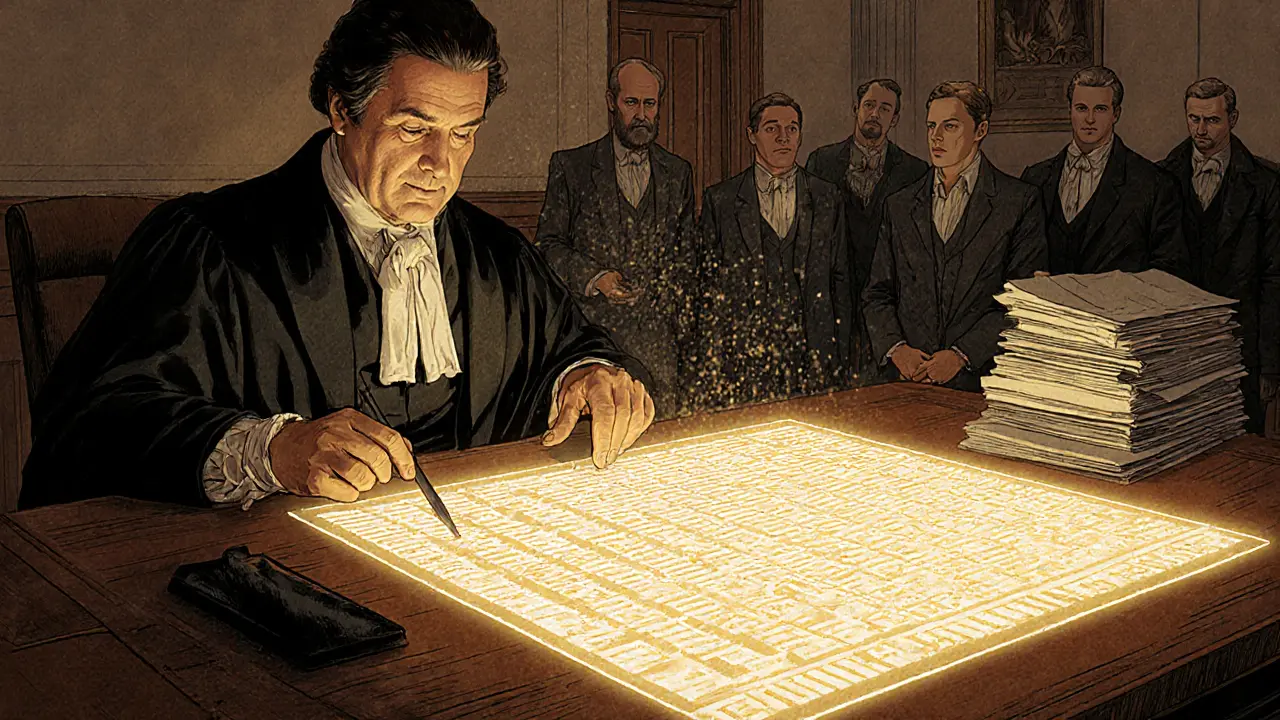
A smart contract for property sales has three main parts:- Property identity: A digital record of the property stored on the blockchain. It includes the legal description, tax ID, survey data, and ownership history.
- Contract conditions: The rules written in code. For example: “If buyer transfers $450,000 to this wallet AND a valid inspection report is uploaded AND the mortgage is approved, then transfer title to buyer.”
- Execution engine: The blockchain network (like Ethereum or Polygon) that runs the code. Once deployed, it can’t be changed-so the terms are final.
Why Most Property Sales Still Don’t Use Smart Contracts
Despite the benefits, 83% of property sales still rely on traditional methods. Why? First, the law doesn’t always recognize digital deeds. In most U.S. states, property transfers still require physical signatures and paper filings. Even if a smart contract executes perfectly, the county may not accept the blockchain record as legal proof. Second, complexity scares people. Most real estate agents, buyers, and sellers don’t know how to read code. Setting up a smart contract requires understanding blockchain wallets, gas fees, and digital signatures. If you mess up the code, you could lock funds or lose ownership rights. There’s no customer service line to call if something goes wrong. Third, legacy systems don’t talk to blockchains. Title companies, banks, and county offices still use 1990s software. Getting them to integrate with a blockchain system takes years of negotiation and regulation. Some states are moving forward. Arizona and Tennessee have passed laws recognizing blockchain signatures. Wyoming allows blockchain-based property titles. But in most places, you still need to file paper documents to make it official.Real-World Use Cases and User Experiences
Early adopters are seeing real results. A couple in Florida bought a vacation home using a smart contract. They didn’t need an agent. The seller uploaded the inspection report and title history to the blockchain. The buyer transferred funds from their crypto wallet. Within 12 hours, the title updated. They got a digital certificate they could print or store on their phone. Another user in Texas used a smart contract to rent out a rental property. Rent was automatically collected each month. If the tenant missed a payment, the system locked the smart lock on the door. If they paid on time, the lock opened automatically. No calls to the property manager. No late fees manually calculated. But not everyone had smooth experiences. One buyer in California tried to use a smart contract for a home purchase but didn’t understand that the contract required a specific type of digital wallet. He sent funds to the wrong address. The transaction went through, but he lost $28,000 because the contract couldn’t reverse it. Blockchain transactions are irreversible. That’s a big risk if you’re not careful.
so like... uhhh... if the code has a bug and i send my house to some random wallet?? like?? there's no undo?? i just lost my home?? 🤔
I think the real story here isn’t the tech-it’s how we’re slowly letting machines handle things we used to trust humans for. There’s beauty in efficiency, sure. But there’s also something human about the messiness of signing papers, shaking hands, waiting weeks. Maybe we’re trading soul for speed.
Let’s break this down statistically: 83% of transactions still use traditional methods because 92% of buyers can’t tell the difference between a private key and a password reset link. Smart contracts reduce closing costs by up to 50%? Sure-if you ignore the 30% of users who lose money to misconfigured wallets, the 12% who get scammed by fake contracts, and the 7% who end up in legal limbo because their county won’t recognize blockchain records. Also, gas fees during peak hours can be $200+ just to trigger a transfer. So… ‘cheaper’? Only if you’re a crypto bro with a Coinbase account and zero fear of irreversible mistakes.
this is how they track us. blockchain deeds = digital fingerprints on your home. next thing you know, the gov’t or some AI will know exactly when you leave, who visits, how much you paid, and then… they’ll raise your taxes. or worse-sell your data to landlords. i’m not paranoid. i’ve seen the documents.
I just can’t believe people are okay with this. What if your partner dies and the smart contract doesn’t recognize the will? What if the system glitches on the day you’re supposed to move in? You think you’re saving time, but you’re just handing your entire life over to something that can’t feel your fear.
The integration of blockchain-based smart contracts into real estate transactions represents a paradigmatic shift in property law and financial infrastructure. While the technological architecture demonstrates significant promise in terms of transactional efficiency and transparency, the current regulatory fragmentation across U.S. jurisdictions presents a non-trivial impediment to scalability. A rigorous, federally coordinated legal framework is imperative prior to widespread adoption.
i grew up in a family that bought homes the old way-paperwork everywhere, lawyers arguing over commas, the whole thing. but i’ve also seen my cousin in Mexico use a digital contract to buy land from a neighbor. no bank. no notary. just a phone and trust. maybe the future isn’t about replacing people… it’s about making trust easier to build. not harder.
If you're nervous about this, start small. Try renting out a room with a smart contract first. Platforms like Propy have walkthroughs. You don't need to be a coder. Just use a trusted service, read the terms, and maybe ask a friend who's done it before. You got this 💪
in india we still use handwritten agreements and local notaries but i think this could work if we make it simple and local language supported no need for crypto wallets just linked bank and aadhaar
What happens if the blockchain goes down?