How Venezuela Took Control of Crypto Mining
When Venezuela launched its state-run crypto mining system, it wasn’t just about making money from Bitcoin. It was about survival. With hyperinflation eating away at the bolívar and banks failing, ordinary Venezuelans turned to cryptocurrency just to buy food. The government saw an opportunity: use the country’s cheap electricity to mine crypto, collect a cut, and keep control over the entire process. But what started as a bold experiment turned into a tangled mess of broken promises, bureaucratic chaos, and sudden crackdowns.
The Rules: SUNACRIP and the National Mining Pool
In 2019, Venezuela created SUNACRIP - the National Superintendence of Cryptocurrencies - to be the single boss of all crypto mining. No one could mine legally without their approval. Miners had to register in one of two government databases: RIM (Comprehensive Registry of Miners) or RISEC (Comprehensive Registry of Cryptoactive Services). You needed proof of power capacity, identity documents, and details on every piece of mining hardware. The process took 3 to 4 months just to get a license.
But the real control came from the National Mining Pool (NMP). Every miner had to plug into this state-run system. It wasn’t optional. The NMP distributed rewards, tracked output, and punished anyone who tried to mine outside the system. If you mined on your own, you risked fines, equipment seizure, or worse. The government claimed this was to prevent money laundering and ensure taxes were paid. In reality, it meant the state collected a share of every Bitcoin, Ethereum, or Dogecoin mined in the country.
Energy: The Biggest Advantage - and the Biggest Problem
Venezuela has some of the cheapest electricity in the world. For miners, it’s about $0.03 per kilowatt-hour - less than half the global average. That’s why companies from China, Russia, and even the U.S. tried to set up shop here. But cheap power doesn’t mean reliable power.
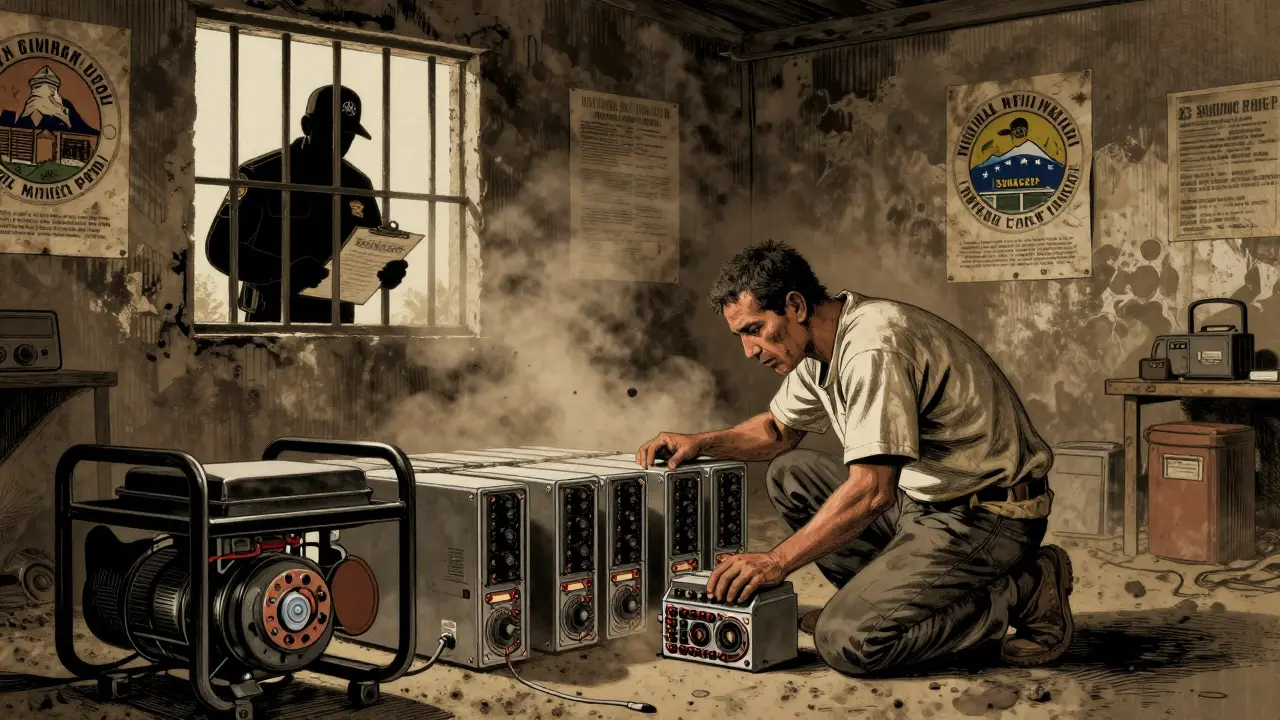
By 2023, miners were dealing with 40 to 60 hours of blackouts every month. To keep running, they had to buy diesel generators. That added 25% to their costs. Even with subsidies, many couldn’t make a profit. The government responded by shutting down mining centers during a corruption probe in 2023. Around 300 licensed operations vanished overnight. Some say the crackdown was about energy waste. Others believe it was about seizing assets.
Regulation on Paper, Chaos in Reality
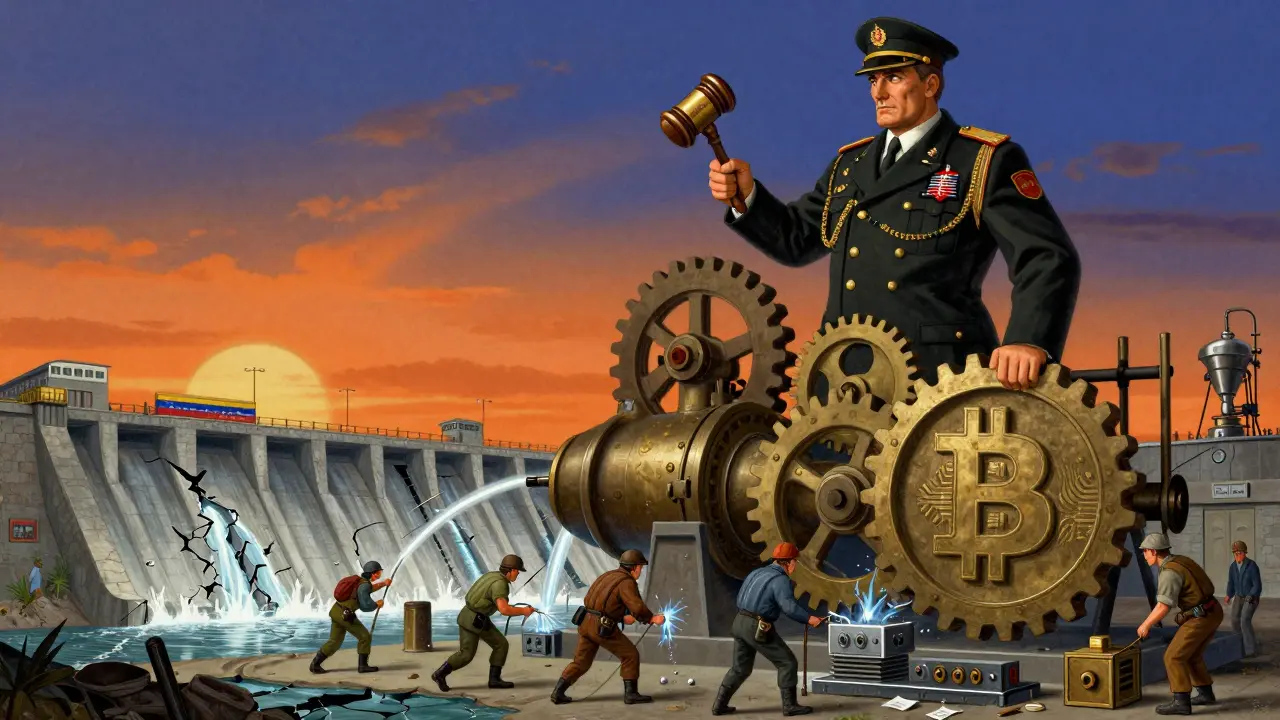
SUNACRIP’s rules looked strict. Miners had to follow Ruling No. 044-2021, which required digital security, user identification, and transaction reporting. But the agency itself fell apart. In March 2023, its leadership was arrested in a corruption case tied to the oil ministry. Operations stopped. The agency was restructured in March 2024, but it still doesn’t function like a real regulator. No one knows if the rules still apply.
Meanwhile, the National Mining Pool broke down. Miners reported delays in payouts, lost mining shares, and constant connection errors. One group estimated their efficiency dropped by 20% because of the system’s failures. Independent miners who ignored SUNACRIP often made more money - and stayed under the radar.
What Happens When the Government Says ‘Stop’
In May 2024, Venezuela announced a ban on all crypto mining. The reason? Too much electricity use. But this wasn’t the first time. A similar ban happened in 2023. Both times, the shutdowns were temporary. The government needed the mining revenue. By July 2024, mining was quietly allowed again - but only for those with licenses, and only if they stayed inside the NMP.
The inconsistency sends a clear message: mining is legal only when the state says so. There’s no long-term stability. No legal protection. Just shifting rules based on political pressure, energy shortages, or who’s in charge that week.
The Real Reason Behind the Control
Why does Venezuela care so much about mining? It’s not just about Bitcoin. It’s about bypassing sanctions. The U.S. and other countries have frozen Venezuelan assets, blocked access to global banking, and imposed travel bans on top officials. Crypto became a lifeline. The government created the Petro, its own cryptocurrency, to try to move money internationally. It launched Conexus, a blockchain-based payment system, to let banks handle Bitcoin and stablecoins directly.
By December 2025, Venezuelan banks are supposed to offer Bitcoin and stablecoin services to customers. That’s huge. It means people can pay rent, buy groceries, or send money home using crypto - all through their local bank. But it only works if the system doesn’t collapse. And right now, it’s hanging by a thread.
Who’s Still Mining? And Why?
Despite the chaos, crypto use in Venezuela keeps growing. Blockchain transactions jumped 35% in 2024. Over 70% of Venezuelans now use stablecoins like USDT to protect their savings. The government doesn’t stop them - it just wants to tax them.
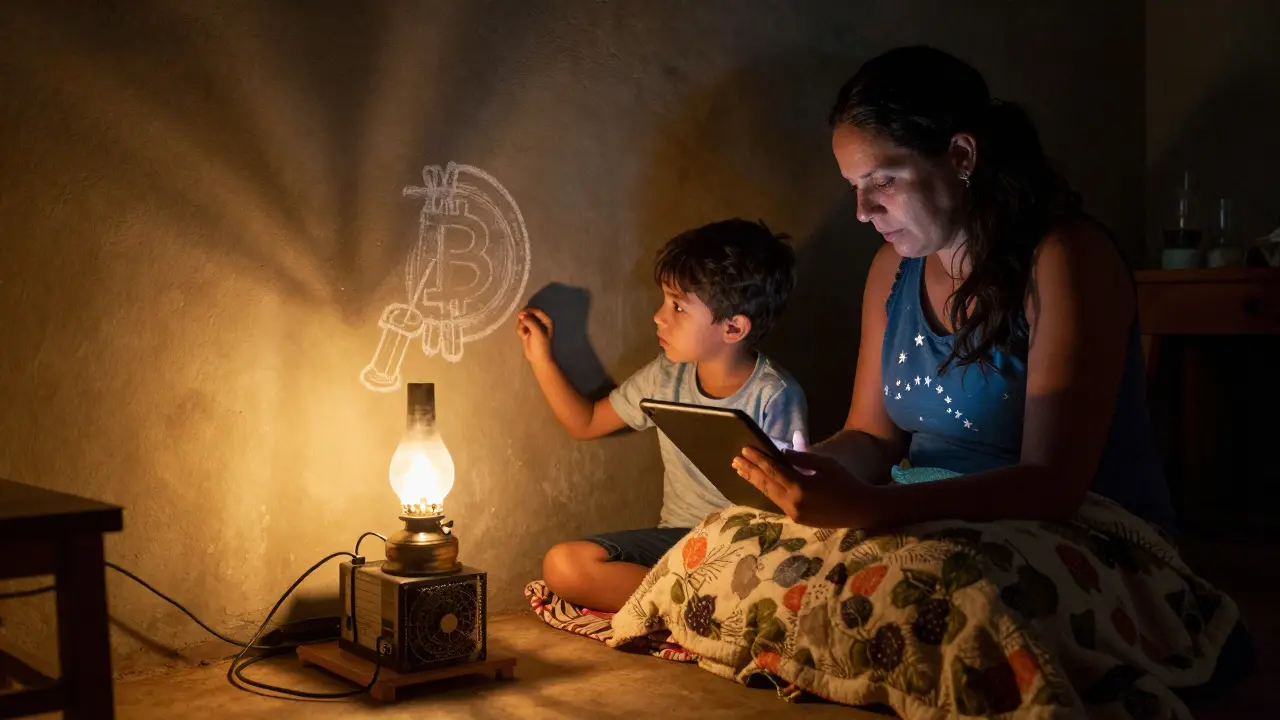
Some miners still operate legally, even with the delays and outages. They see it as a way to earn in dollars. Others mine in secret, using small rigs in homes or warehouses. A few big players have moved operations to military-controlled zones, where power is more stable - and the government looks the other way.
Investors still see potential. In 2024, Venezuela attracted over $10 million in crypto startup funding. Companies like El Dorado and Yeet raised millions to build crypto payment apps. But most projects stall because no one trusts the system to last.
Is This Model Sustainable?
On paper, Venezuela’s state-controlled mining system makes sense. Cheap power + government control + crypto demand = economic win. But in practice, it’s broken. The regulator is paralyzed. The power grid is unreliable. The rules change without warning. Even if the government wanted to fix it, it doesn’t have the capacity.
Experts say the system won’t survive unless there’s a political shift. As long as the leadership is under international sanctions and facing domestic anger, crypto mining will remain a tool for control - not growth. The miners aren’t the problem. The system is.
What This Means for You
If you’re thinking about mining in Venezuela, don’t. The risks far outweigh the rewards. Even if you get a license, you could lose everything in a week. The government doesn’t protect you. It owns the system. And it can shut it down anytime.
But if you’re just trying to survive in Venezuela? Crypto still matters. Stablecoins are the real currency now. And that’s not because of the state. It’s because people chose it - despite the rules, the blackouts, and the corruption.
Let’s cut through the noise - Venezuela’s crypto mining control isn’t about regulation, it’s about survival with a side of authoritarian greed. Cheap power? Sure. But when your grid collapses 40 hours a month, and your ‘regulator’ gets arrested for corruption, you’re not building an economy, you’re running a Ponzi scheme with Bitcoin as the bait. The real winners? The military-linked miners with diesel backups and zero oversight. Everyone else is just paying taxes to a ghost agency.
USA should’ve banned this years ago. This is what happens when you let socialist kleptocrats play with crypto. They don’t care about Bitcoin - they care about bypassing sanctions and laundering drug money. The Petro was always a scam, and now they’re forcing people to use it through banks? That’s not innovation, that’s digital tyranny. If you’re mining in Venezuela, you’re not an entrepreneur - you’re a pawn in a failed state’s last desperate gamble.
I keep thinking about the people just trying to feed their families. They’re not miners or investors - they’re moms trading USDT for rice because the bolívar vanished. The government’s control is brutal, sure. But maybe the real story isn’t the regulators or the blackouts. It’s the quiet resilience of ordinary people using tech they don’t fully understand just to stay alive. I don’t know if that’s hopeful or heartbreaking. Probably both.
It’s wild how the same tech that was supposed to liberate people is now being weaponized by the very regimes it was meant to escape. Venezuela’s case is a mirror - it shows how easily power corrupts even decentralized systems. But here’s the thing: the people still use crypto. Not because they trust the state, but because they trust each other. That’s the real revolution. Not the NMP. Not the Petro. The WhatsApp groups where neighbors swap USDT for groceries. That’s the future - messy, human, and unstoppable.
I know it sounds naive, but I still believe in the potential of crypto to help the vulnerable. The problem isn’t the tech - it’s the lack of accountability. Imagine if instead of seizing rigs, the government had used mining revenue to fix the grid. Or partnered with NGOs to train people in blockchain literacy. Instead of control, they chose extraction. It’s not just a policy failure - it’s a moral one.
Anyone who thinks this is a viable model is either delusional or on the government payroll. Venezuela’s entire infrastructure is held together by duct tape and wishful thinking. The fact that anyone still mines there is a testament to desperation, not ingenuity. This isn’t crypto - it’s a dystopian reality show with Bitcoin as the prize.
State-controlled mining is a logical contradiction. Blockchain’s core tenet is decentralization. Venezuela’s system is a centralized surveillance apparatus masquerading as innovation. The math is simple: if you control the node, you control the ledger. That’s not crypto. That’s state-run accounting with a blockchain UI.
they’re all just pawns... the real power is in the shadows... you think the military’s just letting miners run? nah... they’re the ones who own the rigs now... the whole thing’s a front... the US knew this was coming... they’re waiting for the collapse so they can swoop in... and take the hardware... and the data... they already have the keys...
man i just read this whole thing and i’m shook. like… imagine waking up, your power’s out again, but your rig’s still humming on diesel, and you’re like ‘yo, at least i got usdt for the beans’? that’s not crypto, that’s life. and the gov? they’re just trying to take a cut off the last thing keeping people from starving. it’s messed up. but also… kinda beautiful? like, people built their own economy out of chaos. no one asked for permission. they just did it. and now the state’s mad they didn’t get to tax it first? lol. bless the venezuelans.
One must consider the epistemological implications of state-sanctioned cryptographic sovereignty in a post-sanctioned geopolitical landscape. The institutional collapse of SUNACRIP reveals a deeper ontological crisis - not merely regulatory failure, but the erosion of epistemic authority itself. When governance becomes performative, and legitimacy is derived solely from coercive retention of resource extraction mechanisms, the very notion of ‘legal mining’ becomes a semantic oxymoron. The people’s adoption of stablecoins is not an economic choice - it is an act of existential self-preservation against the collapse of symbolic value systems.
China and Russia are running the whole thing. The NMP? A backdoor for PLA intel. The blackouts? Scheduled to force miners into military zones where the rigs are monitored. The Petro? A honeypot. They’re harvesting private keys, transaction history, and wallet seeds. You think Venezuela’s the victim? Nah. They’re the patsy. The real crypto war is being fought in server farms under military bases. And you? You’re just another data point.
Did you know that the 2023 shutdown wasn’t about electricity? It was a cover. The government used it to seize 87% of all mining hardware in the country and sold it to offshore shell companies. The licenses? Fake. The RIM database? Hollow. They’ve been laundering crypto through fake mining operations since 2020. The whole thing’s a money trail leading straight to the presidential palace. And now they’re forcing banks to integrate it? That’s not adoption - that’s financial colonization.
they’re all lying the power is cheap but its not its a lie the government gives power to their friends and cuts it for everyone else the miners who survive are the ones who pay bribes or sleep with the right people the whole system is rigged and you know it and i know it and the people in the streets know it but no one says it because they’re scared
Interesting case study. The real irony? Venezuela’s crypto use is growing despite the state, not because of it. The NMP is a failure. The regulations are ignored. But the people? They’ve created a parallel economy. Stablecoins aren’t just currency - they’re trust infrastructure. No government needed. Just phones, Wi-Fi, and desperation. That’s the real lesson here.
Okay so like, I did a deep dive into this and I read like 17 academic papers and 42 Reddit threads and watched 3 YouTube documentaries and honestly? The whole thing is a mess but also kind of genius? Like, the government’s trying to control something that by definition can’t be controlled - blockchain is decentralized, right? But they’re still trying to force it into their broken bureaucracy like it’s a state-run oil company. And the people? They’re just using crypto like a Swiss bank account made of memes and WhatsApp. The real story isn’t the NMP - it’s the 16-year-old in Maracaibo who’s earning USDT by doing crypto tutorials on TikTok and paying his mom’s rent with it. That’s the revolution. Not the laws. Not the licenses. Just… people being people.
brooo this is wild 😭 like imagine your power goes out for 3 days but your mining rig is still running on diesel and you’re like ‘at least i got my usdt’ 🤯 the gov says ‘no mining!’ then 2 weeks later ‘ok fine but only if you’re on our system’ 😂 the system is trash but people are still mining because they have no choice. this isn’t tech - this is survival. i’m crying. 🙏🇺🇸💛
You people act like this is some tragic underdog story. It’s not. It’s a textbook case of authoritarian kleptocracy using crypto to mask its failures. The government isn’t helping its people - it’s stealing from them under the guise of regulation. Every Bitcoin mined under the NMP is a tax on desperation. Every blackout is a tool of control. And you call that innovation? That’s tyranny with a blockchain logo. The only thing worse than the system is the people who romanticize it.