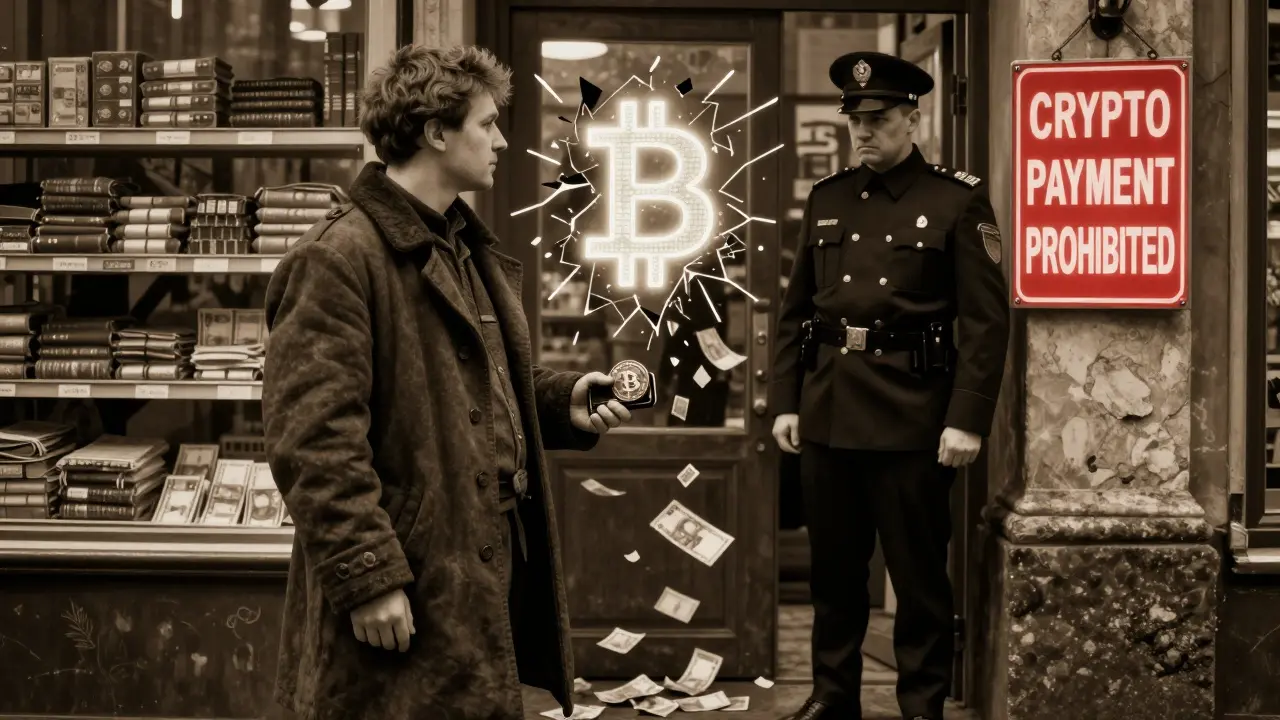
Bitcoin Payments in Russia: How Crypto Is Bypassing Sanctions and Banks
When Bitcoin payments in Russia, a practical workaround for financial isolation caused by Western sanctions. Also known as crypto-based trade, it's not speculation—it's survival. Since 2022, Russian businesses and citizens have turned to Bitcoin and Tether (USDT) to keep buying essentials, paying for imports, and sending money abroad. Banks froze accounts. SWIFT cut access. But crypto? It just kept working.
This isn't theoretical. It's happening in grocery stores, online marketplaces, and even small factories. People use peer-to-peer platforms to swap rubles for USDT, then buy goods from Turkey, China, or India. The USDT Russia, the most widely used stablecoin in the country, acting as a digital dollar substitute. Also known as Tether, it's become the de facto currency for cross-border trade. Why? Because it's stable, fast, and doesn't need a bank. The crypto sanctions evasion, the real-world method Russians use to move value outside traditional financial systems. Also known as sanctions bypass, it's not about hiding money—it's about keeping the lights on. The Central Bank of Russia doesn't endorse crypto, but it can't stop it. Over 17 million Russians now use crypto regularly, according to Chainalysis data. That's more than the population of Sweden.
What you won't see in the news? The quiet shift from cash to crypto in everyday life. A Moscow mechanic now takes USDT for repairs. A farmer in Siberia sells wheat to a buyer in Kazakhstan via a Telegram bot that converts rubles to Bitcoin. Even Russian state-owned oil companies now use crypto to settle deals with non-Western buyers. The Russia crypto adoption, a grassroots movement driven by economic pressure, not ideology. Also known as crypto resilience, it's the most organic crypto boom the world has ever seen. No government campaign. No marketing. Just people finding a way.
And it's not just about avoiding sanctions. It's about beating inflation. The ruble lost 30% of its value in 2022. Crypto became a store of value—faster than gold, easier than real estate. You don't need a visa to send Bitcoin to a family member abroad. You don't need approval from a bank manager. Just a phone and a wallet.
What follows are real stories, real platforms, and real risks. You'll find deep dives into how Russian traders use P2P exchanges, why USDT dominates over Bitcoin for daily payments, and how some businesses got burned by fake escrow services. You'll also see how crypto is quietly reshaping Russia’s economy—without any official permission.