SBF Token: What Happened to the FTX Founder's Crypto and Why It Matters
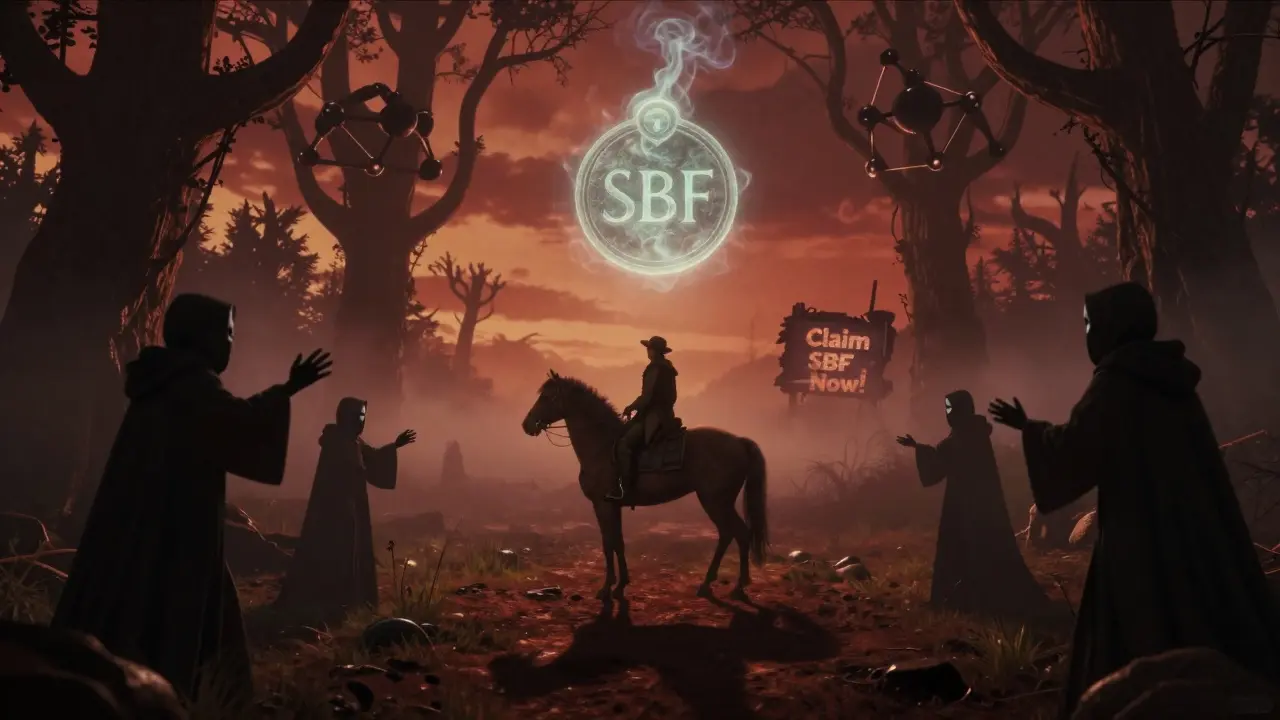
When people talk about the SBF token, a non-existent cryptocurrency falsely linked to Sam Bankman-Fried and the FTX collapse. Also known as FTX token, it never existed as a real asset—only as a ghost in the market’s memory, used by scammers to trick investors after the exchange crashed. There was no official SBF token. No whitepaper. No blockchain. No team. Just rumors, fake listings, and pump-and-dump schemes targeting people who still believed in FTX’s lie.
The real story starts with Sam Bankman-Fried, the former CEO of FTX, once hailed as crypto’s golden boy before being convicted of fraud and money laundering. He built FTX into a $32 billion empire on paper, but behind the scenes, customer funds were funneled to his hedge fund, Alameda Research. When the house of cards fell in November 2022, billions vanished overnight. The SBF token wasn’t part of the plan—it was a consequence. After the collapse, scammers started creating fake tokens named "SBF" or "FTX" on decentralized exchanges, hoping people would buy them out of hope, confusion, or nostalgia. Some even claimed they were "rewards" for former FTX users. They weren’t. They were digital traps.
What’s left now? FTX, the bankrupt exchange once valued at $32 billion, now in liquidation with only a fraction of customer funds recovered. The U.S. government seized millions in assets, including luxury homes and private jets bought with stolen crypto. Court documents show Sam Bankman-Fried’s actions weren’t just reckless—they were systematic theft. Meanwhile, the crypto world is still cleaning up the mess: exchanges tightened KYC rules, regulators cracked down on fake tokens, and investors learned the hard way that no celebrity endorsement or flashy website replaces due diligence.
You won’t find a real SBF token on any trusted exchange. If you see one, it’s a scam. The same way you’d avoid a fake Rolex sold on a street corner, you should avoid any token tied to FTX’s name now. But the lessons from this collapse? They’re real. And they’re everywhere in the posts below—stories about fake tokens like PAPU and KBC, empty airdrops like StarSharks, and exchanges with no users like Oviex. Each one echoes the same warning: if it sounds too good to be true, it’s not just a bad investment—it’s a trap waiting to be sprung.