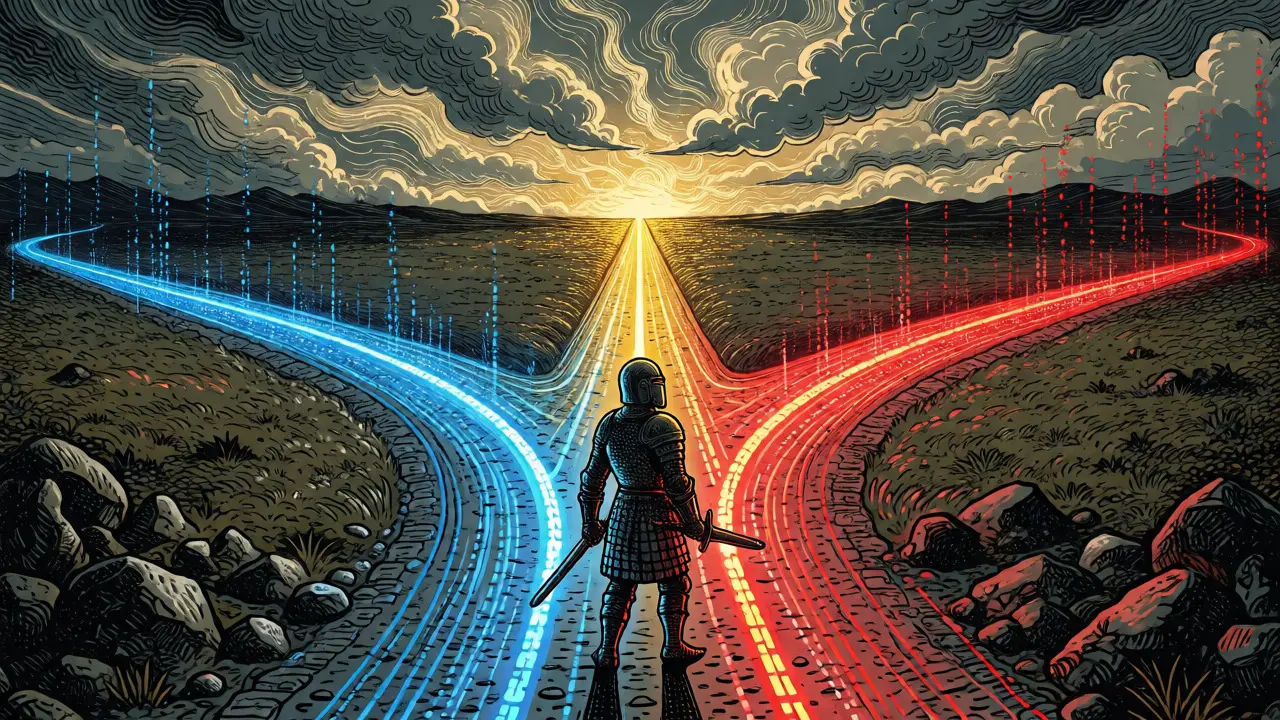
Imagine you’re driving down a highway and suddenly the road splits into two distinct paths. One group of drivers keeps going straight, while another takes the exit ramp. Both groups are still driving, but they’re now on completely different roads, heading toward different destinations. This is exactly what happens during a blockchain fork. It’s not just a glitch or a bug; it’s a fundamental divergence in the network’s history and rules. If you’ve ever wondered why Bitcoin Cash exists separately from Bitcoin, or how Ethereum managed to switch its entire security model without breaking everything, you’re looking at forks in action.
Forks are the primary way decentralized networks evolve. Unlike traditional software where a central company pushes an update to everyone at once, blockchains rely on community consensus. When people disagree on how the code should work-whether it’s about transaction speed, security, or philosophical ideals-the network can split. Understanding this process isn’t just for coders; it affects your wallet balance, your tax obligations, and which version of a coin you actually own.
The Core Mechanics: Why Networks Split
At its heart, a blockchain is a shared ledger maintained by thousands of computers called nodes. These nodes follow strict rules, known as consensus mechanisms, to agree on the order of transactions. A fork occurs when these rules change. Think of it like changing the traffic laws halfway through a game of Monopoly. If some players follow the new rules and others stick to the old ones, you end up with two separate games happening simultaneously.
This divergence creates two potential outcomes. In some cases, the network remains unified because the new rules are compatible with the old ones. In other cases, the incompatibility forces a permanent separation. The technical trigger is usually a modification to the protocol’s source code. Developers propose changes, the community debates them, and eventually, the nodes decide which set of rules to follow. If enough nodes upgrade their software, the chain moves forward. If they don’t, the chain might stall or split.
Soft Forks: The Gentle Upgrade
A soft fork is backward-compatible. This means that even if you haven’t updated your software, your node can still recognize the blocks created by upgraded nodes. It’s like tightening the dress code at a club. Previously, anyone could enter. Now, only people wearing shoes are allowed. Those who already wear shoes (upgraded nodes) see no problem. Those who aren’t wearing shoes (non-upgraded nodes) might try to enter and get rejected, but they don’t crash the system. They simply reject the new blocks until they update.
Because soft forks tighten the rules rather than loosen them, they rarely cause long-term divisions. The network tends to converge back onto the longest chain, which is typically the one followed by the majority of upgraded nodes. Bitcoin’s SegWit (Segregated Witness) upgrade in 2017 was a famous soft fork. It increased the effective block size without creating a new coin. Users didn’t need to do anything dramatic; the network handled it smoothly.
- Backward Compatibility: Old nodes accept new blocks.
- Reversibility: Can often be reverted if adoption fails.
- User Action: Usually requires minimal intervention from users.
Hard Forks: The Permanent Split
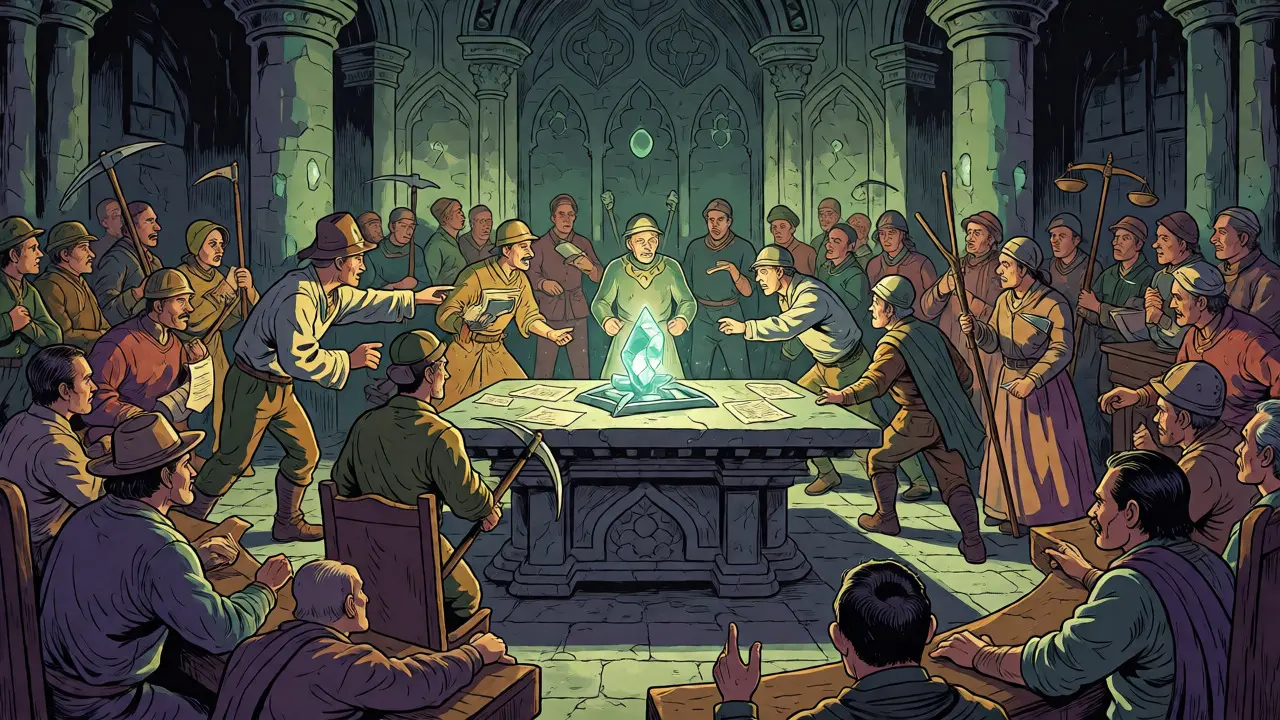
A hard fork is the opposite. It loosens the rules or introduces entirely new ones that old nodes cannot understand. Using our club analogy, imagine the club suddenly allows shorts, but the old bouncers (non-upgraded nodes) think shorts are illegal. They will reject every block created by the new bouncers (upgraded nodes). This creates two incompatible chains. One follows the old rules, the other follows the new ones. Neither can validate the other’s blocks.
This is why hard forks are contentious. They often result in the creation of a new cryptocurrency. When Bitcoin Cash forked from Bitcoin in 2017, holders ended up with both BTC and BCH. The community split over whether to increase block size to handle more transactions or keep blocks small for decentralization. There was no middle ground. You had to choose a side.
| Feature | Soft Fork | Hard Fork |
|---|---|---|
| Compatibility | Backward Compatible | Not Backward Compatible |
| Chain Outcome | Single Chain (usually) | Two Separate Chains |
| Node Requirement | Optional Update | Mandatory Update |
| Complexity | Low to Medium | High |
| Example | Bitcoin SegWit | Ethereum Merge |
The Lifecycle of a Fork Event
Forks don’t happen overnight. They follow a structured path that begins with a proposal. Developers identify a need-perhaps a security vulnerability, a scalability bottleneck, or a feature request. They draft a formal improvement proposal, such as a BIP (Bitcoin Improvement Proposal) or EIP (Ethereum Improvement Proposal).
Next comes the debate phase. This is often the most chaotic part. Community members, miners, validators, and exchanges argue over the merits of the change. Social media fills with memes and hot takes. If the proposal gains traction, it enters testing. Developers deploy the changes on testnets, simulated versions of the blockchain, to catch bugs before they hit the main network.
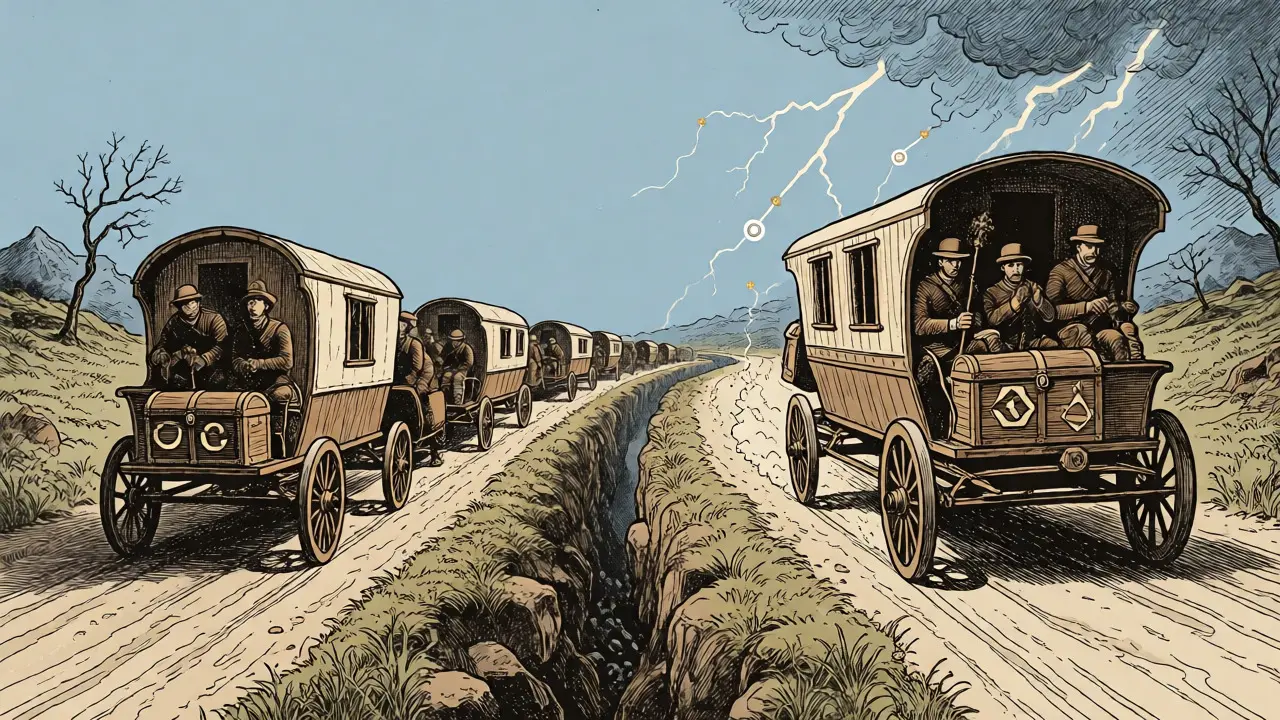
Once tested, the fork is scheduled. Nodes must update their software by a specific block height or date. At that moment, the activation point arrives. Upgraded nodes start producing blocks according to the new rules. Non-upgraded nodes continue producing blocks according to the old rules. For hard forks, this is the critical moment where the chains diverge. Exchanges play a huge role here; they decide which chain(s) to support, effectively influencing which version survives economically.
Real-World Impacts on Users
So, what does this mean for you? If you hold coins on a major exchange like Coinbase or Binance, you usually don’t need to worry much. These platforms have teams dedicated to managing forks. They’ll pause withdrawals during the event and then credit your account with the new tokens if applicable. However, if you store your crypto in a personal hardware wallet, you’re responsible for yourself.
During a hard fork, you might need to export your private keys to a wallet that supports the new chain. Failure to do so could mean losing access to your new assets. Additionally, taxes become complicated. The IRS and other regulatory bodies often treat new tokens received from a fork as taxable income. You need to track the value of those tokens at the moment you gained control over them.
Security risks also spike during forks. Malicious actors sometimes launch phishing campaigns pretending to offer "claim" portals for new tokens. Always verify the official sources before connecting your wallet. Never share your private keys with any website claiming to help you claim fork rewards.
Governance and Future Trends
Historically, forks were messy and political. But newer blockchains are trying to streamline the process. Projects like Polkadot and Tezos use on-chain governance, allowing token holders to vote directly on upgrades. This reduces the likelihood of contentious hard forks because the community decides together, and the network implements changes automatically via smart contracts.
We’re also seeing a shift toward Layer 2 solutions. Instead of forking the main chain to fix scalability issues, developers build scaling layers on top of the existing base layer. This keeps the core protocol stable while allowing innovation elsewhere. Ethereum’s transition to Proof-of-Stake, known as "The Merge," was a massive hard fork, but it was carefully planned over years. It didn’t create a new coin; it changed the underlying engine of the same car while it was driving down the highway.
Forks are inevitable in decentralized systems. They represent the tension between stability and progress. While they can cause short-term confusion and market volatility, they are essential for adapting to new technologies and user needs. As long as there are disagreements about how money and data should work, there will be forks.
Do I lose my coins during a blockchain fork?
No, you generally do not lose your original coins. In a hard fork, you typically end up holding both the original coin and the new forked coin. Your holdings on the original chain remain intact, and you gain equivalent amounts of the new token, provided you held the asset before the fork occurred.
What is the difference between a soft fork and a hard fork?
A soft fork is backward-compatible, meaning older software can still interact with the new blockchain rules. A hard fork is not backward-compatible, forcing all participants to upgrade their software to continue participating in the network. Hard forks often result in two separate blockchains.
Why do blockchain forks happen?
Forks occur to implement upgrades, fix bugs, improve scalability, or resolve ideological disagreements within the community. Since blockchains are decentralized, no single entity can force an update; instead, the community must reach consensus, which sometimes leads to a split if agreement cannot be reached.
Are forked cryptocurrencies valuable?
Value depends on market demand and community support. Some forks, like Bitcoin Cash, gained significant market capitalization. Others fade away quickly if they lack developer activity or user adoption. Market sentiment plays a huge role in determining the price of a newly forked token.
How do exchanges handle blockchain forks?
Exchanges usually suspend deposits and withdrawals for the affected coin shortly before the fork to prevent replay attacks and ensure accurate accounting. After the fork, they decide which chains to support and may list the new token for trading. They then credit users' accounts with the new tokens based on their holdings at the time of the fork.