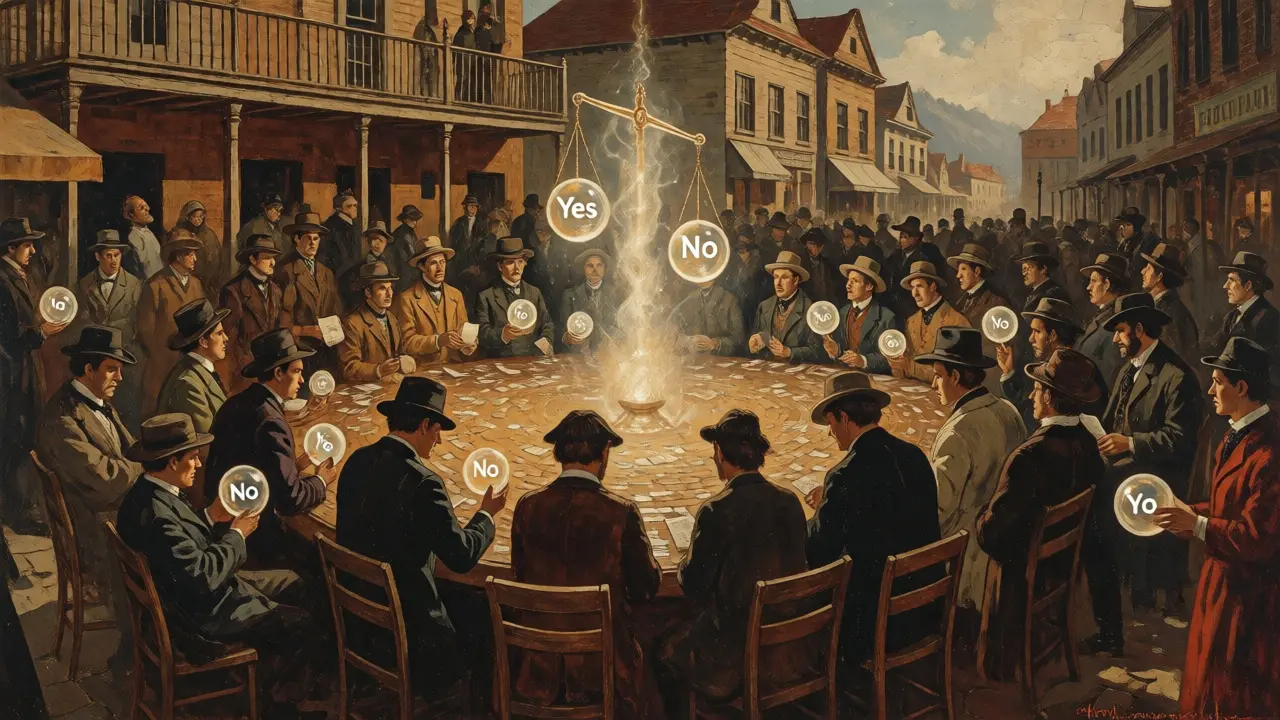
Imagine you could bet on the outcome of almost any real-world event-from who wins the Super Bowl to whether a specific bill passes Congress-without ever handing your money to a bookie. No middlemen taking a cut for their own profit, no geographical restrictions blocking your participation, and no central authority deciding if your win is "valid." This isn't science fiction; it’s the core promise of Augur, a decentralized prediction market protocol built on the Ethereum blockchain.
If you’ve heard whispers about Augur or its native token, Reputation (REP), but aren’t sure what it actually does, you’re in the right place. It’s not just another meme coin or a speculative asset with no utility. Augur is an infrastructure play-a way to turn collective human knowledge into a tradable commodity. But how does it work? Why would anyone stake their reputation on a guess? And is it still relevant in 2026 when competitors like Polymarket are grabbing headlines?
The Core Concept: Betting Without Bookies
Traditional betting platforms operate on a simple model: they set the odds, take your wager, and pay out if you win. They profit from the spread between bets and often restrict winners or ban users who beat them too often. Augur flips this model on its head. It doesn’t act as a bookmaker. Instead, it provides a platform where users create markets and trade against each other.
Here’s the basic flow:
- Market Creation: Anyone can propose a question, such as "Will Bitcoin close above $50,000 by December 31st?" The creator sets the resolution source (e.g., CoinGecko price data) and stakes some ETH to prevent spam.
- Trading: Users buy shares in "Yes" or "No" outcomes using Ether (ETH). If you think Bitcoin will hit that target, you buy "Yes" shares. If you disagree, you buy "No" shares. Prices fluctuate based on supply and demand, reflecting the crowd’s perceived probability of the event occurring.
- Resolution: Once the event happens, the market needs to be resolved. This is where things get interesting-and where REP comes in.
This peer-to-peer structure eliminates counterparty risk. You aren’t betting against the house; you’re betting against other people. If everyone agrees on the outcome, the smart contract automatically distributes the funds. No one can refuse to pay you because you won too much.
Understanding the REP Token: More Than Just Currency
You might assume REP is just the currency used to trade on Augur. That’s a common misconception. While you use ETH to buy shares, REP is a governance and security token. Its primary job is to keep the system honest. Think of REP holders as the jury members of the digital courtroom.
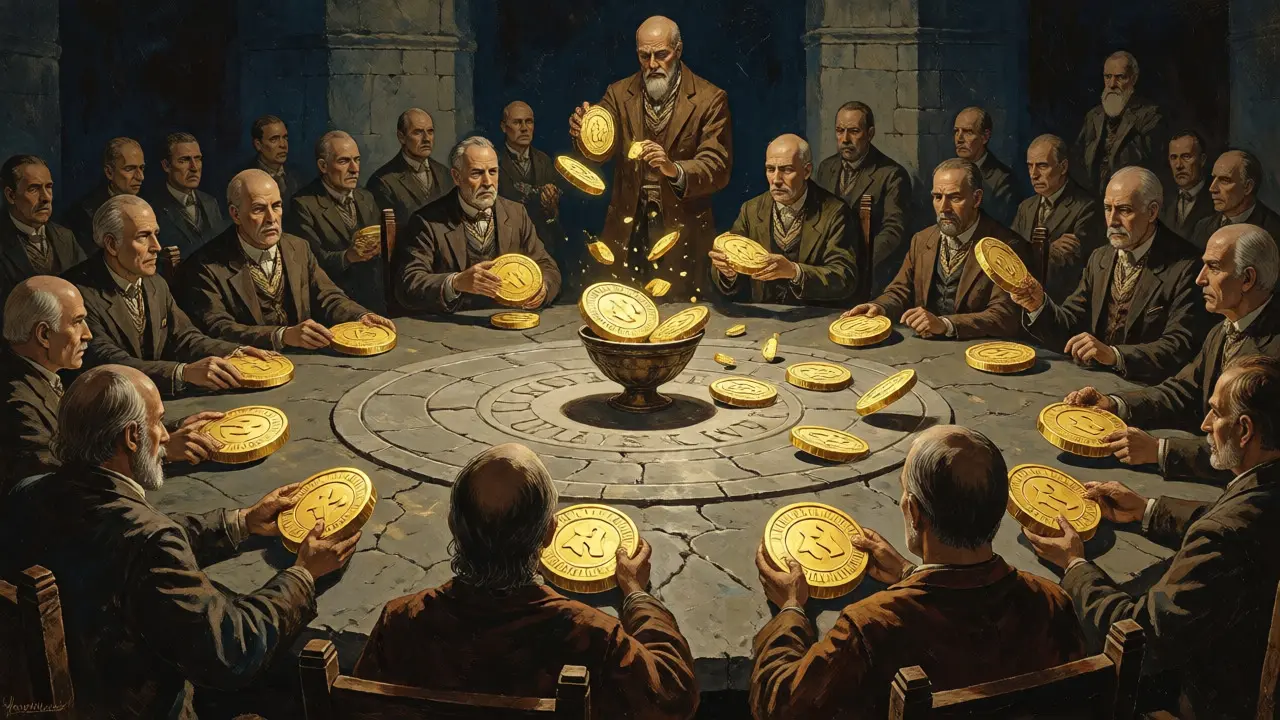
When a market resolves, reporters must stake REP to submit their view of the outcome. Here’s the incentive structure:
- Staking: To report an outcome, you lock up a certain amount of REP.
- Consensus: If your reported outcome matches the consensus of other reporters, you earn rewards (a share of the trading fees).
- Punishment: If you report incorrectly, you lose your staked REP. It gets redistributed to those who reported correctly.
This mechanism relies on the wisdom of crowds. Since most people want to avoid losing their stake, they have a strong financial incentive to tell the truth. However, this system only works if there are enough honest participants. If a malicious actor tries to manipulate the outcome, they need to control a significant portion of the REP supply to succeed, which becomes increasingly expensive.
| Role | Primary Asset Used | Main Function | Reward/Risk |
|---|---|---|---|
| Trader | Ether (ETH) | Buys/sells shares based on predictions | Gains/Loses capital based on accuracy |
| Reporter | Reputation (REP) | Submits outcome resolutions | Earns fees / Loses REP if wrong |
| Disputer | REP + ETH | Challenges incorrect reports | Doubles stake to escalate dispute |
The Evolution: From REP to REPv2
Augur wasn’t always smooth sailing. The original version, launched in 2018, faced several critical vulnerabilities between 2018 and 2020. These issues required emergency upgrades and highlighted the risks of early-stage decentralized protocols. In July 2020, the team executed a major migration to REPV2.
Why the switch? The original REP token had design flaws that made it difficult to manage disputes efficiently. REPV2 introduced a more robust framework for handling edge cases and improved the economic incentives for reporters. If you held the old REP, it was swapped for the new version at a 1:1 ratio. Today, when you see "REP" listed on exchanges, it almost certainly refers to REPV2.
This transition also marked a shift in focus. While Augur remains active, its dominance has waned. In 2020, it held roughly 35% of the decentralized prediction market share. By late 2023, that number had dropped to around 22%, as newer platforms like Polymarket captured attention with lower fees and simpler user interfaces. Yet, Augur retains a loyal base of power users who value its deep liquidity and established track record.
How to Participate: A Practical Walkthrough
So, how do you actually jump in? Unlike centralized apps where you sign up with an email, Augur requires a crypto wallet. MetaMask is the most popular choice, though any Ethereum-compatible wallet works.
First, you need ETH. Not just for buying shares, but for gas fees-the transaction costs paid to Ethereum miners. Even if you’re just reporting an outcome, you’ll pay gas. Second, if you want to report, you need REP. You can buy this on major exchanges like Coinbase or Binance.
Once funded, connect your wallet to the Augur interface. You’ll see a dashboard of active markets. Let’s say you’re interested in the US Presidential Election. You find the market, analyze the current odds (represented by share prices), and decide to buy "Yes" shares for Candidate A. You confirm the transaction in MetaMask, wait for the block confirmation (usually under 15 seconds on modern networks, though Augur historically relied on Ethereum mainnet speeds of ~6 minutes), and you’re in.
If you hold REP and want to contribute to resolution, you wait until the market enters the "Reporting" phase. You select the outcome you believe is true and stake your REP. If the market is uncontested, you eventually claim your rewards. If someone disagrees, a dispute begins. This escalates through layers of higher-stake reporters until it reaches a final resolution, potentially going all the way to the Augur community voting pool.

Pros and Cons: Is Augur Right for You?
No technology is perfect, and Augur has distinct trade-offs compared to traditional betting sites or newer DeFi competitors.
The Good:
- Censorship Resistance: Governments can’t easily shut down the protocol or freeze your funds because it runs on a global blockchain.
- Transparency: Every trade, report, and dispute is recorded on-chain. You can audit the entire history.
- Global Access: If you have internet and a wallet, you can participate. Geographic bans don’t apply to the protocol itself.
The Bad:
- Complexity: The learning curve is steep. Understanding disputes, staking, and fee structures takes time. A 2022 study showed first-time users needed 3-5 hours just to grasp the basics.
- Liquidity Issues: Niche markets often lack depth. You might find a great bet, but if no one else wants to take the other side, you can’t enter or exit at a fair price.
- Gas Fees: During periods of high Ethereum network congestion, transaction costs can eat into small profits.
It’s worth noting that regulatory uncertainty looms large. According to a 2023 Blockchain Association report, 63% of jurisdictions lack clear frameworks for prediction markets. This means while the tech is solid, the legal landscape remains murky in many countries.
The Future Outlook
Where does Augur go from here? The team has acknowledged the pain points of high gas fees and slow transactions. Their roadmap includes integration with Layer-2 scaling solutions like Optimism, which promises faster and cheaper interactions. This move is critical. If Augur stays on the Ethereum mainnet alone, it risks becoming obsolete as users migrate to faster chains.
Industry analysts are split. Some predict steady growth, citing the increasing acceptance of DeFi. Others warn that unless regulatory clarity emerges, growth will remain single-digit. For now, Augur serves as a foundational pillar of the prediction market sector. It proved that decentralized oracles could work, paving the way for every competitor that followed.
If you’re a casual bettor looking for quick sports action, a centralized app might still be easier. But if you’re a crypto-native who values autonomy, transparency, and the ability to speculate on virtually anything, Augur offers a unique playground. It’s not just about winning money; it’s about participating in a decentralized truth machine.
Can I mine REP tokens like Bitcoin?
No, you cannot mine REP. Unlike Proof-of-Work cryptocurrencies, REP is an ERC-20 token distributed through initial sales and earned by participating in the prediction markets as a Reporter. You acquire it by buying it on exchanges or earning it through correct reporting rewards.
What happens if I report an incorrect outcome?
If you stake REP on an outcome that is determined to be incorrect after the dispute resolution process, you lose your staked REP. Those lost tokens are redistributed to the reporters who submitted the correct outcome, creating a strong financial penalty for dishonesty or error.
Is Augur available in the United States?
Access varies. While the protocol is global, individual users may face restrictions depending on local regulations and the specific frontend interface they use. Many US-based crypto enthusiasts access Augur directly via their wallets, but compliance with local gambling laws is always the user's responsibility.
How long does it take for a market to resolve?
Resolution time depends on the event and whether disputes arise. Uncontested markets typically resolve within days of the event date. If disputes occur, the escalation process can extend this timeline significantly, sometimes taking weeks as higher-stakes reporters review the case.
Do I need a lot of REP to start reporting?
Not necessarily. The minimum stake requirements vary by market size and importance. Smaller markets require less REP to report, making it accessible for beginners. However, larger, high-profile markets require substantial stakes to deter manipulation.