UBU Market Cap Calculator
Calculate UBU's market capitalization using real-time price and the two different circulating supply numbers reported by CoinGecko and CoinMarketCap. The discrepancy between these numbers creates a massive difference in market cap.
Market Cap Results
Price: $0.00
Supply: 0 UBU
Market Cap: $0
Why This Matters
CoinGecko reports 270 million UBU in circulation ($4.6M market cap), while CoinMarketCap reports 42 million ($535K market cap). The article states this discrepancy has no official explanation from Africarare.
Important Considerations
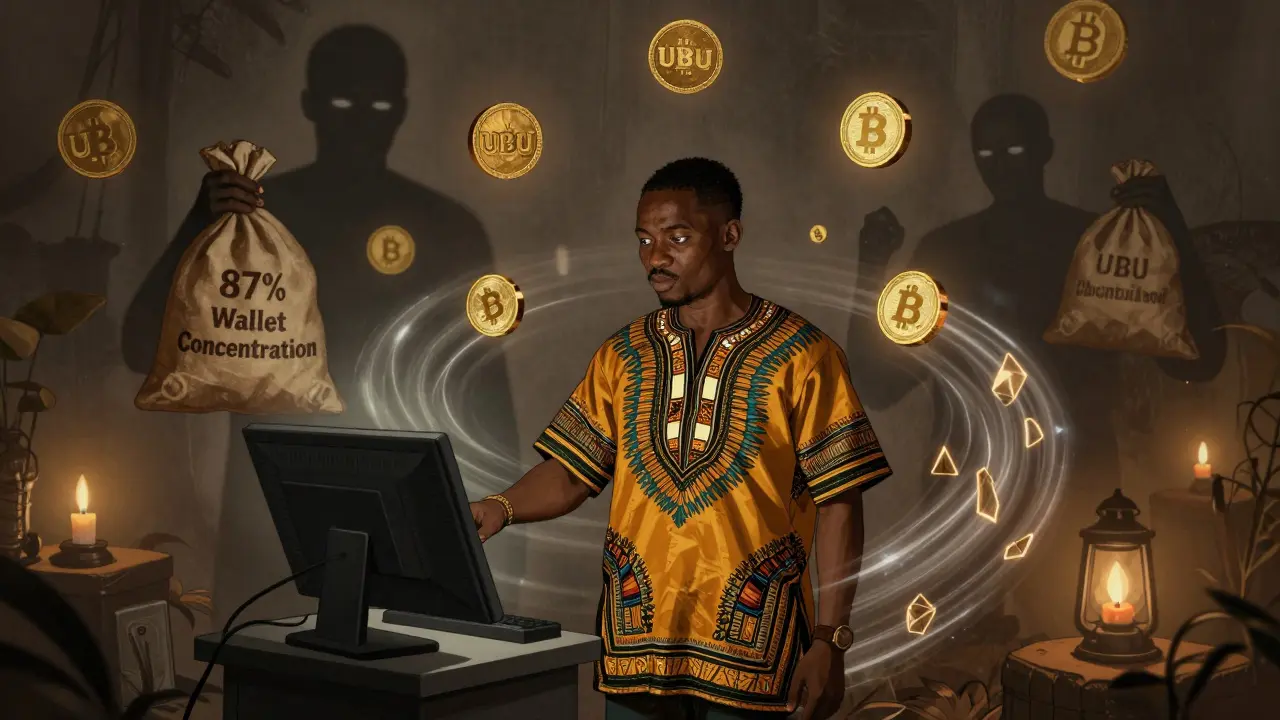
Remember: UBU's value depends entirely on real usage in Ubuntuland. Current data shows only 2,600 unique wallets holding UBU versus 2.6M claimed users. High wallet concentration (87.3% in 10 wallets) and low liquidity mean market cap figures alone don't reflect true value.
This calculator only shows theoretical market cap based on reported supply. Actual value depends on adoption, liquidity, and whether Ubuntuland becomes a platform people actually want to use.
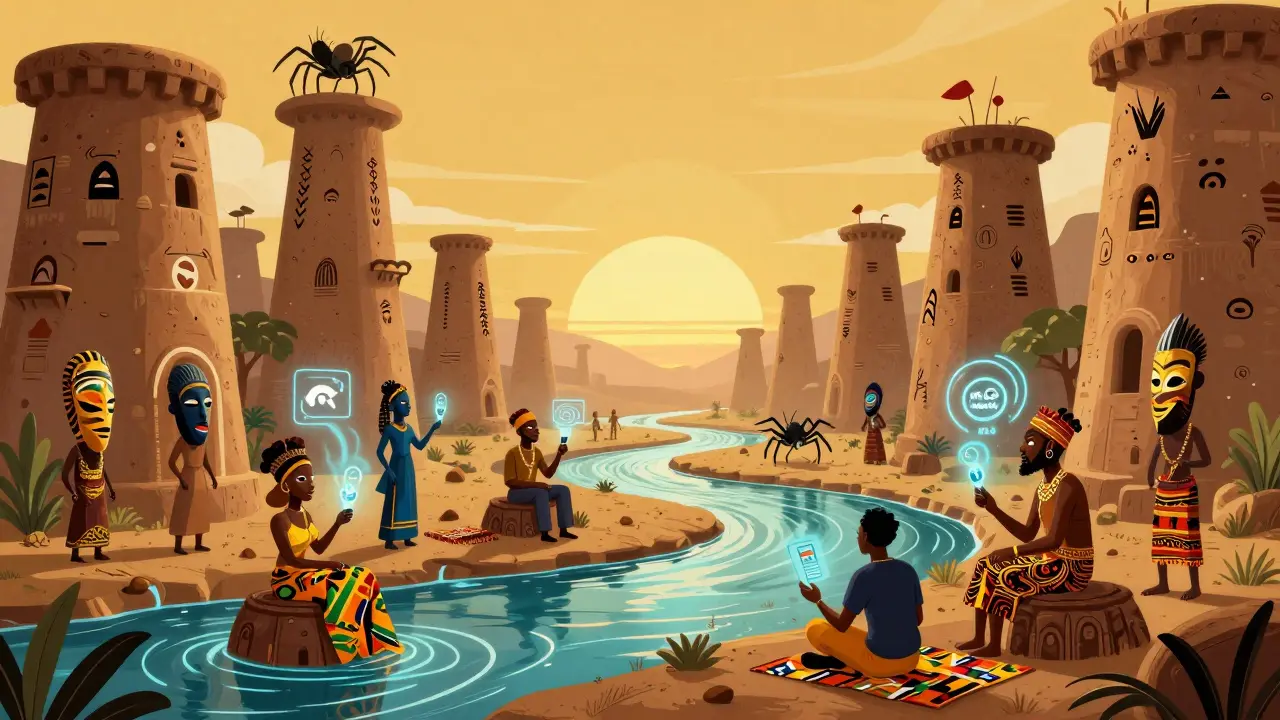
UBU, or Ubuntu Token, isn’t just another crypto coin. It’s a digital currency built for a virtual world called Ubuntuland-a metaverse platform created by Africarare, a South African tech company. Unlike Bitcoin or Ethereum, UBU doesn’t aim to replace money. Instead, it’s meant to power transactions inside a digital space focused on African culture, communities, and connections. If you’ve heard about UBU and are wondering if it’s real, worth buying, or just another crypto hype, here’s the full picture-no fluff, just facts.
What Is UBU Actually Used For?
UBU is an ERC-20 token running on the Polygon blockchain. That means it’s lightweight, fast, and cheap to use. Each transaction costs about $0.001 and takes under 3 seconds to confirm. You can’t mine it. You can’t stake it. And there’s no burn mechanism. Its only job? To let users buy, sell, and trade things inside Ubuntuland.
Inside Ubuntuland, you can:
- Buy virtual land with UBU
- Purchase digital art, clothing, and accessories as NFTs
- Attend virtual concerts, art shows, and cultural events
- Interact with AI-driven characters representing African folklore and history
The whole idea is to create a digital space where African identities aren’t just represented-they’re central. Africarare says it partnered with big African brands like MTN, Nedbank, and Safaricom to make this real. That’s not just marketing. These companies serve over 150 million people across Africa. If even a fraction of them start using Ubuntuland, UBU could see real demand.
How Much Is UBU Worth Right Now?
As of September 2024, UBU trades around $0.0117 USD. That’s down from its all-time high of $0.0704 in March 2023. That’s an 83% drop. But numbers alone don’t tell the full story.
The big problem? Discrepancies in supply data. CoinGecko says 270 million UBU are in circulation. CoinMarketCap says only 42 million. That’s a 6.4x difference. Why does it matter? Because market cap changes wildly depending on which number you use:
- At 270 million circulating: $4.6 million market cap
- At 42 million circulating: $535,000 market cap
There’s no clear explanation from Africarare about why these numbers differ. That’s a red flag. Most legitimate projects publish transparent, verifiable token distribution reports. UBU doesn’t.
Where Can You Buy UBU?
You won’t find UBU on Coinbase, Binance, or Kraken. It’s only available on decentralized exchanges (DEXs), mostly on Polygon:
- MEXC Global - Handles 99.88% of all UBU trading volume ($103,000 in 24 hours)
- QuickSwap v2 - $60 volume
- Uniswap v2 (Polygon) - $60 volume
That means if you want to buy UBU, you need a Polygon-compatible wallet like MetaMask or Trust Wallet. You have to add the Polygon network manually. Then you need to swap ETH or USDC for UBU on a DEX. For someone new to crypto, this isn’t easy. A CryptoCompare study found 68% of users struggled with the setup, taking 35-45 minutes just to make their first trade.
And even then, you might not get what you paid for. Liquidity is thin. Slippage averages 1.96% on a $1,000 trade. That means if you try to buy $1,000 worth of UBU, you might end up paying $1,020 because the price moves while your order fills. Selling is even harder. One Reddit user said it took him 3 hours to sell 50,000 UBU without losing half his investment.
Is UBU a Scam?
No, it’s not a scam in the classic sense. There’s a working platform. There are real partnerships. There’s code on GitHub. But that doesn’t mean it’s safe or smart to invest in.
The biggest concerns:
- Extreme wallet concentration - CryptoQuant reports 87.3% of all UBU is held in just 10 wallets. That’s worse than most meme coins. If one of those wallets dumps, the price could crash overnight.
- Unclear user numbers - Africarare claims 2.6 million platform users. But Etherscan shows only 2,600 unique wallet addresses holding UBU. That’s a 1,000x gap. Either the platform is full of bots, or the token isn’t being used by the people who supposedly use the app.
- Missing documentation - No clear API docs. No staking guide. No roadmap updates that match what was promised. Previous milestones, like a mobile app launch in Q1 2024, were delayed by six months.
- Fake tokens - Chainalysis found 37 fake UBU tokens on Polygon in Q3 2024. If you’re not careful, you could send your money to a scam contract.
Expert opinions are split. Dr. Kwame Mensah from the University of Cape Town calls the tokenomics “concerning.” Jane Nkosi from Blockchain Africa says the African brand partnerships could be a game-changer. The truth? It’s a high-risk bet on a niche market.

Who Is UBU For?
UBU isn’t for everyone. It’s not a long-term investment. It’s not a store of value. It’s not even a good trading coin because of how thin the markets are.
It’s only worth considering if:
- You’re deeply interested in African digital culture and want to support it
- You plan to use Ubuntuland regularly-for virtual events, NFT art, or digital land
- You understand crypto risks and are okay losing your entire investment
- You’re comfortable with DEXs, wallet setup, and low-liquidity assets
If you’re looking to make money from UBU, you’re likely to be disappointed. The token’s value is tied entirely to whether people actually use Ubuntuland. And right now, adoption is unclear.
What’s Next for UBU?
Africarare’s roadmap has some ambitious goals:
- Integration with Meta’s Horizon Worlds (Q1 2025)
- AI translation for 12 African languages (Q4 2024)
- Connect to mobile money systems like M-Pesa and Airtel Money (Q2 2025)
If they deliver, UBU could become the first crypto token to bridge African mobile money users with the metaverse. That’s huge. But they’ve missed deadlines before. And with only 2 code commits in the last 6 months, developer activity is near zero.
The biggest question isn’t whether UBU will rise in price. It’s whether Ubuntuland will ever become a place people actually want to visit-not just because it’s “African-themed,” but because it’s fun, useful, and well-built.
Right now, it’s a promising idea stuck in early development. The culture is strong. The tech is solid. But the execution? Still unproven.
UBU feels like a beautiful idea stuck in a broken engine. I love the vision - African folklore AI characters, virtual concerts with Afrobeats, digital land owned by real communities - but the execution is a ghost town. 2.6 million users? Only 2,600 wallets holding the token? That’s not a metaverse, that’s a PowerPoint deck with a blockchain sticker on it. If you’re buying UBU hoping to flip it, you’re already late. But if you’re buying it because you want to see African digital culture thrive? Maybe just donate to the devs directly and skip the crypto theater.
Look, I’ve been tracking this since March 2023. The supply discrepancy isn’t a bug - it’s a feature. Someone’s intentionally obfuscating the token distribution to create artificial scarcity. CoinGecko’s 270M? Probably includes locked, burned, or fake tokens they haven’t updated. CoinMarketCap’s 42M? That’s likely the real circulating supply. The fact that Africarare hasn’t published a transparent audit in over a year is the biggest red flag. And don’t get me started on the fake tokens - Chainalysis flagged 37 of them. If you’re not using a verified contract address from their official website, you’re gambling with your ETH. This isn’t just risky - it’s predatory.
Not worth it.
People still fall for this? You think African culture needs a token to be valid? You think selling digital hats and virtual land in a metaverse makes you progressive? Wake up. This isn’t empowerment - it’s capitalism with an African filter. They took the word Ubuntu - which means ‘I am because we are’ - and turned it into a fucking NFT marketplace. The real Ubuntu is in the villages, not in some MetaMask wallet where 87% of the coins are held by three guys in a Lagos basement. You’re not supporting culture. You’re funding a scam dressed up as a movement.
I get the skepticism, but I think people are missing the bigger picture. Even if UBU’s price is trash right now, the partnerships with MTN and Safaricom? That’s real. Those companies have access to over 150 million mobile money users. If they integrate UBU into M-Pesa payments for virtual events or digital art, this could actually become the first bridge between African mobile finance and the metaverse. Yeah, the tech is clunky, the liquidity is thin, and the docs are garbage - but if they fix the UX and launch that AI translation tool for Swahili and Zulu, this could be huge. Don’t write it off just because it’s not perfect yet.
There’s something poetic about a token named after Ubuntu - a philosophy rooted in communal existence - being traded in a system built on hyper-individualistic speculation. The irony isn’t lost on me. We’re trying to build a digital space that celebrates collective identity, yet the entire economic model is designed to enrich a handful of early holders. The real question isn’t whether UBU will rise - it’s whether we, as a global crypto community, are willing to let cultural expression be reduced to a liquidity pool. Maybe the answer isn’t to invest in UBU… but to demand better. A token that rewards participation, not speculation. A platform that doesn’t just sell digital land, but actually gives it back to the community.
Let’s be clear - this isn’t a crypto project. It’s a sociological experiment. They’re testing whether African digital identity can survive in a Western-dominated metaverse. The low adoption? The liquidity issues? The fake tokens? Those aren’t bugs - they’re stress tests. The fact that someone in Nairobi can buy a virtual kente cloth with UBU and wear it in a virtual event hosted by a Ghanaian DJ? That’s revolutionary. The infrastructure is broken, yes. But the intent? Pure. If you want to change the narrative of African tech, you don’t wait for Silicon Valley to do it. You build it yourself, even if it’s messy. UBU is that mess. And sometimes, messes are where revolutions start.
The entire premise is fundamentally flawed. You cannot tokenize culture. Culture is not a commodity. It is not a tradable asset. It is not an NFT. It is not a liquidity pool. To reduce Ubuntu - a profound African humanist philosophy - to a ticker symbol on MEXC is not innovation. It is cultural appropriation dressed in blockchain jargon. The fact that people are even entertaining this as an investment opportunity speaks volumes about the moral bankruptcy of modern crypto culture. You are not supporting African communities. You are exploiting them. And if you think this is anything other than a predatory scheme, you are either willfully ignorant or complicit.
Why are we even talking about this? Africa doesn’t need a crypto coin to be cool. America and Europe have been stealing African culture for centuries and selling it as ‘trendy’ - now you want to tokenize it? You think a virtual drum circle with AI ancestors is going to fix centuries of exploitation? The real African metaverse is in the streets of Lagos, the markets of Accra, the rooftops of Cape Town. Not in some Polygon wallet with a $0.0117 token. This isn’t empowerment. It’s colonialism with a blockchain logo. And if you’re buying this, you’re not a visionary - you’re a sucker.
UBU is the epitome of performative diversity in Web3. A token built on Polygon, marketed to African audiences, funded by venture capital that wouldn’t touch a real African startup unless it had a white founder. The partnerships? Hollow. The user metrics? Fabricated. The only thing real here is the greed. This is what happens when you let marketing teams design tokenomics. No one who actually understands blockchain would touch this. It’s not even worth the gas fee to trade it.
While I appreciate the ambition behind Ubuntuland, I find myself deeply concerned by the lack of transparency and the potential for harm to vulnerable participants. The disparity between claimed user numbers and actual on-chain activity raises serious ethical questions. Furthermore, the technical barriers to entry - requiring users to navigate decentralized exchanges, add custom networks, and contend with high slippage - may unintentionally exclude the very communities the project claims to uplift. Without accessible on-ramps and clear educational resources, this initiative risks becoming an exclusionary ecosystem rather than an inclusive one. I urge the developers to prioritize usability and transparency above speculative appeal.
Someone’s gotta say it - this is the most depressing thing I’ve seen all year. All that potential, all that culture, and it’s being turned into a casino for degens who think ‘African-themed’ means ‘easy money.’ I’ve seen the wallets. I’ve seen the fake contracts. I’ve seen the bots. This isn’t a movement. It’s a graveyard for hope. And the worst part? The people who really needed this - the artists, the elders, the kids in rural areas - they’ll never even know it existed. The whole thing feels like a funeral where no one showed up to mourn.
Oh wow, another ‘African metaverse’ token. How original. Did they also hire a white marketing firm to name it after a Bantu word? How thoughtful. I’m sure the 2.6 million ‘users’ are all just sitting around their iMacs in Cape Town, wearing digital kente and trading UBU like it’s the next Bitcoin. Meanwhile, actual African creators are still struggling to get paid on Etsy. But hey - at least the metaverse is ‘inclusive.’ Right? Sigh.