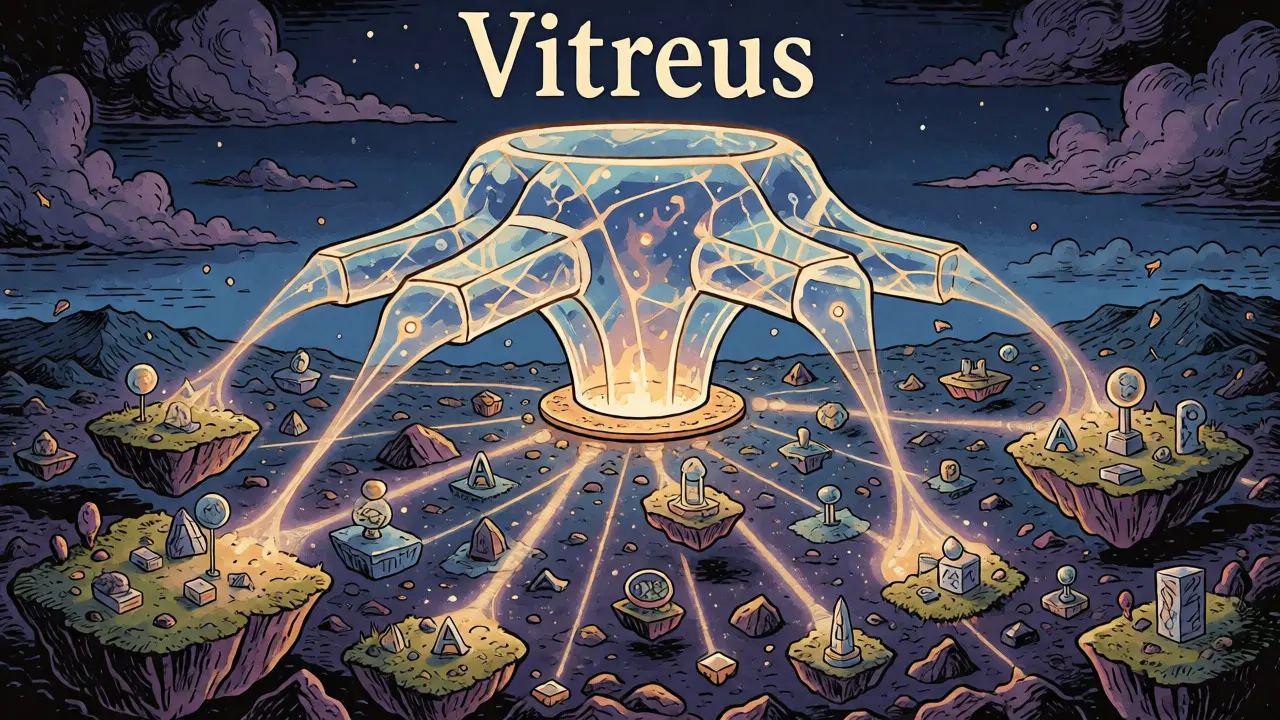
You've probably seen Vitreus pop up in your feed if you're tracking small-cap altcoins with big ambitions. But what exactly is it? It’s not just another meme coin trying to ride a hype wave. Vitreus (WVTRS) is positioning itself as a foundational piece of infrastructure for the next generation of digital assets. Think of it less as a currency you use to buy coffee, and more like the plumbing that lets AI applications, identity systems, and physical hardware networks talk to each other without breaking the bank.
If you’re confused by the ticker symbols-seeing both WVTRS and VTRS floating around-you’re not alone. That confusion actually points to the core innovation here: a dual-token system designed to solve one of crypto's biggest headaches, high gas fees. Let’s break down how this layer-0 network works, why its governance matters, and whether its current market position makes sense for your portfolio.
The Core Concept: What Is Vitreus?
At its heart, Vitreus is a layer-0 blockchain and Decentralized Physical Infrastructure Network (DePIN). The name comes from the Latin word for "glassy" or "transparent," which isn't just poetic branding-it reflects their commitment to open-source code and transparent community governance. Unlike standard blockchains that operate as standalone islands, Vitreus acts as a base layer beneath traditional Layer-1 chains. This means it provides shared security and data availability services to multiple blockchains built on top of it, much like how Ethereum serves as a base for various rollups.
This architecture targets three specific high-growth sectors: Artificial Intelligence (AI), Sovereign Identity, and Real-World Solutions. By integrating these capabilities directly into the infrastructure layer, Vitreus aims to reduce the friction developers face when building complex dApps. Instead of writing custom smart contracts for every single interaction with an AI model or verifying an ID manually, the network handles these heavy lifts at the protocol level.
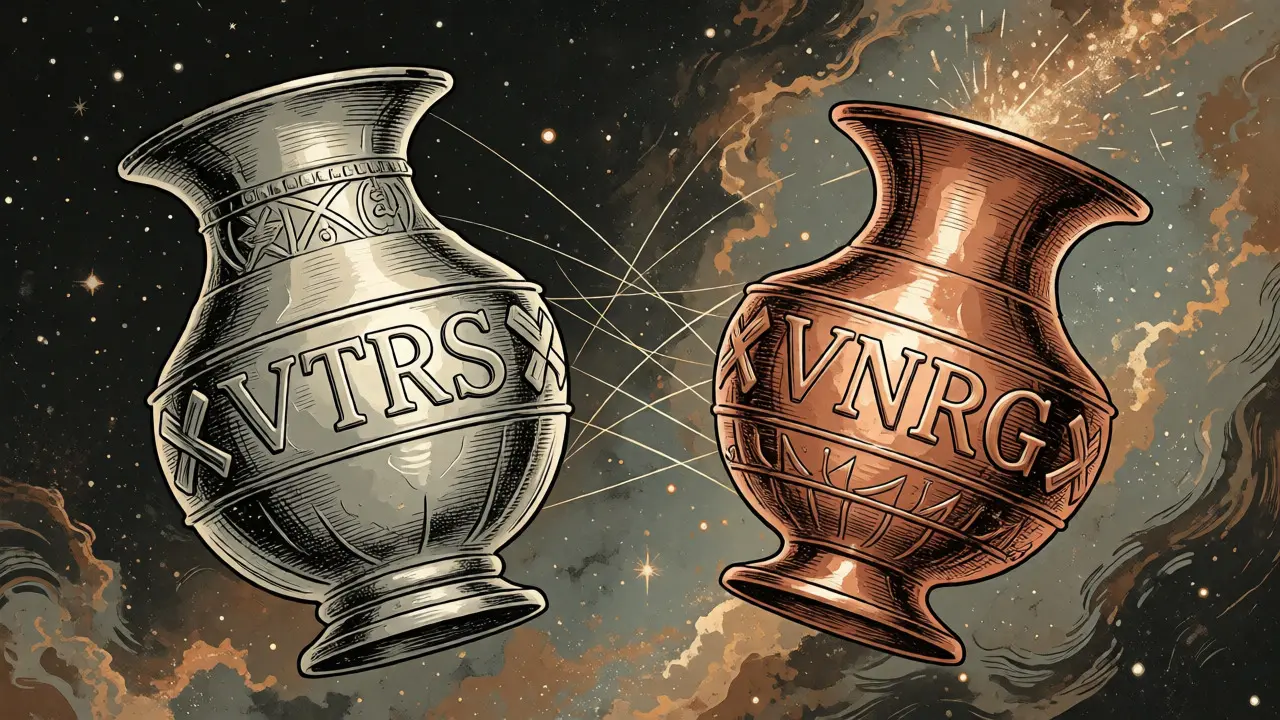
The Dual-Token Economy: VTRS vs. VNRG
Most cryptocurrencies fail because they try to make one token do too many jobs. You need it to pay for gas, vote on proposals, and hold value all at once. When demand spikes, everyone fights for the same resource, and fees skyrocket. Vitreus solves this by splitting the economy into two distinct tokens.
- VTRS (Governance & Utility): This is the primary asset you’ll likely see listed under the ticker WVTRS on some exchanges. It powers governance, staking, and network security. Holding VTRS gives you voting rights in the DAO and allows you to earn rewards by securing the network.
- VNRG (Gas Token): This secondary token handles transaction costs. Because gas fees are separated from governance, network congestion doesn’t necessarily spike the price of the governance token. More importantly, it keeps transaction costs low and predictable for developers, even during busy periods.
This separation is crucial for long-term sustainability. If you’re building a DePIN project where thousands of sensors might send data every minute, you can’t afford variable, high gas fees. VNRG ensures those micro-transactions remain cheap, while VTRS retains its value as a store of utility and influence.
Technical Architecture and DePIN Integration
Vitreus operates as a Decentralized Autonomous Organization (DAO) with onchain governance and financial transparency. Every treasury spend requires a community vote. No CEO pulls strings; the code and the voters decide. This structure appeals to users who distrust centralized foundations holding back massive token unlocks.
The platform’s focus on DePIN sets it apart from pure financial blockchains. In a DePIN network, real-world resources-like GPU power for AI training or storage space-are contributed by distributed participants. Vitreus incentivizes these contributors through its token mechanisms. For example, if you provide computing power to the network, you might earn rewards paid out in the native ecosystem tokens. This creates a tangible link between the digital token and physical hardware usage, moving beyond speculative trading into actual utility.
Additionally, the integration of Sovereign Identity solutions allows users to manage their digital identities without relying on centralized providers like Facebook or Google. This is particularly relevant for enterprise clients needing verifiable credentials that work across different blockchains.
Market Performance and Trading Data
As of late 2026, Vitreus remains a smaller-cap player in the broader crypto landscape. While it hasn’t reached the billion-dollar club yet, it has established presence on major platforms. According to recent data, the token trades primarily on decentralized exchanges like Uniswap V3, with significant volume also appearing on centralized hubs like Binance and Coinbase.
| Metric | Value / Status | Notes |
|---|---|---|
| Current Price Range | $0.0095 - $0.0105 | Varies slightly by exchange due to liquidity depth |
| Market Cap | ~$2.19 Million | Based on circulating supply |
| Fully Diluted Valuation | ~$6.34 Million | Assumes max supply of ~610M tokens |
| Circulating Supply | ~210.38 Million WVTRS | Approx. 35% of total supply is circulating |
| All-Time High | ~$0.0989 | Token is currently ~89% below ATH |
| 7-Day Momentum | +59.20% | Recent volatility suggests active speculation |
Notice the gap between the market cap and the fully diluted valuation (FDV). With only about 35% of the total supply in circulation, there is significant potential dilution ahead. Investors often overlook this, but if the remaining 65% of tokens enter the market via vesting schedules or incentives, it could put downward pressure on the price unless demand grows proportionally.
Trading volume sits around $80,000 daily across all venues. This is modest. It means you can buy or sell reasonable amounts without crashing the price, but large institutional entries might still struggle with slippage. The recent 59% weekly gain indicates renewed interest, possibly driven by broader AI-crypto narratives or specific project updates, but always check the source of the volume before assuming a trend is sustainable.
How to Buy and Store WVTRS
Since Vitreus is an ERC-20 compatible token (operating within the Ethereum ecosystem for trading pairs), acquiring it is straightforward for anyone familiar with Web3 wallets.
- Set up a Wallet: Use MetaMask, Rabby, or Trust Wallet. Ensure you have ETH for gas fees.
- Connect to a DEX: Go to Uniswap V3 or SushiSwap. These are the most liquid venues for WVTRS.
- Swap Tokens: Connect your wallet, select ETH or USDC as the input, and paste the official Vitreus contract address to ensure you aren’t buying a fake clone.
- Confirm Transaction: Review the slippage tolerance. Given the lower liquidity, setting slippage to 1-2% is usually safe, but watch the quote carefully.
- Store Safely: For larger holdings, move the tokens to a hardware ledger. Never keep significant amounts on an exchange you don’t control.
Centralized exchanges like Binance and Coinbase also list the token, though listing requirements and withdrawal fees vary. Always verify the deposit network matches the withdrawal network to avoid losing funds.
Risks and Considerations
No investment is risk-free, and Vitreus carries specific challenges. First, the "Layer-0" narrative is crowded. Competitors like Polkadot, Cosmos, and newer modular chains like Celestia are vying for the same developer mindshare. Vitreus needs to prove its DePIN integrations offer something unique that these giants don’t already provide.
Second, the tokenomics involve a large non-circulating supply. Monitor the vesting schedule. If team members or early investors unlock millions of tokens at once, the price could dip sharply regardless of good news.
Finally, regulatory clarity for DePIN projects is still evolving. Since these networks involve physical hardware ownership and data transmission, they may face different compliance hurdles than pure financial tokens. Keep an eye on legal developments in the US and EU regarding decentralized infrastructure.
Frequently Asked Questions
Is Vitreus the same as VTRS?
Yes, essentially. WVTRS is often used as the ticker symbol on certain exchanges or price trackers, while VTRS refers to the native governance token within the ecosystem documentation. They represent the same underlying asset, but always verify the contract address to be sure.
Why does Vitreus use two tokens?
The dual-token system separates governance (VTRS) from transaction costs (VNRG). This design prevents network congestion from inflating the cost of transactions and decouples the speculative value of governance from the operational cost of using the network, ensuring stability for developers.
Can I stake VTRS tokens?
Yes, staking is a core feature. By locking up VTRS, you help secure the network and participate in consensus mechanisms. In return, you earn rewards, typically distributed from network fees or inflationary emissions, depending on the current protocol parameters.
What makes Vitreus different from Ethereum?
Ethereum is a Layer-1 blockchain focused on smart contracts and dApps. Vitreus positions itself as a Layer-0 infrastructure layer that supports multiple chains and integrates specialized features for AI and DePIN. It aims to handle the heavy lifting of identity and physical resource coordination, potentially serving as a complement rather than a direct competitor.
Is Vitreus a good long-term investment?
This depends on your risk tolerance. As a small-cap project with a high FDV-to-Market-Cap ratio, it offers high growth potential if the DePIN and AI narratives continue to expand. However, it also carries higher risk due to lower liquidity and unproven mass adoption compared to established Layer-1s.
they are hiding the real supply numbers im telling you its all a scam to dump on us little guys
the dual token thing is just smoke and mirrors so they can print more vtrs without anyone noticing until its too late
I appreciate the detailed breakdown of the architecture here. It is refreshing to see a project that genuinely attempts to solve the gas fee issue through structural design rather than just marketing hype. The separation of governance and utility tokens is a mature approach that could indeed stabilize developer experience in the long run.
love this energy!! the depin angle is so underrated right now and vitreus seems to actually have hardware backing it which is huge for sustainability not just vaporware like some other projects
keep pushing the ai integration narrative because that is where the real volume will come from eventually