
Imagine trying to buy a coffee with Bitcoin in Dhaka. You can’t. The government says it’s illegal. Yet, right now, over 600,000 people in Bangladesh are actively using Binance, one of the world's largest cryptocurrency exchanges. They aren’t buying coffee. They are moving money, investing, and bypassing one of the strictest financial bans on the planet. This isn’t a small group of tech rebels; it is a massive underground economy operating in plain sight.
Bangladesh sits in a unique paradox. It is one of only ten countries globally-alongside China, Egypt, and Nepal-that maintains a total ban on cryptocurrencies. But while the law says "no," the reality on the ground says "yes." So, how do hundreds of thousands of citizens trade digital assets without getting caught? And why does the government keep the ban despite the obvious demand?
The Legal Grey Zone: No Law, Just Warnings
To understand how this works, you first have to look at what is actually illegal. Surprisingly, there is no specific criminal code that says "owning Bitcoin is a crime." Instead, the ban relies on older financial laws. The Bangladesh Bank, the central bank of Bangladesh responsible for monetary policy, issued warnings back in 2014 and again in 2016. These warnings cite the Foreign Exchange Regulation Act of 1947 and the Money Laundering Prevention Act of 2012.
Here is the catch: these laws were written long before Bitcoin existed. They prohibit unauthorized foreign exchange transactions. Since cryptocurrencies are not recognized as legal tender by the Bangladesh Bank, using them to settle debts or move value across borders technically violates these old rules. The Financial Intelligence Unit (FIU) monitors for money laundering risks, but they don’t have a dedicated "crypto police" force. This creates a confusing environment where the activity is discouraged and risky, but not explicitly defined as a standalone felony in a new statute.
This regulatory confusion is key. Because there is no clear legislative ban, enforcement is reactive rather than proactive. The government warns you, but they rarely prosecute individual traders unless large sums of illicit money are involved. For the average user on Binance, this means operating in a grey zone where the risk exists, but the hammer rarely falls.
How People Actually Buy Crypto in Bangladesh
If you can’t use your credit card directly-and banks will flag any transaction sent to a known crypto merchant-how do people get their hands on Bitcoin or Tether? The answer lies in two main methods: Peer-to-Peer (P2P) trading and local agents.
1. The Local Agent Network
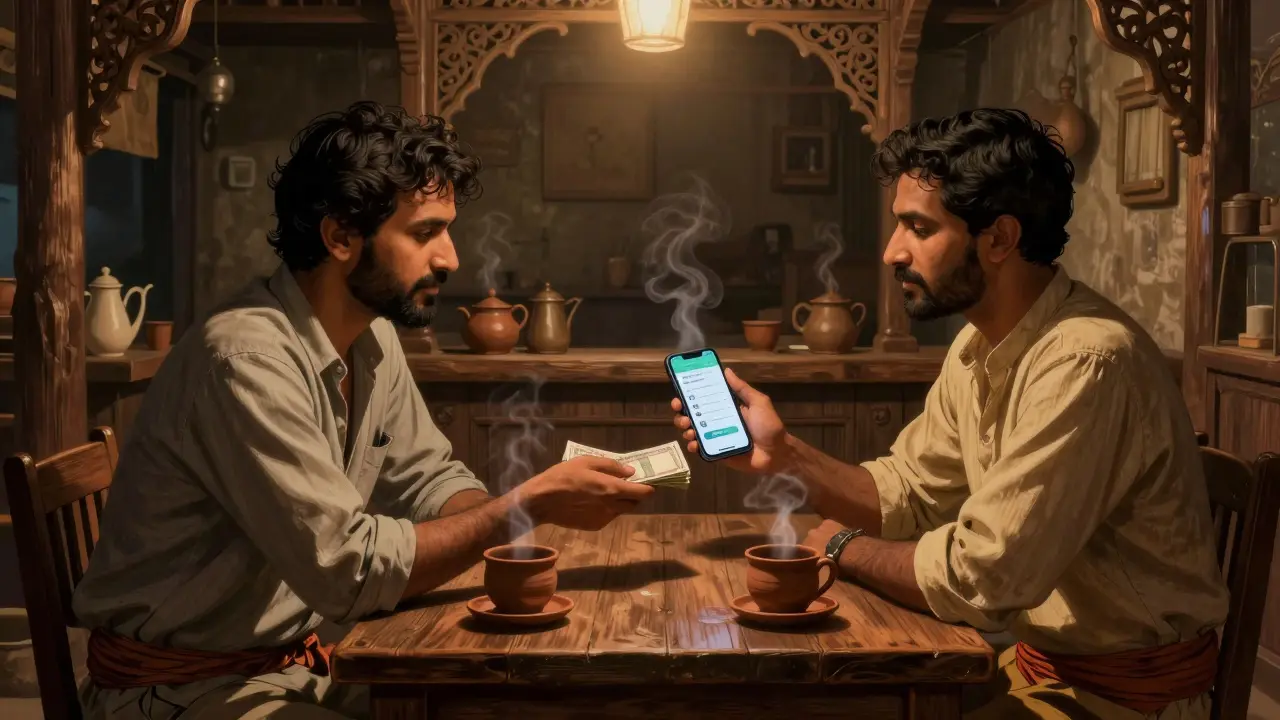
In neighborhoods across Dhaka and Chittagong, informal networks of "agents" operate. These individuals facilitate trades between Bangladeshi Taka (BDT) and stablecoins like USDT (Tether). You transfer BDT to the agent’s bank account, and they send USDT to your Binance wallet. They charge a small commission, often just a percentage point above the market rate. This method is popular because it feels familiar; it mimics traditional currency exchange booths, but for digital assets.
2. Binance P2P Platform
This is the engine behind the 600,000-user figure. Binance has a built-in P2P marketplace where users trade directly with each other. A buyer in Bangladesh finds a seller willing to accept BDT via bank transfer (like bKash, Nagad, or standard bank transfers). The platform holds the crypto in escrow until the payment is confirmed. This removes the need for a third-party agent and provides a layer of security. The app itself is still available on the Google Play Store, meaning the government hasn’t blocked access to the software, only the financial transactions associated with it.
| Method | Risk Level | Speed | Detection Risk |
|---|---|---|---|
| Credit Card Direct Purchase | High | Instant | Very High (Banks track USD outflows) |
| Local Cash Agents | Medium | Fast | Low (Cash leaves no digital trail initially) |
| Binance P2P (Bank Transfer) | Medium | 15-30 mins | Medium (Bank statements show transfers to individuals) |
Why Do They Do It? The Economic Drivers
You might wonder why someone would risk breaking financial regulations to buy crypto. The reasons are purely economic. First, the Bangladeshi Taka has faced significant volatility. Holding assets in USDT offers a hedge against inflation and currency devaluation. When the local currency weakens, the dollar-backed stablecoin retains its value.
Second, cross-border payments are a nightmare. Sending money to family abroad or paying for international services through traditional banking channels is slow, expensive, and heavily regulated. Crypto offers a faster, cheaper alternative. While the government restricts this to prevent capital flight, the demand for efficient remittance channels remains high. For freelancers and IT workers earning in dollars, converting those earnings into crypto and then back to Taka (or keeping them in crypto) is a practical necessity, even if it skirts the edge of legality.
The Government’s Contradictory Stance
Here is where things get interesting. While the Bangladesh Bank bans cryptocurrency, the government released a National Blockchain Strategy in 2020. Yes, they banned the coins but embraced the technology. They recognize blockchain as essential for digital transformation, supply chain management, and public record keeping.
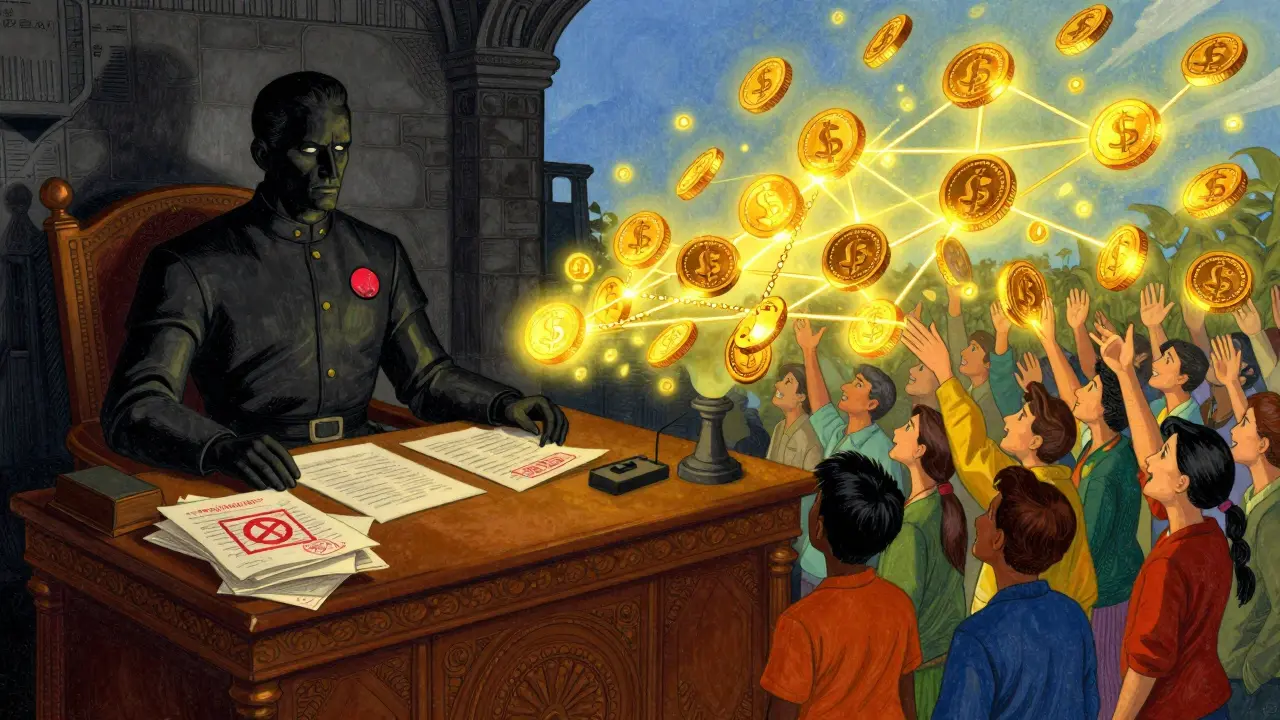
This creates a strange dichotomy. The state wants the efficiency of blockchain without the decentralization of crypto. Experts like Dr. B M Mainul Hossain from Dhaka University argue that this approach is flawed. He states, "Banning is not a solution." His point is that prohibition doesn’t stop adoption; it just pushes it underground. By banning crypto, the government loses visibility into the market. They can’t tax it, regulate it, or protect users from scams. Instead, they create a shadow economy that operates outside their control.
The Ministry of Finance and the FIU are aware of this. They monitor trends, but they haven’t shifted policy yet. As of 2025, the stance remains cautious. They fear money laundering and terrorism financing more than they desire the economic benefits of crypto integration. However, the sheer scale of usage-600,000 users is a significant portion of the digitally active population-makes complete suppression impossible.
Risks for the User
So, if you are considering joining these 600,000 users, what are the real dangers? It’s not just about the government knocking on your door (though that is a theoretical risk). The bigger issues are operational.
- Scams and Fraud: Because the market is unregulated, there is no consumer protection. If a P2P seller takes your money and doesn’t release the crypto, you have limited recourse. The police may not take your complaint seriously since the underlying asset is banned.
- Bank Account Freezes: Banks are instructed to watch for suspicious transactions. If your account shows frequent transfers to multiple individuals labeled as "crypto merchants" by internal algorithms, your account could be frozen for investigation. This disrupts your daily life and business operations.
- Tax Ambiguity: The National Board of Revenue treats crypto transactions under the general Income Tax Ordinance of 1984. There is no specific crypto tax guide. This means you could be liable for taxes on gains, but the reporting mechanism is unclear. Many users simply ignore this, hoping they won’t be audited.
The Future: Will the Ban Lift?
Look at the neighbors. India has moved toward severe restrictions but allows investment. Nigeria blocks banking channels but sees massive growth. Bangladesh is lagging behind. The pressure is mounting. With 600,000 users already on Binance, the genie is out of the bottle.
Most analysts believe a total ban is unsustainable. The likely future scenario is not an immediate legalization, but a gradual loosening. We might see a framework similar to India’s, where crypto is treated as a taxable asset rather than legal tender. This would allow the government to monitor transactions, collect taxes, and provide some level of investor protection. Until then, the 600,000 users will continue to navigate the grey zone, relying on P2P networks and local agents to keep their digital economies alive.
For now, the message from Dhaka is clear: the government says no, but the people say yes. And in the world of finance, the people usually win.
Is Binance legal in Bangladesh?
No, Binance is not officially legal in Bangladesh. The Bangladesh Bank prohibits the use of cryptocurrencies for trading or transactions under existing financial laws. However, the app is accessible, and many users trade via P2P markets.
Can I use my Bangladeshi bank card to buy crypto on Binance?
Generally, no. Direct purchases using credit or debit cards are often blocked or flagged by banks because they detect transactions to crypto merchants. Most users rely on P2P trading or local agents instead.
What happens if the government catches me trading crypto?
While there is no specific prison sentence for holding crypto, you face risks under the Foreign Exchange Regulation Act. Penalties can include fines, confiscation of funds, or freezing of bank accounts. Prosecution is rare for small amounts but possible for large-scale violations.
Why do so many Bangladeshis use Tether (USDT)?
Tether is pegged to the US Dollar. Users buy it to protect their savings from the depreciation of the Bangladeshi Taka and to facilitate easier cross-border payments without high banking fees.
Does Bangladesh tax cryptocurrency profits?
Yes, technically. The National Board of Revenue applies the general Income Tax Ordinance of 1984 to crypto transactions. However, there is no specific reporting framework, leading to ambiguity in how and when taxes should be paid.
you people really think this is a rebellion. its just greed dressed up as freedom. the government isn't banning it because they hate innovation they are banning it because they cant control the money flow and that makes them nervous. but honestly who cares about their feelings. if you want to lose your savings to a scammer or have your bank account frozen for three months while some bureaucrat decides if you are a terrorist go ahead. i bet half of these 600k users are just trying to move dirty money out of the country. typical.
i feel so bad for everyone in bangladesh right now. it must be terrifying to try and save money when the currency keeps losing value. my heart goes out to the freelancers who work so hard only to have their earnings trapped by strict banking rules. please stay safe everyone. sending love from america 🇺🇸💖
Absolutely pathetic. The British government at least has the decency to regulate things properly instead of letting a shadow economy fester like a gangrene on the limb of society. You lot in Bangladesh are playing with fire and expecting not to get burned. It is anarchy pure and simple. When the inevitable crash comes do not come crying to us for help. This is what happens when you ignore financial prudence for the sake of quick gains. Disgraceful.
I am truly inspired by the resilience of the Bangladeshi people! They are finding ways to thrive despite incredible odds. That takes guts and creativity. We can all learn something from their determination to take control of their financial futures even when the system says no. Keep fighting the good fight! You are heroes in my book! 🙌✨
the nature of money is trust and when the state loses the trust of the people the people will find another vessel for that trust whether it is gold or bitcoin or tether. the ban is merely a symptom of a deeper rot within the institutional framework. one must consider that the prohibition creates a vacuum which is then filled by informal networks that operate outside the gaze of the regulator. this is not a new phenomenon it is simply the latest iteration of human ingenuity bypassing restrictive structures. the question is not whether they will stop using crypto but whether the state will eventually realize that taxation requires visibility and visibility requires permission. until then the dance continues.
oh wow another article about poor third world countries having to hustle while we sit here judging them 🙄 like imagine having a stable currency and not worrying about inflation every single day. you guys have no idea how lucky you are. also why does everyone assume these people are criminals? maybe they just want to keep their money safe from a corrupt government? food for thought 🤔💅
do you really believe the narrative that this is just about inflation? look closer. the central banks are losing their grip on the monetary supply and they know it. the ban is a desperate attempt to prevent capital flight before the taka collapses completely. the elite already moved their assets offshore years ago. they left the common man with the hot potato. the blockchain is the only ledger that cannot be rewritten by the powerful. wake up sheeple. the matrix is cracking.
i agree with the points about economic drivers. it makes sense that people would seek alternatives when the traditional system fails them. it is important to understand the context before jumping to conclusions. thank you for sharing this perspective.
actually i think the government is doing the right thing by keeping it banned. crypto is a bubble waiting to burst and protecting citizens from scams is a noble goal. besides decentralization sounds scary to me. i prefer my money to be controlled by experts who know what they are doing. not that anyone actually knows what they are doing anymore but still.
let us bring everyone into this conversation. whether you support crypto or not the reality is that 600000 people are already doing it. ignoring them does not make them disappear. we need to create inclusive policies that protect these users rather than punishing them. let us work together to find a solution that respects both regulation and individual freedom. your voice matters here.
it is evident that the lack of specific legislation creates a perilous environment for the average citizen. the reliance on archaic laws such as the foreign exchange regulation act of 1947 demonstrates a profound failure of modern governance. one must observe that the ambiguity serves neither the state nor the subject. the result is a chaotic marketplace where fraud thrives and legitimate commerce is stifled. it is imperative that a clear legal framework be established without delay to mitigate these systemic risks.
everyone here is missing the point. the real issue is not the ban it is the incompetence of the local agents. i have seen too many people get screwed over by shady middlemen charging insane fees. if you are stupid enough to use p2p without verifying the seller then you deserve to lose your money. stop blaming the government for your own lack of due diligence. grow up.
how quaint. the government bans the coins but loves the blockchain technology. classic case of wanting the cake and eating it too. they want the efficiency without the accountability. it is almost funny how predictable authoritarian regimes are. they always think they can control everything until they realize they cannot. sarcasm aside the situation is tragic for those caught in the middle.
i have been following this situation closely and it is quite alarming. the lack of consumer protection is a major concern. if someone gets scammed there is nowhere to turn. the police will likely dismiss the complaint since the asset itself is illegal. this leaves the most vulnerable members of society exposed to significant financial harm. it is a dangerous game to play.
we must approach this topic with respect for all viewpoints. while some see crypto as a tool for liberation others see it as a threat to stability. both perspectives have merit. the key is to engage in constructive dialogue rather than demonizing either side. let us strive for understanding and perhaps we can find a middle ground that benefits everyone involved. peace and prosperity to all.
It is very encouraging to see so many people taking initiative. I hope that in the future regulations will become more favorable. Please continue to educate yourselves about the risks. Stay optimistic and keep pushing for positive change. The world is changing fast and we must adapt accordingly. Good luck to everyone involved.
why should we care about bangladesh. focus on american issues first. our own economy is struggling and yet here we are discussing some obscure crypto market in south asia. typical globalist distraction. keep your nose out of other countries business and fix your own house first. shame on you for wasting bandwidth on this nonsense.