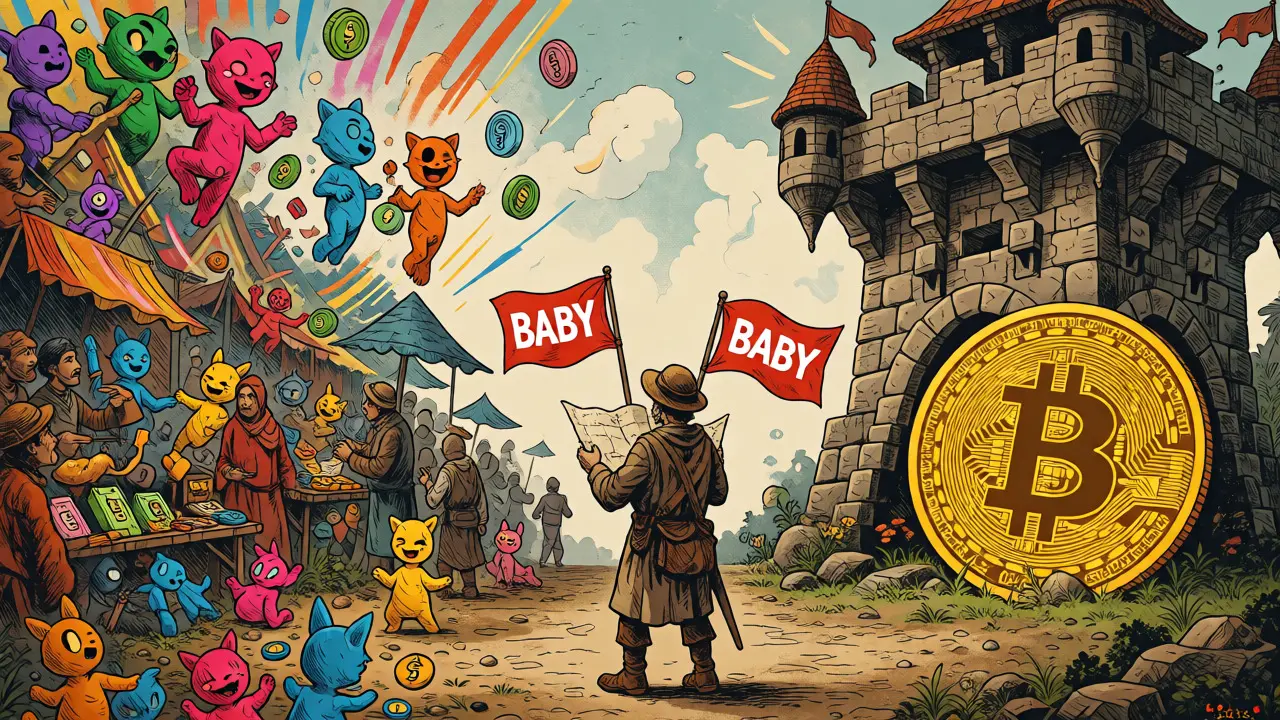
Ever typed "BABY airdrop" into a search bar and gotten two completely different answers? You're not alone. The crypto space is currently buzzing with confusion because two distinct projects-BabySwap, a decentralized exchange on BNB Smart Chain, and Babylon, a Bitcoin-secured network infrastructure project-both use the ticker symbol BABY. If you are trying to claim rewards, mixing these up could mean missing out entirely or wasting time on the wrong platform. This guide breaks down exactly what happened with BabySwap's recent recognition, how it differs from the massive Babylon token launch, and what you actually need to do to secure your assets.
| Feature | BabySwap (BSC) | Babylon (Bitcoin Layer) |
|---|---|---|
| Primary Function | AMM Decentralized Exchange & NFT Platform | Bitcoin-secured Network Infrastructure |
| Airdrop Status | No direct token airdrop for users; won ecosystem awards | Major token distribution (600M+ BABY) |
| Key Event | MVBIII Monthly Stars Award (Aug 2023) | Genesis Launch & Binance Listing (April 2025) |
| Eligibility | N/A for user airdrop (team/project award) | BTC stakers, Pioneer Pass holders, Devs |
The BabySwap MVBIII Recognition: What It Actually Was
Let's clear up the biggest misconception first: BabySwap did not run a standard user-facing airdrop in conjunction with its Most Valuable Builders III (MVBIII) win. Instead, this was a recognition program by BNB Chain designed to reward top-performing applications. In August 2023, BabySwap secured the "Monthly Stars" award, a distinction that highlighted its dominance in daily active users (DAU) and trading volume. At its peak, the platform ranked fifth among all BSC applications for DAU, handling roughly $60 million in daily trades. This wasn't about giving free tokens to every wallet holder; it was about validating the platform's utility within the BNB ecosystem.
Why does this matter to you? Because many users assumed "winning an award" meant "getting free money." In reality, MVBIII participants received ecosystem support and visibility rather than direct token distributions to their wallets. If you were holding BABY tokens on BabySwap during this period, your balance didn't suddenly double due to an airdrop. However, the increased visibility often drives trading volume, which can indirectly benefit liquidity providers through higher fee earnings. The platform's focus remains on its Automated Market Maker (AMM) model and its Non-Fungible Baby (NFB) NFTs, which allow users to stake digital collectibles for boosted Annual Percentage Rates (APRs).
Babylon’s BABY Token: The Real Airdrop Event
If you are looking for a genuine airdrop opportunity involving the name BABY, you are likely thinking of Babylon. Unlike BabySwap, Babylon is a new blockchain infrastructure project that leverages Bitcoin's security model. Its token launch generated significant hype, with registration opening in early 2025 and listing on major exchanges like Binance scheduled for April 10, 2025. The total genesis supply stands at 10 billion BABY tokens, with a core airdrop allocation of at least 600 million tokens (6% of supply). When you factor in bonus staking rewards, this number expands to approximately 900 million BABY tokens.
This is where the details get critical. Babylon's airdrop isn't just for anyone who signed up for a newsletter. Eligibility is strictly divided into five specific categories:
- BTC Stakers: Users who staked Bitcoin during Phase-1 up to block height 875,087.
- Pioneer Pass Holders: Owners of specific NFTs granted to early community members.
- Finality Providers: Nodes registered on GitHub that provided delegation services during Phase 1.
- Developers: Contributors to open-source projects related to the Babylon ecosystem.
- Social Contributors: Active community members engaged before February 18, 2025.
Missing the deadline of March 25, 2025, for registration meant forfeiting potential claims. For those who missed it, the secondary market now dictates access, but always verify sources to avoid scams capitalizing on the confusion between the two BABY projects.
Technical Differences: Why They Are Not Interchangeable
You might wonder why these two projects don't compete directly. They operate in entirely different layers of the crypto stack. BabySwap is a native application on the BNB Smart Chain (BSC), built using standard smart contracts for swapping tokens and minting NFTs. It integrates seamlessly with wallets like MetaMask and Trust Wallet, focusing on ease of use for retail traders. Its technical architecture prioritizes speed and low fees, typical of BSC-based DeFi platforms.
Babylon, conversely, is a layer-one infrastructure solution. It doesn't just host apps; it provides security for other chains by anchoring them to Bitcoin. This requires specialized node infrastructure and a novel consensus mechanism. While BabySwap aims to make DeFi accessible to everyone with lower entry barriers, Babylon targets institutional-grade security for the broader blockchain ecosystem. Understanding this distinction helps you evaluate risk: BabySwap carries the risks of a competitive DEX market (where it holds only ~1.8% market share against giants like PancakeSwap), while Babylon faces challenges related to its aggressive inflation schedule.
Market Sentiment and Long-Term Viability
Community sentiment reveals a split narrative. On Reddit, discussions around Babylon often highlight skepticism regarding its tokenomics. An 8% annual inflation rate in the first year creates downward price pressure, leading some analysts to predict a 40-60% depreciation in token value if adoption doesn't accelerate rapidly. One popular comment noted, "The 8% inflation is a red flag for holding long-term," reflecting widespread caution among retail investors.
BabySwap, meanwhile, faces a different challenge: retention. Data from Messari indicates that 68% of MVB winners experience user decline within six months post-award. BabySwap's Telegram community dropped from 22,000 members during its MVBIII peak to around 15,000 by March 2025. To combat this, the team is pivoting toward GameFi integration and avatar profiles, hoping to gamify the user experience and lock in engagement beyond simple token swaps. Their strategy relies on the premise that "DeFi is for everyone," attempting to democratize yield opportunities that are usually reserved for high-capital whales.
How to Verify Your Claims and Avoid Scams
With two projects sharing a ticker, phishing attacks are inevitable. Here is how to protect yourself when investigating either project:
- Check the Contract Address: Always verify the smart contract address on BscScan (for BabySwap) or the official Babylon explorer. Scammers often deploy fake tokens with similar names.
- Use Official Portals: For Babylon claims, use only the links provided on the official Babylon Foundation website or verified exchange announcements (like Binance). Never click links from random DMs on Twitter or Discord.
- Review Activity History: If you believe you qualified for Babylon as a BTC staker, ensure your wallet activity matches the required block heights. About 32% of initial registrants had to submit additional documentation to prove eligibility, so keep your transaction hashes handy.
- Ignore "Double Claim" Offers: No legitimate protocol will ask you to connect your wallet and sign a transaction to "merge" BabySwap and Babylon rewards. These are separate entities with no shared treasury.
What Comes Next for Both Projects?
Looking ahead, both projects have roadmaps that could influence token value. BabySwap plans to release limited edition NFB NFTs weekly, aiming to sustain APR incentives. If they successfully integrate GameFi elements, they might recapture some of the lost user base. Babylon, on the other hand, will distribute bonus staking rewards approximately six months after its Genesis launch. This delayed gratification model tests community patience but ensures that early adopters remain locked in during the critical post-listing volatility phase.
For the average investor, the takeaway is clear: Don't let the similar names lead to lazy research. BabySwap offers yield through trading and NFT staking on BSC, while Babylon offers speculative exposure to Bitcoin-secured infrastructure via its newly listed token. Know which game you are playing before you put your capital to work.
Did BabySwap give away free tokens to users during MVBIII?
No. BabySwap won the "Monthly Stars" award from BNB Chain's MVBIII program, which recognized the platform's performance. This award went to the project/team for ecosystem support and visibility, not as a direct token airdrop to individual wallet holders.
Are BabySwap and Babylon the same company?
No, they are completely different entities. BabySwap is a decentralized exchange (DEX) on BNB Smart Chain, while Babylon is a Bitcoin-secured network infrastructure project. They coincidentally share the BABY ticker symbol but have different teams, technologies, and goals.
Who was eligible for the Babylon BABY airdrop?
Eligibility included Bitcoin stakers from Phase-1, Pioneer Pass NFT holders, registered finality providers, open-source developers, and active social media contributors from before February 18, 2025. Registration closed on March 25, 2025.
What is the main risk with the Babylon BABY token?
The primary concern is its inflationary tokenomics. With an 8% annual inflation rate in the first year, there is significant sell pressure potential. Analysts suggest this could lead to price depreciation unless adoption rates exceed expectations.
Can I stake NFB NFTs on BabySwap?
Yes, BabySwap allows users to stake Non-Fungible Baby (NFB) NFTs in pools to earn higher Annual Percentage Rates (APRs). New limited-edition NFTs are released 1-3 times per week to maintain community interest.