
Imagine waking up to find that your salary has lost half its value overnight. For millions of Venezuelans, this isn't a hypothetical nightmare-it’s daily life. With annual inflation hitting 229% in May 2024 according to the Venezuelan Finance Observatory (OVF), holding cash is like trying to hold water in a sieve. This desperate reality has forced a dramatic shift in how people survive. Instead of relying on the traditional banking system, which has been crippled by sanctions and mismanagement, citizens have turned to digital assets. Cryptocurrency is a decentralized digital currency that uses cryptography for security and operates independently of a central bank. In Venezuela, it has become less of an investment vehicle and more of a lifeline.
The Shift from Bolívar to Digital Dollars
The collapse of the bolívar accelerated sharply after October 2023, when the government stopped defending the currency's value. Between late 2023 and mid-2024, the bolívar shed over 70% of its purchasing power. Faced with empty shelves and worthless paychecks, ordinary people needed a way to preserve their savings. The answer wasn’t gold or real estate-it was crypto. According to Chainalysis’ 2024 Crypto Adoption Index, Venezuela ranked 13th globally for cryptocurrency usage, boasting a staggering 110% year-over-year growth. This surge wasn’t driven by tech enthusiasts chasing profits; it was driven by necessity. Economist Aarón Olmos noted in August 2025 that Venezuelans adopted these tools because of “inflation, low wages, foreign currency shortages, and difficulty opening bank accounts.”
While Bitcoin (BTC is the first and most widely recognized cryptocurrency, created in 2009 as a peer-to-peer electronic cash system.) remains the symbolic leader, the real workhorse of the Venezuelan economy is the stablecoin. Specifically, Tether (USDT is a fiat-collateralized stablecoin pegged to the US dollar, designed to maintain a stable value relative to USD.). Locally known as “Binance dollars,” USDT offers the stability of the U.S. dollar without the hassle of physical cash smuggling or unreliable bank transfers. It allows merchants and consumers to price goods in a reliable unit of account while bypassing the volatile local currency entirely.
How P2P Trading Became the New Banking System
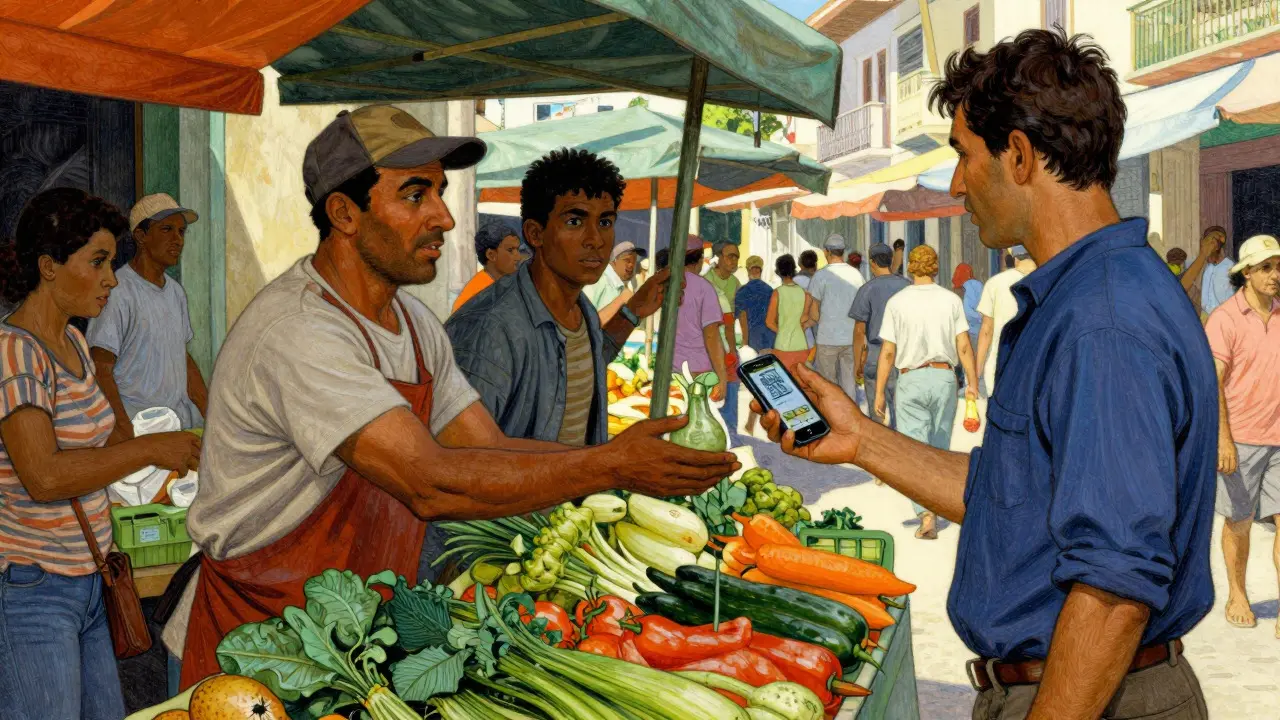
If you walk through Caracas today, you’ll notice something unusual at many shops. You can buy groceries, phone accessories, or rent an apartment using your smartphone. But there are no credit card terminals flashing green lights. Instead, transactions happen through Peer-to-Peer (P2P) platforms. P2P Trading is a method of exchanging cryptocurrencies directly between users without intermediaries like banks or centralized exchanges. Platforms like Binance P2P and LocalBitcoins have effectively replaced traditional banks for millions of users.
Here’s how it works in practice: A seller lists USDT for sale at a specific rate. A buyer agrees to the price and locks their funds in an escrow service provided by the platform. Once the seller confirms receipt of payment via mobile transfer or cash deposit, the platform releases the crypto to the buyer. This system circumvents the strict capital controls and U.S. sanctions that have blocked Venezuelan banks from international networks since 2017. By July 2025, private sector crypto transactions reached $119 million monthly, according to data analyzed by AInvest from the National Superintendence of Crypto Assets (SUNACRIP). Of these transactions, 91% involved stablecoins, highlighting the preference for stability over speculation.
| Method | Speed | Cost/Fees | Reliability | Accessibility |
|---|---|---|---|---|
| Bolívar Cash | Instant | Low | Very Low (Inflation Risk) | High |
| Traditional Bank Transfer | Days | High | Low (Sanctions/Restrictions) | Medium |
| Bitcoin (BTC) | 10-60 mins | Variable | Medium (Volatility) | Medium |
| USDT (Tron Network) | <2 mins | Low (~$1) | High (Stable Value) | High (Smartphone Required) |
The Infrastructure Challenges: Internet and Sanctions
Adopting crypto sounds simple until you try to do it with slow internet and heavy government scrutiny. Venezuela ranks 153rd globally for internet speed, averaging just 14.79 Mbps download speeds in Q2 2025. While this is enough for basic browsing, it can make loading complex wallet interfaces frustrating during peak hours. More critically, only 45% of the population has reliable connectivity, according to ITU data from February 2025. If your connection drops during a transaction, you risk losing money or getting stuck in limbo.
Then there are the sanctions. The U.S. government has imposed severe restrictions on financial dealings with Venezuela under Executive Order 13850. Major platforms like Binance have had to comply by blocking accounts linked to sanctioned banks or individuals. In March 2025, FastBull reported that approximately 18% of attempted transactions were blocked due to these compliance checks. For a user trying to send remittances home, this means constant anxiety about whether their funds will go through. Despite this, the ecosystem persists. Decentralized alternatives like Bisq have seen an 8% market share increase, offering a censorship-resistant option for those wary of centralized platforms shutting down access.
Real Stories: Survival in the Digital Age
Behind the statistics are real people making tough choices. Victor Sousa, a resident of Caracas, shared his experience with Financial Times in early 2025. “There’s lots of places accepting it now... The plan is to one day have my savings in crypto,” he said while buying phone accessories with USDT. His story is common. Carlos, another Caracas resident, explained that he uses USDT for everything from food to rent because it is “much more reliable than the bolivar.”
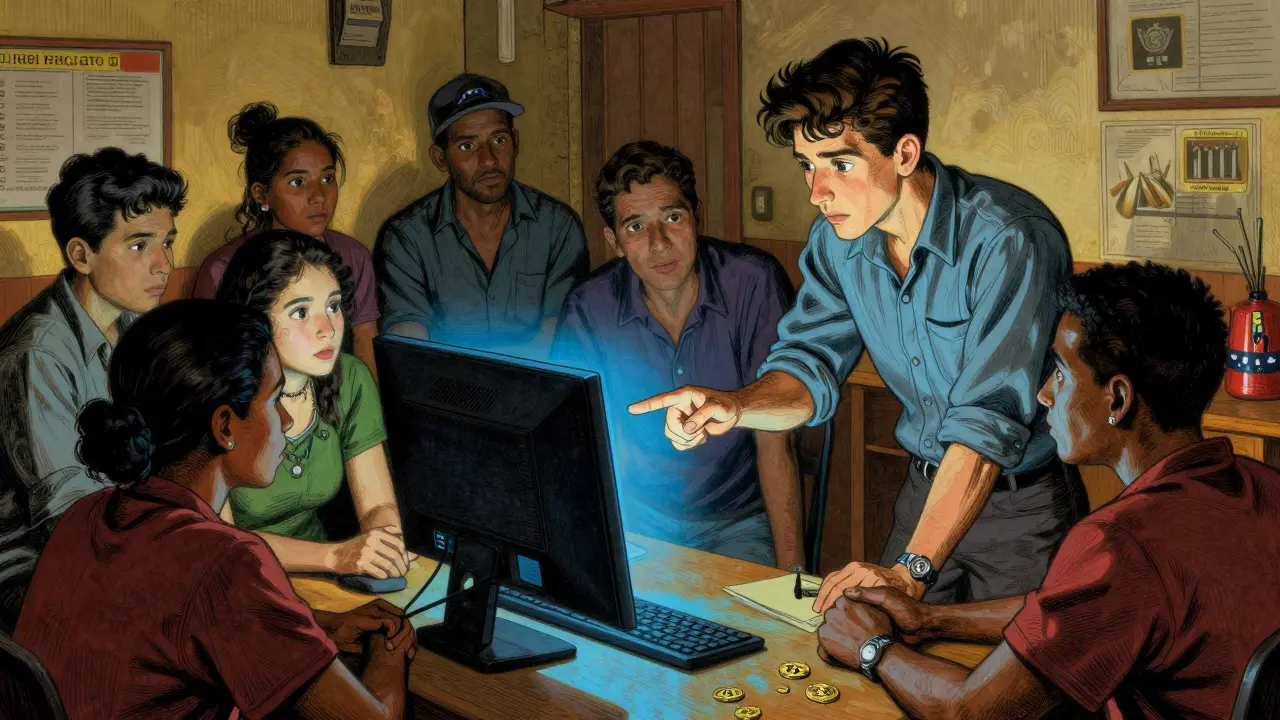
Community support plays a huge role in this transition. With formal education lacking, Venezuelans have turned to each other. YouTube channels like 'Cripto Para Todos,' which boasts 127,000 subscribers, provide free tutorials on how to set up wallets and avoid scams. Even universities are catching up; Universidad Central de Venezuela launched mandatory cryptocurrency courses in January 2025. These grassroots efforts help bridge the knowledge gap, allowing even non-tech-savvy individuals to participate in the digital economy within weeks.
Government Stance and Regulatory Uncertainty
The Venezuelan government’s relationship with crypto is complicated. On one hand, they launched their own state-backed cryptocurrency, the Petro, in 2018. However, the Petro collapsed in 2024 amid corruption allegations related to oil-linked transactions. On the other hand, the government has cracked down on private exchanges, notably shutting down SUNACRIP’s regulatory functions in 2023. This creates a confusing environment where crypto is tolerated out of necessity but lacks legal protection.
This ambiguity leaves users vulnerable. If a platform freezes your assets or gets hacked, there is little recourse. The Central Bank of Venezuela acknowledged crypto’s role in its 2024 report but offered no clear framework for consumer protection. As University of Zulia Professor Carlos Hernández pointed out, “Crypto adoption in Venezuela is a symptom of economic failure, not a solution.” It provides tactical relief but doesn’t fix the underlying issues of production shortages or supply chain disruptions.
Future Outlook: Lifeline or Dead End?
Looking ahead, the trajectory seems clear: crypto will remain essential until the bolívar stabilizes. IMF economists predict that inflation won’t drop below 50% annually before 2027. Until then, digital assets will continue to serve as the backbone of informal commerce. There is also talk of integration with regional systems, such as the BRICS cross-border payment initiative, which could offer alternative infrastructure less vulnerable to U.S. pressure.
However, risks remain high. Dependency on centralized issuers like Tether Limited, which controls 76% of Venezuela’s stablecoin market, poses a systemic threat. If Tether were to face regulatory action or technical failure, the entire parallel economy could shudder. Furthermore, if the bolívar ever does stabilize, rapid de-adoption could leave users exposed to volatility without the immediate need driving current usage. For now, though, for millions of Venezuelans, crypto is simply the best tool available to keep their heads above water.
Why do Venezuelans prefer USDT over Bitcoin?
Venezuelans prefer USDT because it is pegged to the U.S. dollar, providing price stability. Bitcoin’s volatility makes it risky for daily purchases like food or rent. USDT allows users to store value without worrying about sudden drops in price, acting as a digital substitute for physical dollars.
Is it safe to use P2P platforms in Venezuela?
P2P platforms like Binance P2P are generally safe due to escrow services, but risks exist. Users must verify sellers carefully to avoid fraud. Additionally, U.S. sanctions can block transactions if accounts are linked to sanctioned entities. Always use reputable platforms with strong community feedback.
How does internet speed affect crypto usage?
Slow internet can cause transaction delays or failures, leading to financial loss. With average speeds of 14.79 Mbps, users often struggle during peak times. Reliable connectivity is crucial for confirming payments and accessing wallet apps, making internet access a key barrier to entry.
What happened to the Petro cryptocurrency?
The Petro, Venezuela’s state-backed crypto, collapsed in 2024 following corruption allegations tied to oil transactions. It failed to gain trust or liquidity, unlike private stablecoins. Its demise highlighted the limitations of government-controlled digital currencies in a crisis-driven economy.
Can foreigners send money to Venezuela via crypto?
Yes, crypto is a popular method for sending remittances. In 2023, crypto accounted for 9% of total remittances, totaling around $461 million. Platforms like Binance P2P allow easy conversion from USD to USDT, which recipients can then exchange for local cash or spend directly.