
You might think the first block of Bitcoin is just a technical starting point, a boring line of code that kicks off the chain. But it’s actually one of the most interesting artifacts in digital finance history. It contains a newspaper headline from 2009, a hidden message about banking bailouts, and 50 BTC that nobody can ever spend. If you’ve ever wondered why Bitcoin’s Genesis Block is so special, or why those initial coins are locked forever, you’re in the right place. This isn’t just about tech specs; it’s about understanding the philosophical roots of the entire cryptocurrency ecosystem.
The Birth of Block Zero
On January 3, 2009, at 18:15:05 UTC, Satoshi Nakamoto created the first block of the Bitcoin blockchain. In modern software implementations, this is known as Block 0, though some older documentation calls it Block 1. Unlike every other block in the network, which is mined by computers solving complex puzzles to validate transactions, the Genesis Block was manually hardcoded into the Bitcoin client. There were no previous blocks to link to, so its "previous block hash" field is filled with zeros. This makes it the absolute root of the tree.
Why did Satoshi do this? Because you can’t mine the first block if there’s no chain to add it to yet. It had to be seeded manually. This manual creation ensures that every node in the network starts with the exact same foundation. If your Genesis Block doesn’t match everyone else’s, you’re on a different network entirely. That’s why changing the Genesis Block would effectively create a new cryptocurrency, not just an update to Bitcoin.
The Newspaper Headline Message
Embedded in the coinbase transaction of the Genesis Block is a string of text: "The Times 03/Jan/2009 Chancellor on brink of second bailout for banks." This wasn’t just random data. It served two purposes. First, it acted as a timestamp, proving the block couldn’t have been created before that morning when The Times printed that headline. Second, it was a political statement. By referencing the UK government’s struggle to save failing banks during the financial crisis, Satoshi positioned Bitcoin as a direct response to the failures of traditional fiat currency and central banking.
This message has become iconic. It’s not just code; it’s context. When you look at the raw data of the Genesis Block, you see a deliberate choice to anchor the technology in a specific moment of economic turmoil. Financial historians like Dr. Perry Mehrling have argued that this embedding serves as a permanent reminder of why Bitcoin exists. It’s a cryptographic birth certificate that says, "We started here because the old system broke down."
The Mystery of the Unspendable 50 BTC
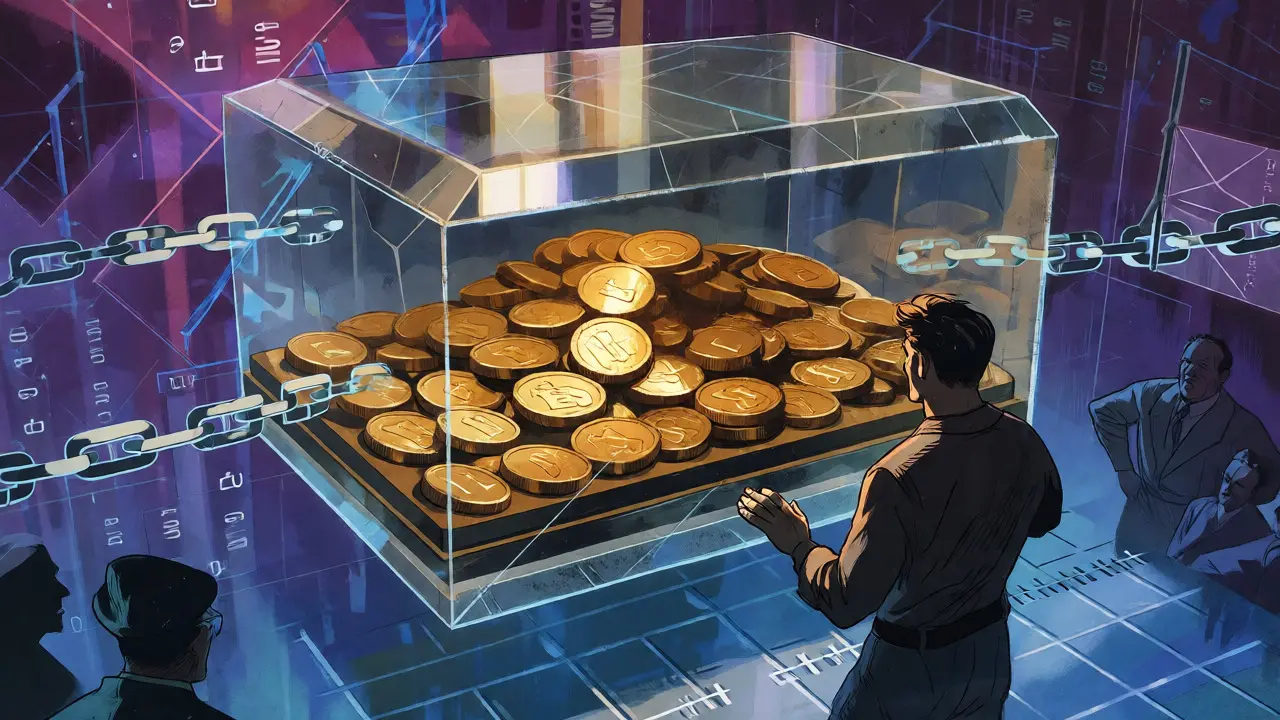
Every block reward in Bitcoin gives the miner a certain amount of BTC. For the Genesis Block, that reward was 50 BTC. But here’s the twist: those coins are permanently unspendable. You can’t move them, sell them, or use them in transactions. They sit in the ledger, untouched, like a museum exhibit.
Why? It comes down to how Bitcoin handles "coinbase" transactions (the first transaction in a block). To prevent double-spending attacks, Bitcoin requires that coinbase rewards mature after 100 confirmations before they can be spent. Since the Genesis Block is the very first block, it has zero predecessors. Therefore, it never reaches the required depth of 100 blocks behind it. The rule applies universally, but the Genesis Block is the exception that proves the rule-it can never satisfy the condition because nothing comes before it.
Some developers, including Pieter Wuille, have noted this was likely an unintended side effect of early code limitations rather than a grand design. However, the community has embraced it. Trying to fix it would require a hard fork, which would break compatibility with existing nodes and wallets. As Bitcoin Core maintainer Marco Falke pointed out, unlocking these coins offers no technical benefit and risks compromising the historical integrity of the chain. So, the 50 BTC remains frozen in time, reducing Bitcoin’s effective maximum supply to roughly 20,999,999.9769 BTC instead of a clean 21 million.
Technical Specs That Define the Network
The Genesis Block didn’t just start the chain; it set the rules for everything that followed. It established the initial mining difficulty at 1.0, making it the easiest block ever mined. Today, the difficulty is billions of times higher, reflecting the massive computational power securing the network. It also set the target block time at 10 minutes and confirmed the 21 million cap on total supply.
The block’s hash is 000000000019d6689c085ae165831e934ff763ae46a2a6c172b3f1b60a8ce26f. Notice the leading zeros? That’s proof-of-work in action. Miners must find a hash below a certain target value. The more zeros at the start, the harder it was to find that specific number. For the Genesis Block, the low difficulty meant finding this hash was relatively quick, but it still required effort. This hash is now a fixed reference point. Every wallet and exchange uses it to verify they are connected to the real Bitcoin network.
How Other Blockchains Handle Their Genesis Blocks
Not all blockchains start the way Bitcoin does. Comparing Bitcoin’s approach to others reveals different philosophies about decentralization and distribution.
| Blockchain | Creation Method | Initial Distribution | Key Feature |
|---|---|---|---|
| Bitcoin | Manual Hardcode | 50 BTC (Unspendable) | Newspaper headline embedded; pure decentralized start. |
| Ethereum | Presale Allocation | 72M ETH (Spendable) | Distributed via ICO; 60M to presale buyers, 12M to foundation. |
| Ripple (XRP) | Company Issued | 100B XRP | Centralized distribution to founding company initially. |
| Cardano | Stake Distribution | 31.1B ADA | Established initial stake holders for Proof-of-Stake consensus. |
Ethereum, launched in 2015, used a coordinated token sale to distribute its initial supply. Its Genesis Block allocated funds to presale contributors and the Ethereum Foundation. Unlike Bitcoin, those coins were immediately spendable. Ripple took an even more centralized route, issuing 100 billion XRP directly to the company. Cardano, a proof-of-stake network, focused on distributing stakes to validators. These differences highlight Bitcoin’s unique commitment to a trust-minimized launch. There was no pre-mine sold to investors, no venture capital backing. Just code, a message, and a challenge.
Cultural Significance and Community Tributes
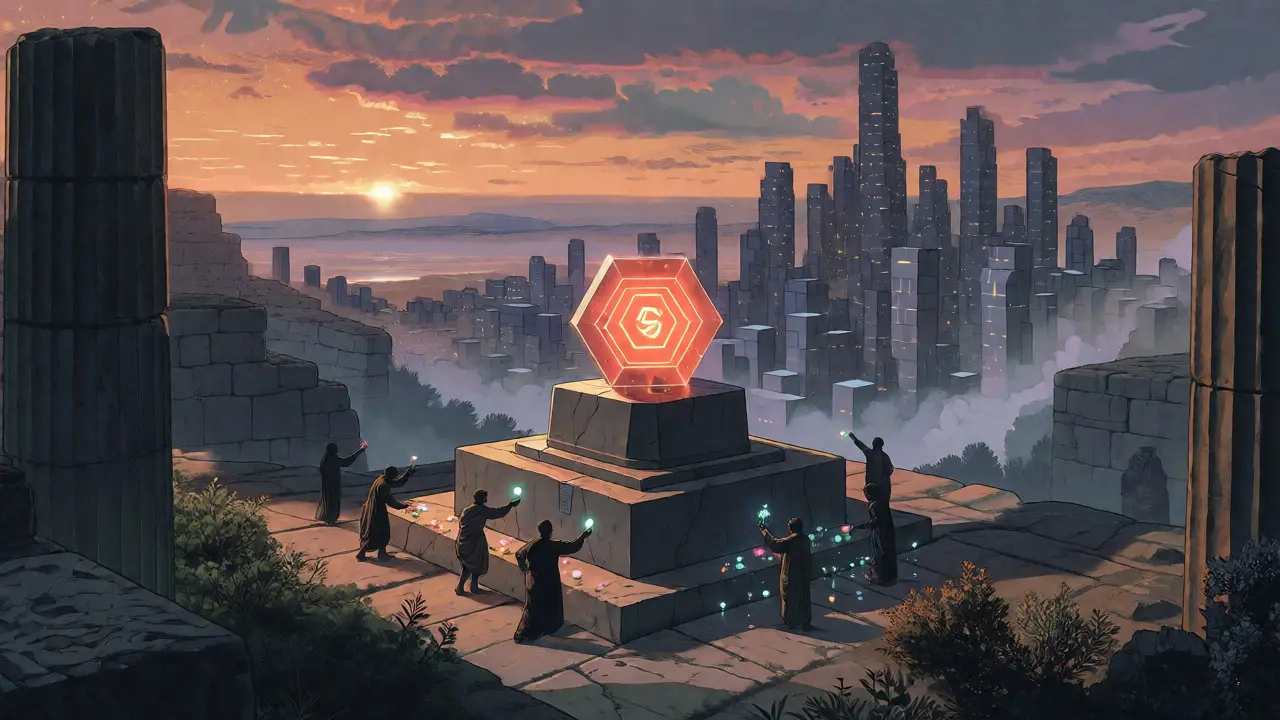
Over the years, the Genesis Block has become a cultural monument. Users often send small amounts of BTC to the address associated with the Genesis Block’s output as a form of tribute. Analytics firm Chainalysis reported that this address receives a few transactions per week, usually tiny amounts like 0.0001 BTC. One user described it as sending "a digital flower on Satoshi's digital grave."
A survey by Bitcoin Magazine found that 92% of respondents believe the unspendable coins should remain untouched. They view it as a sacred artifact. Changing it would feel like rewriting history. The Internet Archive even preserved the raw hexadecimal data of the Genesis Block in 2022, assigning it a permanent archival identifier. This preservation effort underscores its status not just as code, but as a piece of human heritage.
Why It Matters for Developers and Investors
If you’re building a blockchain application, you need to understand the Genesis Block. Modifying its parameters creates a fork. When Bitcoin Cash split from Bitcoin in 2017, it kept the original Genesis Block to maintain some lineage, but changes later diverged the chains. For enterprise adoption, verifying the Genesis Block is part of due diligence. Deloitte’s 2023 Global Blockchain Survey noted that 76% of enterprises developing blockchain solutions document their Genesis Block explicitly to establish provenance.
For investors, the Genesis Block represents the ultimate scarcity. The fact that the first reward is lost forever adds to the deflationary pressure. It’s a subtle detail, but it reinforces the idea that Bitcoin’s supply schedule is rigid and predictable. No central authority can mint new coins arbitrarily. The rules were set in stone-literally, in the hex code-on day one.
Frequently Asked Questions
Can the 50 BTC in the Genesis Block ever be spent?
No, under current Bitcoin protocol rules, the 50 BTC reward from the Genesis Block is permanently unspendable. This is due to a technical constraint requiring coinbase transactions to mature after 100 confirmations, which the first block can never achieve since it has no predecessors. Unlocking it would require a controversial hard fork.
What is the significance of the newspaper headline in the Genesis Block?
The headline "The Times 03/Jan/2009 Chancellor on brink of second bailout for banks" serves as both a timestamp and a political statement. It proves the block was created after the newspaper was published and signals Bitcoin’s purpose as an alternative to the traditional banking system during the 2008 financial crisis.
Is the Genesis Block considered Block 0 or Block 1?
In most modern Bitcoin implementations and programming languages, it is referred to as Block 0. However, some older documentation and conceptual explanations refer to it as Block 1 because it is the first block in the sequence. Technically, it is the parent of Block 1.
Did Satoshi Nakamoto mine the Genesis Block?
No, the Genesis Block was manually created and hardcoded into the Bitcoin source code. It was not mined through the standard proof-of-work process because there was no existing blockchain to attach it to. All subsequent blocks were mined normally.
Why is the Genesis Block hash important?
The Genesis Block hash (000000000019d668...ce26f) acts as a universal checksum for the Bitcoin network. Every node verifies this hash upon startup to ensure it is connecting to the correct, canonical Bitcoin blockchain. If the hash differs, the node rejects the connection, preventing forks from accidentally merging.