You’ve likely stumbled upon Bitcoin801010101018101010101018101010108 with the ticker BITCOIN because you saw a suspicious link or a strange listing online. Maybe it popped up in a search result, a spam email, or even a corrupted URL on a major exchange site. The name looks like a glitched version of Bitcoin, and the price is listed as $0. If you’re wondering if this is a hidden gem, a new testnet coin, or just another way to lose your money, the answer is stark: it is almost certainly a scam, a honeypot, or a database error designed to trick you.
This isn’t a legitimate cryptocurrency. There is no blockchain, no development team, no whitepaper, and no real market value behind this ticker. In fact, trying to interact with it could put your funds at risk. Let’s break down exactly what this entity is, why it exists, and how to protect yourself from similar traps in the wild world of digital assets.
The Red Flags of a Fake Token
When you look at Bitcoin801010101018101010101018101010108, the first thing that should raise an alarm is the name itself. Legitimate cryptocurrencies have clean, recognizable tickers. Bitcoin is BTC. Ethereum is ETH. Even obscure altcoins usually have short, memorable symbols like DOGE or SHIB. This string of numbers-801010101018101010101018101010108-is not a standard ticker format. It looks like a random hash or a corrupted data entry.
Second, check the price. A listing showing $0 USD is a massive warning sign. While some tokens start near zero, a established-looking project with a name mimicking Bitcoin shouldn’t be trading for nothing unless it has already failed completely or is being used to drain wallets. Third, look for volume. Real coins have trading volume. You can buy and sell them. For this specific ticker, there is zero verifiable volume on any reputable platform. If you can’t find it on CoinMarketCap or CoinGecko, it doesn’t exist in the legitimate market.
Here are the key attributes that define this entity:
- Name: Bitcoin801010101018101010101018101010108
- Ticker: BITCOIN (misleading)
- Price: $0 USD
- Market Cap: None / Unverifiable
- Blockchain: Unknown / Likely non-existent
- Status: Suspected Scam / Honeypot / Error
Why Does This Ticker Exist?
If this coin isn’t real, why do you see it? There are three main possibilities, all of which are dangerous for the average investor.
1. The Honeypot Trap
A honeypot token is a smart contract designed so that you can buy it, but you can never sell it. The code is rigged. When you try to trade it back for USDT or ETH, the transaction fails. Scammers create these tokens with names that mimic popular coins to lure in victims. They might promote it on social media or fake exchange listings. Once you send money to buy the "coin," it’s gone forever.
2. Database Corruption or Spam Links
Sometimes, malicious actors inject fake URLs into search results or exploit vulnerabilities in websites. You might click a link that looks like it leads to Binance or Coinbase, but the URL contains a garbled string like this one. The page loads, shows a fake chart, and asks you to connect your wallet. This is a phishing attempt. The goal isn’t to sell you a coin; it’s to steal the private keys from your wallet.
3. Impersonation Fraud
Scammers often register tokens with names very close to famous projects. They use the word "Bitcoin" in the title to confuse users who aren’t paying close attention. By using a ticker like "BITCOIN" instead of "BTC," they bypass some automated filters while still looking familiar enough to trick a novice. This is a classic brand impersonation tactic.
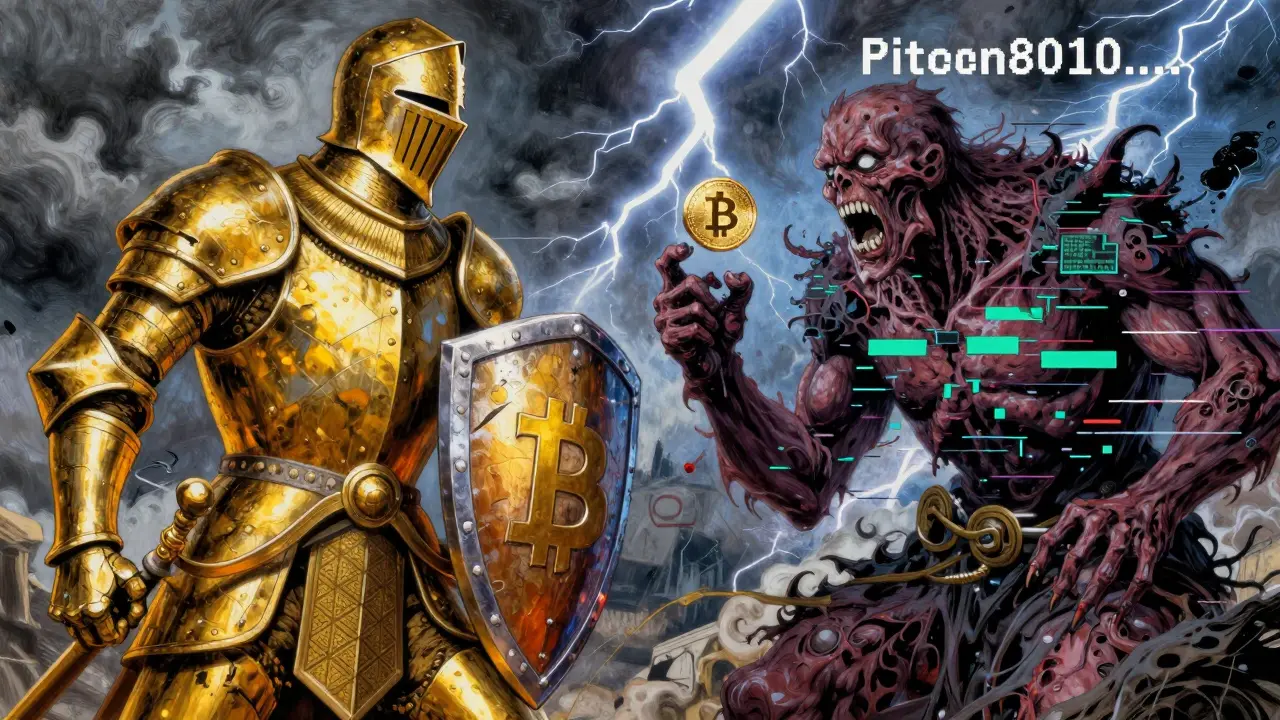
Real Bitcoin vs. The Fake Clone
To understand why this fake token is worthless, you need to compare it to the real thing. Bitcoin (BTC) is the original decentralized cryptocurrency created by Satoshi Nakamoto in 2009. It operates on a robust Proof-of-Work blockchain, secured by millions of dollars worth of mining hardware worldwide. As of mid-2026, Bitcoin trades in the tens of thousands of dollars per coin, with a market cap exceeding $1.6 trillion. It is listed on every major exchange globally, including Binance, Coinbase, Kraken, and Robinhood.
The fake token shares none of these traits. It has no miners, no network security, and no historical data. Below is a comparison to highlight the differences clearly.
| Feature | Bitcoin (BTC) | Bitcoin8010...108 (Fake) |
|---|---|---|
| Ticker Symbol | BTC | BITCOIN (Misleading) |
| Launch Date | January 2009 | Unknown / Recent Spam |
| Market Presence | Global, Top #1 Asset | None / Obscure Listings Only |
| Technology | Proof-of-Work Blockchain | Likely No Functional Code |
| Liquidity | High (Billions Daily) | Zero / Illiquid |
| Risk Level | Moderate (Volatility) | Extreme (Total Loss Likely) |
How to Verify Any Cryptocurrency
You don’t have to be an expert to spot a fake. Use these simple steps before interacting with any unknown token.
- Check Aggregators: Go to CoinMarketCap or CoinGecko. Search for the exact name. If it’s not there, or if the only result has zero volume and no website link, walk away. These platforms track over 10,000 legitimate tokens. If it’s missing, it’s suspect.
- Inspect the Contract Address: Every ERC-20 or BEP-20 token has a unique contract address on the blockchain. Copy that address and paste it into Etherscan or BscScan. Look at the "Holders" tab. If one wallet holds 99% of the supply, it’s a rug pull waiting to happen. Also, check if the contract is verified. Unverified contracts are a huge red flag.
- Analyze the Name and Ticker: Be skeptical of long, random strings of numbers or names that slightly misspell famous coins. Legitimate projects invest in branding. They don’t use garbage characters.
- Look for Community Presence: Real projects have active Twitter accounts, Discord servers, and GitHub repositories. Check the dates. Did the account just get created last week? Are the followers bots? If there’s no developer activity on GitHub, the project is dead on arrival.
- Test with Small Amounts (If You Must): Never invest money you can’t afford to lose. If you’re curious, send a tiny amount (like $5). Try to sell it immediately. If the sell button fails or the transaction reverts, you’ve found a honeypot. Cut your losses and leave.

The Psychology Behind Crypto Scams
Why do people fall for tokens like Bitcoin801010101018101010101810101010108? It’s often due to FOMO (Fear Of Missing Out) or curiosity. Scammers know that beginners might not know the difference between BTC and a fake "BITCOIN" ticker. They also exploit confusion during high-volatility periods when everyone is searching for "Bitcoin price."
Another tactic is the "free money" illusion. Some scams advertise airdrops or free tokens. They ask you to connect your wallet to claim them. Once connected, the malicious script drains your existing assets. Always remember: if something sounds too good to be true, it is. There is no such thing as a free lunch in crypto.
What To Do If You Already Interacted With It
If you’ve already sent funds to a wallet associated with this fake token, act quickly. First, move any remaining legitimate assets from that wallet to a new, secure wallet. Generate new private keys. Assume the old wallet is compromised. Second, report the incident. While you likely won’t recover your funds, reporting helps authorities track scam networks. Finally, educate yourself. Use this experience as a lesson to verify every future investment rigorously.
Remember, the crypto space is largely unregulated. There is no customer support to call if you get scammed. Your security depends entirely on your vigilance. Stick to well-known exchanges and verified tokens. Avoid clicking links from unsolicited messages. And always, always double-check the ticker symbol and contract address.
Is Bitcoin801010101018101010101018101010108 a real coin?
No, it is not a real coin. It appears to be a scam token, a honeypot, or a database error. It has no legitimate market presence, no development team, and a price of $0.
Can I buy Bitcoin801010101018101010101018101010108 on Binance?
You should not attempt to buy it. Any listing you see is likely a phishing link or a corrupted URL. Legitimate Binance listings will show clear data, volume, and a standard ticker like BTC.
Why does the ticker say BITCOIN instead of BTC?
Scammers use misleading tickers like "BITCOIN" to confuse investors who expect the standard "BTC" symbol. This is a common impersonation tactic to make a fake token look familiar.
Is my wallet safe if I viewed the page?
Viewing a page is generally safe, but connecting your wallet is not. If you connected your wallet to a site promoting this token, assume it is compromised. Move your funds to a new wallet immediately.
How can I tell if a crypto token is a scam?
Check for red flags: zero volume, missing information on CoinMarketCap/CoinGecko, unverified contract addresses, and names that mimic famous coins. Always verify the contract address on a block explorer.
What is a honeypot token?
A honeypot token is a malicious smart contract that allows users to buy the token but prevents them from selling it. The code is rigged to trap your funds inside the contract permanently.
Where can I find the real Bitcoin price?
You can find the real Bitcoin (BTC) price on major financial news sites, CoinMarketCap, CoinGecko, or directly on reputable exchanges like Coinbase, Binance, and Kraken.