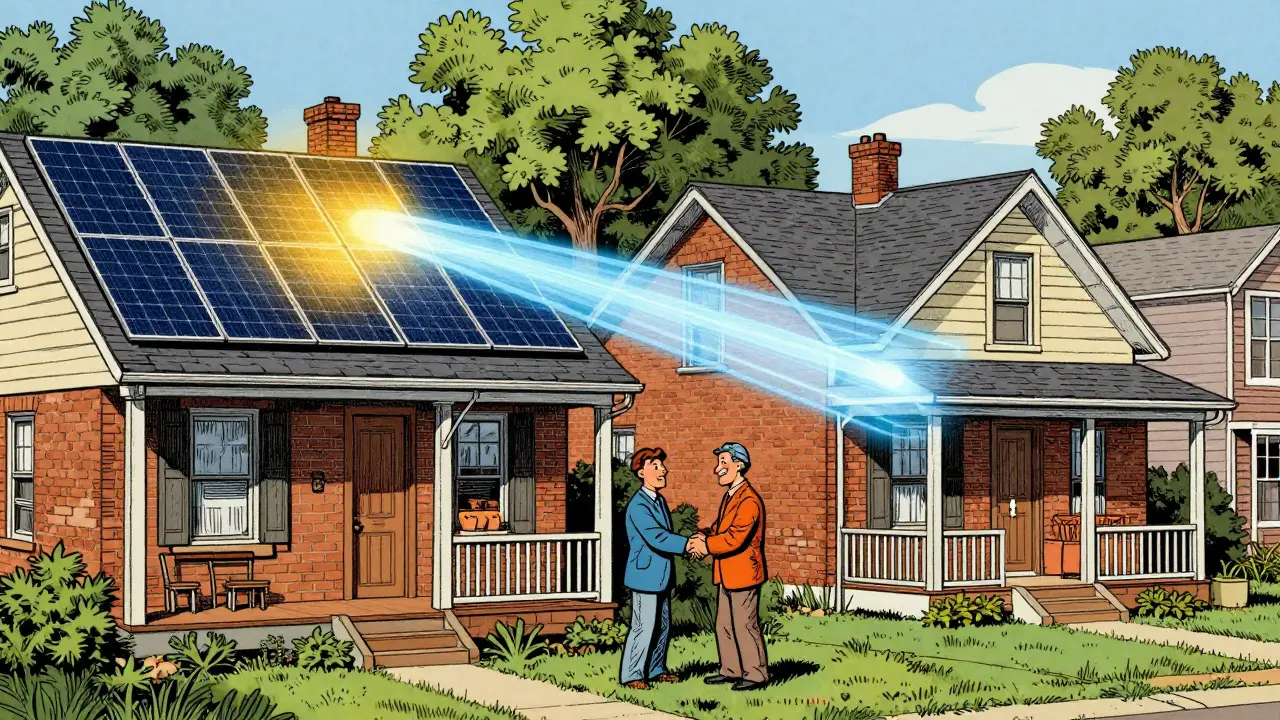
Imagine selling the excess power from your rooftop solar panels directly to your neighbor, skipping the utility company entirely. That is exactly what Peer-to-Peer (P2P) energy trading is a decentralized system enabling direct electricity exchanges between producers and consumers without traditional utility intermediaries. It sounds like science fiction, but it is already happening in neighborhoods from New York to Australia. By using blockchain technology, these systems create a transparent ledger where every kilowatt-hour exchanged is recorded securely and automatically. This shift moves the power grid from a one-way street controlled by giants to a dynamic marketplace where you are both a buyer and a seller.
Key Takeaways
- P2P energy trading allows homeowners with renewable sources to sell surplus power directly to local neighbors, bypassing centralized utilities.
- Blockchain provides the necessary trust layer through immutable records and smart contracts, reducing transaction costs by 30-45% compared to traditional methods.
- Real-world pilots like the Brooklyn Microgrid show participants saving 12-18% on energy bills while increasing local grid resilience.
- Major hurdles remain, including regulatory clarity, limited scalability for large populations, and the technical complexity of onboarding non-technical users.
- The global market for P2P energy trading is projected to grow from $1.27 billion in 2023 to $8.43 billion by 2028, driven by renewable adoption and digital infrastructure improvements.
How the System Actually Works
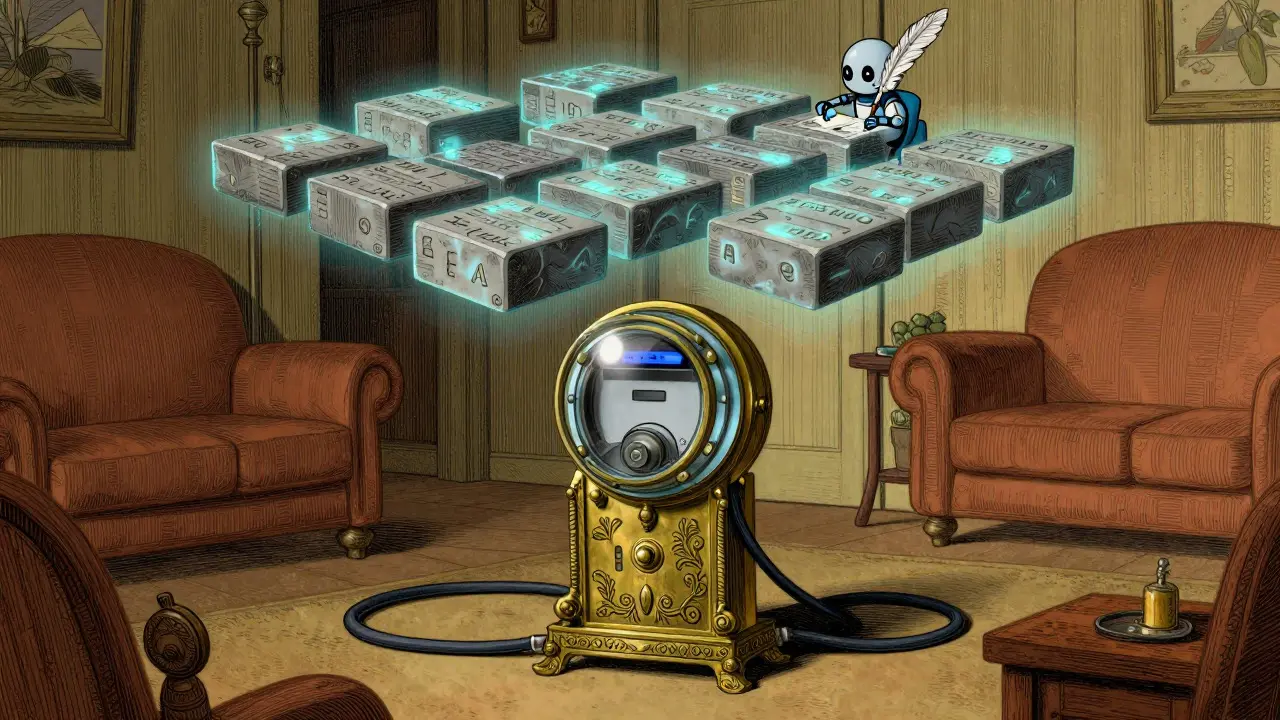
To understand why this matters, you need to see the machinery under the hood. A standard P2P energy platform relies on four core components working in tandem. First, you have Smart Meters, which are IP-enabled devices that record real-time production and consumption data. Unlike old analog meters, these communicate via standards like IEEE 2030.5 or OpenADR 2.0, sending data every 15 to 60 minutes. Next comes the Blockchain Ledger. This acts as the shared source of truth. Platforms like Ethereum, Hyperledger Fabric, or Corda host the network, ensuring that once a trade is made, it cannot be altered. Then there are Smart Contracts, which are self-executing code. If your meter reports 5 kWh of surplus and your neighbor’s contract says they will buy at $0.15/kWh, the smart contract triggers the payment automatically. No invoice, no waiting for a check, no middleman taking a cut.
The process flows logically from registration to execution. Homeowners first register their generation capacity on the blockchain. Once connected, the system continuously matches surplus supply with local demand. When conditions are met-such as price thresholds or availability-the transaction executes instantly. This automation eliminates the billing delays common in traditional utility models. For instance, in conventional grids, you might wait weeks for a credit after selling power back to the utility. In a P2P model, settlement happens in seconds or minutes, improving cash flow for small-scale producers.
Why Decentralization Beats Centralized Utilities
You might wonder why we would abandon the established utility model. The answer lies in efficiency and resilience. Traditional grids suffer from transmission losses. According to a 2024 study in Nature.com, these losses typically range from 5% to 8%. In a P2P system, energy travels shorter distances, often just down the block. Research indicates that local production and consumption minimize distribution losses by approximately 6.2% on average. This means more of the energy you generate actually reaches its destination.
Cost savings are another major driver. IRENA’s Innovation Landscape Brief from July 2020 highlights that blockchain can reduce transaction costs for electricity trading among prosumers by 30-45%. Why? Because you remove multiple layers of administrative overhead. There is no need for complex billing departments, dispute resolution centers, or manual reconciliation processes. Smart contracts handle the logic, and the blockchain handles the verification. Furthermore, localized markets enhance grid resilience. During outages, a neighborhood microgrid can keep running independently if it has enough local generation and storage. The Brooklyn Microgrid project demonstrated this capability, maintaining power during centralized grid failures.
Real-World Proof: Successes and Stumbles
Theory is nice, but does it work in practice? Let’s look at the data. The Brooklyn Microgrid, launched in April 2016 by LO3 Energy and ConsenSys, remains the flagship example. As of Q3 2024, it has connected over 500 participants across three New York neighborhoods. Participants report average savings of 12-18% on their energy bills. These numbers are not trivial; they represent tangible financial benefits for everyday households.
In Australia, Power Ledger ran a trial in Fremantle involving 100 participating households. Their 2023 annual report documented a 97% user satisfaction rate. Solar prosumers earned between AUD$220 and AUD$350 monthly from selling surplus energy. This income stream transforms solar panels from a cost-saving device into an asset that generates revenue. However, not every project is a success story. WePower, a similar initiative in Lithuania, faced significant challenges due to insufficient regulatory clarity. It suffered 18 months of operational delays before shutting down in Q1 2023. This highlights a critical point: technology alone is not enough. Regulatory frameworks must align with the new business model.
| Feature | Traditional Utility Model | P2P Blockchain Model |
|---|---|---|
| Transaction Cost Reduction | Baseline (High) | 30-45% Lower |
| Distribution Losses | 5-8% | ~6.2% Average Reduction |
| Settlement Time | Weeks to Months | Seconds to Minutes |
| Grid Resilience | Vulnerable to Single-Point Failures | Enhanced Local Independence |
| User Complexity | Low (Passive Consumer) | Moderate (Active Prosumer) |
Technical Requirements and Limitations
If you are considering implementing a P2P system, you need to know what it takes. The hardware requirements include IP-enabled smart meters compliant with IEEE 2030.5 or OpenADR 2.0 standards. You also need reliable internet connectivity with a minimum bandwidth of 1Mbps for real-time data transmission. On the software side, you need a web-based Energy Management System (EMS) to gather data, predictive analytics for risk management, and visualization dashboards for tracking consumption. Payment processing must also comply with local financial regulations.
However, do not underestimate the limitations. Blockchain throughput is still a bottleneck. Ethereum currently handles approximately 15-30 transactions per second, whereas Visa processes around 24,000. For a small neighborhood, this is fine. For a city-wide rollout, it becomes a problem. Additionally, while Ethereum’s transition to proof-of-stake in September 2022 reduced energy consumption by 99.95%, earlier proof-of-work implementations drew criticism for being energy-intensive. Scalability is another concern. Current implementations typically serve neighborhoods of 50-500 participants. Expanding beyond that requires significant architectural changes. Finally, user experience remains a challenge. Reddit discussions from June 2024 reveal complaints about complex onboarding processes that can take 3-5 hours for first-time users. For non-technical residents, this friction can deter adoption.
Regulatory Landscape and Market Growth
Technology moves fast, but regulation often lags behind. Yet, progress is being made. In the European Union, the Clean Energy Package established foundational rules for 'active customers' and 'renewable energy communities' effective January 2021. This legal framework provides the safety net needed for P2P trials to proceed. In the US, the Federal Energy Regulatory Commission’s Order 2222, issued in September 2020, opened wholesale markets to distributed energy resources. This creates pathways for aggregated P2P systems to participate in larger energy markets.
The market potential is substantial. MarketsandMarkets forecasts that the global P2P energy trading market will grow from $1.27 billion in 2023 to $8.43 billion by 2028, representing a CAGR of 46.1%. Major players are taking notice. Shell acquired sonnen in 2019 and has since run P2P trials in Germany. Startups like LO3 Energy, Power Ledger, and Electron have raised combined funding exceeding $250 million. Deloitte researchers identified P2P energy trading as 'the next big thing that will disrupt the industry,' predicting it could support over 500 GW of renewable capacity globally by 2025. This growth is fueled by three key enabling factors identified by IRENA: distributed renewable energy resources (minimum 15-20% household penetration), digitalization infrastructure, and conducive regulatory frameworks.
Future Outlook: What’s Next?
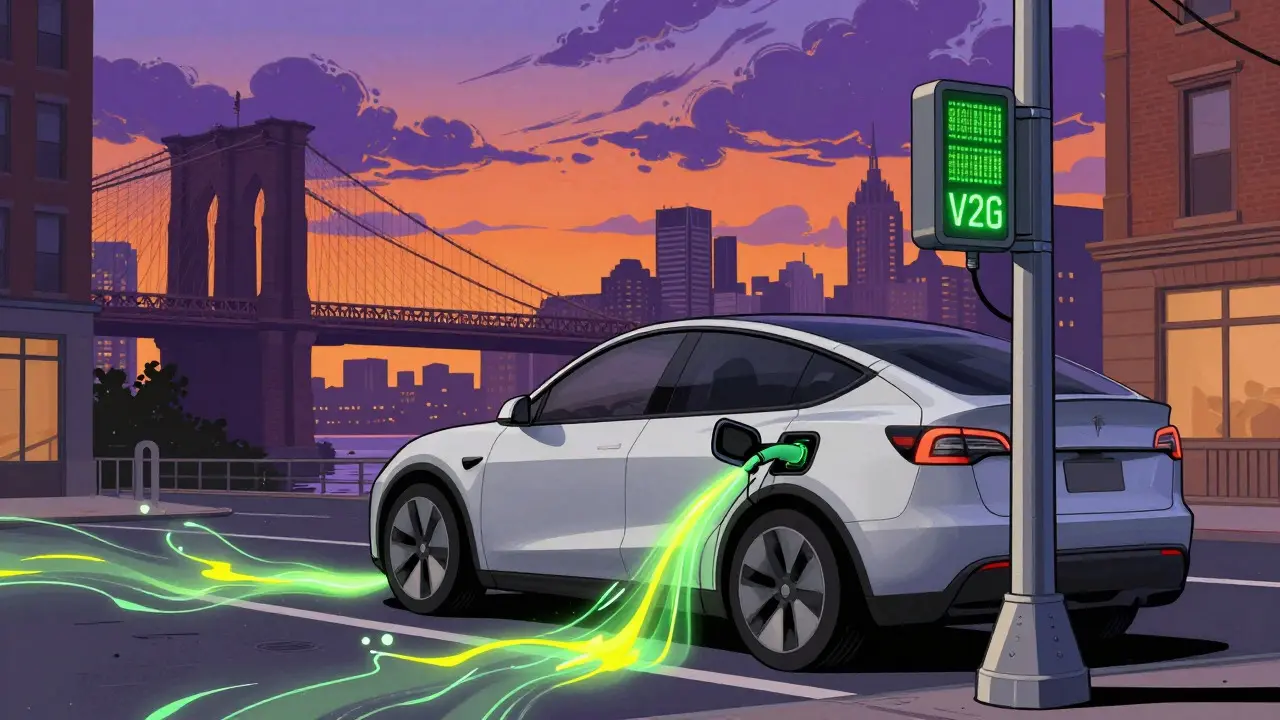
Where does this go from here? The integration of vehicle-to-grid (V2G) capabilities is a major focus. BMW and Siemens launched a joint P2P trial in Munich in April 2024, connecting 200 electric vehicles to the energy market. This turns EVs into mobile batteries that can sell power back to the grid when parked. The European Blockchain Services Infrastructure, launched in January 2024, now includes energy trading as a certified use case, enabling cross-border P2P transactions between EU member states. Standardization is also advancing. The IEEE 2030.5 Annex D specification for P2P energy trading interfaces was finalized in June 2023, providing a common language for different systems to talk to each other.
IRENA predicts that by 2030, P2P trading could account for 10-15% of distributed renewable energy transactions in regions with supportive regulations. Long-term viability depends on continued regulatory evolution, technological maturation to handle higher transaction volumes, and successful demonstration of grid stability benefits at scale. Grid operators, such as National Grid, have warned that uncoordinated P2P trading could exacerbate congestion during peak demand periods without proper oversight. Therefore, the future likely involves hybrid models where P2P systems operate within a broader managed grid framework, rather than completely replacing it.
What is the main benefit of P2P energy trading for homeowners?
The primary benefit is increased financial returns on renewable investments. Instead of selling surplus energy to the utility at low feed-in tariffs, homeowners can sell directly to neighbors at market rates. Additionally, transaction costs are reduced by 30-45%, and settlement times drop from weeks to seconds.
Is P2P energy trading available everywhere?
Not yet. Availability depends heavily on local regulations. The EU has clear frameworks, while the US varies by state. Some US states terminated trials due to regulatory conflicts. Currently, most implementations are pilot projects serving specific neighborhoods or communities rather than widespread public utility services.
Do I need to be tech-savvy to participate?
Ideally, yes, but platforms are improving. Early onboarding processes could take 3-5 hours. Modern platforms offer mobile apps and simplified interfaces, but understanding basic concepts like smart meters and wallet management is still helpful. Non-technical users may find the initial setup challenging compared to traditional utility services.
How does blockchain ensure security in energy trades?
Blockchain uses cryptographic hashing to create immutable records. Once a transaction is verified by the network, it cannot be altered or deleted. Smart contracts execute trades automatically based on predefined conditions, removing the need for trusted third parties and reducing the risk of fraud or error.
Can P2P trading help during power outages?
Yes, in some cases. If a neighborhood has sufficient local generation and storage, it can form a microgrid that operates independently of the main grid. The Brooklyn Microgrid demonstrated this capability, maintaining power during centralized grid failures. However, this requires robust local infrastructure and coordination.