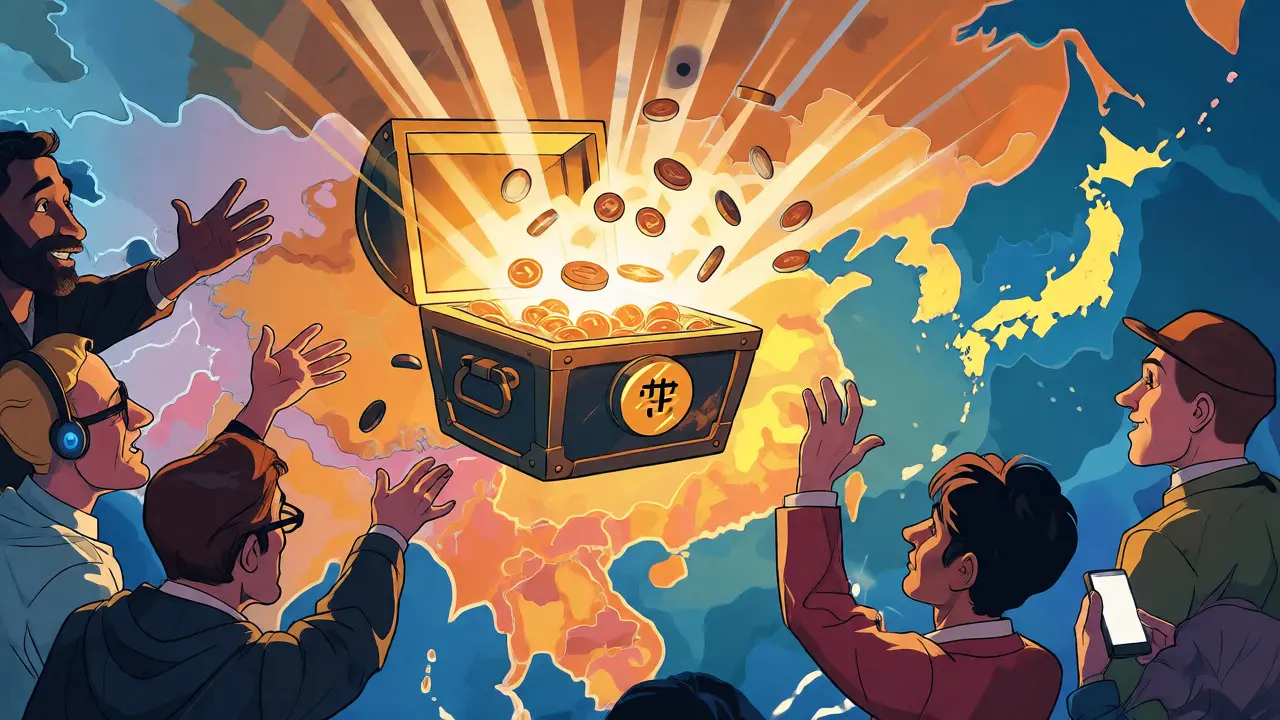
Remember the buzz around free tokens? If you were active in the Crypto digital currency ecosystem space in mid-2024, you likely saw the Cratos (CRTS) airdrop pop up on your feed. It wasn't just another hype cycle; it was a specific, time-bound event that rewarded community engagement with real value. But what actually happened? Who got paid, and how much was it worth? Let's break down the details of this completed distribution so you can understand where it fits in the broader landscape of token giveaways.
The Core Mechanics of the Cratos Distribution
The Cratos project designed its airdrop to be simple yet impactful. They didn't hide behind complex smart contracts or multi-year vesting schedules. Instead, they went for immediate gratification. The plan was straightforward: select 5,000 winners from their community and hand each one exactly 500 CRTS tokens. That’s right-no tiers, no lottery odds based on wallet size, just a flat reward for being part of the selected group.
This structure meant the total pool consisted of 2.5 million CRTS tokens. While that number sounds huge, remember that CRTS is a low-price asset. At the time of the announcement, the token traded at approximately $0.00029888 USD. Do the math, and you see why this mattered: 500 tokens multiplied by that price equals roughly $0.149 per winner. Sure, it’s not life-changing money, but for a free drop into your wallet, it’s a nice little bonus that covers transaction fees or serves as a starter position if you believe in the project.
| Parameter | Details |
|---|---|
| Total Winners | 5,000 |
| Tokens Per Winner | 500 CRTS |
| Total Airdrop Pool | 2,500,000 CRTS |
| Estimated Value Per Winner | ~$0.149 USD |
| Deadline | July 5, 2024, 8:00 AM UTC+9 |
Why the Timing and Timezone Mattered
You might wonder why the deadline was set for 8:00 AM UTC+9. This isn't random. The UTC+9 timezone corresponds to Japan and South Korea, two markets with massive cryptocurrency adoption rates. By setting the cutoff there, Cratos signaled a clear intent to target Asian investors. This strategic choice helped them tap into regions where retail participation in altcoins is particularly high. If you were in the US or Europe, you had to stay up late or wake up early to ensure your entry counted. It’s a small detail, but it shows how global these projects really are.
The timing also coincided with a period of heightened market activity in July 2024. Crypto markets often move in waves, and launching an airdrop during a bullish or neutral trend ensures better visibility. If you launch when everyone is panic-selling, nobody notices the free money. Cratos managed to catch a wave of interest, which directly influenced the token's performance post-announcement.
Market Impact and Price Performance
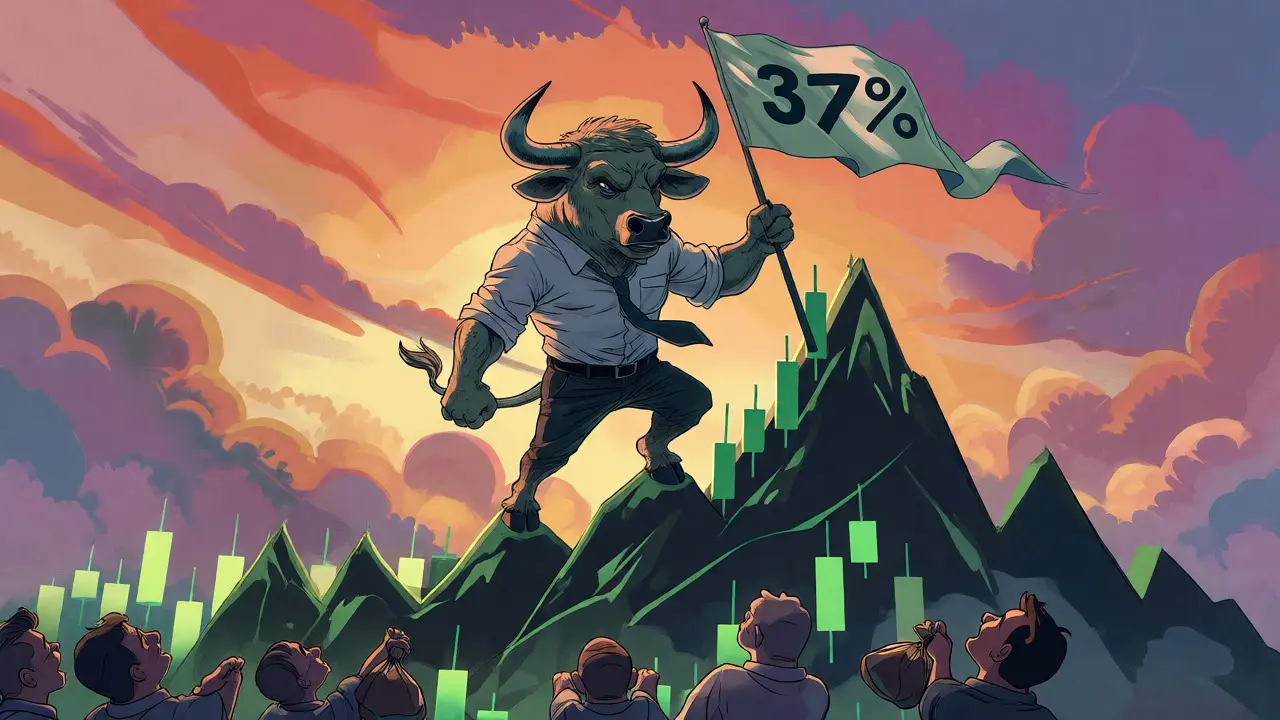
Did the airdrop move the needle? Absolutely. Following the announcement, CRTS experienced significant volatility. The token saw an 18.64% price increase shortly after the news broke. Over the next two days, gains continued, reaching 18.47%, and eventually hitting a 37.33% rise from the initial publication date. This surge indicates that the market viewed the airdrop positively, interpreting it as a sign of healthy community growth rather than just dilution.
Let’s look at the liquidity context. With a daily trading volume of $29.6 million and a circulating supply of 62.8 billion tokens, the market had enough depth to absorb the new tokens without crashing the price. This is crucial. Many small-cap projects fail because they flood the market with too many free tokens, causing sell pressure that overwhelms buy orders. Cratos struck a balance here, distributing enough to generate excitement but not so much that it destabilized the $18.7 million market cap.
How Cratos Compares to Other 2024 Airdrops
To understand the scale, compare Cratos to other major distributions in 2024. According to CoinGecko’s annual report, notable airdrops like Ethena, PENGU, Hyperliquid, and MagicEden collectively added over $20 billion to the total crypto market capitalization. These were giants. Cratos operated in a different lane. It wasn't backed by Andreessen Horowitz or Sequoia Capital like some of the bigger players such as Espresso or Andrena. Instead, it relied on grassroots community building.
While RedotPay raised $47 million in strategic funding and offered more complex incentive structures, Cratos kept it simple. There were no scavenger mining phases or four-year "lost-and-found" periods like Midnight Network used. You participated, you won, you got paid. This simplicity appealed to users who were tired of navigating labyrinthine claim processes. For many casual participants, the ability to skip the paperwork and just receive tokens was a major draw.

Eligibility and Participation Requirements
So, how did people actually qualify? The primary criterion was community involvement. Cratos promoted the event heavily through social media using hashtags like #CRATOS2024 and #Airdrop. Unlike some projects that require you to hold a certain amount of ETH or interact with a specific DeFi protocol, Cratos focused on engagement. Did you follow them on Twitter? Did you join their Discord? Were you active in discussions?
The selection process for the 5,000 winners wasn't purely random. While exact algorithms weren't fully public, active community members generally had higher chances. This approach aligns with a growing trend where projects reward loyalty and activity rather than just wealth. It democratizes access, allowing someone with zero investment capital to potentially win tokens simply by being present and vocal in the community.
Lessons from the Cratos Airdrop for Future Investors
If you're looking for the next big drop, the Cratos case offers several takeaways. First, don't ignore low-price assets. A $0.15 reward seems tiny until you realize it cost you nothing but time. Second, pay attention to timezone deadlines. Missing a window by hours can mean missing out entirely. Third, monitor trading volume. An airdrop is only valuable if there's a liquid market to sell into. Cratos maintained healthy volume, ensuring winners could actually cash out their tokens.
Finally, keep an eye on the evolution of airdrop strategies. In 2024, we saw a shift toward simpler, faster distributions. As we move further into 2025 and beyond, expect more projects to adopt hybrid models-combining immediate rewards with long-term incentives. Understanding these mechanics helps you decide which events are worth your time and which are just noise.
When did the Cratos (CRTS) airdrop end?
The Cratos airdrop concluded on July 5, 2024, at 8:00 AM UTC+9. This deadline was specifically chosen to align with Asian market hours, reflecting the project's focus on investors in regions like Japan and South Korea.
How many CRTS tokens did each winner receive?
Each of the 5,000 selected winners received exactly 500 CRTS tokens. Given the token's price of approximately $0.00029888 USD at the time, this equated to a value of roughly $0.149 per participant.
What was the total size of the Cratos airdrop pool?
The total airdrop pool consisted of 2,500,000 CRTS tokens. This was calculated by multiplying the 500 tokens allocated per winner by the total number of 5,000 winners.
Did the Cratos airdrop affect the token price?
Yes, the announcement led to significant price appreciation. The CRTS token experienced an 18.64% increase initially, followed by sustained gains that resulted in a 37.33% rise from the initial event publication date, indicating strong positive market sentiment.
How does Cratos compare to larger 2024 airdrops?
Compared to major 2024 airdrops like Ethena or Hyperliquid, which added billions to market cap, Cratos was a smaller, community-focused initiative. It lacked the massive venture backing of projects like RedotPay or Andrena but succeeded in engaging its specific user base through simple, direct rewards.