
Indian citizens can still trade cryptocurrency-but not just anywhere. Since October 2025, the Financial Intelligence Unit - India (FIU-IND) has forced the takedown of apps and websites from 25 major offshore crypto exchanges that refused to register under India’s anti-money laundering laws. Platforms like Binance, KuCoin, OKX, Bybit, Huione, Paxful, BitMex, and BingX are now blocked for users in India. This isn’t a ban on crypto itself. It’s a crackdown on unregistered platforms that serve Indian customers without following local rules.
What’s Actually Banned?
Contrary to what many believe, India has not banned cryptocurrency. You can still buy, sell, and hold Bitcoin, Ethereum, and other digital assets legally. The problem isn’t owning crypto-it’s using exchanges that refuse to comply with Indian financial laws. The government’s message is clear: if you want to serve Indian users, you must register with FIU-IND as a Virtual Digital Asset Service Provider (VDA SP). That means submitting customer data, keeping transaction records, and reporting suspicious activity. Over 50 exchanges have done this. The rest? They’re blocked.
When an exchange ignores this rule, FIU-IND doesn’t just send a warning. It orders internet service providers to block access to their websites and mobile apps. If you try to open the Binance app in India right now, it won’t load. Same with KuCoin or Bybit. The government isn’t targeting users-it’s cutting off access to platforms that won’t play by India’s rules.
Who’s Affected and How?
Indian crypto users now face a split market. On one side, there are registered exchanges like CoinDCX, WazirX, and ZebPay. These platforms follow Indian regulations. They require KYC, report transactions, and deduct 1% tax at source (TDS) on every trade. On the other side, there are offshore exchanges that still let Indian users sign up-but you can’t access them directly anymore. Some people use VPNs to bypass the blocks, but that’s risky. Using a VPN to access unregistered platforms could technically violate India’s IT Act, and there’s no legal protection if something goes wrong.
For traders, this means less liquidity. The biggest global exchanges had deeper markets, tighter spreads, and more trading pairs. Now, Indian users are stuck with smaller platforms that may not offer the same depth or variety. If you’re trying to trade lesser-known tokens or use advanced order types, your options are limited. And if you’re a frequent trader, the 1% TDS on every transfer adds up fast. That tax isn’t just on sales-it applies to swaps, transfers between wallets, and even peer-to-peer trades.
The Tax Trap
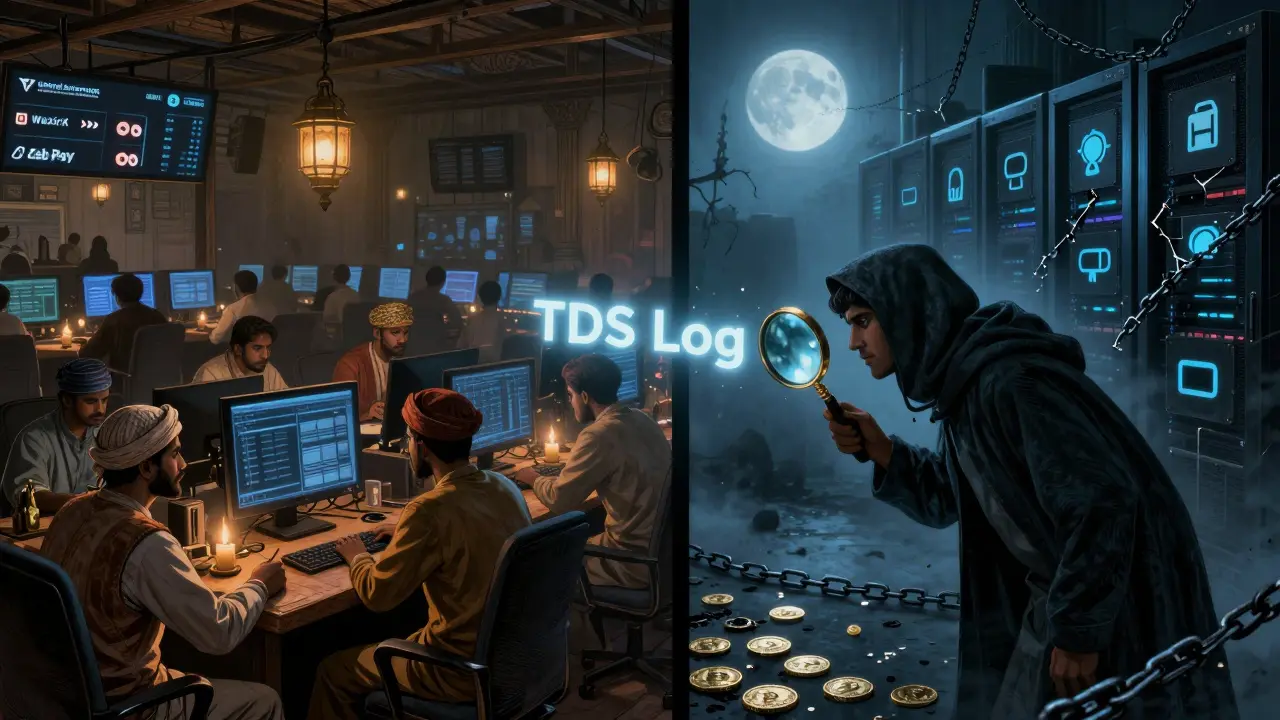
India’s crypto tax rules are among the strictest in the world. Any profit from selling or trading crypto is taxed at 30%, with no deductions allowed-not even for losses. That’s worse than capital gains tax on stocks. On top of that, every time you transfer crypto-whether you’re selling, swapping, or sending it to a friend-a 1% TDS is automatically deducted. If you sell $1,000 worth of Bitcoin, $10 disappears before you even see the money. If you swap Bitcoin for Ethereum, another $10 is taken. There’s no way around it. Even if you break even on trades, you still pay TDS.
This system isn’t designed to punish traders. It’s designed to track them. The government wants to know every movement of digital assets. The 1% TDS acts like a digital trail. Every transaction gets logged, reported, and matched against your income tax filings. Miss a report? You could face penalties under the Income Tax Act. It’s not just about revenue-it’s about control.
Who’s in Charge?
India’s crypto regulation isn’t handled by one agency. It’s a mess of overlapping powers. The Reserve Bank of India (RBI) still warns that crypto is risky and could hurt the economy. It’s pushing its own digital rupee and doesn’t want private crypto stealing attention. The Ministry of Finance runs the show on taxes and registration. They’re the ones who slapped on the 30% tax and forced exchanges to register. Meanwhile, the Securities and Exchange Board of India (SEBI) has hinted it wants to regulate crypto like stocks-with licensing, oversight, and investor protections. That’s a very different vision than the RBI’s.
There’s no unified policy. That’s why the rules feel confusing. One day, you hear crypto is legal. The next, you see 25 apps gone. The government hasn’t passed a law. It’s using existing financial laws-the Prevention of Money Laundering Act (PMLA) from 2002-to force compliance. That’s why even offshore exchanges with no office in India are being forced to register. If you serve Indian customers, you’re subject to Indian law. Period.

What’s Next?
The government is still working on a bill to ban private cryptocurrencies. It’s been in the works since 2023. But as of March 2026, it hasn’t been introduced in Parliament. That means crypto isn’t illegal-but it’s not protected either. It’s stuck in legal limbo. More exchanges will likely get blocked if they don’t register. The FIU-IND has already signaled it’s expanding its monitoring. New platforms popping up with Indian marketing? They’ll be next.
For users, the path forward is simple: stick to registered exchanges. They’re slower, have fewer coins, and charge higher fees-but they’re legal. Don’t use a VPN to access blocked platforms. It won’t make you safer. It might make you a target. And always keep records of every trade. The tax department is watching.
Why This Matters
India’s approach isn’t about stopping crypto. It’s about controlling it. Countries like the U.S. and the EU are building clear rules for crypto firms. India is doing something else: forcing every player to report everything, pay heavily, and play by rules written in real time. It’s not innovation-friendly. But it’s not a ban either. It’s a way to keep crypto within reach-while keeping it under tight surveillance.
If you’re an Indian crypto user, your freedom to trade hasn’t disappeared. It’s just been reshaped. You can still own Bitcoin. You can still earn from it. But you can’t do it on the platforms you used to. And you’ll pay more taxes than almost anyone else in the world. That’s the new reality.
Are crypto exchanges banned in India?
No, crypto exchanges aren’t banned in India. Only offshore exchanges that refuse to register with FIU-IND are blocked. Registered platforms like CoinDCX, WazirX, and ZebPay operate legally and serve Indian users.
Can I still buy Bitcoin in India?
Yes, you can still buy Bitcoin and other cryptocurrencies through registered Indian exchanges. The government hasn’t banned crypto ownership. You just can’t use unregistered offshore platforms like Binance or KuCoin directly from India.
Why are apps like Binance and KuCoin blocked in India?
These platforms were ordered to block access because they didn’t register with FIU-IND as Virtual Digital Asset Service Providers (VDA SPs). Under India’s PMLA law, any exchange serving Indian users must register, report transactions, and follow anti-money laundering rules. They refused, so the government blocked them.
Is using a VPN to access blocked exchanges legal in India?
Using a VPN to access unregistered exchanges may violate India’s Information Technology Act. While enforcement is rare, you lose legal protections if something goes wrong-like a hack, scam, or frozen funds. Authorities can still track your transactions through tax filings, making the risk not worth it.
What’s the 1% TDS on crypto trades?
The 1% Tax Deducted at Source (TDS) is automatically taken from every crypto transaction in India-whether you’re selling, swapping, or transferring. It’s applied regardless of profit or loss. For example, if you swap $1,000 of Bitcoin for Ethereum, $10 is deducted immediately. This is meant to track all crypto movements for tax compliance.
Will India ban cryptocurrency completely?
There’s a proposed bill to ban private cryptocurrencies, but as of March 2026, it hasn’t been introduced in Parliament. The government’s current stance is regulation, not prohibition. Crypto remains legal, but heavily monitored and taxed.
Let’s be real - India’s regulatory approach is the most coherent thing happening in global crypto right now. No half-measures, no regulatory arbitrage. You want to serve 150 million users? Then you play by their rules. Binance and KuCoin had years to comply. They chose profit over principle. Now they’re blocked. That’s not tyranny - that’s sovereignty. And yes, the 1% TDS is brutal, but it’s also the only thing preventing crypto from becoming a tax evasion haven. If you can’t handle transparency, maybe you shouldn’t be trading.
Also, let’s not pretend the US is any better. The IRS still doesn’t know how to tax crypto, and the SEC is just chasing memes. At least India has a plan. You just don’t like that it’s not yours.
PS: VPNs? Don’t be a fool. You’re not hacking the system - you’re just giving your data to some sketchy offshore proxy that’ll sell it to the highest bidder. And then the tax department will still find you anyway.
It’s not about banning crypto. It’s about banning chaos.
so like... you're telling me i can't use binance anymore? and i have to pay 1% every time i swap dogecoin for shiba? and then 30% on my 'profits' even if i lost money? wow. what a beautiful world we live in.
also, why does every indian crypto post sound like a government press release? just say 'we're scared' and be done with it.
They’re not banning crypto. They’re banning freedom. This is step one. Next they’ll track your wallet addresses through your phone’s IMEI. Then they’ll freeze your bank account if you send more than 5000 rupees in crypto. Then they’ll make you file a form for every Satoshi. This isn’t regulation. It’s digital serfdom.
And the 1% TDS? That’s a surveillance tax. They don’t care if you profit. They care if you move. They want to own your money before you even touch it.
Wake up. This is China 2.0. And you’re the one who enabled it by using CoinDCX.
i just wanted to trade solana and now i have to deal with tax forms and tds and kyc and i just want to be left alone
why does everything have to be so complicated
Honestly I get the frustration, but I also get why India did this. I’ve seen too many friends get scammed on unregulated exchanges - fake apps, exit scams, frozen withdrawals. The registered platforms are clunky, yeah, but at least if something goes wrong, you can call customer support and they’ll actually answer. And the TDS? It’s annoying, but at least you’re not getting blindsided by a tax bill next April.
It’s not perfect, but it’s better than the Wild West. And honestly? I’d rather pay 1% and sleep at night than risk losing everything to some offshore bot that vanishes next week.
so i read this whole thing and i think the 1% tds is actually kind of fair? like, if you're making trades, the government has to track it somehow right? and yeah, it's annoying when you swap btc for eth and lose $10, but at least you know it's happening. i used to think it was a trap but now i think it's just... bureaucracy doing its job. also, i switched to wazirx and it's actually not that bad. the interface is clunky but it works. and no more weird vpn errors. peace of mind is worth a little extra cost, i guess?
as someone who grew up in india and now lives in the us, i’ve seen both sides. the us has crypto freedom but also crypto chaos - pump-and-dumps, rug pulls, influencers selling snake oil. india’s system isn’t sexy, but it’s protecting people. i know a girl who lost 20 lakhs on a fake exchange. she’s still in therapy. the government didn’t stop her from trading - it stopped her from getting scammed.
yes, the taxes are high. yes, the platforms are limited. but you know what? you can still buy bitcoin. you can still hold it. you can still earn from it. it’s not a ban - it’s a filter. and honestly? i’d rather live in a country that filters out predators than one that lets them roam free.
you people are so naive. the 1% tds isn’t for tax revenue - it’s for surveillance. every transaction is logged, stored, and cross-referenced with your bank accounts. the government already knows who you are, what you own, and who you trade with. this isn’t regulation. it’s digital profiling. and you’re okay with it because you’re too lazy to think about what comes next.
next they’ll require facial recognition for every login. then they’ll freeze wallets that don’t comply with ‘national sentiment’. then they’ll ban altcoins entirely. this is how authoritarian regimes start. and you’re the ones giving them the keys.
India’s crypto policy is the most honest thing I’ve seen in a decade. No pretending it’s ‘innovation’. No pretending it’s ‘decentralized’. It’s state-controlled finance with a blockchain skin. And it’s working. The registered exchanges are clean. The tax compliance is real. The scams are dropping. You want freedom? Go to the US - where you can’t even get a loan because your crypto wallet has 300 unreported transactions.
Stop crying about the 1% TDS. It’s a feature, not a bug. It’s the price of legitimacy. And if you can’t afford it? Maybe you shouldn’t be trading in the first place.
Look - I know this feels oppressive. I do. But let’s zoom out. You’re not losing freedom. You’re gaining structure. The unregulated world was a minefield. People lost life savings. Families were destroyed. This isn’t about control - it’s about care.
Yes, the tax is heavy. Yes, the platforms are limited. But you still have access. You still have choice. You still have legal recourse. That’s more than most countries offer.
Stop seeing this as punishment. See it as protection. You don’t have to love it. But you can respect it. And if you’re still angry? Use that energy to push for better interfaces, lower fees, fairer rules. Don’t just complain - build. The system is flawed, yes. But it’s not broken. And it’s yours to improve.