
Choosing a crypto exchange is no longer just about finding the platform with the most coins. It’s about trust, speed, and keeping your money safe in a market that never sleeps. If you’ve ever wondered why your trade took too long or why fees ate into your profits, you’re not alone. The landscape has shifted dramatically since the early days of unregulated wild west trading. Today, with over $18 trillion processed globally in the first three quarters of 2025, the stakes are higher than ever.
You need a platform that matches your specific goals-whether you’re a beginner buying your first Bitcoin or a pro trader executing complex derivatives strategies. This review breaks down the top contenders, comparing their security, costs, and user experience so you can stop guessing and start trading with confidence.
The Big Picture: Centralized vs. Decentralized
Before picking a name, you have to understand the two main types of exchanges. Most people start with centralized exchanges (CEXs). These are companies like Coinbase or Binance that act as intermediaries. They hold your funds, match buyers with sellers, and handle the technical heavy lifting. In return, they offer high liquidity and easy customer support. However, you’re trusting them with your assets. Remember the Mt. Gox collapse in 2014? That’s the risk of centralization.
On the other side, you have decentralized exchanges (DEXs) like Uniswap or dYdX. Here, you trade directly from your own wallet using smart contracts. No company holds your keys. It’s more private and censorship-resistant, but it comes with a catch: you are responsible for your own security, and transaction fees (gas fees) on networks like Ethereum can spike during busy times. In August 2025, average gas fees on Uniswap hit nearly $5 per transaction during peak hours, making small trades impractical. For most users starting out, a regulated CEX remains the safer, easier entry point.
Top Contenders: A Deep Dive
Not all exchanges are created equal. Based on volume, regulatory compliance, and user feedback from late 2025 and early 2026, here is how the major players stack up.
Coinbase: The Beginner’s Choice
If simplicity is your priority, Coinbase is hard to beat. As the public-facing leader in the U.S., it processes roughly 41% of North American crypto activity. Its interface is clean, intuitive, and backed by a NerdWallet rating of 4.6 out of 5. You can buy Bitcoin or Ethereum with a credit card in minutes. But convenience has a cost. Coinbase charges fees ranging from 0% to 4%, depending on how you pay. Using a bank transfer is cheaper, but instant buys via debit card will take a significant chunk off the top. It’s also worth noting that while Coinbase is highly regulated, its advanced features are locked behind 'Coinbase Advanced Trade,' which requires a bit of learning.
Kraken: The Power User’s Playground
Kraken appeals to those who want control. Founded in 2011, it has built a reputation for robust security and deep liquidity. Professional traders love Kraken Pro for its advanced order types, real-time charting tools, and lower fees compared to Coinbase. In Q3 2025, Kraken handled over $100 billion in volume, proving it can handle serious traffic. One standout feature is its implementation of zero-knowledge proof technology (ZK-Rollups) for certain trading pairs, enhancing privacy without sacrificing speed. However, the verification process can be strict, taking up to a week for complex accounts, and customer support response times can lag during market volatility.
Gemini: Security First
If peace of mind is your main concern, look at Gemini. Co-founded by the Winklevoss twins, it operates under strict New York Department of Financial Services (NYDFS) regulations. Every dollar in customer funds is insured and held in cold storage. This makes it a favorite among institutional investors and cautious retail users. Gemini offers unique products like 'Gemini Earn' for generating yield on idle assets and a crypto-linked credit card. The downside? Fewer supported cryptocurrencies compared to giants like Binance or Kraken, and historically higher spreads on trades.
Binance & OKX: Global Giants
Binance remains the world’s largest exchange by volume, processing nearly $1.8 trillion in spot trading in Q3 2025 alone. It offers an incredible range of tokens and competitive fees (as low as 0.1%). However, regulatory hurdles in the U.S. mean American users must use Binance.US, which offers fewer coins and higher fees. Meanwhile, OKX has surged ahead in derivatives trading, handling $1.3 trillion in monthly volume. If you’re interested in futures and options, these platforms offer sophisticated tools that smaller exchanges simply can’t match.
| Exchange | Best For | Trading Fees | Security Rating | User Experience |
|---|---|---|---|---|
| Coinbase | Beginners, U.S. Users | 0% - 4% | High (Publicly Traded) | Very Easy |
| Kraken | Pro Traders, Privacy | 0.16% - 0.26% | Very High | Moderate |
| Gemini | Security, Institutions | 0.35% - 1.5% | Very High (NYDFS) | Easy |
| Binance | Global Volume, Altcoins | 0.1% - 0.1% | High | Complex |
| OKX | Derivatives, Futures | 0.08% - 0.1% | High | Moderate |

Key Factors to Consider Before Signing Up
When evaluating any platform, look beyond the marketing hype. Focus on these critical metrics:
- Fees: Look at both maker (adding liquidity) and taker (removing liquidity) fees. High-frequency traders should prioritize low-fee platforms like Kraken Pro or Bybit. Casual buyers might prefer Coinbase despite higher fees for the ease of use.
- Liquidity: High liquidity means you can buy or sell large amounts without significantly moving the price. Binance and Coinbase lead here. Low liquidity can result in slippage, where you get a worse price than expected.
- Regulatory Compliance: Does the exchange operate legally in your region? U.S. users should stick to NYDFS-regulated entities like Coinbase and Gemini to ensure consumer protections. Non-U.S. users have more flexibility but should still verify licensing.
- Asset Selection: Do they list the coins you want? While Bitcoin and Ethereum are everywhere, niche altcoins may only be available on larger global exchanges like Binance or OKX.
- Customer Support: Test the waters before depositing big sums. Coinbase offers 24/7 live chat, while others rely on slower ticket systems. Poor support can be a nightmare when you’re locked out of an account.
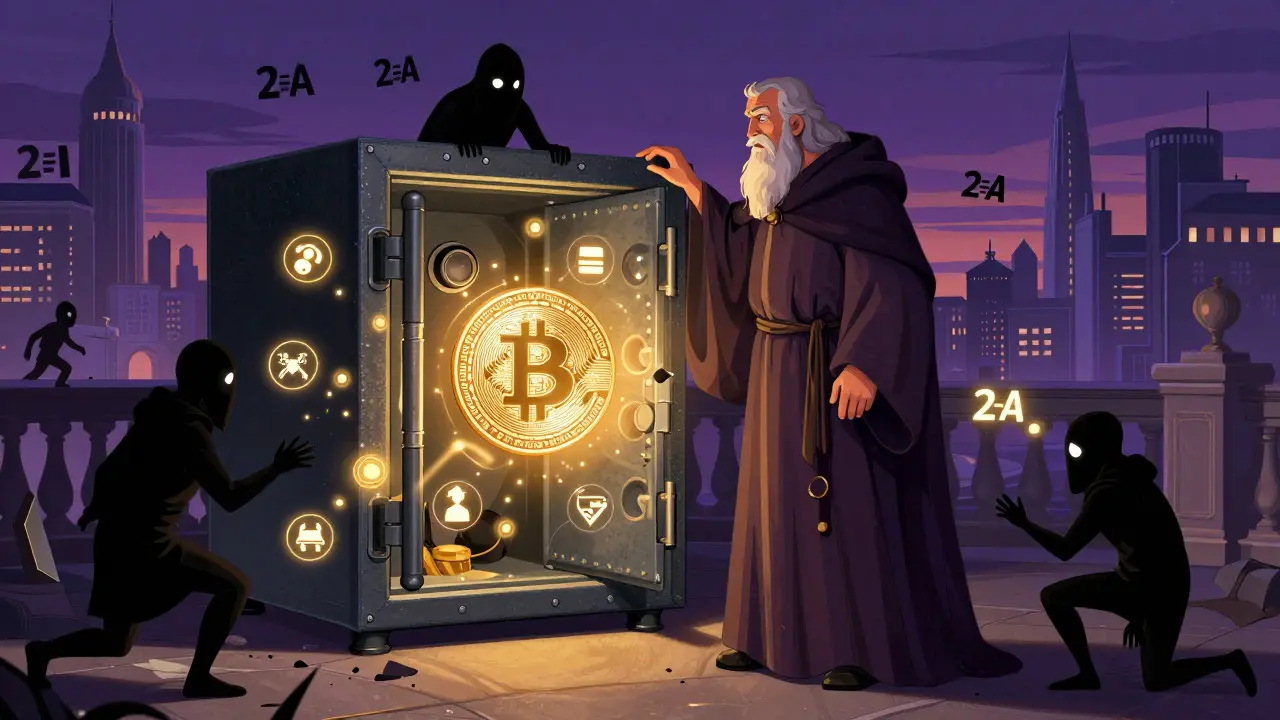
Security Best Practices for Your Account
No exchange is 100% hack-proof, but you can drastically reduce your risk. Always enable two-factor authentication (2FA), preferably using an authenticator app rather than SMS, which is vulnerable to SIM-swapping attacks. Whitelist your withdrawal addresses so that even if someone gains access to your account, they can’t send funds to an unknown wallet. Finally, consider the old adage: "Not your keys, not your coins." For long-term holdings, transfer your crypto from the exchange to a hardware wallet like Ledger or Trezor. Use exchanges for active trading, not as permanent vaults.
The Future of Trading in 2026 and Beyond
The industry is consolidating. With stricter regulations like the EU’s MiCA framework and ongoing SEC oversight in the U.S., smaller, non-compliant platforms are disappearing. Major players are integrating new technologies like zero-knowledge proofs for faster, cheaper transactions. Institutional adoption is accelerating, with many S&P 500 companies now holding crypto assets. This trend favors established, regulated exchanges that can meet institutional custody standards. For the average user, this means a safer, more transparent market, but potentially less anonymity.
Which crypto exchange is best for beginners in 2026?
For beginners, Coinbase is widely considered the best option due to its intuitive interface, strong educational resources, and high regulatory compliance in the U.S. Robinhood Crypto is another alternative for those already using the stock trading app, though it offers fewer coin choices.
Are crypto exchanges safe from hacks?
While no system is immune, major regulated exchanges like Coinbase, Kraken, and Gemini employ enterprise-grade security, including cold storage for the majority of funds and insurance coverage. However, user error remains the biggest risk, so enabling 2FA and using strong passwords is essential.
What are the lowest fee crypto exchanges?
For spot trading, Binance and Kraken Pro offer some of the lowest fees, often below 0.1%. For derivatives, OKX and Bybit are competitive. Note that fiat-to-crypto conversion fees (buying with a credit card) are generally higher across all platforms.
Can I use Binance in the United States?
U.S. residents cannot use the global Binance platform due to regulatory actions. Instead, they must use Binance.US, which is a separate entity with a more limited selection of coins and higher fees compared to the international version.
Is it better to keep crypto on an exchange or in a wallet?
Keep only what you need for active trading on an exchange. For long-term investments, move your assets to a self-custody hardware wallet. This protects you from exchange insolvency or hacking incidents, giving you full control over your private keys.