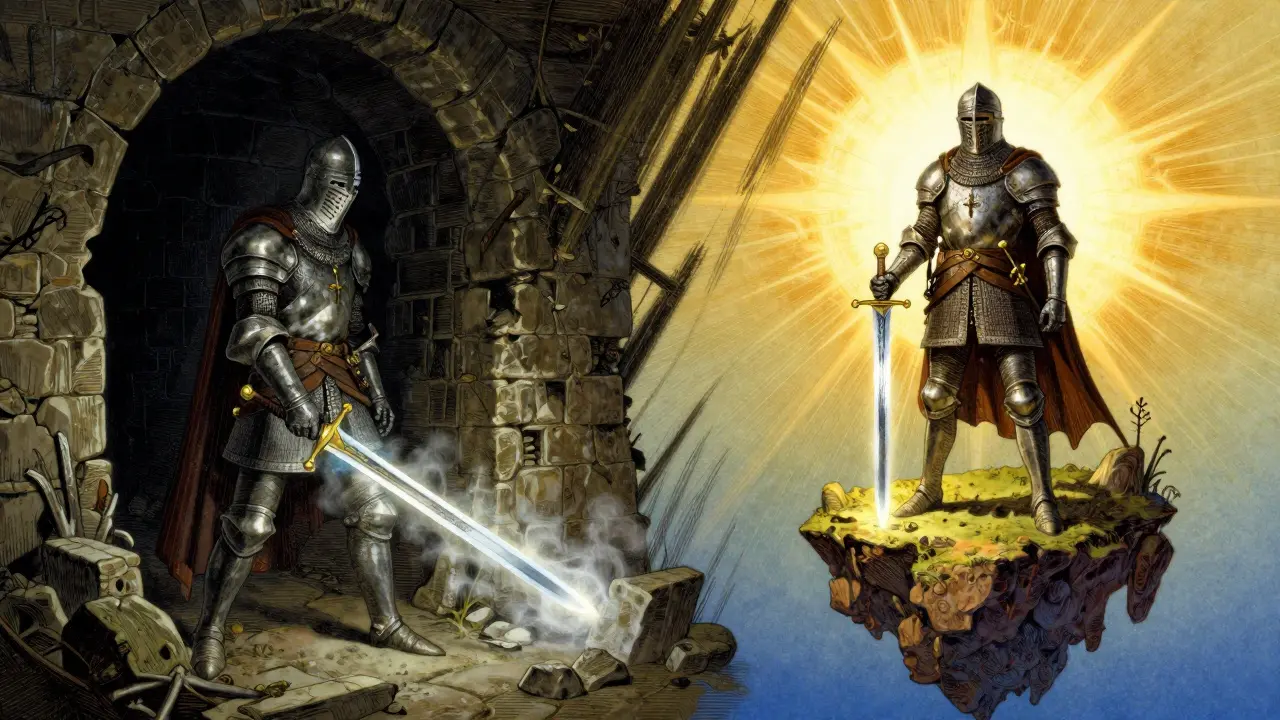
Imagine playing a game for three hours, grinding through difficult levels, and finally earning a rare sword. In traditional gaming, that sword stays locked inside the company's server. If they shut down the game, or if you get banned, the sword vanishes. You don't actually own it; you just rented access to it.
Decentralized gaming platforms are online gaming ecosystems built on blockchain technology that allow players to truly own their in-game assets as digital property, often tradable for real-world value. This shift flips the script. Instead of renting your progress, you own it. The market for this technology is exploding, projected to grow from $4.6 billion in 2021 to a staggering $65.7 billion by 2027. But with big money comes big questions. Is this the future of fun, or just another crypto bubble waiting to burst?
What Actually Makes a Game "Decentralized"?
To understand decentralized gaming, you have to look under the hood. Traditional games run on centralized servers controlled by one company-like Epic Games for Fortnite or Blizzard for World of Warcraft. They decide the rules, the economy, and what happens to your data.
Decentralized games use blockchain as their backbone. Most popular platforms today run on networks like Ethereum, Solana, or Binance Smart Chain. Here’s how the pieces fit together:
- Smart Contracts: These are self-executing codes that automate game mechanics. When you win a battle, the smart contract automatically updates the ownership record. No human administrator needs to approve it.
- NFTs (Non-Fungible Tokens): Your character, skin, or weapon is an NFT. It lives on the blockchain, proving you own it. You can sell it on open marketplaces like OpenSea, not just within the game.
- Tokenomics: Many games have their own cryptocurrency tokens. Players earn these by playing, and developers use them to balance the in-game economy.
The result is a system where the community, rather than a single corporation, has a say in how the game evolves. This is often managed through DAOs (Decentralized Autonomous Organizations), where token holders vote on updates and features.
The Big Trade-Off: Ownership vs. Performance
If decentralized gaming is so revolutionary, why isn’t everyone playing it? The answer lies in physics and economics. Blockchains are slow compared to traditional servers.
A standard gaming server processes thousands of transactions per second (TPS). A fully decentralized game might handle only 15 to 50 TPS, depending on the network congestion. For a turn-based strategy game or a collectible card game, this delay is negligible. But for a fast-paced first-person shooter? It’s a disaster. You need millisecond response times to dodge bullets, and blockchain latency makes that impossible right now.
| Feature | Traditional Gaming | Decentralized Gaming |
|---|---|---|
| Asset Ownership | Licensed (Company owns it) | Owned (You hold the NFT) |
| Economy | Closed (No real-world value) | Open (Tradeable for crypto/fiat) |
| Speed (TPS) | 10,000+ (Instant) | 15-50 (Delayed) |
| Barriers to Entry | Low (Just download) | High (Wallet setup, crypto knowledge) |
| Fairness | Trust-based (Black box) | Provably Fair (Code is public) |
This performance gap explains why most successful decentralized games today are slower-paced genres like RPGs, strategy games, or simulation titles. Fast-action games are still struggling to find a technical solution that doesn’t compromise the blockchain experience.
Play-to-Earn: Real Money or Unsustainable Hype?
The biggest draw for many new users is the "Play-to-Earn" (P2E) model. In this system, gameplay generates income. According to recent studies, active players in major titles can earn between $0.50 and $5.00 per hour. In regions like the Philippines, Vietnam, and Thailand, this has become a significant source of supplemental income. During the pandemic, programs like the Axie Scholar initiative helped tens of thousands of players earn enough to support their families.
However, there is a dark side to P2E. Many experts warn that the current economic models are unsustainable. Dr. Michael Johnson from Stanford’s Blockchain Research Center noted that 68% of token economies collapse within 18 months of launch. Why? Because early investors cash out, driving the token price down. New players join to make money, but when the rewards shrink, they leave, creating a death spiral.
Successful long-term projects are shifting away from pure P2E toward "Play-and-Earn." The focus returns to fun and engagement, with earnings as a secondary benefit rather than the primary goal. This shift is crucial for survival beyond the initial hype cycle.
Security Risks: You Are Your Own Bank
In traditional gaming, if you lose your password, you click "Forgot Password" and regain access. In decentralized gaming, you are responsible for your own security. Your wallet key is your identity, your bank account, and your inventory all rolled into one.
The risks are real. In 2024, players lost over $412 million due to exploits and scams. A significant portion of these losses-42%-came from user error, such as falling for phishing scams or connecting to malicious websites. Unlike a credit card, there is no chargeback option in crypto. If someone steals your wallet, the assets are gone forever.
To protect yourself, you must treat your private keys like cash. Never share them, never type them into random websites, and consider using hardware wallets for high-value assets. Additionally, be wary of "rug pulls," where developers abandon a project and take the liquidity with them. Always research the team behind a game before investing time or money.

How to Get Started in 2026
If you want to try decentralized gaming, the barrier to entry has lowered significantly, but it still requires some technical know-how. Here is a practical checklist to get you started safely:
- Choose a Wallet: Download a reputable Web3 wallet like MetaMask or Trust Wallet. Install the browser extension or mobile app. Write down your seed phrase on paper and store it securely offline. Never digitize it.
- Fund Your Wallet: Buy a small amount of cryptocurrency (ETH, SOL, or BNB depending on the game) from a major exchange. Transfer it to your wallet address.
- Pick a Reputable Platform: Start with established names. The Sandbox, Axie Infinity, and Gods Unchained have large communities and proven track records. Avoid brand-new launches with anonymous teams.
- Connect and Play: Visit the game’s official website. Click "Connect Wallet." Approve the connection request carefully. Look for games that offer free starter packs to minimize initial risk.
- Understand the Costs: Be aware of "gas fees" (transaction costs). On Ethereum, these can be high during peak times. Layer-2 solutions like Polygon or Arbitrum offer cheaper transactions. Check which network the game uses before buying assets.
Remember, you may also need to report your earnings as income, depending on your country’s tax laws. Keep records of your transactions for year-end filing.
The Future: Convergence with Mainstream Gaming
We are entering a phase of convergence. Major traditional studios like Ubisoft and Square Enix are experimenting with blockchain elements, though adoption remains cautious. Meanwhile, decentralized platforms are improving their user interfaces to hide the complexity of crypto transactions from casual players.
By 2027, industry analysts predict that 40% of AAA studios will incorporate some form of blockchain asset ownership. We might see hybrid models where core gameplay remains centralized for speed, while asset ownership and trading happen on-chain. This "best of both worlds" approach could finally bring decentralized gaming to the masses, combining the fluidity of traditional games with the true ownership of Web3.
For now, decentralized gaming remains a niche but powerful experiment in digital rights. It challenges the status quo of corporate-controlled entertainment and offers a glimpse into a future where players truly control their digital lives. Whether you’re in it for the profit, the politics, or the pixels, the revolution is already underway.
Is decentralized gaming legal?
Legality varies by country. As of 2026, 28 countries including the US, Canada, and Germany are developing specific frameworks for blockchain gaming assets. However, 41 countries have issued warnings about potential risks. Always check your local regulations regarding cryptocurrency earnings and NFT trading.
Can I really make money playing decentralized games?
Yes, but it is not guaranteed income. Active players in top-tier games can earn between $50 and $500 monthly, particularly in regions with lower living costs. However, most "play-to-earn" models are volatile and depend on continuous new player influx. Treat it as a hobby with potential rewards, not a reliable salary.
Why are transaction speeds so slow in blockchain games?
Blockchains prioritize security and decentralization over speed. While traditional servers process thousands of actions per second, blockchains verify each transaction across a distributed network, resulting in 15-50 TPS. Layer-2 solutions and specialized gaming chains are improving this, but fast-paced competitive gaming remains challenging.