
Most people chasing the next big crypto airdrop make one fatal mistake: they trust rumors instead of verifying sources. If you are looking for details on the DMEX Global a decentralized mining exchange platform that distributes DMC tokens to early participants and miners, you need to separate fact from fiction. As of May 2026, there is no official, publicly verified announcement confirming a mass retail airdrop for the DMC token. This lack of clarity is actually your biggest advantage-if you know how to navigate the silence.
The crypto landscape in 2026 is flooded with fake sites claiming to offer free tokens. The real value lies in understanding what DMEX actually does, how it plans to distribute its native asset, and where you can find legitimate opportunities before the hype train leaves the station. Let’s cut through the noise and look at what we know, what we don’t, and how to position yourself correctly without risking your wallet or your time.
What Is DMEX and Why Does It Matter?
To understand why an airdrop might happen, you first need to understand the project itself. Decentralized Mining Exchange (DMEX) is not just another meme coin wrapper. It operates in the infrastructure layer of cryptocurrency mining. Traditional mining has always been centralized, dominated by large farms and ASIC manufacturers. DMEX aims to change this by allowing individual users to contribute computing power or stake assets to support network security, earning rewards in return.
This model relies heavily on community participation during its early stages. In the world of blockchain, projects often use token distributions-commonly called airdrops-to bootstrap their user base. By giving away DMC tokens to early adopters, DMEX incentivizes people to test the platform, provide liquidity, or simply spread the word. However, unlike simple "click-to-claim" giveaways, mining exchanges usually tie rewards to actual activity, such as hash rate contribution or node operation.
The Current Status of the DMEX Airdrop
Here is the hard truth: as of mid-2026, DMEX has not released a public whitepaper detailing a specific airdrop schedule for retail investors. Many social media channels claim otherwise, but these are often scams designed to steal your private keys. When a project is silent, it usually means one of two things: either they are still in the private allocation phase, distributing tokens to venture capitalists and strategic partners, or they are preparing a phased rollout tied to mainnet launch milestones.
In 2025, similar projects like Berachain and Hyperliquid used complex qualification criteria rather than open claims. They required users to interact with testnets, hold specific NFTs, or provide liquidity over a set period. If DMEX follows this industry standard, expecting a simple form submission will lead to disappointment. You need to be active on their platform, not just waiting for a link.

How to Qualify for Potential DMEX Rewards
If you want to be ready when the doors open, you need to act now. Passive waiting is the fastest way to miss out. Here is a practical checklist to maximize your chances of qualifying for any future DMEX distribution:
- Monitor Official Channels: Follow DMEX only on verified platforms. Look for blue checks on X (formerly Twitter) and official Discord servers. Never trust links from Telegram groups unless they are pinned by admins with verifiable identities.
- Engage with Testnets: Most mining exchanges launch a testnet before the mainnet. Sign up for early access programs. Participate in bug bounties or feedback loops. These actions are often recorded on-chain and used as proof of engagement for later rewards.
- Build Social Proof: Create content about DMEX. Write tutorials, record videos, or join community discussions. Projects often reward contributors who help build the ecosystem. This is known as "community farming" and is becoming a standard qualification method.
- Secure Your Wallet: Use a hardware wallet like Ledger or Trezor. Connect only to audited dApps. If DMEX launches a claim portal, it will require a secure connection. Scammers target wallets that have previously interacted with unverified contracts.
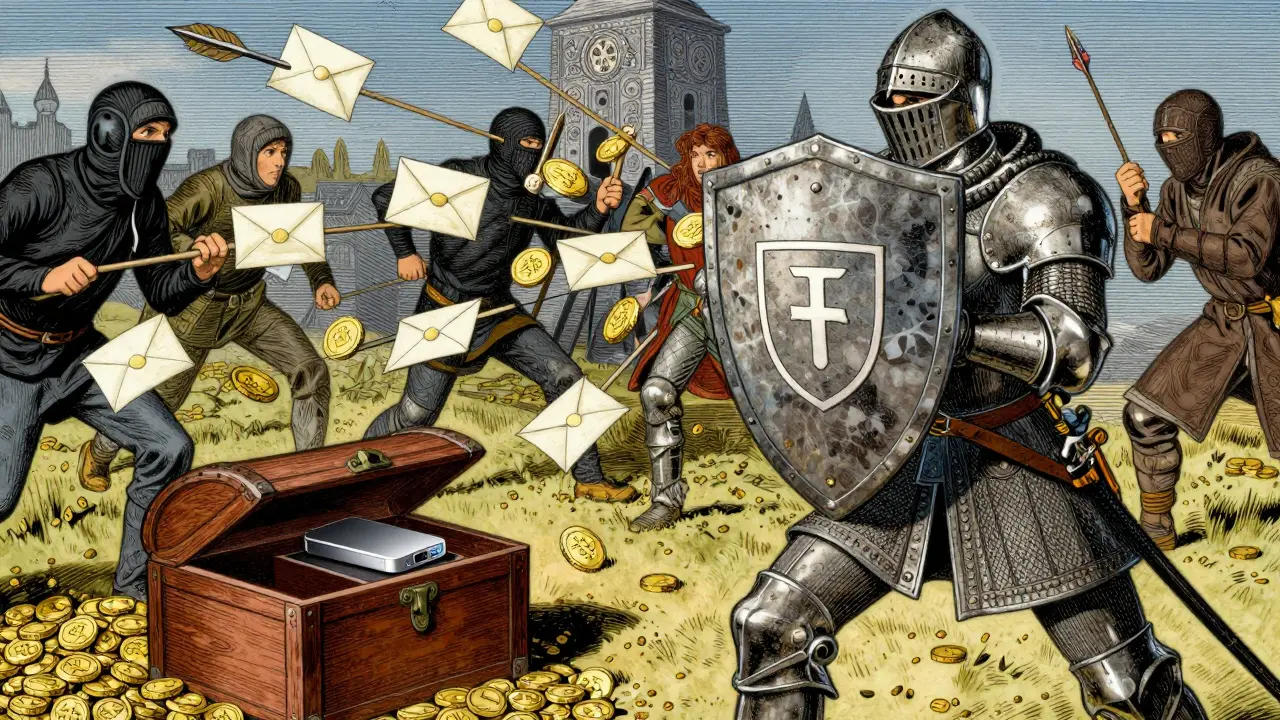
Red Flags: Avoiding DMEX Scams
The absence of clear information creates a vacuum that scammers fill quickly. In 2026, phishing attacks have become sophisticated, using AI-generated copy that mimics official tone perfectly. Here is how to spot the fakes:
| Scam Indicator | Legitimate Practice |
|---|---|
| Asking for seed phrases or private keys | Never asks for private data; only requires public wallet address |
| Promising guaranteed high-value returns | Provides transparent tokenomics and vesting schedules |
| Urgent countdown timers on unofficial sites | Announcements made via official blog posts and verified social media |
| Requiring payment to "unlock" tokens | Airdrops are free; gas fees may apply for claiming on-chain |
If a site looks too good to be true, it is. Legitimate projects like Eclipse or Monad took months to announce their distribution rules. DMEX will likely follow suit. Patience is part of the strategy.
Understanding the Tokenomics Behind DMC
Before you decide if the effort is worth it, look at the potential utility. The DMC token is expected to serve several functions within the DMEX ecosystem. First, it will likely be used for governance, allowing holders to vote on protocol upgrades and fee structures. Second, it may act as a staking asset for miners who want to secure their positions on the exchange. Finally, it could offer fee discounts for users trading mining contracts.
Token distribution models vary. Some projects allocate 10-20% of their supply to community incentives. Others reserve most tokens for team and investors, releasing them slowly over years. Without a published tokenomics report, you cannot know the exact percentage allocated to airdrops. However, historical data suggests that projects focusing on decentralization tend to favor broader community distribution to prevent centralization of voting power.
Strategic Alternatives While You Wait
You do not need to sit idle while waiting for DMEX news. The crypto market moves fast, and other opportunities exist. Consider diversifying your attention across related sectors. For example, Layer 2 solutions like Abstract have shown strong growth in developer activity. Engaging with multiple emerging protocols increases your exposure to potential rewards without putting all your eggs in one basket.
Additionally, focus on learning about decentralized physical infrastructure networks (DePIN). DMEX falls into this category, as it connects digital tokens with real-world mining resources. Understanding DePIN trends will give you an edge when evaluating not just DMEX, but similar projects launching in late 2026 and 2027.
Is the DMEX airdrop officially confirmed?
No, as of May 2026, DMEX has not released an official public announcement confirming a retail airdrop. All current claims are speculative or potentially fraudulent. Always wait for verification from official DMEX channels.
How can I stay updated on DMEX developments?
Follow DMEX's verified accounts on X (Twitter) and join their official Discord server. Enable notifications for posts containing keywords like "announcement," "token," or "distribution." Avoid third-party aggregator sites until they cite primary sources.
What should I do if I receive a DMEX airdrop link?
Verify the URL carefully. Check if the domain matches the official website listed in their bio. Never enter your seed phrase. Use a burner wallet with minimal funds to test interactions. If in doubt, ask in the official Discord before proceeding.
Will DMEX airdrop require holding other tokens?
It is possible. Many modern airdrops require users to hold specific bridge tokens or provide liquidity in partner pools. Keep an eye on DMEX's partnerships with major bridges or exchanges, as these often signal qualification requirements.
Can I participate in DMEX if I am not a miner?
Yes. While DMEX focuses on mining, many decentralized exchanges allow non-miners to participate through liquidity provision, governance voting, or referral programs. Early community engagement is often valued equally to technical contributions.