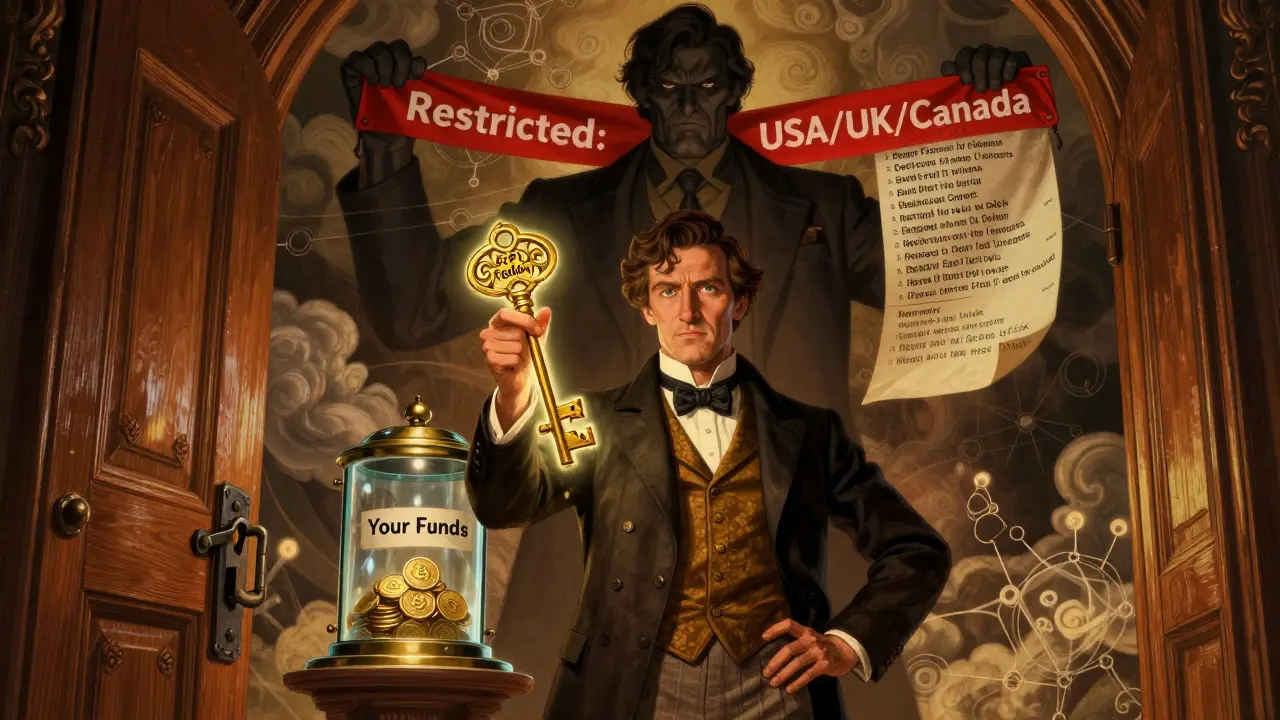
There is a frustrating contradiction at the heart of modern cryptocurrency trading. You hear the word "decentralized," and you imagine a wild west where no government can stop you from buying or selling assets. Then you try to log in from your country, and a red banner blocks your screen. If you have ever wondered why dYdX, a platform that prides itself on being a non-custodial decentralized exchange (DEX), restricts access for users in specific countries, you are not alone. The answer lies in the messy reality of how these platforms actually operate.
While the underlying blockchain technology might be open and permissionless, the user interface-the gateway through which most people interact with it-is often controlled by centralized entities. For dYdX, this means implementing strict geographic restrictions to comply with global financial laws. Let's break down exactly which countries are affected, how the enforcement works, and what it means for your trading strategy.
The Illusion of Total Decentralization
To understand the restrictions, we first need to look at the structure of the platform. Founded by Antonio Juliano in 2017, dYdX started as an ambitious project to bring order book trading to the blockchain. Unlike early DEXs that relied on simple automated market makers (AMMs) like Uniswap, dYdX aimed to replicate the experience of centralized exchanges (CEXs) like Binance or Coinbase but without holding your funds.
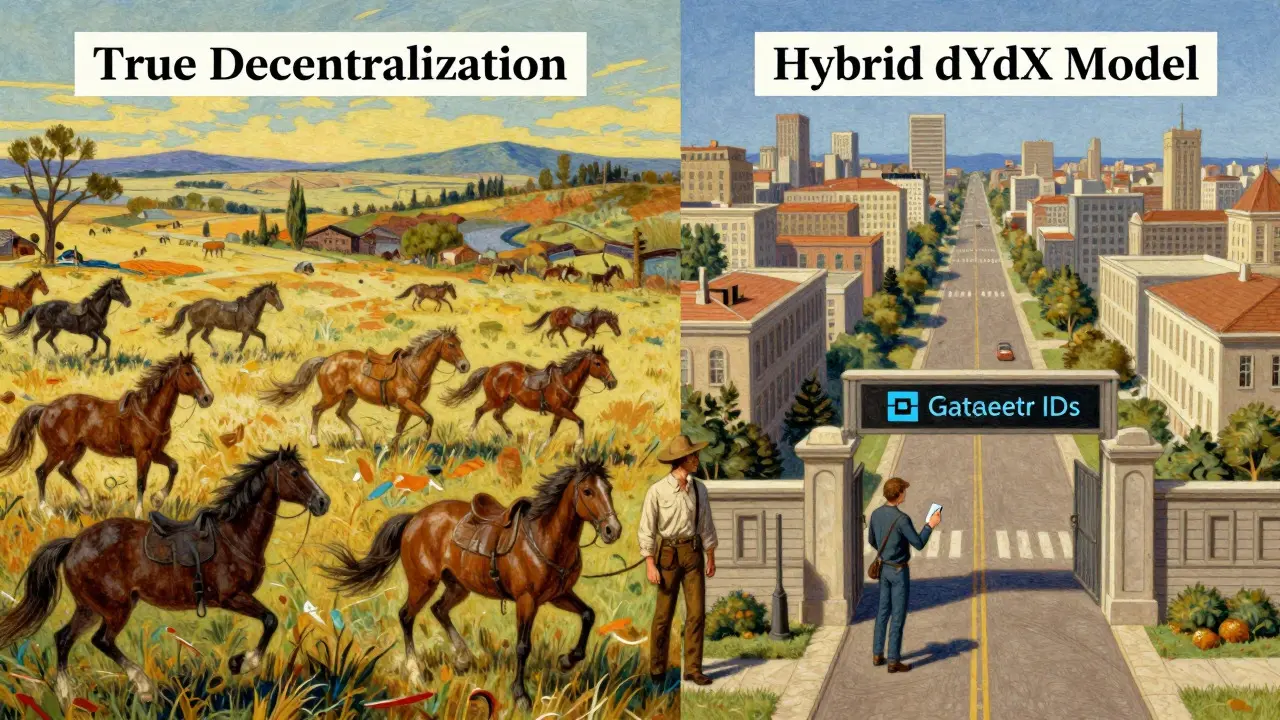
However, pure decentralization comes with trade-offs. It often means slower speeds, higher costs, and complex user experiences. To solve this, dYdX adopted a hybrid model. While the core protocol operates on-chain (initially Ethereum, later moving to its own Layer 2 chain, dYdX Chain), the frontend-the website you visit at dydx.trade-is operated by dYdX Operations Services Ltd. (DOS). This company is headquartered in New York, USA, and is subject to U.S. jurisdiction.
This distinction is crucial. The blockchain itself cannot easily ban a wallet address from interacting with smart contracts if the code allows it. But the *frontend*-the web app that makes those interactions easy-can absolutely block your IP address or flag your wallet. When dYdX says it is "decentralized," it refers to the custody of funds and the settlement layer. When it enforces rules, it acts like a traditional corporation.
Which Countries Are Restricted?
If you are trying to figure out if you can use dYdX, checking the list of prohibited jurisdictions is step one. The platform claims availability in over 180 countries, but the excluded list is significant and heavily influenced by United States sanctions and local regulatory pressures.
Here is a breakdown of the primary restricted regions:
- United States: Perhaps the biggest surprise for some, U.S. residents are generally barred from using the consumer-facing frontend due to strict SEC and CFTC regulations regarding derivatives.
- United Kingdom & Canada: Major Western economies with tight financial oversight.
- Sanctioned Nations: Iran, Cuba, North Korea, Syria, Myanmar (Burma), Crimea, Donetsk, Luhansk, Iraq, Libya, Mali, Democratic Republic of Congo, Côte d'Ivoire, Nicaragua, Somalia, Sudan, Yemen, and Zimbabwe.
Interestingly, some countries that are often banned on other crypto platforms remain accessible on dYdX. These include China, Russia, South Korea, Japan, and Vietnam. This suggests that dYdX’s compliance strategy is not just about blanket conservatism but is specifically targeted at jurisdictions with active enforcement actions against unlicensed derivatives trading or those under heavy U.S. Treasury sanctions.
| Region | dYdX Status | Typical CEX Status (e.g., Binance) | Primary Reason for Restriction |
|---|---|---|---|
| United States | Restricted | Restricted / Segregated | SEC/CFTC Derivatives Laws |
| China | Allowed* | Restricted | No direct US sanction; capital controls enforced locally |
| Russia | Allowed* | Restricted | Complex geopolitical stance; no broad OFAC ban on citizens |
| Iran/North Korea | Blocked | Blocked | OFAC Sanctions |
| UK/Canada | Restricted | Restricted | Local Financial Conduct Authority Rules |
How Enforcement Actually Works
You might think, "I'll just use a VPN." It’s a common thought, but dYdX has built sophisticated mechanisms to catch violators. The enforcement isn't just a simple "403 Forbidden" error page. It involves a multi-stage process that impacts your wallet status directly.
When you connect your wallet to the dYdX frontend, the system checks your IP address and cross-references it with geolocation databases. If it detects a connection from a restricted region, or if your wallet has previously been flagged, the system triggers a compliance response.
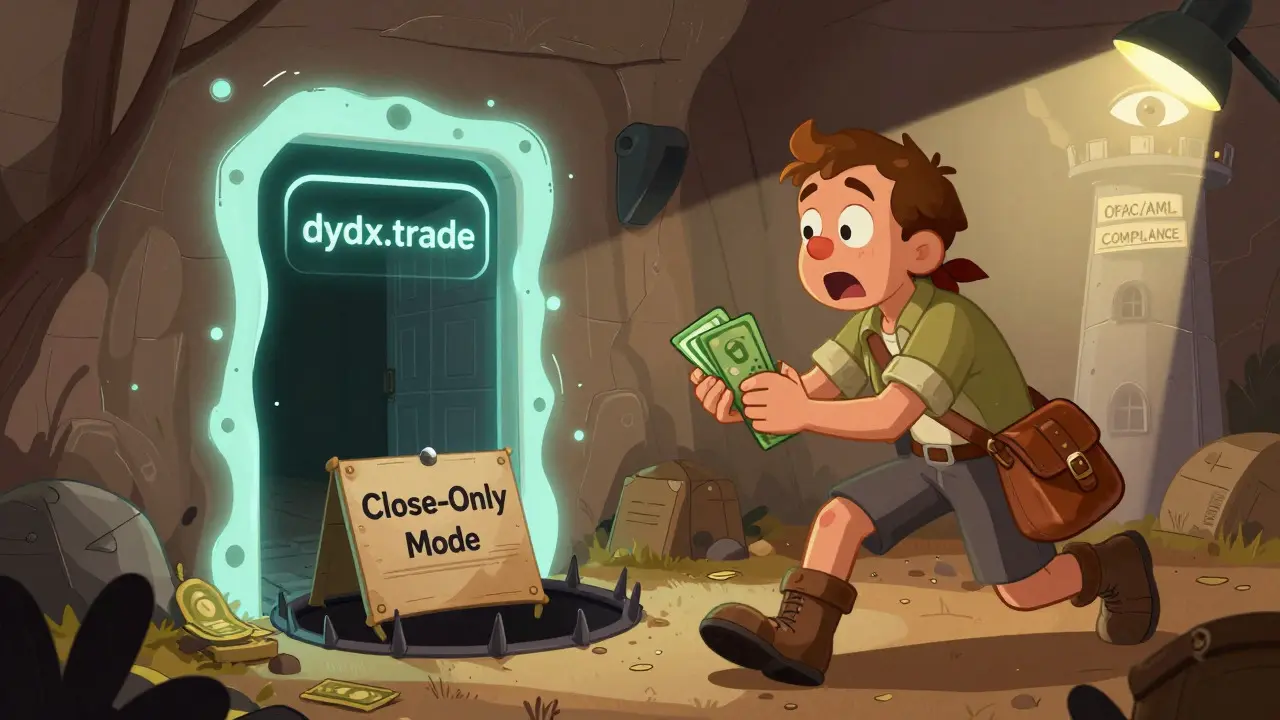
The first stage is often a warning. You might see red banners alerting you that you are accessing from a restricted jurisdiction. If the violation persists or is confirmed, your account enters "Close-Only Mode." This is a critical concept to understand:
- Trading Halts: You can no longer open new positions. All new orders default to "reduce-only" status.
- Funding Locked: Deposits and transfers into the platform are disabled.
- Exit Strategy: You can cancel existing orders, reduce open positions, or fully close them.
- Withdrawal Access: You can still withdraw funds back to your external wallet on the blockchain.
If your wallet remains in this state for seven consecutive days, it transitions to "Blocked" status. At this point, you lose access to subaccounts, trading history views, and any further interaction via the frontend. Your only remaining option is to export your Secret Recovery Phrase and manage your assets directly through the blockchain explorer or a different interface, if possible.
The Role of AML and OFAC Compliance
Why go through all this trouble? The driving force behind these restrictions is Anti-Money Laundering (AML) and Counter-Terrorism Financing (CTF) protocols. Even though dYdX does not hold your private keys, the corporate entity operating the frontend fears liability.
The U.S. Department of the Treasury's Office of Foreign Assets Control (OFAC) maintains lists of sanctioned individuals and nations. Under the Bank Secrecy Act, financial institutions-and increasingly, crypto service providers-are required to ensure they are not facilitating transactions for these entities. By restricting access, dYdX attempts to shield itself from fines, lawsuits, and potential shutdowns.
This creates a paradox. The ethos of Decentralized Finance (DeFi) was originally pitched as a way to escape these very regulations. Early adopters believed that because the code runs on a public ledger, governments couldn't touch it. However, regulators have adapted. They don't necessarily need to shut down the blockchain; they just need to pressure the "on-ramps" and "frontends" that make the blockchain usable for the average person.

What Happens If You Get Flagged?
If you find yourself in Close-Only Mode, panic is your enemy. Here is a practical guide on how to handle it:
- Act Quickly: Do not wait for the seven-day deadline. Immediately work to close your open positions. Liquidation risks increase if you are stuck with leverage during volatile markets.
- Check Your IP: Ensure you aren't accidentally connecting via a corporate network or a shared WiFi hotspot that has been flagged by another user in a restricted country.
- Contact Support: While limited, dYdX support may offer appeals if the flagging was an error. Have proof of residence ready.
- Use Direct Wallet Interaction: In extreme cases, advanced users can interact with the dYdX smart contracts directly using tools like Etherscan or specialized DeFi dashboards that do not perform IP checks. Note that this requires technical expertise and gas fees.
The Future of Geo-Restrictions in DeFi
The case of dYdX is not unique; it is a trendsetter. As regulatory scrutiny intensifies globally, more "hybrid" DeFi platforms are likely to adopt similar models. We are seeing a shift from "permissionless" to "permissioned-by-default-but-opt-in" architectures.
Some protocols are experimenting with decentralized identity solutions, where users prove their residency without revealing personal data. Others are moving toward fully community-governed frontends, removing the corporate operator entirely. However, until that transition happens, platforms like dYdX will continue to balance the scales between accessibility and compliance.
For traders, the lesson is clear: never assume a platform is truly borderless just because it uses blockchain technology. Always check the Terms of Service, verify your eligibility, and keep an eye on regulatory news. The landscape changes fast, and what is allowed today might be blocked tomorrow.
Is dYdX really decentralized if it blocks countries?
It is partially decentralized. The core protocol and your funds are non-custodial and reside on the blockchain, meaning no central authority holds your assets. However, the frontend interface is operated by a centralized company (dYdX Operations Services Ltd.) that enforces geographic restrictions to comply with laws. This hybrid model allows for better user experience but sacrifices total censorship resistance.
Can I use a VPN to bypass dYdX restrictions?
Technically, yes, but it is risky. dYdX monitors for VPN usage and can flag wallets that appear to be spoofing locations. If detected, your account may be placed in "Close-Only Mode," forcing you to exit positions and withdraw funds. Using a VPN violates the Terms of Service and could lead to permanent blocking of your wallet from the frontend.
Why is the United States restricted on dYdX?
The U.S. has strict regulations regarding cryptocurrency derivatives, enforced by the SEC and CFTC. Because dYdX offers leveraged trading and perpetual futures, it falls under these regulatory scopes. To avoid legal action and hefty fines, dYdX blocks U.S. residents from accessing its consumer frontend, even though the underlying technology is global.
What happens if my wallet gets blocked after 7 days?
If your wallet stays in "Close-Only Mode" for seven days, it becomes "Blocked." You lose access to the dYdX frontend features like subaccounts and trading history. However, your funds are not lost; they remain in your wallet on the blockchain. You can still withdraw them to another exchange or cold storage using standard blockchain transactions, though you may need to use alternative interfaces to initiate the withdrawal if the main site is inaccessible.
Are there any truly unrestricted decentralized exchanges?
Yes, simpler Automated Market Maker (AMM) protocols like Uniswap or PancakeSwap are generally more permissionless because they lack a centralized frontend operator enforcing KYC/AML rules. However, even these platforms face pressure, and liquidity providers or token issuers may sometimes implement restrictions. For derivatives trading specifically, options are more limited due to the higher regulatory scrutiny on leveraged products.