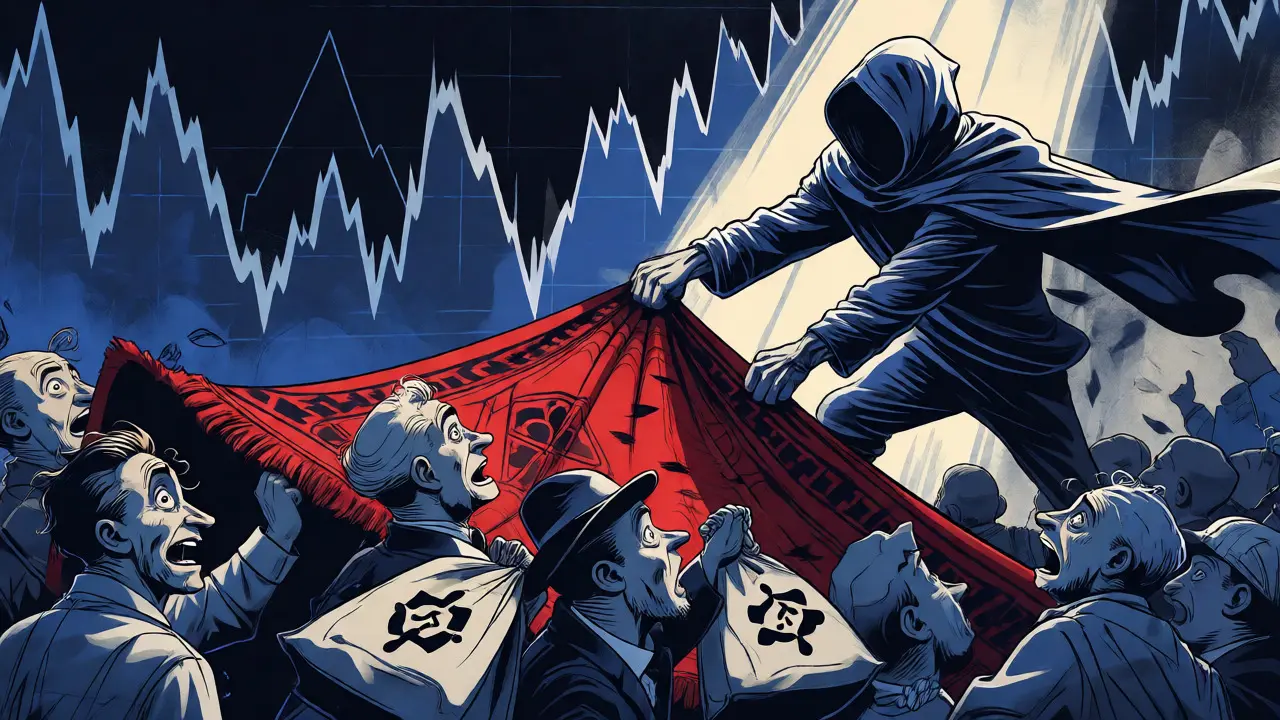
You wake up, check your phone, and see a new coin skyrocketing. It’s got a funny name, a viral meme, and everyone on X is talking about it. You buy in, thinking you’ve found the next big thing. A few hours later, the chart looks like a cliff edge. Your money? Gone. This isn’t bad luck; it’s a rug pull, a scheme where developers drain liquidity and vanish with investor funds.
Rug pulls aren't just minor annoyances. They are the most common form of fraud in the crypto world. According to research by Solidus Labs, over 300,000 scam tokens have been created, defrauding roughly 2 million investors. The financial damage from these schemes actually surpasses the combined losses from major exchange collapses like FTX or Celsius. If you’re holding digital assets, understanding how these scams work-and looking at famous cases-is essential for survival.
What Actually Happens During a Rug Pull?
A rug pull happens when project creators hype up a new cryptocurrency, get people to invest, and then abruptly liquidate their holdings. This leaves regular investors holding worthless tokens while the scammers cash out. There are two main ways this plays out:
- DeFi Scams: Developers write malicious code into the smart contract. This might mean users can’t sell their tokens (a "honeypot"), or the developers can mint unlimited new tokens to dump on the market.
- Exit Scams: The team spends heavily on marketing, promises partnerships that don’t exist, and then simply abandons the project, taking the liquidity pool with them.
The worst scams combine both. They use aggressive promotion to drive up the price and technical tricks to ensure only the insiders can exit before the crash.
The Big Ones: Famous Rug Pull Examples
Not all rug pulls are small-time. Some have wiped out billions. Here are the cases that defined the landscape of crypto fraud.
Thodex: The $2 Billion Disappearance
In April 2021, Thodex was one of Turkey’s largest centralized exchanges. Then, withdrawals stopped. CEO Faruk Fatih Özer disappeared. He was eventually caught in Albania, but the damage was done. Investors lost over $2 billion. This wasn’t a DeFi smart contract trick; it was a classic exit scam on a massive scale. It showed that even centralized platforms with physical offices could execute a rug pull if they lacked proper regulation.
Squid Game Token: The Honeypot Trap
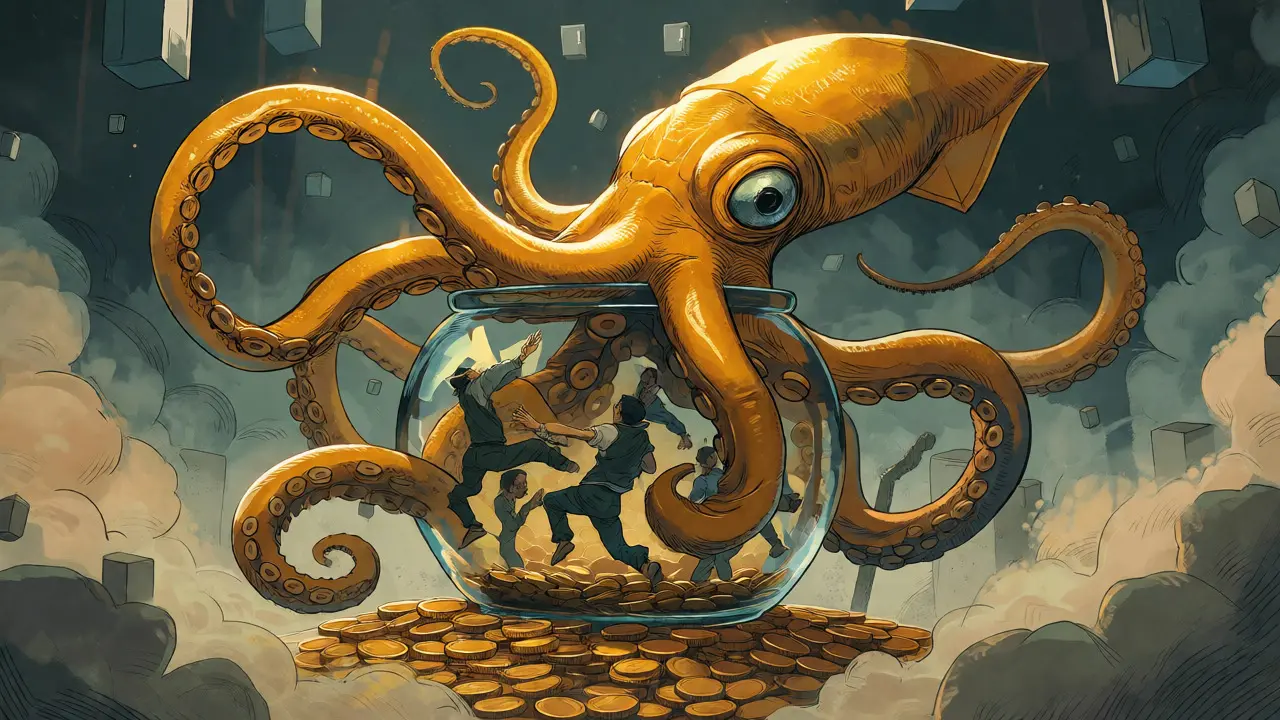
Capitalizing on the Netflix hit Squid Game, this token launched in late 2021. It started at $0.01 and soared to $2,861 in less than a week. Sounds great, right? But there was a catch. When investors tried to sell, they couldn’t. The smart contract had a hidden restriction that only allowed selling after reaching a certain threshold-effectively trapping buyers.
Developers drained the liquidity pool, making an estimated $3.38 million. The price crashed 99% in a week. It’s a textbook example of a honeypot exploit mixed with viral marketing hype.
AnubisDAO: $58 Million in 20 Hours
Launched in October 2021, AnubisDAO promised a decentralized currency backed by a basket of assets. It had no website, no white paper, and anonymous developers. Yet, it raised nearly $60 million overnight. Within 20 hours, the funds-mostly wrapped Ethereum-vanished from the liquidity pool. The speed of this collapse highlights how quickly FOMO (Fear Of Missing Out) can blind investors to basic red flags.
Bored Bunny NFTs: Celebrity Smoke and Mirrors
The NFT boom brought its own flavor of rug pulls. Bored Bunny, launched in December 2021, claimed endorsements from celebrities like Floyd Mayweather and Jake Paul. The collection sold out instantly, generating around 2,000 ETH. However, blockchain sleuths discovered that many of the "celebrity-owned" NFTs were actually bought by developer wallets. Insider trading fueled the initial hype, and once the floor price dropped, early buyers were left holding bags worth pennies on the dollar.
Recent Cases: Meme Coins and Social Media Fame
As we move through 2024 and into 2026, the tactics haven’t changed much, but the venues have. Social media influencers are now key players in driving these pumps.
Hawk Tuah (HAWK): The Influencer Pump
In December 2024, Hailey Welch, known for her viral "Hawk Tuah" clip, launched a meme coin. The excitement was real, but so was the drop. Within 20 minutes of launch, the market cap plummeted from $500 million to $60 million. Legal action followed, with law firms filing lawsuits against those behind the project. This case illustrates the growing risk of celebrity-endorsed tokens, where fame replaces fundamental value.
Froggy (FROGGY): The Classic Liquidity Drain
FROGGY marketed itself as a community-driven meme token. Early investors funded the liquidity pool, pushing the price up. Once the hype peaked, developers drained the liquidity, crashing the token’s value by over 99%. At its lowest point, FROGGY traded for fractions of a cent, down from its all-time high. It’s a reminder that "community-driven" often means "developers hold the keys."
How to Spot a Rug Pull Before It Happens
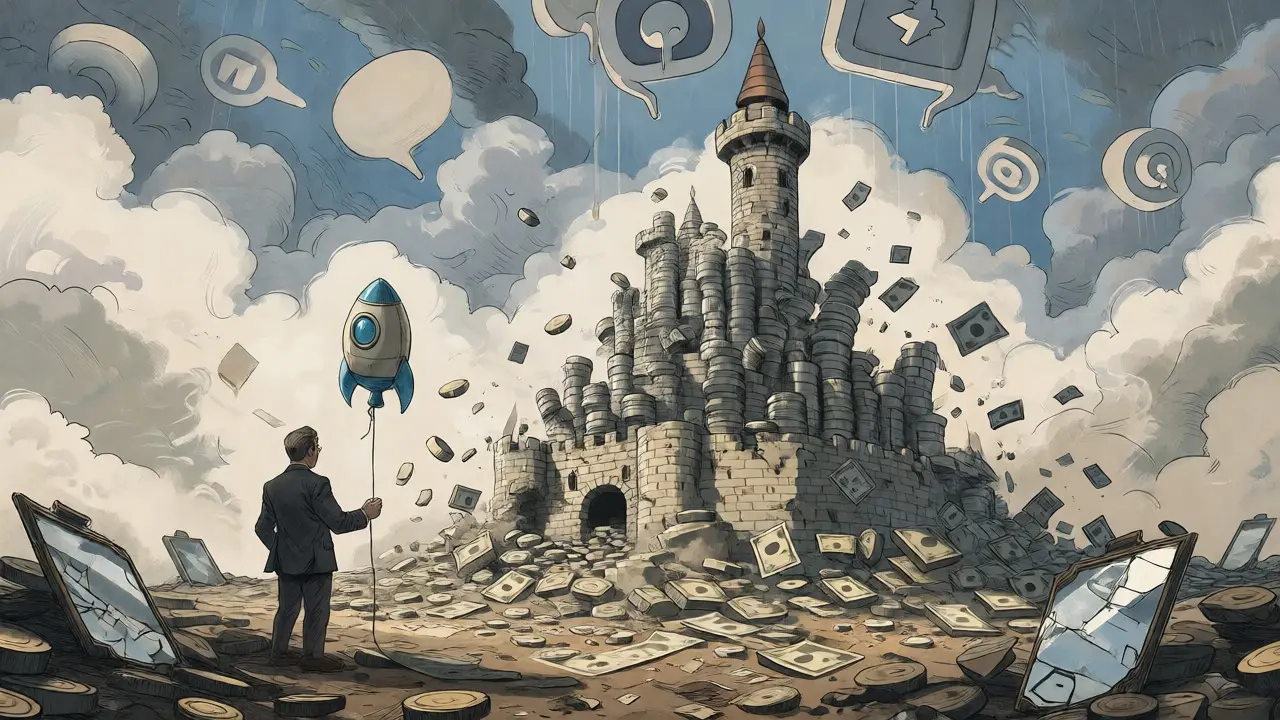
You can’t prevent every scam, but you can avoid the obvious ones. Here’s a quick checklist based on the patterns seen in these famous cases:
| Feature | Rug Pull Red Flag | Legitimate Project Signal |
|---|---|---|
| Team Identity | Anonymous founders with fake LinkedIn profiles. | Doxxed team with verifiable professional history. |
| Smart Contract | Unverified code, high transaction fees, or selling restrictions. | Audited code by reputable firms (e.g., CertiK, Hacken). |
| Liquidity Pool | Not locked; developers can withdraw funds anytime. | Liquidity locked via third-party services (e.g., Uniswap V3 LP lock). |
| Marketing | Promises of 10x returns, paid bots, vague roadmaps. | Clear utility, realistic growth projections, organic community. |
Always check if the liquidity is locked. If the developers can withdraw the liquidity pool, they can steal the money backing your tokens. Also, look at the holder distribution. If one wallet holds 50% of the supply, they control the price.
Why Do These Scams Keep Working?
It’s easy to blame greed, but psychology plays a huge role. Crypto markets move fast. When you see a green candle shooting up, your brain screams "buy now or miss out." Scammers exploit this urgency. They create artificial scarcity and hype using bots on Twitter and Telegram. By the time you realize something is wrong, the window to exit has closed.
Furthermore, the pseudonymous nature of blockchain makes prosecution difficult. While authorities are getting better at tracking funds-like in the Hawk Tuah lawsuits-it’s still hard to recover assets once they’ve been mixed through multiple wallets.
What is the difference between a rug pull and a simple crash?
A simple crash happens due to market conditions or poor performance. A rug pull is intentional fraud. In a rug pull, developers actively manipulate the price and then remove liquidity or sell their entire stake, causing an artificial collapse designed to trap other investors.
Can I recover my money after a rug pull?
It’s difficult but not impossible. If the scammers are identified and prosecuted, courts may order restitution. However, in most DeFi cases, the funds are moved across chains or exchanged for privacy coins, making recovery rare. Always assume the money is gone until proven otherwise.
Are all meme coins rug pulls?
No. Many meme coins survive and thrive because they build genuine communities. However, they carry higher risk because their value is driven by sentiment rather than utility. Check for liquidity locks and transparent team structures before investing.
What tools help detect rug pulls?
Tools like DexScreener, GoPlus Security, and Token Sniffer analyze smart contracts for red flags such as hidden mint functions, unlocked liquidity, or suspicious holder distributions. Use them before buying any new token.
Did the Squid Game token have a real game?
The project claimed to be a play-to-earn game, but investigations revealed the game was barely functional, if it existed at all. The primary focus was on token speculation, not gameplay, which is a common trait in short-lived hype cycles.