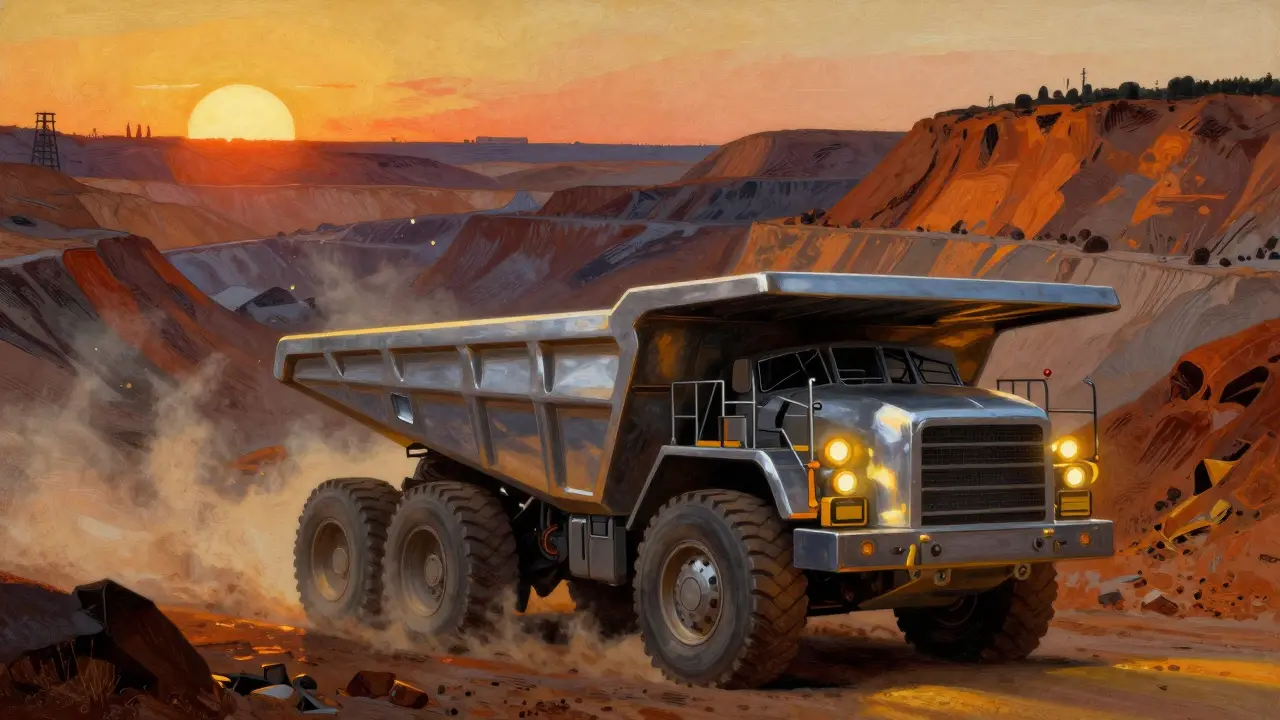
Imagine a mine where the heavy machinery drives itself, analyzes rock samples in real-time, and reports its own maintenance needs before a single bolt loosens. This isn't science fiction anymore. It is the reality of mining hardware technology in 2025 and 2026. The industry is undergoing a massive shift. We are moving away from brute force and manual labor toward precision, automation, and data-driven decision-making. For anyone interested in blockchain, crypto, or industrial tech, understanding this transformation is crucial. The hardware powering these operations is becoming smarter, greener, and more connected than ever before.
The core driver behind this change? Efficiency and safety. Traditional mining has always been dangerous and resource-intensive. But with the integration of artificial intelligence and autonomous systems, companies are not just digging deeper; they are digging smarter. Let’s look at what is actually happening on the ground (and underground) right now.
The Rise of Autonomous Equipment
The most visible change in modern mines is the disappearance of drivers from heavy trucks. Autonomous mining equipment, including self-driving haul trucks and robotic drilling systems, is no longer an experimental novelty. It is standard practice in major operations worldwide. These machines operate 24/7 without fatigue, breaks, or error-prone human judgment.
Why does this matter? Safety and productivity. By removing workers from hazardous environments like open-pit edges and deep tunnels, incident rates drop dramatically. At the same time, productivity soars. A driverless truck can run continuously, optimized by algorithms that calculate the most efficient route and load distribution every second. The market for this technology is exploding, projected to double from $3.1 billion to $6.2 billion by 2026. Companies are investing heavily because the math works out: less downtime, fewer accidents, and higher output.
But it’s not just about big trucks. Robotic loaders and automated drilling rigs are also taking over repetitive, high-risk tasks. These systems use sensors and cameras to navigate complex terrain, avoiding obstacles and adjusting to changing conditions instantly. This level of automation allows humans to focus on supervision and strategic planning rather than physical operation.
AI and Edge Computing: Processing Data Where It Matters
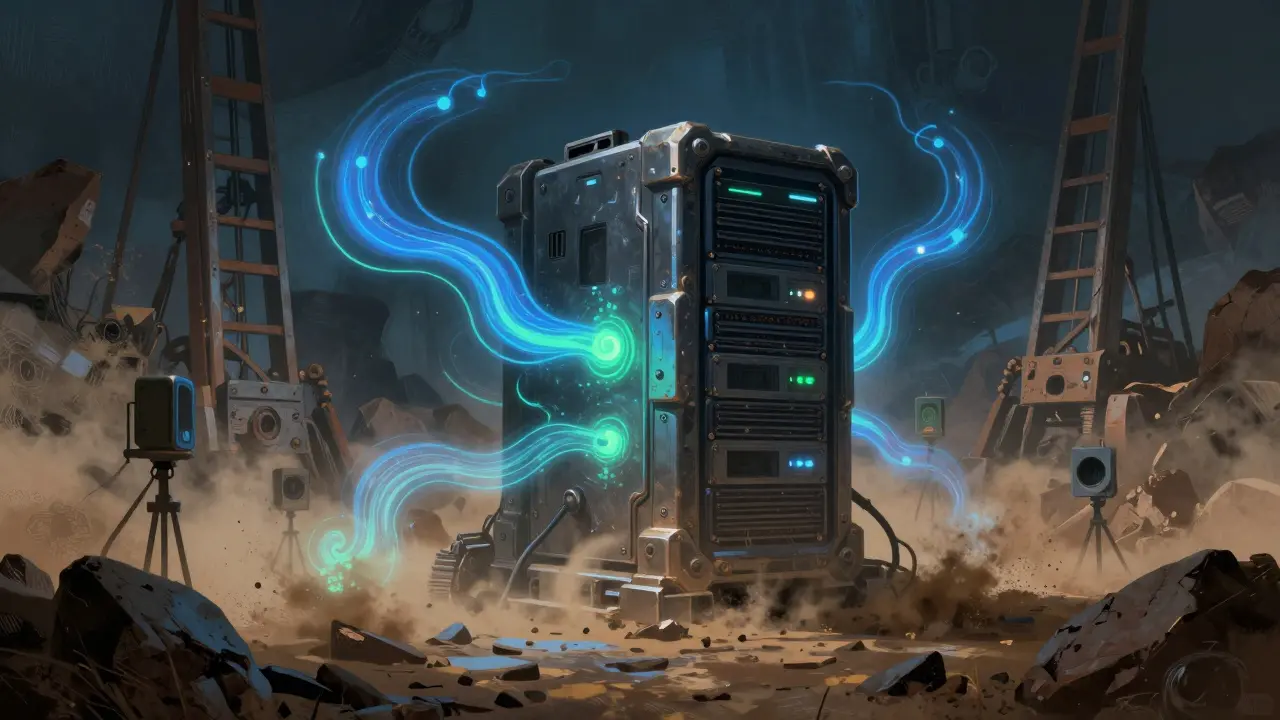
Data is the new ore. In modern mining, every drill bit, sensor, and camera generates terabytes of information. The challenge isn’t collecting this data; it’s processing it fast enough to make decisions in real-time. This is where AI-optimized edge storage nodes come into play.
Traditionally, data would be sent to a central server for analysis, causing latency delays. In a dynamic environment like a mine, seconds count. Edge computing processes data locally, on-site. AI-optimized nodes can analyze ore grades, monitor equipment health, and detect environmental hazards instantly. These systems offer up to a 40% improvement in efficiency by enabling immediate action based on live data.
Consider a scenario: a drill rig detects a vein of low-grade ore mixed with high-value minerals. Instead of blindly continuing, the AI system adjusts the drilling pattern in real-time to maximize extraction value while minimizing waste. This level of precision was impossible with legacy systems. Machine learning tools are also analyzing geological data with remarkable accuracy, improving mineral discovery rates by 20 to 30%. This means finding valuable deposits faster and cheaper, even in challenging regions.
Advanced Storage Solutions for Harsh Environments
Mines are tough places. Dust, vibration, extreme temperatures, and moisture can destroy standard electronics. That’s why specialized hardware is essential. Ruggedized HDD mining systems are designed specifically for these conditions. They offer shock, temperature, and dust resistance, ensuring reliable data logging for remote drilling applications. These rugged drives provide a 35% efficiency improvement by preventing data loss and hardware failure in harsh environments.
But speed matters too. Hybrid storage architectures combine the durability of Hard Disk Drives (HDDs) with the speed of Solid State Drives (SSDs). This tiered approach supports long-term survey data storage while allowing instant reporting capabilities. The result? A 28% boost in operational efficiency. Companies can archive years of geological data securely while accessing critical real-time metrics instantly.
Looking ahead to 2026, we expect widespread adoption of IoT-embedded HDD devices. These units feature onboard connectivity, automating data flow from connected machines. This is crucial for sensor-based environmental regulation monitoring, ensuring compliance without manual intervention. Additionally, self-healing storage platforms are emerging as a game-changer. Using AI-driven system checks and advanced error correction, these platforms maintain continuous real-time operational data archiving, offering a 38% efficiency gain by eliminating downtime caused by storage failures.
Sustainability and Green Mining Hardware
The mining industry faces intense pressure to reduce its environmental footprint. Investors, regulators, and communities demand cleaner operations. In response, hardware manufacturers are prioritizing sustainability. Electric and hybrid mining equipment is gaining traction, significantly reducing emissions and fuel consumption.
Energy-efficient HDD devices are part of this green push. Designed for green data centers located directly on mining camps, these drives achieve 32% efficiency gains through advanced thermal and power management. They consume less electricity and generate less heat, reducing the need for energy-intensive cooling systems.
Precision mining also plays a huge role. By using AI to target specific ore bodies, companies extract only what they need, minimizing waste generation and land disturbance. Recycling initiatives for both materials and machinery parts are becoming standard. This holistic approach aligns with global sustainability goals and helps companies meet increasingly stringent regulations.
Additive Manufacturing: Printing Parts On-Site
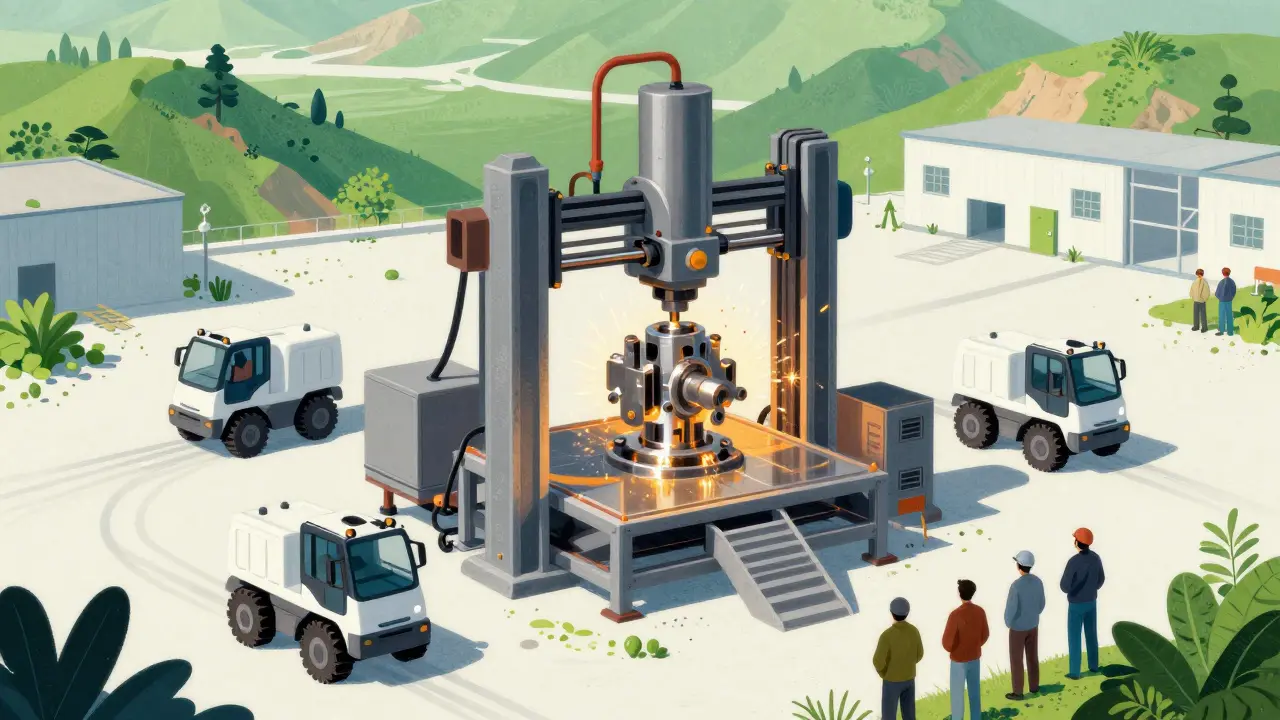
Supply chain disruptions can cripple a mining operation. Waiting weeks for a replacement part from a distant factory costs millions. Additive manufacturing, or 3D printing, solves this problem. Mining companies are now fabricating strong, lightweight parts on demand at remote sites.
Technologies like metal 3D printing, laser cladding, and continuous fiber filament printing enable the creation of complex components that traditional methods struggle to produce. For example, Kazakhstani startup Arcobo manufactures large-scale metal products using steel, titanium alloys, and bronze. They create specialized blanks with high-tech equipment and precise machining, allowing mining companies to receive custom-manufactured parts within days.
This capability reduces reliance on traditional supply chains and minimizes downtime from equipment failures. If a loader breaks down, engineers can print a replacement bracket overnight instead of shutting down the line for weeks. This agility is a significant competitive advantage in the modern mining landscape.
Blockchain Integration for Data Traceability
Trust and transparency are vital in mining, especially when dealing with conflict-free minerals and regulatory compliance. Blockchain integration provides a secure, immutable ledger for tracking data throughout the extraction process.
By recording every step-from ore extraction to transport and refining-on a blockchain, companies guarantee data integrity. This traceability is crucial for compliance audits and proving ethical sourcing. Blockchain modules offer a 30% efficiency improvement in administrative processes by automating record-keeping and eliminating discrepancies. For the crypto community, this represents a practical application of blockchain technology beyond currency, demonstrating its value in supply chain management and verification.
Workforce Transformation and New Skills
All this technology requires a different kind of workforce. The era of purely physical labor in difficult conditions is fading. Today’s miners need skills in technology management, data analysis, and remote supervision. This transition creates new career opportunities, attracting diverse talent who might never have considered mining before.
However, challenges remain. Workforce retraining is essential. Companies must invest in education programs to help existing employees adapt to new roles. Regulatory adaptation and cybersecurity are also major concerns. As operations become more connected, they become vulnerable to cyberattacks. Protecting sensitive geological data and controlling autonomous fleets requires robust security protocols.
| Feature | Traditional Systems | Next-Gen Automated Systems |
|---|---|---|
| Operation Mode | Manual, human-driven | Autonomous, AI-optimized |
| Safety Record | Higher risk due to human exposure | Drastically reduced incidents via remote ops |
| Data Processing | Centralized, delayed analysis | Edge computing, real-time insights |
| Maintenance | Reactive, scheduled downtimes | Predictive, minimal disruption |
| Environmental Impact | High emissions, waste-heavy | Electric/hybrid options, precision extraction |
| Efficiency Gain | Baseline | Up to 40% with AI and automation |
Challenges and Considerations
While the benefits are clear, adopting future mining hardware is not without hurdles. The initial investment is substantial. Upgrading to autonomous fleets and AI infrastructure requires significant capital. Small and medium-sized enterprises may struggle to compete with larger players who can afford these technologies.
Cybersecurity is another critical issue. Connected mines are attractive targets for hackers. A breach could lead to operational paralysis or theft of valuable geological data. Companies must implement rigorous security measures, including encryption, network segmentation, and regular audits.
Regulatory frameworks are still catching up. Laws governing autonomous vehicles and AI decision-making in industrial settings vary by region. Navigating this legal landscape requires expertise and proactive engagement with policymakers.
What is the biggest benefit of autonomous mining equipment?
The primary benefits are enhanced safety and increased productivity. Removing humans from dangerous environments drastically reduces accident rates. Simultaneously, autonomous systems operate 24/7 with optimal efficiency, leading to double-digit productivity gains.
How does AI improve mining operations?
AI enables real-time data analysis through edge computing, optimizing resource allocation, predicting maintenance needs, and improving mineral discovery rates by 20-30%. It allows for precision mining, reducing waste and energy consumption.
Why is ruggedized hardware important in mining?
Mines are harsh environments with dust, vibration, and extreme temperatures. Ruggedized HDDs and SSDs are designed to withstand these conditions, ensuring reliable data storage and transmission without frequent failures, thus maintaining operational continuity.
How does blockchain help in mining?
Blockchain provides an immutable ledger for data traceability. It ensures transparency in the supply chain, verifies ethical sourcing, and streamlines compliance audits by automating record-keeping and preventing data tampering.
What role does additive manufacturing play in modern mining?
Additive manufacturing, or 3D printing, allows mines to produce replacement parts on-site. This reduces dependency on long supply chains, minimizes downtime during equipment failures, and enables the creation of custom, lightweight components tailored to specific needs.
Is the mining industry becoming more sustainable?
Yes. The adoption of electric and hybrid equipment, energy-efficient data storage, and precision mining techniques significantly reduces emissions and waste. Sustainability is now a core focus for meeting regulatory requirements and investor expectations.
honestly the part about safety really hits home. my uncle worked in a mine for twenty years and he came back with more scars than medals. seeing them push humans out of the pit is genuinely relieving even if it feels like sci fi.
You are vastly oversimplifying the logistical nightmare here. The article claims a 40% efficiency gain from edge computing but fails to address the latency issues inherent in remote satellite uplinks which are standard for these isolated sites. It is naive to think local processing solves the bandwidth bottleneck when terabytes of geological data need to be synced with central compliance databases. Furthermore, the 'self-healing' storage platforms mentioned are marketing fluff. RAID arrays have existed for decades. What they mean is automated failover which still requires physical intervention for hardware replacement. Do not let the buzzwords fool you into thinking this is magic.
Oh wow that is actually so amazing! I never thought about how much dust and vibration would ruin normal computers. It makes me feel so hopeful that technology can make dangerous jobs safe for people. We should all work together to support these green initiatives because the planet needs us to be kinder to it right now.
Absolutely typical corporate propaganda. They talk about 'sustainability' while stripping the earth bare. The real issue is that these autonomous systems are just a way to cut labor costs under the guise of safety. The elite get richer while the workers lose their livelihoods. It is a moral failing of our society to prioritize machine efficiency over human dignity. The environmental impact is barely mitigated by electric trucks when the energy source itself is often coal-fired grids. Disgraceful.
The paradigm shift towards epistemological certainty via algorithmic determinism in extractive industries represents a fundamental restructuring of socio-economic hierarchies. One must consider the ontological implications of removing the human agent from the locus of production. Is the value derived from the mineral or the labor? By automating the latter, we decouple value from human suffering, theoretically. However, the cyber-physical infrastructure creates new vectors for asymmetric warfare. A state actor could cripple a nation's resource supply chain through a simple SQL injection into an IoT-enabled HDD node. This necessitates a robust national security framework for industrial data sovereignty.
stop worrying about the philosophy and look at the results!! productivity is up accidents are down. this is what progress looks like. we need to embrace this change instead of clinging to outdated methods. lets go mining industry!!!
i feel like nobody cares about the actual workers who have to retrain. its all about the shiny new toys. i spent hours reading this and i am exhausted. why do companies always focus on the tech and not the people. it drains my energy just thinking about the resistance they will face.
the irony is palpable. we use blockchain to prove ethical sourcing while the servers running the blockchain consume enough power to light up a small city. yet here we are talking about green mining. classic. the jargon is thick but the point stands. automation is inevitable whether we like it or not. might as well get used to the idea that your job is probably next on the chopping block.
I've been watching this space for a while. The 3D printing aspect is particularly interesting for remote sites. Waiting weeks for a single bracket is ridiculous. If you can print it overnight that changes the entire maintenance workflow. Not sure about the AI hype though. Seems like there is still a lot of room for error in unpredictable geological formations.
so does this mean the miners are basically just IT guys now? thats wild. i guess if u dont know how to code u cant work in a mine anymore. kinda crazy how fast things are changing.
The cybersecurity risks mentioned are understated. When you have autonomous fleets communicating via IoT, you are creating a massive attack surface. A hacker doesn't need to steal data; they just need to cause a collision between two haul trucks. The article mentions encryption but doesn't detail the key management protocols. Who holds the keys? The mine operator? The equipment manufacturer? This lack of clarity is a major vulnerability that needs addressing before widespread adoption.
It is quite the colorful transformation isn't it? From dusty boots to digital dashboards. I wonder if the robots will ever get tired of digging. Probably not. But I do worry about the aesthetic loss. There is something poetic about the raw effort of traditional mining. Now it is just silent machines humming in the dark. Efficient yes but perhaps a bit soulless.
Hey everyone thanks for sharing your thoughts. It is great to see such a diverse range of perspectives on this topic. I agree that safety is the biggest win here. My hope is that the workforce transition programs are handled with care so no one gets left behind. Let us keep the conversation respectful and focused on how we can make these technologies work for everyone.
@2528 Your optimism is misplaced. The 'care' you speak of is usually a PR stunt. Look at the history of automation in manufacturing. Workers were displaced and never rehired in equivalent numbers. The retraining programs are underfunded and ineffective. The only ones winning here are the shareholders. Stop pretending this is a utopian scenario.