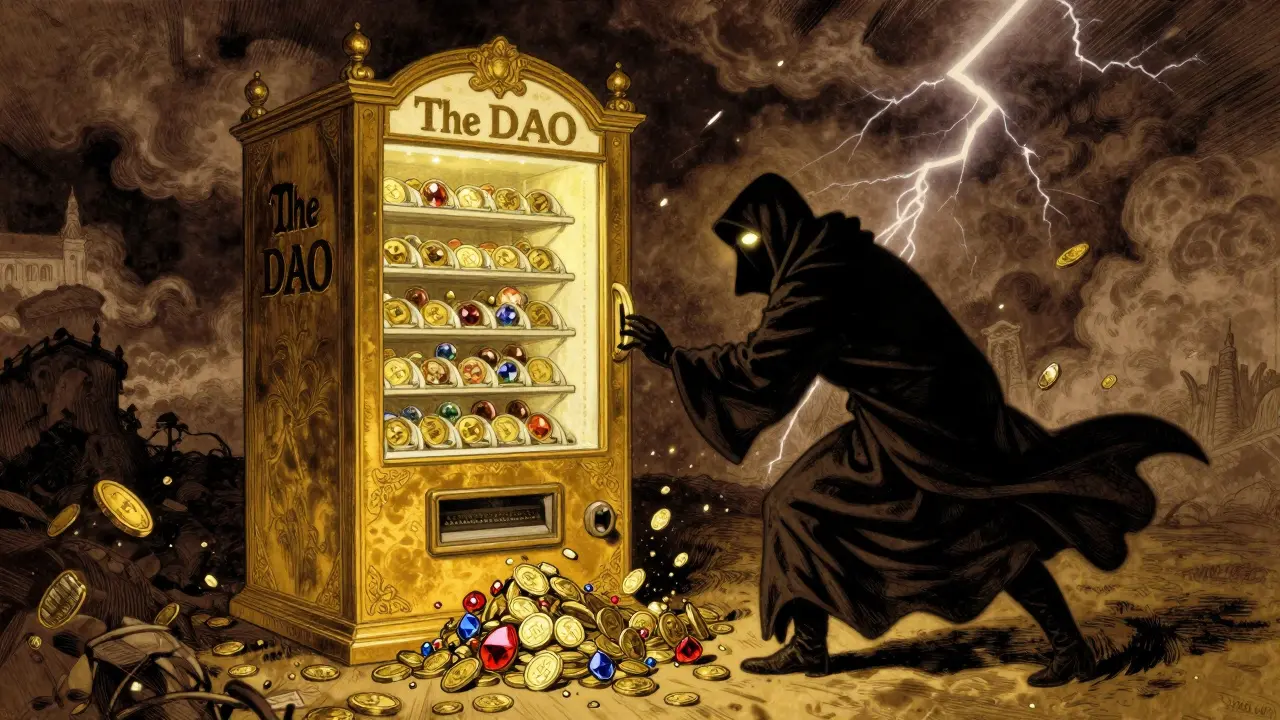
Imagine handing over your life savings to a vending machine that promises to give you snacks but has a glitch allowing anyone to take money without inserting coins. That is essentially what happened repeatedly in the world of smart contracts, which are self-executing contracts with the terms of the agreement directly written into code on a blockchain. Since 2014, these automated agreements have been targeted by hackers, resulting in cumulative losses exceeding $3 billion. These aren't just random thefts; they are sophisticated attacks that have fundamentally reshaped how we think about digital security.
You might wonder why this matters if you don't code daily. The answer is simple: every time you use a decentralized finance (DeFi) app, trade tokens across chains, or even hold assets on an exchange, you rely on the integrity of these historical lessons. Understanding past failures isn't just about morbid curiosity; it’s about recognizing patterns that protect your own assets today.
The Dark Age: When Code Was Candy for Hackers
To understand where we stand now, we have to look back at the "Dark Age" of smart contract security between 2016 and 2017. Back then, the industry was moving so fast that security practices were virtually nonexistent. In May 2016, security expert Peter Vessenes famously warned that "Ethereum contracts are going to be candy for hackers." He wasn't exaggerating. Within months, roughly 50% of projects holding significant funds were compromised.
The most infamous incident from this era was the The DAO hack, which occurred in June 2016. Attackers exploited a vulnerability in the organization's code to siphon off $50 million worth of Ether. This wasn't a minor glitch; it was a fundamental flaw in how the contract handled recursive calls. The fallout was massive. It led to a controversial hard fork of the Ethereum blockchain, splitting it into Ethereum and Ethereum Classic. This event established a critical precedent: when smart contracts fail, the consequences can fracture entire ecosystems.
Another telling example from this period was the Rubixi incident. Developers simply forgot to update a constructor name during a contract rename. This small oversight accidentally created a public function that allowed anyone to become the contract owner and drain its funds. It highlights a harsh truth: in blockchain, a single typo can cost millions.
Cross-Chain Bridges: The New Weak Link
As the ecosystem matured, attackers shifted their focus. While early hacks targeted individual contracts, modern exploits increasingly target cross-chain bridges, which are protocols that allow users to exchange tokens across different blockchain networks. These bridges are essential for interoperability but introduce complex interactions that create multiple points of failure. In 2022 alone, cross-chain bridges accounted for approximately 40% of total hacking losses.
| Incident | Date | Amount Lost | Key Vulnerability |
|---|---|---|---|
| Ronin Network | March 2022 | $625 million | Compromised validator keys |
| Binance BNB Bridge | October 2022 | $569 million | BSC Token Hub exploit |
| Wormhole | February 2022 | $326 million | Minting wETH without collateral |
| Nomad Bridge | August 2022 | $190 million | Incorrect type casting |
The largest hack in history remains the Ronin Network breach in March 2022. Supporting the Axie Infinity gaming platform, Ronin lost $625 million in Ether and USDC. What made this particularly alarming was the attacker: the Lazarus Group, a North Korean state-backed hacking collective. This demonstrated that nation-state actors had entered the crypto space, bringing military-grade sophistication to bear against decentralized protocols.
Then there was Wormhole. In February 2022, hackers exploited a software update to mint 120,000 wrapped Ethereum (wETH) without depositing any actual Ether as collateral. They then swapped these fraudulent tokens for $250 million in legitimate Ethereum. Wormhole offered a $10 million bounty for the return of funds and details of the exploit, but the offer was ignored. This incident underscored the risk of relying on external validators and the complexity of multi-signature setups.

The Psychology of Exploits: From Greed to "Fun"
Not all hacks follow the same script. Some are driven by pure greed, while others seem almost philosophical. The Poly Network hack in August 2021 stands out because the hacker stole over $611 million but then returned most of it. The attacker claimed the hack was conducted "for fun" or as a challenge to prove the system was vulnerable. This sparked intense debate in communities like r/cryptocurrency: was this ethical whistleblowing or a calculated move to avoid law enforcement?
In contrast, the Nomad Bridge incident in August 2022 felt like a "digital mob looting." After the initial exploit was discovered, the vulnerability could be replicated by users with basic coding skills. Within three hours, $190 million was drained. This raised uncomfortable questions about moral responsibility in decentralized systems. If a vault door is left open, is it the bank's fault or the thief's? The community response highlighted the tension between innovation and security, with many users expressing frustration at the frequency of such breaches.

How the Industry Responded: Audits and Regulations
The sheer scale of these losses forced the industry to evolve. Security is no longer an afterthought; it's a core component of development. Major protocols now allocate 15-20% of their development resources to security audits and bug bounty programs. Firms like Trail of Bits, ConsenSys Diligence, and OpenZeppelin command fees of $100,000 to $500,000 for comprehensive audits. This shift reflects a growing recognition that trustless systems require rigorous verification.
Regulatory responses have also intensified. Following the Ronin hack, the U.S. Treasury sanctioned cryptocurrency addresses associated with North Korean hackers. The European Union's Markets in Crypto-Assets (MiCA) regulation introduced strict operational resilience requirements for service providers. Japan implemented tighter security standards after the Coincheck exchange breach in 2018, where $532 million in NEM coins were stolen from hot wallets. These regulations aim to protect users but also increase compliance costs, potentially stifling smaller innovators.
Technologically, the landscape has changed too. We see more widespread adoption of formal verification tools, automated vulnerability scanners, and standardized security frameworks. Newer blockchains like Solana and Avalanche have incorporated lessons from early Ethereum exploits into their core architectures. Best practices now include multi-signature wallet requirements, time-locked transactions for major changes, and extensive testnet deployments before mainnet launches.
What This Means for You Today
If you're navigating the crypto space in 2026, here’s what you need to know. First, assume that no smart contract is perfect. Even well-funded, extensively reviewed projects can contain critical vulnerabilities. Second, be wary of cross-chain bridges. While they offer convenience, they remain the highest-risk area in the ecosystem. Third, diversify your storage. Don't keep all your eggs in one basket, especially not in hot wallets or unverified DeFi protocols.
Look for protocols that prioritize transparency. Do they publish regular audit reports? Do they have active bug bounty programs? Are they using established libraries like OpenZeppelin? These are signs of a team that takes security seriously. Remember, the goal isn't to find a hack-proof system-that doesn't exist-but to minimize your exposure to known risks.
The future outlook suggests that while individual hack sizes may decrease due to improved security practices, the total number of incidents will likely increase as the ecosystem expands. Artificial intelligence is emerging as both a tool for attackers and defenders, promising to alter the security landscape further. Insurance products for DeFi protocols are becoming more common, though coverage remains limited and expensive.
Ultimately, historical smart contract hacks teach us humility. They remind us that code is law, but code can also be flawed. By learning from the past, we can build a more resilient future. Stay informed, stay skeptical, and always verify.
What was the largest smart contract hack in history?
The largest smart contract hack was the Ronin Network breach in March 2022, where attackers stole $625 million worth of Ether and USDC. The attack was attributed to the Lazarus Group, a North Korean state-sponsored hacking collective.
Why are cross-chain bridges so vulnerable to hacks?
Cross-chain bridges are vulnerable because they involve complex smart contract interactions between different blockchain networks. These interactions create multiple potential points of failure, including issues with validator keys, token minting logic, and type casting errors. In 2022, bridges accounted for about 40% of total hacking losses.
What happened in The DAO hack?
In June 2016, attackers exploited a vulnerability in The DAO's smart contract code to steal $50 million worth of Ether. This incident led to a controversial hard fork of the Ethereum blockchain, splitting it into Ethereum and Ethereum Classic, and highlighted the risks of recursive call vulnerabilities.
How much do professional smart contract audits cost?
Professional security auditing firms like Trail of Bits, ConsenSys Diligence, and OpenZeppelin typically charge between $100,000 and $500,000 for comprehensive smart contract audits. Major protocols now allocate 15-20% of their development budgets to security measures.
Did the Poly Network hacker return the stolen funds?
Yes, the hacker who exploited Poly Network in August 2021 returned most of the $611 million stolen. The attacker claimed the hack was done "for fun" or as a challenge, sparking debates about ethics and motivation in the crypto community.
What is the total amount lost to smart contract hacks since 2014?
Cumulative losses from smart contract hacks and related cryptocurrency security breaches exceed $3 billion since 2014. These incidents have significantly influenced the evolution of blockchain security practices and regulatory frameworks.