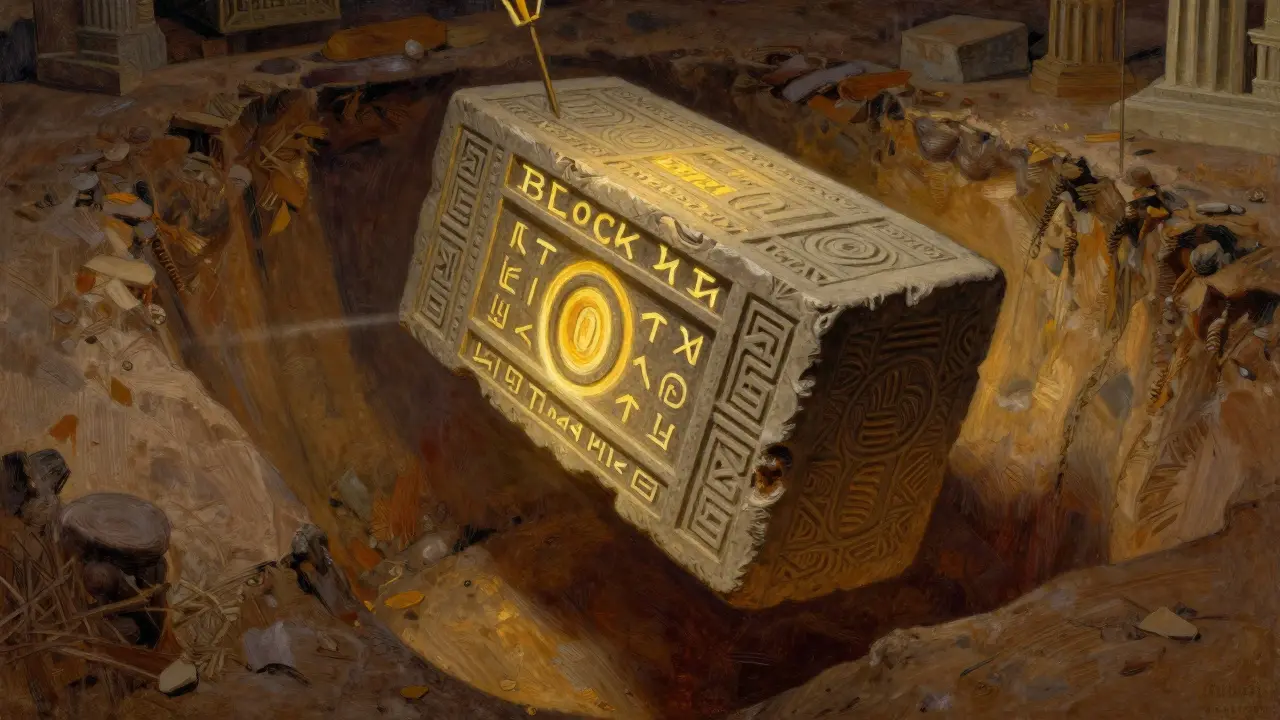
Imagine trying to build a skyscraper without a foundation. The whole thing would collapse the moment you added a second floor. In the world of distributed ledgers, the genesis block is the absolute first block ever mined or forged in a blockchain network Block 0. It is the only block in the entire chain that doesn't point to a previous block because, quite simply, there wasn't one. Without this starting anchor, nodes would have no way to agree on where the history of the network actually begins.
The core purpose of a genesis block
A genesis block does more than just exist; it sets the DNA for the entire network. When a developer launches a new blockchain, they can't just let the network "figure it out." They have to hardcode the rules of the game into this first block. This includes things like the initial mining difficulty, how many coins are rewarded for finding a block, and the timing intervals between blocks.
If you've ever heard of the famous message embedded in the Bitcoin genesis block-a reference to a newspaper headline about bank bailouts-that's a perfect example of using the genesis block for more than just technical setup. It serves as a permanent, immutable timestamp and a statement of intent, proving the chain existed at a specific point in time.
How Proof of Work (PoW) networks start the engine
In a Proof of Work (PoW) system, the process is a mix of hardcoding and raw computing power. First, the creators define the block's structure in a configuration file. They decide what data goes in and set the target difficulty. Because there is no "previous hash" to reference, the software is told to use a placeholder (usually a string of zeros) for the parent hash.
The actual "creation" happens when the first miner runs the software and manages to find a hash that satisfies the network's difficulty target. Once that valid hash is found, the block is broadcast to all other nodes. These nodes check the work against the rules defined in the software. If it checks out, they add it to their local database, and the chain officially begins. From that moment on, every new block must reference the hash of the one before it, creating an unbreakable link back to that original genesis block.
The Proof of Stake (PoS) approach to initialization
Things work differently in Proof of Stake (PoS) networks. Since these networks don't rely on miners solving puzzles, they can't just "mine" the first block into existence. Instead, the genesis block usually acts as a distribution ledger. It contains a pre-defined list of validators and their starting balances.
| Feature | Proof of Work (PoW) | Proof of Stake (PoS) |
|---|---|---|
| Primary Goal | Establish difficulty & reward rules | Initial token & validator allocation |
| Creation Method | Mining the first valid hash | Configuration file / Pre-defined state |
| Referenced Parent | None (Hardcoded zeros) | None (Initial state setup) |
| Distribution | Earned through computation | Allocated via ICO or Pre-mine |
For instance, Ethereum didn't just start with a single miner. It used a crowd-sale (ICO) to determine who got the initial Ether. The genesis block was then created to reflect those balances, effectively "bootstrapping" the network with a community of stakeholders already in place.

The technical blueprint: Genesis files and configuration
Behind the scenes, creating a genesis block involves a lot of JSON editing and configuration management. Developers use specific files to ensure every node in the network starts with the exact same version of reality. If one node has a slightly different genesis block, it will be rejected by the rest of the network because the hashes won't match.
Key components usually found in these configuration files include:
- Network ID: A unique identifier that prevents a node on a test network from accidentally connecting to the main production network.
- Initial State: A list of accounts and their starting balances. This is where "pre-mines" are handled.
- Consensus Parameters: Details on the block time (e.g., 10 minutes for Bitcoin) and the gas limits for smart contracts.
- Chain ID: Used in platforms like Ethereum to prevent replay attacks across different versions of the chain.
Modern frameworks, such as Klayr, have simplified this. Instead of manual coding, they provide SDKs that can bootstrap a genesis block automatically using a set of `.json` and `.blob` files, making it much faster to launch testnets during development.
Common pitfalls and security risks
Getting the genesis block wrong can be catastrophic. Since the block is immutable, any error in the initial token distribution or a flaw in the consensus parameters cannot be "fixed" without a hard fork-which essentially means restarting the entire network from a new point.
One major risk is centralization. If the genesis block allocates too many tokens to a small group of founders (a heavy pre-mine), the network may struggle to gain trust or decentralized validation. This is why many modern projects opt for "fair launches," where the genesis block is designed to minimize the advantage of the creators.
Another technical danger is the "weak subjectivity" problem. In some PoS chains, a new node joining the network can't tell just by looking at the chain which version is the correct one if there's a fork. They rely on the genesis block as the absolute truth, but if the genesis configuration is leaked or manipulated, the entire trust model breaks down.

The evolution of network bootstrapping
We've moved past the era of simple hardcoded blocks. Today, we see more sophisticated methods for initialization. Some networks use automated security auditing tools to verify the genesis state before the block is broadcast. Others are experimenting with AI-driven parameter optimization to ensure the block rewards and difficulty levels are sustainable for the long haul.
We are also seeing a shift toward regulatory compliance. Newer blockchains often include specific logic in their genesis state to comply with securities laws, ensuring that initial token distributions don't trigger legal red flags in different jurisdictions.
Can a genesis block be changed after it is created?
No. By design, a genesis block is immutable. If you need to change the parameters of the genesis block, you must perform a hard fork, which involves creating a new version of the software and essentially starting a new chain from a specific point, or starting the entire network over from scratch.
Why does the genesis block have no previous hash?
Because it is the first block in the chain. Every subsequent block uses the hash of the previous block to create a secure link. Since there is no block before the genesis block, there is nothing to hash. It is the "zero point" of the blockchain.
What happens if two different genesis blocks are created for the same network?
This would result in a split, or a fork. Nodes that recognize the first genesis block will form one network, and nodes recognizing the second will form another. They will be completely incompatible because their foundational states and hashes differ.
Is every blockchain's genesis block the same?
Definitely not. Each network has its own unique genesis block based on its specific consensus mechanism (PoW, PoS, etc.), its initial token distribution, and its unique set of network parameters.
Who usually creates the genesis block?
Typically, the original developer or a founding team creates the genesis block. However, in some community-driven projects, the genesis state is decided through a vote or a public contribution process before the network officially launches.
Next steps for developers
If you're looking to launch your own network, start by defining your network parameters in a JSON file. Decide whether you want a fair launch or a pre-mine. If you're using a framework like Klayr or Ethereum-based tools, leverage their CLI to regenerate your genesis block during the testing phase. Always run a private testnet with multiple nodes to ensure that your genesis configuration doesn't cause synchronization issues before you go live to the public.
actually thinkin its way overcompilcated. just call it the start block lol. why ppl love makin things sound fancy with words like genesis
The nuance regarding the a-symmetric nature of the genesis block is quite fascinatting. Most amatures forget that the placeholder hash is not merely a zero but a conceptual necessity for the SHA-256 algorithm to initiate the chain's integrity. Furthermore, the distinction between the state-root in PoS and the mining difficulty in PoW is where the real technical divergentce lies, though few grasp the mathematical implications of pre-mining in terms of long-term inflation.
Oh sure, because manually editing JSON files for a genesis block is exactly how we avoid the dreaded 'centralization' boogeyman. Love how we just trust the 'founding team' not to dump a billion tokens into their own pockets while claiming it's a fair launch. Absolute peak decentralization right there, guys. Totally legit.
Haha, I feel that sarcasm but honestly the tech is still pretty cool regardless of the politics!
Totally agree with the part about the technical blueprint! Getting the chain ID right is a huge lifesaver for preventing those nasty replay attacks. Let's keep pushing for more open-source genesis templates so everyone can launch securely! 🚀✨
Where do you live?
As long as this tech keeps US dominance in the digital finance space, I don't care how the blocks are made.
the genesis block is just a mirror of our own existence we all have a starting point and a set of rules we didnt choose that define who we become in the network of life
There is something profoundly poetic about the idea of an immutable foundation that dictates the future of a digital society, as it reminds us that the values we instill at the very beginning of any venture-whether it is a blockchain or a human relationship-are the ones that will echo through every subsequent interaction. If we consider the genesis block as a philosophical anchor, we realize that the struggle between centralization and fair launches is not just a technical hurdle, but a reflection of the eternal human struggle between power and equity, urging us to build systems that are inherently inclusive from the very first byte of data created.
I really believe that for anyone starting their journey in blockchain development, understanding the genesis block is the most critical step because it allows you to visualize the entire architecture of the network before a single transaction is even processed. It is so encouraging to see tools like Klayr simplifying this process, because in the past, the barrier to entry was incredibly high due to the manual configuration of JSON and blob files, but now, an aspiring developer can experiment with testnets and refine their consensus parameters without fearing a total network collapse, provided they take the time to properly audit their initial state and ensure that the token distribution is balanced enough to encourage a healthy and vibrant community of validators who are actually invested in the long-term success of the project rather than just short-term gains.
this stuff is realy cool. just keep it simple for the new guys tryin to learn
It's a lot to take in, but just take it one step at a time. While the concept of weak subjectivity in PoS chains can seem incredibly daunting to a newcomer, it is actually a great opportunity to learn about the nature of trust and verification in a decentralized system, and if you just focus on the basic logic of how a parent hash works, the rest of the complex architecture will eventually fall into place through persistence and a bit of curiosity.