The Real Reason Venezuelans Turned to Crypto
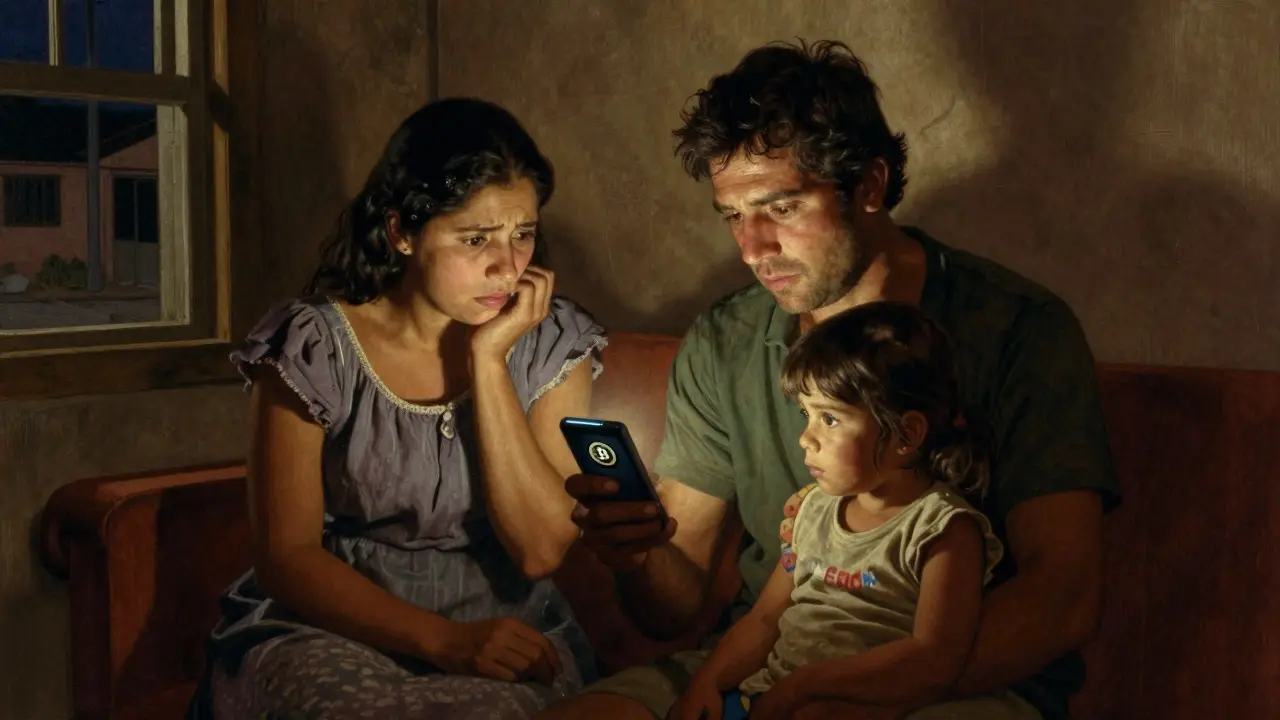
Imagine waking up one morning to find that the money in your pocket is worth half of what it was yesterday. For millions of people in Venezuela, this isn't a hypothetical nightmare-it’s daily life. When the national currency, the bolívar, loses value faster than you can spend it, traditional banking stops making sense. This is exactly why cryptocurrency adoption has exploded in the country. It wasn’t about getting rich quick or following a tech trend. It was about survival.
In 2024, Chainalysis ranked Venezuela 13th globally for crypto adoption, with usage jumping by an incredible 110% year-over-year. But behind those numbers are real people trying to buy food, pay rent, and keep their families safe from hyperinflation. With annual inflation hitting 229% according to the Venezuelan Finance Observatory (OVF) in May 2024, holding cash became a losing game. The bolívar lost over 70% of its value between October 2023 and June 2024 after the government stopped defending the currency. Suddenly, digital assets weren't just an option; they were essential tools for staying alive economically.
Why Stablecoins Beat Bitcoin for Daily Use
While Bitcoin gets all the headlines, it’s not actually the most used cryptocurrency in Venezuela. That title goes to stablecoins, specifically Tether (USDT). Why? Because when you’re buying groceries, you don’t want your payment method swinging up and down by 5% every hour. USDT is pegged to the U.S. dollar, meaning it stays relatively stable even as the bolívar crashes.
Locally, many Venezuelans refer to USDT as "Binance dollars" because so much of the trading happens on Binance's platform. According to data analyzed by AInvest in July 2025, private sector crypto transactions reached $119 million in a single month, with 91% involving stablecoins. This shift makes perfect sense: if you need to preserve purchasing power while waiting for your next paycheck, a token that mirrors the dollar is far more practical than a volatile asset like Bitcoin.
| Feature | Bitcoin (BTC) | Tether (USDT) |
|---|---|---|
| Price Stability | High volatility | Pegged to USD (stable) |
| Transaction Speed | 10-60 minutes | Under 2 minutes (on Tron network) |
| Primary Use Case | Savings, long-term storage | Daily commerce, payments |
| Adoption Rate | Growing but lower | Dominant (91% of volume) |
This distinction matters because it shows how users adapt technology to their immediate needs. While Bitcoin serves as a store of value for those looking to save for the future, USDT acts as the actual medium of exchange in markets, shops, and online services across Caracas and other major cities.
How People Actually Trade Without Banks
If banks are unreliable or restricted due to sanctions, how do ordinary citizens get crypto into their hands? The answer lies in Peer-to-Peer (P2P) trading platforms. Services like Binance P2P and LocalBitcoins allow individuals to trade directly with each other without needing a traditional bank account. One person might offer USDT, while another offers bolivars via mobile transfer or cash pickup. These platforms act as intermediaries, holding funds in escrow until both parties confirm the transaction.
This system bypasses the broken formal banking infrastructure entirely. In fact, approximately 4.3 million Venezuelans-about 13% of the population-now rely on digital wallets like Binance Wallet and Airtm for basic financial operations. For someone whose salary arrives in worthless bolivars, converting immediately to USDT through P2P channels means they can still afford essentials. As Victor Sousa, a resident of Caracas, told reporters: "There's lots of places accepting it now... The plan is to one day have my savings in crypto."
However, this independence comes at a cost. Connectivity remains a major hurdle. Venezuela ranks 153rd globally for internet speed, averaging just 14.79 Mbps download speeds in Q2 2025. Slow connections mean failed transactions, frustrated users, and missed opportunities. Additionally, U.S. sanctions complicate things further. Accounts linked to sanctioned banks or individuals often face restrictions, blocking around 18% of attempted transactions according to internal Binance data shared with CoinTelegraph.
Merchants Accepting Crypto: A New Normal
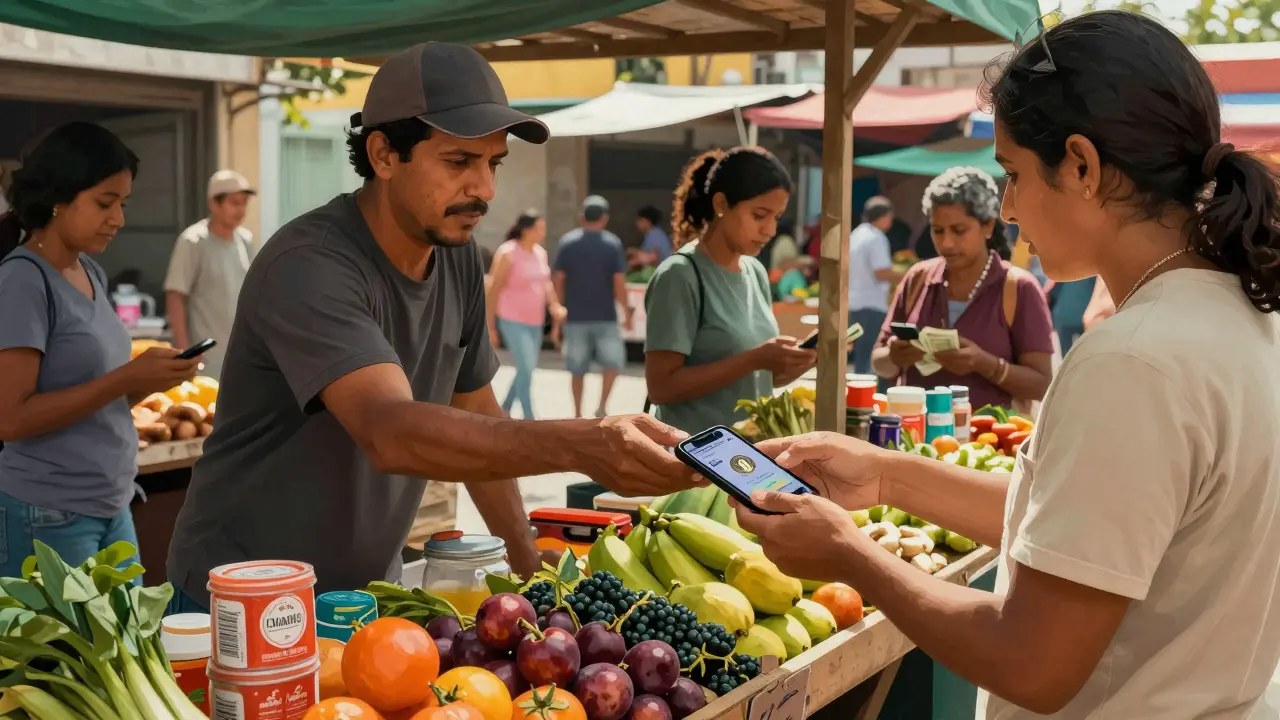
You wouldn’t expect to see a small electronics shop in Caracas accept Bitcoin, right? Think again. A survey conducted by Markets.com in August 2025 found that over 65% of merchants in Caracas now accept some form of cryptocurrency for routine transactions. From phone accessories to household goods, crypto has become embedded in everyday commerce.
This widespread acceptance didn’t happen overnight. It grew out of necessity. Merchants realized that taking bolivars meant losing money constantly due to inflation. By accepting USDT instead, they could price items in dollars and protect their margins. Carlos, another Caracas resident, explained simply: "I use USDT for everything-buying food, paying rent. It is much more reliable than the bolivar."
Even larger businesses are jumping on board. Enterprise adoption surged from 9% in 2023 to 28% in 2025 among medium-to-large companies surveyed by Markets.com. This trend signals something deeper than individual coping mechanisms-it suggests a structural shift in how the economy functions. Crypto isn’t replacing the bolívar yet, but it’s certainly running parallel to it, creating a dual-currency reality where digital assets handle high-value or cross-border transactions while local currency struggles along.
The Hidden Risks Behind the Boom
For all its benefits, relying on crypto carries significant risks. First, there’s the issue of centralization. Tether Limited controls 76% of Venezuela’s stablecoin market, according to Chainalysis. If Tether were to freeze accounts or delist certain regions, millions of users could suddenly lose access to their funds. Unlike decentralized cryptocurrencies, stablecoins depend heavily on trust in centralized issuers-a dangerous dependency in a politically unstable environment.
Then there’s the regulatory uncertainty. The Venezuelan government launched its own cryptocurrency, the Petro, back in 2018, hoping to boost oil exports and circumvent sanctions. Instead, it collapsed in 2024 amid corruption allegations tied to oil-linked transactions. Meanwhile, the state shut down SUNACRIP, the main exchange regulator, in 2023, sending mixed signals about whether private crypto activity is tolerated or targeted.
International pressure adds another layer of complexity. U.S. sanctions under Executive Order 13850 continue to restrict international banking relationships, forcing many platforms to limit services for Venezuelan users. As University of Zulia Professor Carlos Hernández pointed out in April 2025, "Crypto adoption in Venezuela is a symptom of economic failure, not a solution." He’s right-the underlying problems remain: production shortages, supply chain disruptions, and lack of structural reform.

Learning to Navigate the Digital Economy
Getting started with crypto isn’t easy, especially when you’re doing it under pressure. Most new users master basic transactions within 2-3 weeks, according to a March 2025 study by the University of Carabobo involving 500 participants. But that learning curve includes navigating complex interfaces, understanding wallet security, and dealing with technical glitches.
Community-driven education plays a huge role here. YouTube channels like 'Cripto Para Todos' boast over 127,000 subscribers, offering tutorials in Spanish tailored to local challenges. Universities are catching up too-Universidad Central de Venezuela introduced mandatory cryptocurrency courses in January 2025, recognizing that future generations will need these skills regardless of political outcomes.
Still, documentation quality varies wildly. Binance’s Spanish-language resources earned a 4.2/5 rating from 1,200 Venezuelan users on Trustpilot, while LocalBitcoins scored only 3.1/5 due to poor language support. Clear instructions matter when mistakes can cost you real money.
What Comes Next?
Looking ahead, experts disagree on whether this crypto boom will last. Some believe it will evolve into a formalized parallel payment system, potentially integrating with any stabilized national currency down the line. Others warn that once the bolívar stabilizes-even moderately-adoption could drop sharply, leaving users exposed to centralized stablecoin risks without the urgent need driving current usage.
Short-term projections suggest crypto will remain vital until bolívar inflation falls below 50% annually, which IMF economists predict won’t happen before 2027. In the meantime, initiatives like BRICS cross-border payment discussions offer hope for alternative infrastructure less vulnerable to U.S. sanctions. Whether optimistic or cautious, everyone agrees on one thing: Venezuela’s experience proves that cryptocurrency can serve as a lifeline when traditional systems fail. The question isn’t whether it works-it’s whether it can scale sustainably beyond crisis mode.
Is Bitcoin legal in Venezuela?
Yes, Bitcoin and other cryptocurrencies are legal in Venezuela. The country passed the Crypto Assets Law in 2020, providing a framework for regulation. However, enforcement is inconsistent, and the government has occasionally cracked down on exchanges, such as shutting down SUNACRIP in 2023. Despite this, private use and merchant acceptance thrive largely unchecked.
Why do Venezuelans prefer USDT over Bitcoin?
USDT is preferred for daily transactions because it maintains a stable value tied to the U.S. dollar, unlike Bitcoin, which fluctuates significantly. Since Venezuelans face hyperinflation, preserving purchasing power is critical. USDT allows them to buy goods and services without worrying about sudden drops in value during checkout.
How do people buy crypto without banks?
Most Venezuelans use Peer-to-Peer (P2P) platforms like Binance P2P or LocalBitcoins. These sites connect buyers and sellers directly, allowing trades using mobile transfers, cash pickups, or informal networks. Escrow services hold funds temporarily until both sides confirm completion, reducing fraud risk.
Are there risks associated with using crypto in Venezuela?
Yes, several risks exist. Centralized stablecoins like USDT depend on issuers who could freeze accounts. Internet connectivity issues cause transaction failures. U.S. sanctions block some users from accessing global platforms. Plus, regulatory uncertainty means rules could change abruptly, affecting accessibility and legality.
Will crypto adoption decline if the economy improves?
Possibly. Many analysts believe crypto usage stems from desperation rather than preference. If the bolívar stabilizes and inflation drops below 50%, demand for crypto may decrease. However, entrenched habits and improved infrastructure could sustain partial adoption, particularly for remittances and cross-border trade.
Wow, reading this is like watching a slow-motion car crash but with more math involved 📉💸. It’s absolutely wild that people are using 'Binance dollars' just to buy groceries without their lunch money evaporating by the time they reach the checkout line. I mean, who thought it was a good idea to let a currency drop 70% in six months? That’s not an economy, that’s a slot machine rigged against you! 😱 The part about stablecoins being preferred over Bitcoin makes total sense though, because nobody wants their rent payment to suddenly be worth 5% less before the landlord checks his phone. It’s basically financial triage for a nation on life support.
honestly this is crazy how fast things change man i mean 110 percent jump in crypto usage is insane right?? its not about getting rich its just survival which is sad but true lol
the distinction between store of value and medium of exchange is crucial here bitcoin is gold digital gold but usdt is cash digital cash when your local currency is burning a hole in your pocket every hour you need the stability of the dollar pegged token even if it comes from a centralized issuer it is a pragmatic choice driven by necessity rather than ideology
This is exactly what happens when you let socialists run the show!!! Venezuela is a disaster zone because of bad policy!! They should have stuck to traditional banking and free markets instead of chasing these crypto fantasies!! Now they are dependent on US-based platforms like Binance which can freeze their accounts at any moment!! Typical!!
Hey everyone, keep in mind that while the situation is tough, the resilience of the Venezuelan people is truly inspiring. They are adapting to new technologies faster than many developed nations because they have no other choice. Let's hope for better days ahead for them.
It is so heartbreaking to see humans reduced to mere data points on a blockchain just to survive. We as a global society have failed them completely. While we argue about gas fees, they are arguing about whether they can afford bread. It makes me feel sick inside knowing that our economic systems allow such suffering to persist unchecked.
they dont realize tether is controlled by the same elites who ruined their country anyway it is just a different kind of leash the government shut down sunacrip but now they rely on a company that answers to washington think about it really think about it there is no freedom here just a new master
I always say that technology is only as good as the infrastructure supporting it. With internet speeds that slow, trying to do P2P trading must be a nightmare. Imagine waiting ten minutes for a transaction to confirm while standing in line for food. It is just another layer of stress added to an already stressful life. Poor souls.
The sheer audacity of merchants accepting crypto is a beautiful rebellion against the state's incompetence! It is like a digital underground railroad for commerce. One day, perhaps, this parallel system will swallow the bolívar whole, leaving the old regime choking on its own hyperinflation. What a sight that would be!
Great article! :) Just wanted to add that learning curve is real but communities are helping out big time. If anyone knows someone struggling with wallet security, point them to those YouTube tutorials mentioned. Knowledge is power, especially when your savings are at risk! (Y)
THIS IS HUGE!!! People need to understand that this is not just a Venezuelan issue!! This is a preview of what decentralized finance looks like in a crisis!! The adoption rate is skyrocketing and banks are losing their monopoly!! Wake up world!!!
why does everyone ignore the fact that most of these transactions fail due to bad internet?? its not just about crypto its about basic infrastructure which is terrible there lol also half the people dont know how to secure their keys so they get hacked anyway sad story