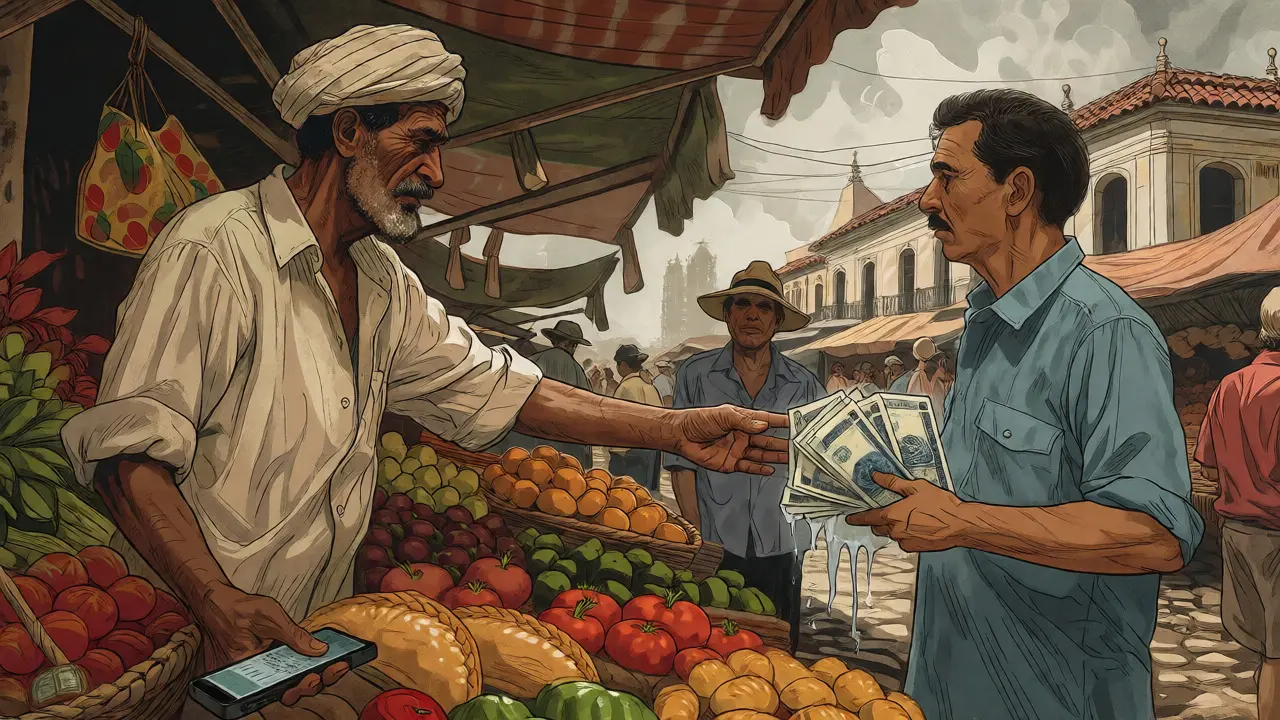
Imagine walking into a grocery store in Caracas. The price tag on the milk says 500 bolívars, but by the time you reach the checkout counter ten minutes later, it might say 600. This isn't a glitch; it's Tuesday. For millions of Venezuelans, the local currency has become so unstable that holding it feels like holding melting ice. So, what do they use instead? They turn to cryptocurrency, specifically stablecoins like USDT, which serve as digital lifelines in an economy where the official money fails daily.
The Collapse of the Bolívar and the Rise of Digital Dollars
Venezuela’s economic situation is often described as one of the worst peacetime economic collapses in modern history. Annual inflation hit 229% in May 2025, with month-on-month spikes reaching 26%. That means your salary loses nearly a quarter of its buying power every thirty days. To make matters worse, the Venezuelan bolívar lost over 70% of its value since early 2025 alone. When your money evaporates faster than you can spend it, traditional banking stops making sense. People don’t invest in crypto here to get rich; they use it to stay alive.
This desperation drove a massive shift toward blockchain-based assets. Unlike speculative traders who watch charts for profit, Venezuelans treat crypto as a utility. It’s the new dollar. Because physical US dollars are scarce and hard to obtain due to strict government controls and sanctions, digital versions filled the void. Tether (USDT) became the de facto currency for everyday transactions. Locals even call it "Binance Dollars" because the platform Binance dominates the peer-to-peer market where these trades happen.
Three Rates, One Reality: How Pricing Works Now
If you try to understand how things are priced in Venezuela, you’ll encounter a confusing web of three different exchange rates. First, there’s the official rate set by the Central Bank of Venezuela (BCV). Second, there’s the parallel black market rate, known locally as the "dólar negro." Third, and most importantly for daily life, there’s the peer-to-peer USDT rate. Merchants increasingly ignore the first two when setting prices. Instead, they look at what USDT costs on platforms like Binance or LocalBitcoins.
You’ll see receipts in supermarkets listing totals in "Binance dollars." This isn’t just marketing; it reflects a structural change. If a shopkeeper sets a price in bolívars based on yesterday’s rate, they lose money today. By pricing in USDT equivalents, they protect their margins. Customers then pay using crypto transfers or convert cash through informal networks. This system bypasses the broken formal banking sector entirely.
| Currency Type | Primary Use Case | Stability Level | Accessibility |
|---|---|---|---|
| Venezuelan Bolívar | Small change, government fees | Extremely Low | High (Cash) |
| Physical USD | Large purchases, savings | High | Low (Scarce) |
| USDT (TRC-20) | Daily commerce, remittances | High | Moderate-High (Mobile) |
| Bitcoin | Long-term savings, international trade | Medium-High | Moderate |
Why Stablecoins Beat Bitcoin for Daily Life
You might wonder why people don’t just use Bitcoin for everything. After all, it’s the most famous cryptocurrency. The answer lies in volatility. While Bitcoin preserves value over years, its price can swing 10% in a day. For a family trying to buy food, that uncertainty is terrifying. A stablecoin like USDT, pegged 1:1 to the US dollar, offers the stability of fiat currency with the speed of crypto.
Most transactions happen on the TRC-20 network (Tron) rather than Ethereum. Why? Fees. Sending USDT on Ethereum can cost several dollars-too expensive for buying coffee or bus fare. On Tron, fees are fractions of a cent. This technical detail makes or breaks adoption for low-income users. Platforms like Binance allow users to hold USDT and send it instantly to friends, landlords, or suppliers without waiting for bank clears or worrying about capital controls.
Peer-to-Peer Networks: The Invisible Banking System
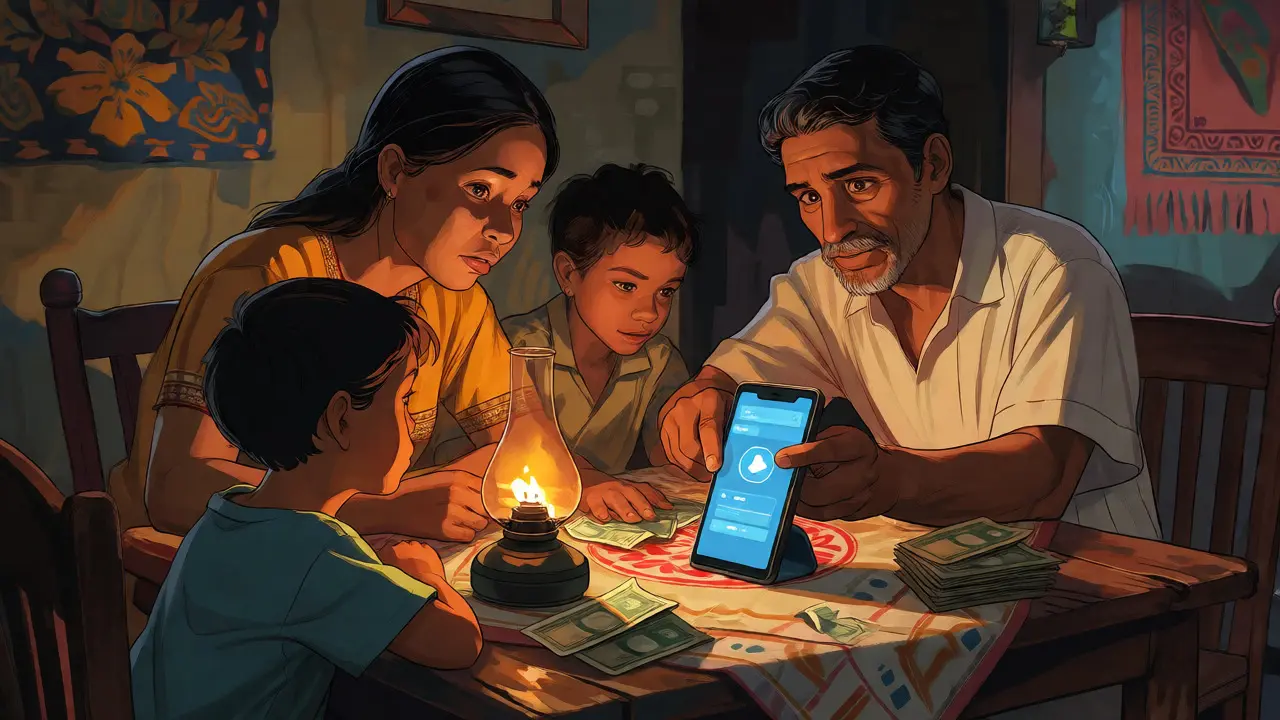
Venezuela doesn’t have a robust institutional infrastructure for crypto. Banks barely touch it. Instead, a vibrant peer-to-peer (P2P) ecosystem thrives. Apps like Binance P2P and LocalBitcoins act as the connective tissue. Here, individuals trade directly. One person sells USDT for bolívars; another buys them. These trades happen via bank transfers, mobile payments, or even cash meetups.
Remittances play a huge role here. In 2023, $5.4 billion flowed into Venezuela from abroad. About 9% of that came through crypto channels. Families rely on relatives in Spain, the US, or Chile to send USDT directly to their wallets. This avoids high wire transfer fees and the risk of funds being frozen by banks wary of sanctions. It’s faster, cheaper, and more reliable than traditional Western Union routes.
Government Stance: Tolerance vs. Crackdowns
The Maduro government’s relationship with crypto is complicated. On one hand, they launched the Petro, a state-backed cryptocurrency, in 2018. It flopped. Public distrust was too high, and adoption remained negligible until it was discontinued in 2024. On the other hand, the government tolerates private exchanges like Binance because they provide liquidity and ease pressure on the foreign exchange market.
However, this tolerance is fragile. Authorities periodically crack down on mining operations, citing energy shortages. Since electricity grids are unstable, mining consumes resources that politicians want to allocate elsewhere. Yet, despite regulatory ambiguity, usage grows. The government knows that banning crypto would anger the middle class and disrupt commerce. So, they look away while citizens continue to transact digitally.
Real-Life Scenarios: From Street Vendors to Universities
Crypto adoption isn’t limited to tech-savvy urbanites. It spans the entire socioeconomic spectrum. Carlos, a resident of Caracas, explains his routine: "I use USDT for everything - buying food, paying rent. It is much more reliable than the bolívar." His experience is typical. He receives part of his salary in bolívars but immediately converts it to USDT to preserve value.
Even small street vendors accept crypto. You might buy empanadas from a cart where the owner checks their phone for a USDT confirmation before handing over the food. Larger entities, like universities and tech startups, also integrate crypto payments. This widespread acceptance creates a self-reinforcing cycle: the more merchants accept it, the more useful it becomes, driving further adoption.
Challenges and Risks: Not All Smooth Sailing
While crypto solves many problems, it introduces new ones. Internet connectivity remains spotty in some areas. Power outages can interrupt transactions mid-process. Security is another concern. Many users are new to digital wallets and may fall victim to scams or lose access to their private keys. There’s no customer support hotline if you send funds to the wrong address.
Furthermore, reliance on centralized stablecoins like USDT carries risk. If Tether faces regulatory issues in the US, the peg could break. Sanctions also complicate things. Some global financial institutions block accounts associated with Venezuelan crypto activity, fearing compliance violations. Users must navigate these risks carefully, often keeping only small amounts in online wallets and moving larger sums to hardware devices when possible.
The Future: Irreversible Dollarization?
Analysts suggest that this trend is irreversible. Even if political conditions improve, trust in the bolívar is shattered. The convenience of digital dollars outweighs the desire to return to a failing national currency. As internet infrastructure improves and user education spreads, crypto usage will likely expand beyond survival tactics into broader economic functions.
Venezuela serves as a real-world lab for crisis-driven financial technology. What works here-simple, low-cost, mobile-first stablecoin transactions-could inspire similar adaptations in other economies facing inflationary pressures. The key lesson? When money fails, people adapt. And right now, adaptation looks like a smartphone screen displaying a USDT balance.
Why do Venezuelans prefer USDT over Bitcoin for daily purchases?
Venezuelans prefer USDT because it is a stablecoin pegged to the US dollar, offering price stability essential for daily transactions. Bitcoin’s volatility makes it unsuitable for buying groceries or paying rent, as its value can fluctuate significantly within hours. Additionally, transaction fees for USDT on networks like Tron (TRC-20) are much lower than those for Bitcoin, making micro-transactions feasible.
Is cryptocurrency legal in Venezuela?
The legal status is ambiguous. While the government launched its own failed cryptocurrency, the Petro, it generally tolerates the use of private cryptocurrencies like Bitcoin and USDT for commercial transactions. However, there are periodic crackdowns on mining operations due to energy concerns. There is no comprehensive regulatory framework fully endorsing or banning crypto, creating a gray area where usage continues largely unchecked for personal and business purposes.
How do Venezuelans receive remittances using crypto?
Family members abroad purchase USDT or Bitcoin using their local bank accounts and send it directly to the recipient’s crypto wallet address. The recipient then either spends the crypto directly with merchants who accept it or sells it on peer-to-peer platforms like Binance P2P for local bolívars or physical dollars. This method is often faster and cheaper than traditional wire services, especially given banking restrictions and sanctions.
What are the main risks of using crypto in Venezuela?
Key risks include internet connectivity issues disrupting transactions, loss of private keys leading to permanent fund loss, and potential regulatory changes affecting exchange availability. There is also counterparty risk in peer-to-peer trades, where buyers or sellers might not honor agreements. Finally, dependence on centralized stablecoins exposes users to regulatory actions against issuers like Tether.
Did the government's Petro cryptocurrency succeed?
No, the Petro did not succeed. Launched in 2018 as a state-backed cryptocurrency intended to bypass sanctions, it suffered from extremely low adoption and public distrust. Due to lack of utility and confidence, it was effectively discontinued in 2024. Its failure highlighted the importance of organic market demand over government mandates in cryptocurrency adoption.