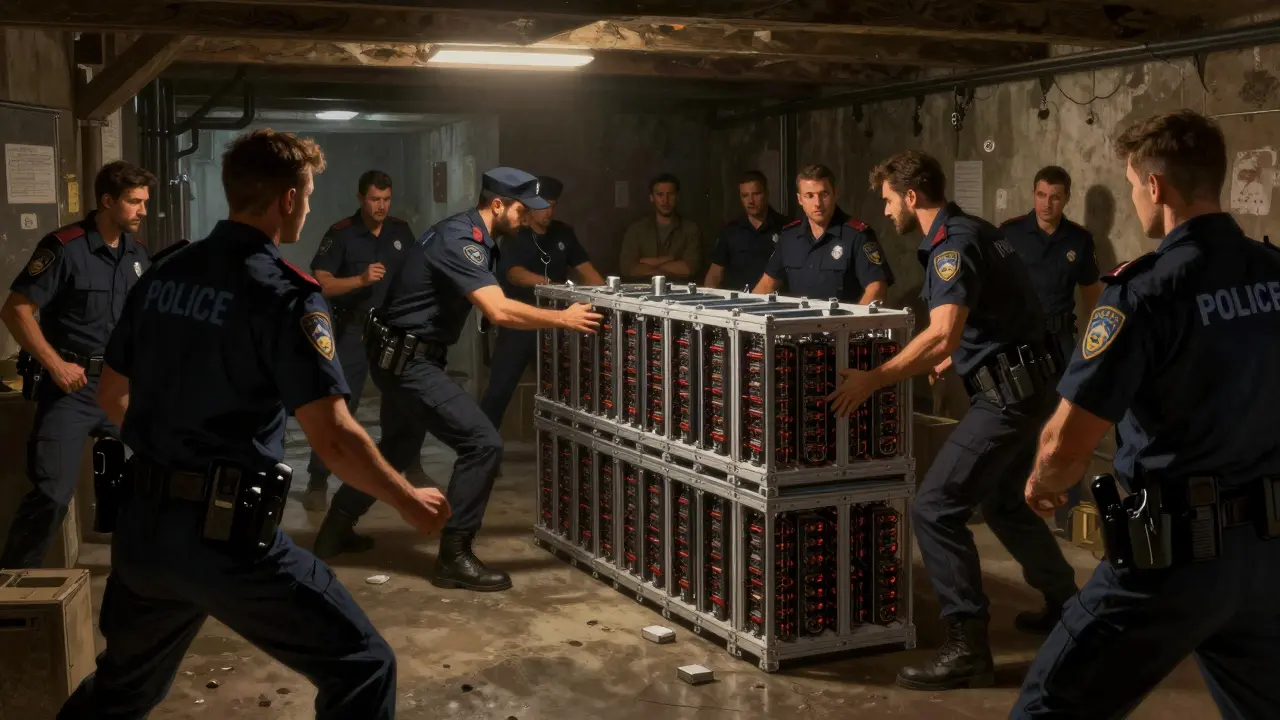
Imagine plugging in a powerful computer to mine Bitcoin, only for the police to knock on your door and confiscate your equipment. That was the reality for many in Kosovo is a country in Southeast Europe that implemented one of the strictest cryptocurrency mining bans globally in early 2022. On January 4, 2022, the government didn't just raise prices or issue warnings; they declared a complete ban on cryptocurrency production. This wasn't a minor policy tweak. It was an emergency response to a severe energy crisis that threatened to leave millions without power during winter.
If you are looking into crypto regulations in the Balkans, understanding this event is crucial. It highlights how energy infrastructure vulnerabilities can lead to drastic legal changes overnight. Here is what happened, why it happened, and where things stand today.
The Energy Crisis That Sparked the Ban
To understand the ban, you have to look at the fuel supply. Kosovo relies heavily on coal-fired power plants for its electricity. In late 2021, the European Union imposed sanctions on Russian fossil fuels. For Kosovo, this meant higher costs and reduced availability of coal needed to keep the lights on. The situation worsened as winter approached, leading to rolling blackouts and fears of a total grid collapse.
At the same time, Bitcoin mining is an energy-intensive process that requires significant electricity to solve complex mathematical problems had boomed in the region. Miners were attracted by cheap electricity rates compared to Western Europe. However, this boom came at a steep price. Reports suggested that cryptocurrency miners were consuming up to 3% of the country’s total electricity generation. While 3% might sound small, in a strained system with limited reserves, every kilowatt-hour matters. The government faced a choice: let businesses run while citizens froze, or cut off the high-consumption users to save the grid.
They chose the latter. Minister of Economy Artane Rizvanolli announced the ban on January 4, 2022. The move was immediate and absolute. All forms of cryptocurrency mining were prohibited until further notice. This decision aligned Kosovo with other nations facing similar pressures, though few acted as quickly.
How the Government Enforced the Restrictions
A ban on paper means little without enforcement. Kosovo’s approach was aggressive and multi-layered. The government didn’t rely solely on self-reporting. They mobilized law enforcement agencies to hunt down unauthorized mining operations.
- Electricity Monitoring: Authorities began scrutinizing electricity consumption patterns. Sudden spikes in usage for residential addresses raised red flags. If your bill looked like a factory’s, inspectors would come knocking.
- Police Raids: Police units conducted coordinated raids across the country. In the first few months alone, they confiscated over 300 bitcoin mining devices. These weren't small home rigs; many were industrial-grade setups hidden in basements and warehouses.
- Customs Control: To stop new equipment from entering, customs authorities tightened inspections at borders. Importing ASIC miners (Application-Specific Integrated Circuit computers) became nearly impossible without proper documentation, which the ban effectively nullified.
This systematic approach sent a clear message: the state prioritized basic energy security over digital currency profits. The speed of confiscation showed that the underground mining network was larger than previously thought, but also vulnerable to centralized crackdowns.
The Northern Kosovo Factor
One specific aspect of the ban targeted a unique regional challenge. In northern Kosovo, municipalities with Serbian-majority populations had historically boycotted local institutions, including utility payments. Many residents there did not pay their electricity bills, relying on subsidized or unpaid power.
Cryptocurrency miners exploited this loophole. They set up operations in these areas to access free or extremely cheap electricity. The government viewed this not just as an energy drain, but as a political and economic injustice. By banning mining, they aimed to close this loophole. The Committee for Economy in the Assembly of Kosovo specifically highlighted this geographic focus. They wanted to prevent private actors from profiting off systemic issues while the rest of the country suffered shortages.
Extension Mechanisms and Legal Framework
The initial ban was framed as an emergency measure. However, the government built in flexibility to handle ongoing uncertainty. When the ban was extended starting August 1, 2022, it included provisions for future extensions ranging from 30 to 180 days. This allowed policymakers to adjust restrictions based on real-time energy data rather than being locked into a rigid timeline.
| Date | Action | Reason/Context |
|---|---|---|
| December 2021 | State of Emergency Declared | Severe energy shortages and rising coal costs due to EU sanctions. |
| January 4, 2022 | Total Mining Ban Imposed | Minister Artane Rizvanolli announces prohibition on all crypto production. |
| Early 2022 | Enforcement Raids | Police confiscate >300 mining devices; customs block imports. |
| August 1, 2022 | Ban Extended | Extended for 60 days with options for further 30-180 day renewals. |
| 2025-Present | Status Quo Maintained | Mining remains illegal except for limited alternative energy exceptions. |
This adaptive strategy showed sophisticated planning. The government recognized that energy markets are volatile. By keeping the extension mechanism open, they retained control over the narrative and the resources.
Impact on Investors and Everyday Users
The human cost of these restrictions extends beyond lost profits for miners. For investors, Kosovo became a no-go zone for crypto-related ventures. You couldn't legally operate a mining farm, trade on exchanges, or offer crypto-based services. This stifled innovation in the local fintech sector. Startups that might have used blockchain technology found themselves navigating a legal gray area that often tipped into illegality.
For everyday citizens, the impact was more subtle but significant. Kosovo has a large diaspora population living abroad. Cryptocurrencies often serve as efficient tools for remittances-sending money home quickly and with lower fees than traditional banks. With crypto activities classified as illegal, these avenues closed. Families lost access to faster, cheaper ways to receive support from relatives overseas. The ban inadvertently hurt the very people who could benefit most from decentralized finance tools.
Current Status: Is Mining Still Illegal?
As of 2025, the answer is yes. Kosovo remains one of only eight countries worldwide with an outright ban on cryptocurrency mining. International monitors confirm that the restrictions are still in effect. However, there is a slight nuance emerging. Recent regulatory discussions suggest limited exceptions for mining operations powered exclusively by alternative energy sources, such as solar or wind.
This shift indicates a potential pathway forward. If you can prove your mining operation does not burden the national grid, you might find legal ground. But for now, the default assumption is prohibition. The broader legal framework continues to classify most cryptocurrency activities as illegal, affecting traders and users alike. The government is expected to introduce new legislation soon, which may define rules for crypto use, taxation, and categorization. Until then, caution is advised.
Global Context: Why Kosovo Joined the Trend
Kosovo’s ban didn’t happen in isolation. It followed China’s massive crackdown on crypto mining in 2021, which displaced nearly 75% of global Bitcoin hash rate. Countries around the world began re-evaluating the environmental impact of proof-of-work mining. Greenpeace USA noted Kosovo’s move as part of a growing trend to protect electrical grids and climate goals.
In 2022, multiple nations considered or implemented similar restrictions. The international spotlight on carbon footprints made energy-intensive industries targets for regulation. Kosovo’s action was both a local necessity and part of a global conversation about sustainable energy use.
When did Kosovo ban cryptocurrency mining?
Kosovo officially banned cryptocurrency mining on January 4, 2022. The ban was announced by Minister of Economy Artane Rizvanolli as an emergency measure to address severe energy shortages caused by rising coal costs and reduced fossil fuel supplies.
Is crypto mining still illegal in Kosovo in 2025?
Yes, cryptocurrency mining remains largely illegal in Kosovo as of 2025. The country is one of eight nations with an outright ban. However, there are emerging discussions about allowing mining if powered entirely by alternative renewable energy sources that do not strain the national grid.
Why did Kosovo target northern regions specifically?
Northern Kosovo municipalities with Serbian-majority populations had a history of not paying electricity bills. Miners exploited this to access free power. The government targeted these areas to stop the misuse of subsidized or unpaid electricity for private profit, addressing both energy conservation and political equity issues.
What happened to people caught mining after the ban?
Law enforcement conducted raids and confiscated mining equipment. In the early months of the ban, police seized over 300 bitcoin mining devices. Individuals faced legal repercussions, and imported equipment was blocked by customs authorities.
Can I send crypto remittances to Kosovo?
While sending crypto from abroad isn't directly banned for the sender, receiving and using cryptocurrency within Kosovo is restricted under the current legal framework. Most crypto activities are classified as illegal, limiting the ability of diaspora members to use digital currencies for remittances safely.
It is absolutely heartbreaking to think about the families in Kosovo who lost their lifeline for sending money home. The diaspora relies on those remittances to keep their parents fed and housed, and slapping a ban on crypto without offering a viable alternative is just cruel. I can imagine the panic when the police started raiding homes, not because these people were criminals, but because they were trying to survive in a broken system. It feels like the government chose ideology over human compassion, leaving ordinary citizens to freeze while protecting the grid from 'energy vampires.'
Sure, let's pretend that banning mining actually solved the coal shortage. Because clearly, the problem was miners eating 3% of the power instead of the fact that Kosovo runs on ancient, inefficient coal plants that are basically burning money and air. Typical short-sighted policy making where you punish the symptom rather than fixing the disease.
The economic illiteracy displayed here is staggering. You do not solve an energy crisis by confiscating private property and destroying capital investment. This is textbook socialism in action: seize the means of production because the state cannot manage its own infrastructure. The result? A black market for hardware, zero innovation, and a complete loss of trust in regulatory bodies. Investors will never return to a jurisdiction that treats them like enemies of the state overnight.
From a regulatory standpoint, this is a classic case of reactive governance 📉. The lack of proactive grid modernization forced the hand of the Ministry of Economy. However, the enforcement mechanism using customs control to block ASIC imports shows a surprisingly sophisticated understanding of supply chain interdiction. It’s interesting to see how they leveraged existing bureaucratic frameworks to enforce a digital asset ban. Most nations fail at the execution phase, but Kosovo’s multi-layered approach suggests competent administrative planning despite the political chaos. 🛑⚡
This situation mirrors what we saw in parts of Asia during the same period, but with a distinct Balkan flavor. The geopolitical tension in Northern Kosovo added a layer of complexity that pure energy economics couldn't explain. By targeting areas where utility payments were boycotted, the government wasn't just saving watts; they were asserting sovereignty over ungoverned spaces. It’s a fascinating intersection of energy policy and ethnic politics that often gets overlooked in Western analyses of crypto bans.
How quaint. They thought seizing GPUs would fix a structural failure in national energy infrastructure. Truly elegant solution.
I’ve been following the energy sector in Southeast Europe closely, and this move was inevitable given the reliance on coal. The key takeaway isn’t the ban itself, but the extension mechanism. Allowing 30-180 day renewals gave the government flexibility to adapt as global energy prices fluctuated. For anyone looking at regional risk, watch the renewable energy exceptions. That’s where the real story is heading next year.
its crazy how fast they moved tho. one day ur mining btc next day cops r at da door. gotta respect the hustle of the miners though, they were just tryna make some cash in a tough economy. hope things get better for em soon.
Let’s look at the bigger picture here, folks. While the ban hurts individual miners, it forces a necessary conversation about sustainable blockchain integration. We need to encourage Proof-of-Stake transitions or renewable-backed mining farms. The jargon-heavy reality is that hash rate migration is painful but essential for long-term viability. Let’s support policies that push for green energy solutions rather than just complaining about confiscations. We can build a better ecosystem together! 🌱🔗
as someone from india i know how power cuts affect daily life :(. so i understand why they did it. but taking equipment from people is too harsh. maybe they should have taxed it heavily instead of banning it completely. hope the new laws help the common man more than the big players. 😕
Oh wow, nothing says 'stable investment climate' like random police raids on your basement server rack. Really makes you feel safe and secure, doesn't it? I guess if you want to mine Bitcoin, you should stick to countries with actual rule of law and not ones that operate on whimsical emergency decrees. Good luck getting your ASICs back, buddy. 🙄
The prioritization of national energy security over speculative financial activities is a responsible governmental stance. Many developing nations struggle with grid stability, and allowing unregulated energy consumption by foreign-backed mining operations undermines local welfare. The strict enforcement ensures equitable distribution of limited resources among citizens rather than enriching a few tech enthusiasts. This aligns with broader principles of economic sovereignty.