
Imagine waking up to find that every transaction you’ve ever made on a "private" crypto exchange is now sitting in a government server. No more hiding behind pseudonyms. No more pretending your digital footprint doesn’t exist. That’s exactly what happened to thousands of users when German authorities launched Operation Final Exchange. On September 19, 2024, the German Federal Criminal Police Office (BKA) didn’t just shut down websites; they seized the entire infrastructure of 47 Russian-language cryptocurrency exchanges. This wasn’t a minor regulatory slap on the wrist. It was a coordinated strike against the backbone of sanctions evasion and cybercrime laundering.
You might be wondering why this matters if you’re not trading Bitcoin from Moscow or Berlin. The answer lies in how money moves today. If you think cryptocurrency is still the Wild West where nobody can track you, Operation Final Exchange proves otherwise. This operation targeted specific types of platforms known as "no-KYC" exchanges. These services let you swap one crypto for another without asking for your name, phone number, or email. For criminals, this anonymity is gold. For regulators, it’s a headache. But for regular users seeking privacy, it raises a terrifying question: Is true financial privacy dead?
The Anatomy of the Takedown
What makes Operation Final Exchange different from previous crackdowns? Most enforcement actions target the company headquarters or freeze bank accounts. The BKA went deeper. They located and seized the physical and virtual servers hosting these exchanges. We are talking about development servers, production servers, and crucially, backup servers. By grabbing the backups, the authorities ensured that operators couldn’t simply spin up a new site the next day with the same data intact.
The scale was massive. Authorities secured over 8 terabytes of data. This isn’t just a few spreadsheets. This includes complete user registration records, detailed transaction histories, and IP addresses. The message sent by the BKA was blunt and chilling: "We have found their servers and seized them... Our search for traces begins." This psychological component is key. It wasn’t just about stopping the flow of money; it was about signaling to every criminal using these channels that their past transactions were now visible to law enforcement.
Why Target No-KYC Exchanges?
To understand the strategy, you need to look at the mechanics of Know Your Customer (KYC) regulations. Standard exchanges like Coinbase or Binance require strict identity verification. You upload your ID, take a selfie, and provide proof of address. This creates a paper trail. No-KYC exchanges skip this step entirely. They function as instant-swap services, often catering specifically to Russian-speaking markets.
These platforms became essential tools for three main groups:
- Ransomware Operators: After encrypting a victim’s files, attackers need to convert Bitcoin into other currencies or fiat cash quickly to avoid tracking.
- Darknet Vendors: Sellers of illicit goods need a way to move profits out of the ecosystem without linking back to their real identities.
- Sanctions Evaders: Following geopolitical tensions, certain Russian banks faced restrictions. These exchanges provided a loophole, allowing sanctioned entities to move capital through non-compliant digital channels.
By targeting these specific venues, the BKA hit the choke points of illicit finance. Unlike general marketplaces, no-KYC services attract a disproportionate amount of high-risk activity because legitimate users usually don’t mind showing an ID card. When you remove the requirement for identification, you primarily serve those who have something to hide.
The Technical Execution and Data Seizure
Executing a raid on decentralized-ish web services requires sophisticated technical coordination. The BKA worked closely with blockchain analytics firms, most notably Chainalysis, which played a pivotal role in mapping the connections between these exchanges and broader criminal networks. The operation wasn’t just a legal maneuver; it was a technical forensic event.
The seizure of 8+ terabytes of data provides investigators with a treasure trove. In traditional banking, tracing money involves subpoenaing bank records. In crypto, the ledger is public, but linking wallet addresses to humans is hard. The seized databases bridge that gap. Now, investigators can match a Bitcoin address involved in a ransomware payment directly to a user’s email address and IP login history. This turns anonymous on-chain movements into identified off-chain realities.
| Feature | Traditional KYC Exchange | No-KYC Exchange (Targeted) |
|---|---|---|
| Identity Verification | Mandatory (ID, Selfie) | None or Minimal |
| Primary User Base | Retail investors, Institutions | Criminals, Privacy seekers, Sanction evaders |
| Data Availability | High (Structured records) | Low (Pseudonymous until seized) |
| Enforcement Impact | Fine-based, Operational disruption | Total infrastructure seizure, Historical exposure |
| Recovery Time | Days to Weeks | Months to Years (if at all) |
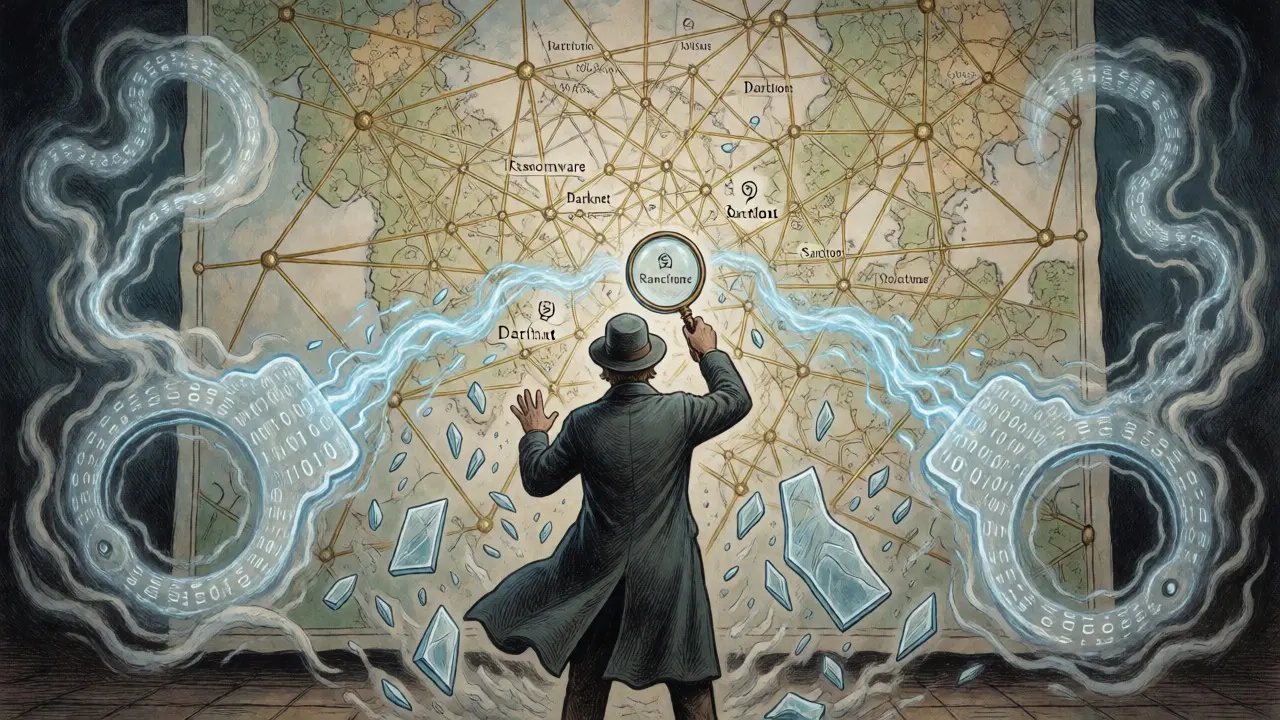
Geopolitical Context: Sanctions and Sovereignty
This operation cannot be viewed in isolation. It aligns perfectly with the European Union’s intensified efforts to enforce sanctions against Russia. Since 2022, Western nations have struggled to monitor how sanctioned entities bypass financial restrictions. Cryptocurrency offered a new vector for this evasion. By shutting down these specific Russian-language exchanges, Germany signaled that digital assets are not outside the reach of international law.
The involvement of Frankfurt’s Public Prosecutor’s Office highlights the seriousness of the charges. This wasn’t just about administrative fines for failing to register. It was about active facilitation of money laundering and violation of trade embargoes. The dual focus on financial crime and geopolitical sanctions marks a shift in how European agencies view crypto. It is no longer just a tech issue; it is a national security and foreign policy tool.
User Reaction and Market Ripple Effects
The immediate aftermath saw panic in niche communities. Telegram channels dedicated to crypto privacy reported a drop in activity, while Reddit threads on r/cryptocurrency buzzed with anxiety. Many users feared prosecution based solely on having used these platforms. However, the reaction was split. Compliance-focused traders viewed the takedown as a positive step toward legitimacy. They argued that removing shady actors helps mainstream adoption by reducing the stigma associated with crypto being a "criminal’s playground."
For the darknet economy, the impact was severe. Vendors reported difficulty moving funds. Services that had been reliable for years vanished overnight. This created a vacuum, forcing criminals to seek alternative, often less efficient, methods for laundering proceeds. Some turned to newer, smaller exchanges, hoping to stay under the radar. Others moved toward privacy coins like Monero, though these too face increasing scrutiny.
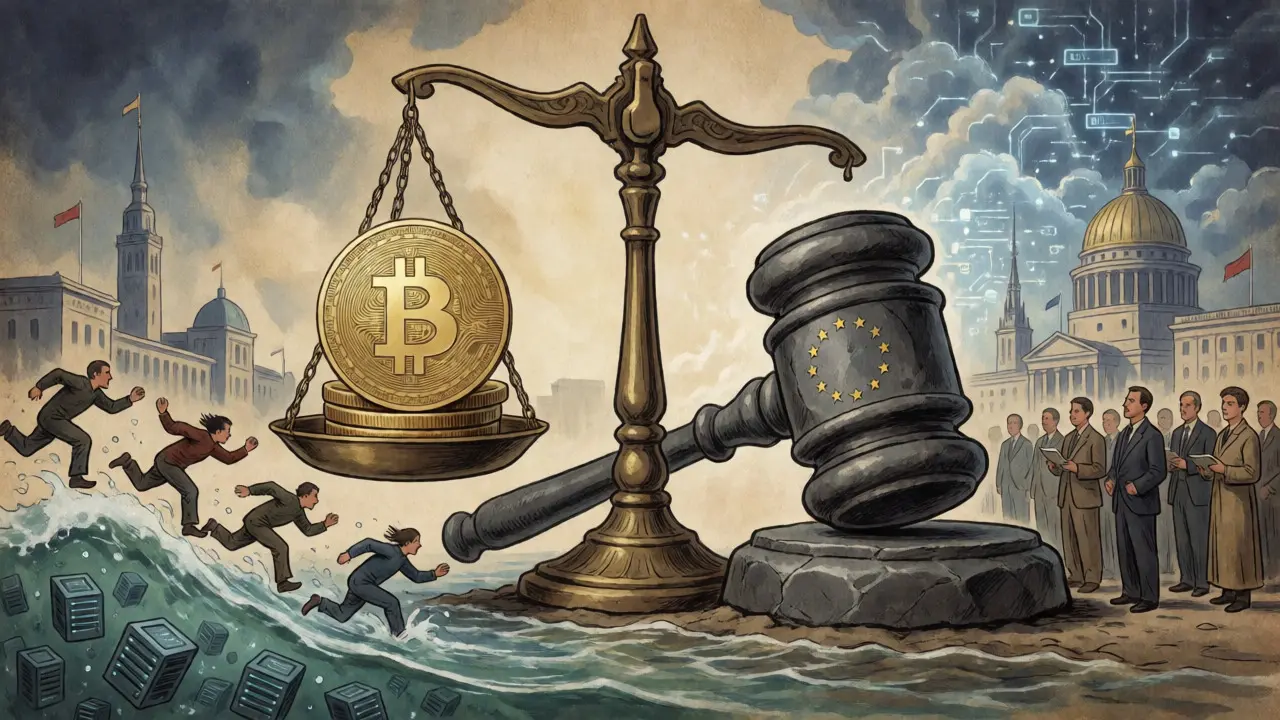
The Future of Crypto Enforcement
Operation Final Exchange sets a precedent. It shows that law enforcement has mastered the art of seizing cloud infrastructure. The days of thinking "the cloud is safe from raids" are over. Agencies now possess the technical capability to identify server locations, coordinate simultaneous takedowns across jurisdictions, and preserve evidence digitally.
We can expect more operations like this. As blockchain analytics improve, the ability to de-anonymize users increases. The 300% growth in blockchain analytics services since 2024 indicates that governments are investing heavily in these tools. The goal isn’t necessarily to ban crypto, but to force it into the light. If you want to use crypto, you will likely have to accept some level of transparency.
For developers and entrepreneurs building in this space, the lesson is clear: compliance is becoming mandatory, even for niche services. Ignoring KYC rules is no longer a viable business model for long-term survival. The risk of total asset seizure outweighs the benefit of attracting privacy-focused users.
Practical Implications for Crypto Users
If you use cryptocurrency, what should you do? First, assess your risk profile. If you are a casual investor using major exchanges, you are largely unaffected. If you value privacy and use decentralized exchanges (DEXs), be aware that on-chain analysis is getting sharper. Using mixers or tumblers may no longer guarantee anonymity if the endpoints are compromised.
Second, keep records. With authorities holding historical data, being able to explain the source of your funds becomes easier if you have documentation. Third, diversify your approach. Relying on a single platform, especially a small offshore one, exposes you to sudden shutdown risks. Spreading assets across compliant, regulated venues reduces the chance of being caught in a crossfire of enforcement actions.
What exactly was seized during Operation Final Exchange?
German authorities seized the complete server infrastructure of 47 exchanges, including development, production, and backup servers. This resulted in the acquisition of over 8 terabytes of data containing user registration details, transaction logs, and IP addresses.
Why did the BKA target no-KYC exchanges specifically?
No-KYC exchanges allow transactions without identity verification, making them ideal for money laundering, ransomware payments, and sanctions evasion. They lack the compliance controls that standard exchanges use to filter out illicit activity.
Are users of these exchanges automatically guilty of a crime?
Not necessarily. Using a no-KYC exchange is not inherently illegal. However, the seized data allows investigators to trace transactions. If a user’s funds are linked to criminal activities like drug sales or fraud, they may face investigation. Legitimate privacy seekers generally face less risk than those with suspicious transaction patterns.
How does this affect the price of Bitcoin?
The direct impact on Bitcoin’s price was minimal. The operation targeted specific service providers rather than the underlying asset. However, it increased volatility in the short term due to uncertainty about liquidity in certain market segments.
Can crypto exchanges recover after such a seizure?
It is difficult. Because the BKA seized backup servers, operators lost their historical data and user bases. While new companies can launch, rebuilding trust and liquidity takes significant time and capital. Many of the targeted brands effectively disappeared.
They didn't just seize servers they seized the narrative. The cloud was never safe and now we see exactly who holds the keys to our digital history.
It is truly heartening to see such coordinated efforts to bring clarity to the financial landscape. For many of us who have struggled with the ambiguity of decentralized systems this feels like a necessary step toward stability and trust. I hope that users who were simply seeking privacy are treated with fairness and understanding as these investigations unfold. It is important to remember that behind every transaction is a human being trying to navigate a complex economic world. Let us approach this moment with empathy for those caught in the crossfire while acknowledging the need for regulatory frameworks that protect everyone involved.
Privacy is an illusion anyway we are all just data points waiting to be harvested so why fight the inevitable flow of information into the great machine
The technical incompetence displayed by these operators is staggering. Relying on backup servers without proper geographic redundancy or encryption at rest is basic infrastructure hygiene. By seizing the backups the BKA effectively neutralized the primary vector for recovery which demonstrates a sophisticated understanding of distributed system vulnerabilities. This isn't just law enforcement it's applied computer science meeting geopolitical strategy. The lack of zero-knowledge proofs in their architecture made them sitting ducks from day one.
Great breakdown! It’s interesting how Frankfurt has become such a hub for this kind of crypto enforcement. In Ireland we’re seeing similar shifts with the Central Bank getting more involved in oversight. It really shows that Europe is taking a unified front against illicit finance. Keep up the good work!
I appreciate the detailed analysis provided here. From a philosophical standpoint one must consider whether the trade-off between absolute anonymity and regulatory compliance is sustainable in the long run. The erosion of privacy for the sake of security is a theme that recurs throughout history yet the speed at which blockchain analytics can now de-anonymize users is unprecedented. It seems we are moving towards a model where transparency is mandatory rather than optional which fundamentally changes the nature of peer-to-peer value transfer.
Actually no-KYC exchanges were always destined to fail due to liquidity fragmentation 📉. Big players absorb small ones eventually. 🧠💡
yeah but what about the legit folks who just dont want their name on every database? its not all criminals yknow. kinda sucks that we get lumped in with the ransomware guys just cause we value our own info. 😒
Exactly right! 💖 It’s scary when your personal freedom gets tied to compliance rules that feel arbitrary. Hope people stay safe out there 🌿✨
Love the perspective here. It’s like watching a storm roll in-some get soaked, some find shelter, but everyone feels the wind change. We gotta look out for each other in these shifting tides of regulation. Stay vibrant and vigilant, friends! 🌊🎨
Well said. It is quite worrying to think about the historical data being held centrally. I suppose the best advice is indeed to keep meticulous records ourselves since we cannot rely on the platforms anymore. A bit daunting but manageable if you stay organized.
Who actually owns the private keys now?
The government does. Or at least they have the ability to compel access through the seized databases linking addresses to identities. Not ideal for decentralization purists.
its funny how we thought code was law but turns out laws are still written by men with badges and warrants. reality hits hard sometimes doesnt it
I am curious to observe how this impacts user behavior in the coming months. Do you think we will see a migration to Monero specifically because of its ring signatures or will users simply accept KYC as a cost of doing business? It seems the market is signaling a preference for regulated venues despite the loss of privacy. Your thoughts on this shift would be appreciated.
Stop overthinking it! Adapt or die! If you want freedom you gotta pay the price in hassle or go fully underground. There is no middle ground left!
honestly id say moneros gonna take a hit too soon enough. govts are getting smarter with chain analysis even for privacy coins. better to use mixers wisely or just bite the bullet with kyc imo. typos sorry lol
Good point Liam. Its all about balance right? We want safety but also freedom. Maybe we need new tech that gives both without the headache. Keep learning and growing together fam!
Compliance is moral necessity 🏛️. Those hiding are hiding guilt 🕵️♂️. Simple truth ✨
This is absolutely terrifying and wonderful in equal measure! The sheer drama of 8 terabytes of secrets spilling onto government servers is Shakespearean in its tragedy. We are living through the death of anonymity and the birth of total surveillance capitalism. Every click every swap every login is now a confession waiting to be read. The paranoia is justified the fear is real and the future looks incredibly bright for those who hold the data. Oh the humanity of it all! 😱🎭