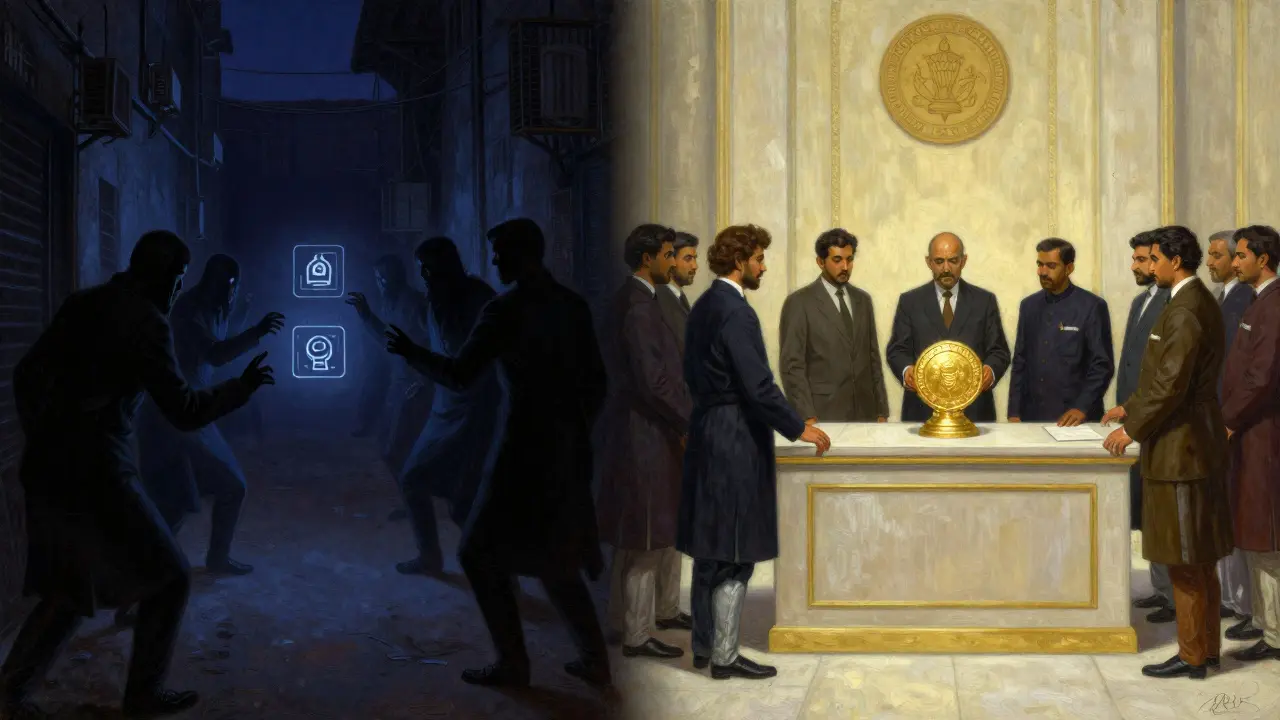
For years, owning a single Satoshi in Pakistan felt like a gamble with the law. Since 2018, the State Bank of Pakistan kept a tight lid on digital assets, leaving a massive $21 billion underground economy to operate in the shadows. But 2025 changed everything. The country didn't just tweak its rules; it performed a complete 180-degree pivot, moving from a restrictive ban to a structured legal framework. If you're trying to figure out if you can finally move your assets to a regulated exchange or how the new laws affect your wallet, you're in the right place.
The big shift started when the State Bank of Pakistan (SBP), the nation's central monetary authority, decided that the war on crypto was a losing battle. In September 2025, the SBP officially agreed to legalize digital currencies, effectively killing the 2018 advisory that had terrified investors for nearly a decade. This wasn't just a polite suggestion; it was a systemic overhaul designed to bring billions of dollars of "grey market" capital back into the formal financial system.
The New Rulebook: Virtual Assets Bill 2025
You can't have legalization without a law to back it up. That's where the Virtual Assets Bill 2025 comes in. Promulgated by President Asif Ali Zardari on July 8, 2025, this legislation is the backbone of the new era. It doesn't just say "crypto is okay"; it creates a rigorous environment for how these assets are handled.
The most critical outcome of this bill was the creation of the Pakistan Virtual Asset Regulatory Authority (PVARA). Think of PVARA as the "crypto cop." It's an autonomous body responsible for licensing and supervising Virtual Asset Service Providers (VASPs), which include the exchanges and wallet providers you use daily. If a platform isn't licensed by PVARA, you're essentially back in the unregulated wild west.
To make sure this wasn't just a rushed political move, the government formed a technical committee on June 2, 2025. This team combined the brainpower of the Finance Minister, the SBP, and the Securities and Exchange Commission of Pakistan (SECP) to draft rules that prevent the common nightmares of crypto: fraud, insider trading, and money laundering.
The Catch: Legal but Not "Free"
Here is where things get tricky. Many people hear "legalization" and think they can start paying for their coffee with Bitcoin. That is absolutely not the case in Pakistan. The 2025 pivot is a model of strict control, not a free-for-all. While it is now legal to hold and transfer cryptocurrencies, the government has drawn a hard line on how they can be used.
- No Retail Payments: You cannot use Bitcoin or Ethereum to buy goods at a store.
- No Open Investment Trading: The government has placed significant restrictions on open-market speculative trading.
- Limited Altcoins: Trading of smaller, volatile altcoins is heavily restricted to protect retail investors from total wipeouts.
Essentially, the state is saying, "You can own it, and we will track it, but you can't use it to bypass our monetary system." This puts Pakistan in a strange middle ground. It's not a total ban like China's early days, but it's far from the "Bitcoin Beach" vibes of El Salvador.
| Country | Legal Status | Retail Use | Primary Focus |
|---|---|---|---|
| Pakistan | Legal (Regulated) | Prohibited | State Control & Remittances |
| El Salvador | Legal Tender | Permitted | Full Adoption |
| India | Legal (Grey Area) | Limited | Heavy Taxation |
| UAE | Legal (Innovation Hub) | Permitted | Business Growth |

The Digital Pakistani Rupee (CBDC)
If the government isn't letting you use decentralized coins for payments, what do they want you to use? Enter the Digital Pakistani Rupee. This is a Central Bank Digital Currency (CBDC), a state-controlled version of digital cash. Announced by Governor Jameel Ahmad in July 2025, the Digital PKR is the government's attempt to modernize the financial system without giving up the steering wheel.
Unlike Bitcoin, which is decentralized and permissionless, the Digital PKR is centralized. The SBP knows exactly who sent what, where, and when. The main goal here is to streamline remittances-which are the lifeblood of the Pakistani economy-and to push fintech pilot programs that make banking accessible to the unbanked population. It's basically the traditional rupee, just stripped of its paper form and put onto a ledger controlled by the state.
Why the Pivot? Following the Money
You might wonder why a government that spent seven years banning crypto suddenly opened the doors. The answer is simple: the $21 billion underground market was too big to ignore. By legalizing crypto, the state can now do three things it couldn't do before: tax the gains, monitor the flow of funds, and attract foreign blockchain investment.
There is also a massive geopolitical play here. With the UAE and India evolving their digital asset laws, Pakistan risked becoming a digital graveyard where talent and capital fled to Dubai. By establishing PVARA and the Pakistan Crypto Council (PCC), the government is trying to signal to the world that it is "open for business," provided that business happens on their terms.
The Real-World Impact: User Experience
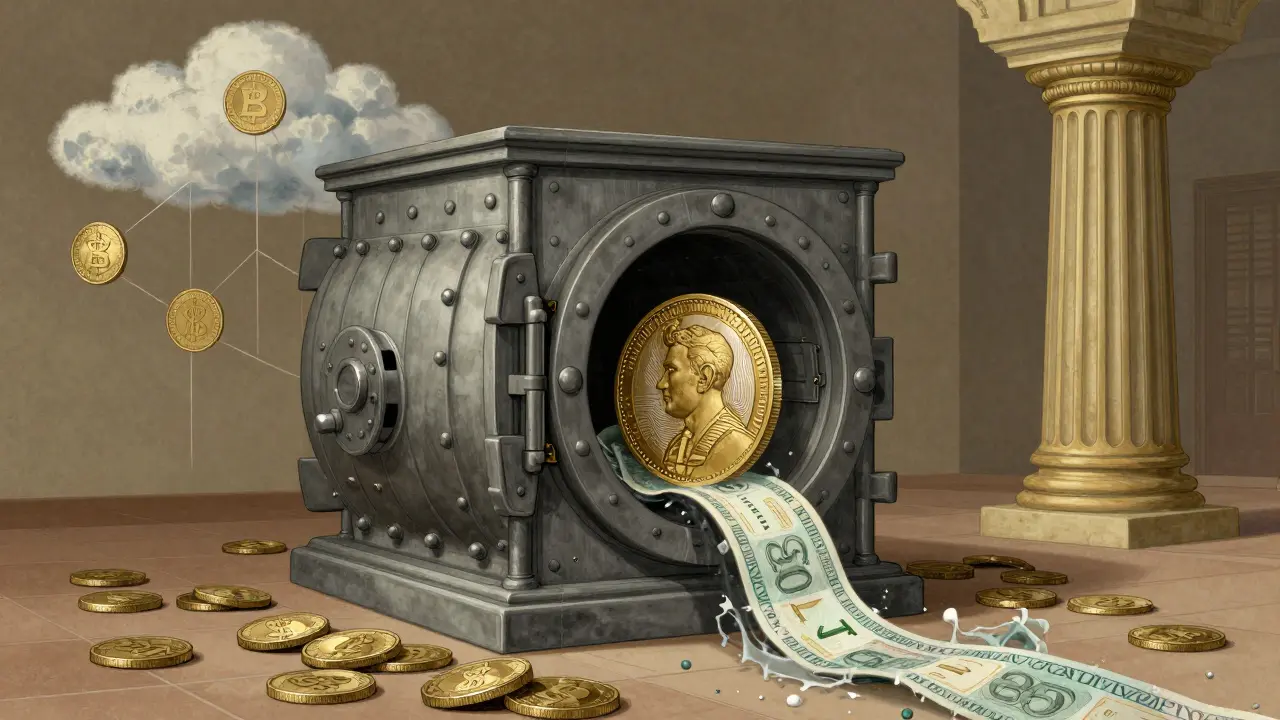
For the average user, the feeling is one of cautious relief. For years, P2P trading on platforms like Binance was a game of "hope the bank doesn't freeze my account." Now, with the removal of legal ambiguity, that fear is fading. However, a lot of the community is frustrated. If you can't use your crypto for actual commerce, is it really "legalization," or just "supervised ownership"?
Many enthusiasts argue that the current restrictions stifle innovation. When you ban retail payments and limit altcoin trading, you kill the very things that make DeFi (Decentralized Finance) exciting. The risk is that Pakistan creates a sterile environment where only the state-approved tools work, potentially pushing the most innovative developers back into the shadows or across borders.
What’s Next for 2026 and Beyond?
As we move further into 2026, the focus shifts from writing laws to building the pipes. The SBP is currently in the pilot phase for the Digital PKR, testing how it integrates with existing commercial banks. Meanwhile, PVARA is in a hiring spree, looking for experts who actually understand how a blockchain works rather than just traditional bureaucrats.
The big question is whether the government will eventually loosen the grip. History shows that once the infrastructure for a Digital Rupee is in place and the tax revenue from crypto starts hitting the treasury, the pressure to allow more flexible trading and retail use will grow. For now, the strategy remains "strict control," but the door is finally unlocked.
Is it legal to own Bitcoin in Pakistan in 2026?
Yes, as of September 2025, it is legal to hold and transfer cryptocurrencies under the framework established by the Virtual Assets Bill 2025 and the State Bank of Pakistan. However, you must ensure you are using platforms that comply with PVARA regulations.
Can I use crypto to pay for things at a store in Pakistan?
No. The current regulations strictly prohibit the use of cryptocurrencies like Bitcoin or Ethereum for commercial retail transactions. The government intends for digital payments to be handled via the state-controlled Digital Pakistani Rupee (CBDC).
What is PVARA and why does it matter?
PVARA (Pakistan Virtual Asset Regulatory Authority) is the autonomous body created to license, regulate, and supervise all virtual asset service providers (VASPs). It ensures that exchanges and wallets follow anti-money laundering (AML) and counter-terrorism financing laws.
What is the Digital Pakistani Rupee?
The Digital Pakistani Rupee is a Central Bank Digital Currency (CBDC) developed by the State Bank of Pakistan. Unlike decentralized cryptocurrencies, it is a digital form of national currency, fully backed and controlled by the central bank.
Are there taxes on crypto in Pakistan now?
While the broad legalization has occurred, the specific tax brackets are being integrated into the formal financial system. By bringing the $21 billion underground market into the light, the government intends to collect taxes on capital gains from digital assets.
Pretty wild to see the shift. Big move for the region!
It is fundamentally naive to view this as 'legalization' when the core utility of the asset is stripped away. A regulated environment that prohibits retail payments and restricts altcoins is essentially a custodial regime masquerading as a free market.
Lol you guys actually think PVARA is there to protect you. It's just a fancy name for the tax office. They don't care about 'fraud' unless it's happening to their own pockets. Anyone with a brain can see this is just a cash grab to fix their failing economy.
Oh honey, let's talk about the absolute comedy of errors that is a 'Central Bank Digital Currency' in a volatile economy. Imagine thinking that replacing physical cash with a programmable ledger-where the SBP has absolute visibility and can essentially 'turn off' your money if you breathe wrong-is some kind of innovative leap forward in financial liberation. We're basically talking about a Panopticon for your wallet, leveraging a permissioned blockchain that manages to strip away every single architectural benefit of actual decentralization while keeping all the systemic risks of a centralized point of failure, and honestly, calling it 'modernization' is the biggest joke of 2025. It's just a glorified database with a fancy name to lure in the tech-illiterate masses who think 'digital' automatically means 'better' while the government keeps the master key to the vault and monitors every single micro-transaction to ensure no one is actually innovating outside the state-sanctioned sandbox. Truly a masterclass in regulatory capture and social engineering masquerading as fintech progress!
digital rupee is just the start they want total control over every cent you spend so they can track the dissidents this is how the globalist agenda works they give you a little bit of legal freedom to lure you into the system then snap the trap shut
It is truly a heartbraking situation that the people cannot truly use their assets for daily needs, but perhaps we should all try to be patience and hope for a more libberal future for everyone involvved.
I love the idea of more people getting access to banking though! Even with the rules, it's a step in the right direction for the unbanked population!
This is a massive moment! Imagine the potential for developers in Pakistan now that they can legally build within a framework. It's a steep climb, but the view from the top will be worth it!
It makes me wonder if this is the inevitable path for most nations-a compromise between the anarchy of pure DeFi and the rigidity of old-school banking.
absolute clown show if you ask me why would anyone want a government managed coin when you have the gold standard of btc this is just some bureaucratic nonsense to feel relevant in a digital age
My country has a very different approach but it is wonderful to see the world moving toward digital assets! Pakistan will surely reach great heights with this!
Such a wild ride for the community! 🎢 Hope the transition is smooth for everyone moving their funds! ✨
Love the energy here! 🌟 It's all about finding a balance between safety and innovation. 🌍
The sheer audacity to call this 'legalization' is almost impressive. 🙄 It's essentially a digital leash. 🐕
Only fools think a CBDC is a benefit. You're just trading one master for another and calling it progress. Wake up.
I've seen better regulatory attempts in emerging markets. This is just lazy policy writing that will inevitably fail.
money is just a vibe anyway who cares who controls it
I believe we should focus on how this affects the most vulnerable users. Proper education will be key here. (^_^)