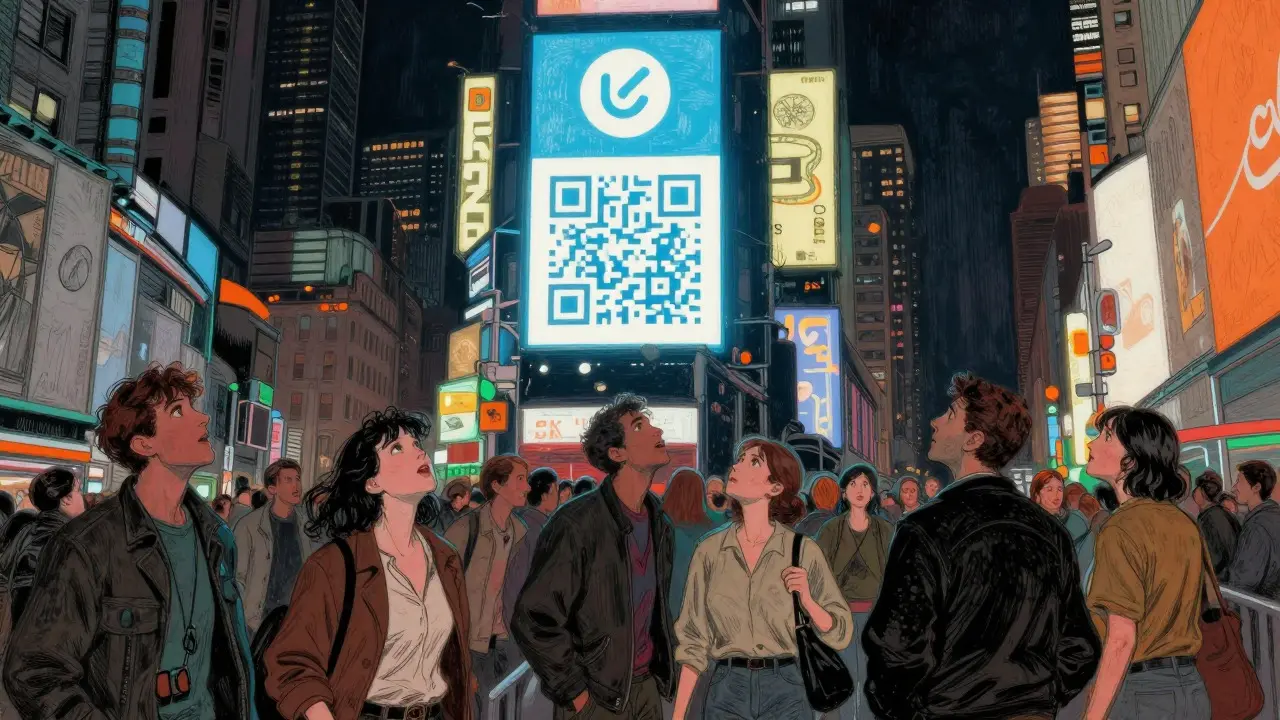
Imagine scrolling through your feed and seeing a flashy image of the Times Square is a major commercial hub in Manhattan, New York City, known for its dense concentration of digital billboards and pedestrian traffic. It sees over 1.9 million daily impressions on prime displays. The screen shows a logo you've never heard of: Position Exchange is an alleged cryptocurrency platform promoting a token giveaway linked to physical advertising in New York City. Next to it, bold text promises a massive Crypto Airdrop is a method of distributing free tokens to users, often used for marketing or community building in blockchain projects. A QR code sits right there, inviting you to claim your share. It looks exciting, doesn't it? But before you scan that code or type in your seed phrase, pause. Is this a legitimate marketing stunt by a new exchange, or is it one of the most common traps in the crypto world today?
The short answer might surprise you: it’s almost certainly a scam. While big names like Coinbase and Binance have used Times Square screens for brand awareness, no legitimate project has ever distributed tokens directly via a billboard. Here is what you need to know about the Position Exchange event, why the mechanics don’t make sense, and how to protect your wallet from falling victim to this specific fraud pattern.
The Myth of the Billboard Airdrop
To understand why the Position Exchange campaign is suspicious, we have to look at how airdrops actually work. In the blockchain space, an airdrop requires a way to identify recipients. This usually happens through two methods: holding a specific token in your wallet (on-chain verification) or submitting a wallet address/email (off-chain registration). Neither of these can happen automatically just by looking at a screen in New York.
Digital billboards are essentially giant video walls. They use standard signage software to display images or videos. They do not have NFC chips, Bluetooth connectivity, or any direct link to the Ethereum or Solana blockchains. So, when a poster claims you can "claim" tokens from a billboard, they are relying on you to take an extra step. That step is usually scanning a QR code. This moves you from a passive observer to an active participant on a website controlled by the scammers. Once you are on their site, the game changes. You are no longer interacting with a verified exchange; you are interacting with a phishing portal designed to steal your assets.
Legitimate companies use billboards for branding. For example, when Crypto.com sponsored the stadium in Los Angeles, it was about visibility, not direct token distribution. If a company wants to give away tokens, they create a dedicated landing page, verify identities if necessary, and distribute via smart contracts. They don't rely on the hope that people will scan a code off a street sign. The disconnect between the physical ad and the digital reward is the biggest red flag.
Red Flags: How to Spot the Position Exchange Scam
Fraudsters behind schemes like the Position Exchange event follow a predictable playbook. If you encounter similar promotions, check for these specific indicators. Each one points toward a high risk of losing your funds.
- Unverified Domain Names: Legitimate exchanges use well-known domains (e.g., binance.com, coinbase.com). Scams often use lookalike domains (e.g., position-exchange-claim.xyz) or parked pages. Check the URL carefully. If it doesn't match the official brand's registered domain, walk away.
- Seed Phrase Requests: This is the ultimate tell. No legitimate airdrop requires your 12 or 24-word recovery phrase. If a form asks for your seed words to "verify ownership," it is a theft attempt. Your seed phrase should only be known to you.
- Urgency and FOMO: The ads usually say "Claim within 24 hours" or "Limited spots left." This pressure tactic prevents you from doing due diligence. Real projects rarely operate on such tight, arbitrary deadlines for basic token distribution.
- Social Media Origin: These scams often start as posts on TikTok, Instagram, or X (Twitter) featuring manipulated images. If the news isn't covered by major outlets like CoinDesk or Cointelegraph, but only by anonymous influencers, be skeptical.
- No Regulatory Filings: Major exchanges file with the SEC or CFTC in the US. A quick search for "Position Exchange SEC filings" yields zero results. The absence of regulatory paperwork suggests the entity may not even legally exist.
In the case of Position Exchange, forensic analysis by security researchers traced lost funds to Tornado Cash mixers, a tool often used to hide illicit transactions. This confirms that once victims sent tokens, the money was quickly moved out of reach.
Technical Reality: Why Billboards Can't Send Tokens
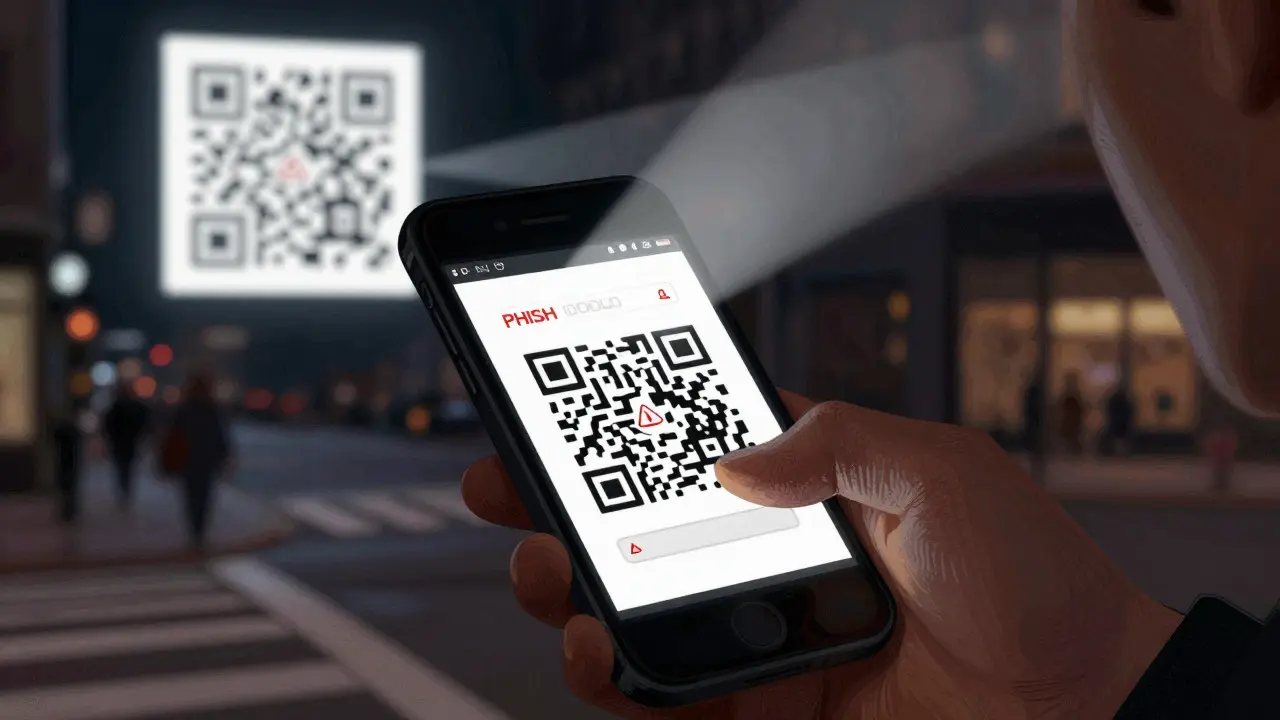
Let’s break down the technology involved. A Digital Billboard is a large electronic display used for outdoor advertising, typically managed by local agencies and powered by standard video files. It broadcasts signals. It does not receive data from your phone unless you actively connect via Wi-Fi or Bluetooth, which is rare in public spaces due to security risks.
When you scan a QR code, your phone opens a web browser. That browser connects to an internet server. That server is hosted somewhere-often in a jurisdiction with weak consumer protection laws. The connection between the billboard and the server is purely visual. There is no cryptographic handshake between the screen and your wallet. Therefore, the billboard itself holds no authority. It is just an image. The authority lies entirely with the website the QR code leads to.
This distinction is crucial. If the website is hacked, or if the developers decide to rug pull (steal the liquidity), the billboard doesn't care. It keeps playing its loop. Your loss is personal, not institutional. In contrast, a centralized exchange holds custody of your funds in insured accounts. An airdrop via a random website offers no such protection.
| Feature | Legitimate Crypto Project | Position Exchange Style Scam |
|---|---|---|
| Primary Goal | Brand Awareness / User Acquisition | Wallet Draining / Seed Phrase Theft |
| Token Distribution Method | Smart Contract / Verified Wallet List | QR Code to Phishing Site |
| Information Required | Email / Public Address (Optional) | Seed Phrase / Private Key |
| Regulatory Status | SEC/CFTC Compliant | Unregistered / Unknown |
| Media Coverage | Mainstream Financial News | Social Media Influencers Only |
How the Scam Works Step-by-Step
Understanding the mechanics helps you avoid the trap. Here is the typical lifecycle of a billboard-based airdrop scam like the one attributed to Position Exchange:
- Creation of Fake Assets: Scammers design a professional-looking logo and mockup of a Times Square billboard using photo editing software. They make it look real by adding crowds and city lights.
- Social Media Blitz: They post the image on platforms like X, Telegram, and Discord. They tag popular crypto influencers and use hashtags like #Airdrop and #Giveaway to boost visibility.
- The Hook: The caption promises a huge amount of free tokens (e.g., 10,000 POSI tokens). The catch? You must "connect your wallet" or "enter your seed phrase" to prove you are a real user.
- The Phishing Portal: Victims click the link and land on a site that looks identical to a reputable exchange. It feels safe because it uses familiar UI elements.
- Data Harvesting: When you enter your seed phrase, the site instantly copies it. Sometimes, it asks you to send a small amount of ETH or SOL to "cover gas fees" for the airdrop. This is also stolen.
- The Rug Pull: Within minutes, the scammers drain your wallet. They move the funds to mixer protocols like Tornado Cash to obscure the trail. The website may go offline days later.
Blockchain forensics firms have tracked millions of dollars in losses to this exact pattern. The speed at which funds disappear after entering a "claim" portal is a dead giveaway. Legitimate distributions take time because they require smart contract execution and verification. Scams are instant because they are just moving money from your wallet to theirs.
Protecting Yourself: Best Practices for Crypto Users
You don't need to stop using crypto to stay safe. You just need to adopt a few defensive habits. Think of your digital assets like cash in your pocket-you wouldn't hand them to a stranger on the street without checking their ID. Apply the same logic online.
- Use a Hardware Wallet: Devices like Ledger or Trezor keep your private keys offline. Even if you visit a phishing site, you won't lose everything because the keys never leave the device. You still have to approve transactions, but the barrier to entry for scammers is much higher.
- Never Share Your Seed Phrase: Repeat this until it sticks: No one needs your seed phrase. Not support staff, not airdrop sites, not tax services. If a site asks for it, close the tab.
- Verify Domains Manually: Don't click links in social media posts. Go to the official project's Twitter or website and find the link from there. Typosquatting (domains that look similar but are different) is a common tactic.
- Check Community Sentiment: Before claiming anything, search Reddit or Trustpilot for the project name. If the top results are warnings or complaints, trust the crowd over the influencer.
- Be Skeptical of "Too Good to Be True": If an airdrop promises more value than you expect, ask yourself why. Are they giving away millions of dollars for free? Usually, there is a cost attached, and that cost is your wallet security.
For the specific Position Exchange event, the consensus among security experts is clear: stay away. The domain associated with the campaign resolves to a parked page, and no credible news source has verified the existence of the exchange. The New York Attorney General's office has even opened investigations into similar billboard scams, signaling that regulators see this as a serious threat to consumers.
FAQ
Is the Position Exchange Times Square billboard real?
Most likely, no. While Times Square has many billboards, there is no verified record of a "Position Exchange" ad running there for a crypto airdrop. Images circulating online are often Photoshop mockups created by scammers to generate hype.
Can you get tokens from a billboard QR code safely?
It is risky. A QR code simply opens a website. If the website is a phishing site, you can lose your funds. Always verify the URL before connecting your wallet, and never enter your seed phrase on any third-party site.
What should I do if I already entered my seed phrase?
Act fast. Move all remaining assets to a new wallet immediately. Use a hardware wallet or a fresh software wallet with a new seed phrase. Assume your old wallet is compromised and monitor it for any outgoing transactions.
Why do scammers use Times Square in their ads?
Times Square is synonymous with success and legitimacy. By associating their fake project with this iconic location, scammers borrow credibility. It creates a psychological bias where victims assume the project must be big and trustworthy because it's advertised in such a prestigious place.
Are there any legitimate crypto airdrops currently?
Yes, many legitimate projects run airdrops. Look for announcements on official project channels, check for smart contract audits, and ensure the process doesn't require your private keys. Reputable projects like Uniswap or Arbitrum have conducted fair, transparent distributions in the past.