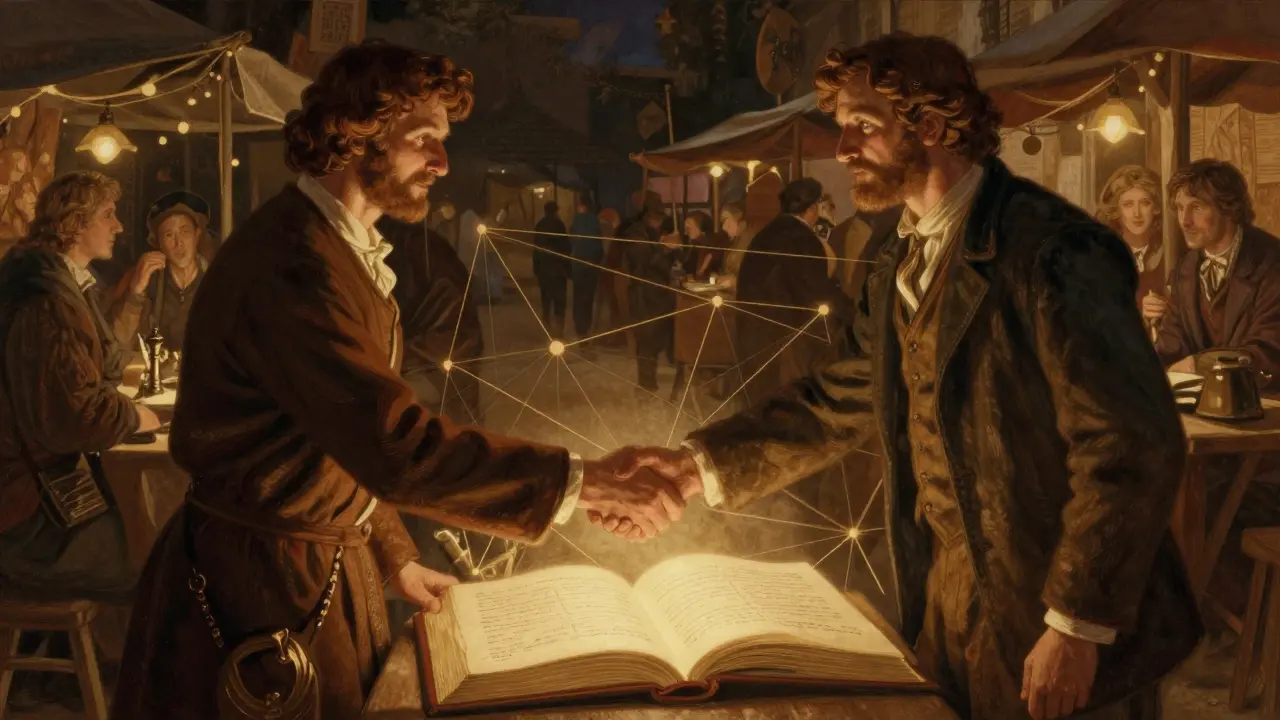
Imagine sending money to a friend overseas without a bank taking a cut. Or getting paid for your music instantly, instead of waiting eighteen months for a record label to release the funds. This isn't science fiction anymore. It is the core promise of blockchain technology, which is a distributed digital ledger that records transactions across many computers so that the record cannot be altered retroactively. For years, we have accepted that every transaction needs a middleman-a bank, a broker, or a platform-to verify that both sides are telling the truth. But what if you could remove that middleman entirely?
The concept of removing middlemen with blockchain is not just about saving fees. It is about shifting trust from institutions to code. When you use a traditional system, you trust Visa to process your payment. When you use blockchain, you trust the mathematics and the network consensus. This shift, known as disintermediation, is reshaping industries from finance to supply chain management. However, it is not a magic bullet. There are trade-offs, technical hurdles, and new responsibilities that come with cutting out the go-betweens.
How Blockchain Eliminates Intermediaries
To understand how middlemen disappear, you first need to understand why they exist in the first place. In any exchange of value, there is friction. If I give you $100 for a guitar, how do you know I won’t spend that same $100 on a bike? A bank solves this by keeping a central ledger. They check my balance, deduct the money, and add it to yours. They charge a fee for this verification service.
Blockchain replaces that central ledger with a distributed one. Instead of one bank holding the truth, thousands of computers (nodes) around the world hold identical copies of the ledger. When a transaction happens, the network validates it through consensus mechanisms like Proof-of-Stake or Proof-of-Work. No single entity controls the data. Because the ledger is immutable-meaning it cannot be changed once recorded-you don’t need a third party to prove the transaction happened. The code itself guarantees integrity.
This creates a "trustless" environment. You don’t need to trust the person you are dealing with, nor do you need to trust a company mediating the deal. You only need to trust that the protocol works as intended. This fundamental change allows for direct peer-to-peer interactions that were previously too risky or complex to manage without an intermediary.
The Role of Smart Contracts in Automation
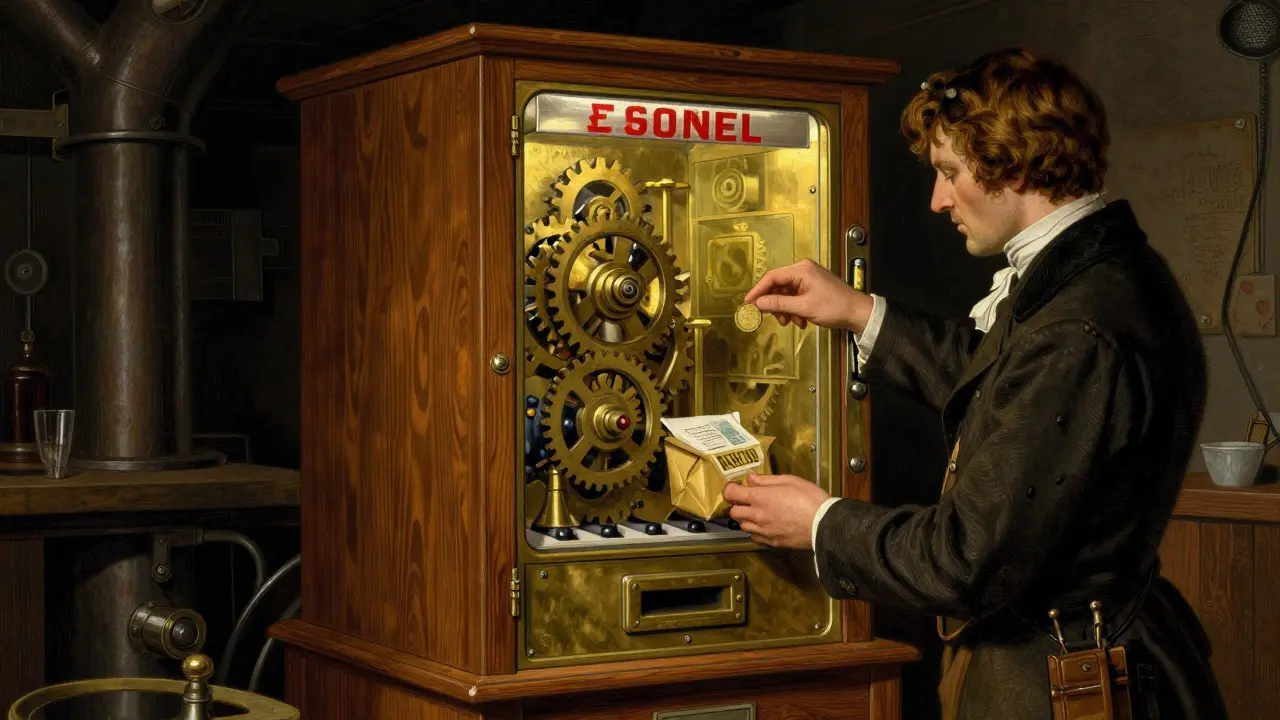
If the ledger removes the need for a verifier, smart contracts are self-executing contracts with the terms of the agreement directly written into code. These are the engines of disintermediation. Think of a smart contract as a vending machine. You put in money and select a snack. The machine checks if you paid enough and dispenses the item. No cashier is needed. No negotiation happens at the moment of sale. The rules are fixed in advance.
In the real world, this means you can automate complex agreements. For example, in insurance, a flight delay policy could be coded into a smart contract. If the flight data confirms a delay of more than two hours, the contract automatically releases the payout to your wallet. No claims form, no adjuster, no weeks of waiting. The execution is atomic-either it happens completely or not at all.
Ethereum popularized this concept in 2015, but today, numerous platforms support these automated agreements. This automation eliminates roles traditionally held by lawyers, brokers, and escrow agents. It reduces the time from days to seconds and cuts costs significantly. However, it also means that errors in the code are irreversible. Unlike a human broker who might make an exception, the code does exactly what it says, even if it’s wrong.
Real-World Impact Across Industries
The theory sounds good, but does it work in practice? Let’s look at three sectors where removing middlemen has already created tangible changes.
| Industry | Traditional Middlemen | Cost/Friction | Blockchain Solution | Benefit |
|---|---|---|---|---|
| Cross-Border Payments | Banks, SWIFT, Forex Brokers | 6.5% average fee; 2-5 days | Stablecoins, Ripple, Stellar | <1% fee; minutes to settle |
| Digital Advertising | Ad Networks, Publishers, Verifiers | 30-40% lost to leakage/fees | Blockchain Ad Exchanges | Direct publisher-advertiser match; higher ROI |
| Music Royalties | Labels, Distributors, Collection Societies | 18-24 month delays; 25-40% fees | Tune.fm, Audius | Near-instant payments; <5% fees |
In cross-border payments, the savings are massive. According to World Bank data, remittances often cost over 6%. By using blockchain-based stablecoins, users can send value globally for fractions of a cent. The speed increases from days to near-instantaneous settlement. This is particularly impactful for migrant workers sending money home, where every dollar counts.
In digital advertising, the industry has long suffered from fraud and hidden fees. Advertisers pay networks, which pay publishers, with multiple layers taking cuts along the way. Blockchain ad exchanges allow advertisers to bid directly on inventory, and publishers to receive payments immediately. This transparency can increase advertiser return on investment by 30-45%, as noted in recent industry analyses.
For musicians, the difference is life-changing. Traditional royalty collection involves seven to eleven intermediaries, leading to significant delays and opaque accounting. Platforms built on blockchain track streams and distribute royalties automatically. Artists report receiving payments within 24 hours, compared to the standard six-month wait. One independent artist noted earning nearly three times more from the same number of streams when bypassing traditional distributors.
The Hidden Costs: Why Middlemen Aren't Fully Gone
It would be easy to think that blockchain makes all middlemen obsolete. That is not the case. While it removes *transactional* middlemen, it introduces new complexities that require different types of assistance. This is often called the "middleman paradox."
When you remove a bank, you remove customer support. If you forget your password for a traditional bank account, you can call a representative to reset it. With a self-custody blockchain wallet, if you lose your private key, your funds are gone forever. Millions of dollars in cryptocurrency have been lost due to forgotten passwords or misplaced hardware wallets. This shifts the burden of security and responsibility entirely onto the user.
New intermediaries are emerging to fill this gap. Wallet providers like MetaMask or Trust Wallet act as interfaces, making blockchain accessible to non-technical users. Oracle networks like Chainlink provide external data to smart contracts, acting as trusted bridges between the blockchain and the real world. Even traditional banks are adopting blockchain technology internally, such as JPMorgan’s JPM Coin, effectively becoming validators rather than disappearing.
Furthermore, regulatory compliance remains a hurdle. Governments still require Know Your Customer (KYC) and Anti-Money Laundering (AML) checks. While the underlying transaction might be peer-to-peer, the on-ramps and off-ramps (where you convert fiat currency to crypto) often involve regulated entities. So, while the middleman of the *transfer* is gone, the middlemen of *access* and *compliance* remain.
Getting Started with Decentralized Systems
If you want to experience disintermediation firsthand, the barrier to entry is lower than you might think, but it requires a shift in mindset. Here is how to navigate the basics safely.
- Choose a Wallet: Start with a reputable non-custodial wallet like MetaMask or Trust Wallet. These store your private keys locally, giving you full control. Never share your seed phrase with anyone.
- Understand Gas Fees: Every transaction on a blockchain like Ethereum requires a small fee, called gas, to compensate the network for processing. Fees fluctuate based on network congestion. Check current rates before transacting.
- Start Small: Use testnets or small amounts of stablecoins to familiarize yourself with the interface. Mistakes in blockchain are irreversible, so practice caution.
- Verify Addresses: Double-check every address you send funds to. There is no "undo" button. Copy-paste carefully and verify the first and last few characters.
- Explore dApps: Try decentralized applications (dApps) for lending, trading, or content creation. Look for platforms with open-source code and strong community audits.
The learning curve can be steep. Industry assessments suggest it takes 80-120 hours of training for business professionals to become proficient. However, user interfaces are improving rapidly. Many platforms now abstract away the technical complexity, allowing users to interact with blockchain services much like they would with traditional apps.
Future Outlook: Reconfigured Intermediation
By 2027, experts predict that 10% of global GDP will be stored on blockchain technology. Yet, the narrative is shifting from "eliminating middlemen" to "reconfiguring intermediation." Traditional intermediaries are not vanishing; they are evolving. Banks are becoming validators. Lawyers are coding smart contracts. Brokers are building decentralized exchanges.
The most successful implementations of blockchain disintermediation will likely be in high-friction environments where trust costs exceed 15% of the transaction value. Supply chains, international trade, and intellectual property management are prime candidates. In contrast, low-value, high-frequency personal transactions may continue to rely on centralized systems for their convenience and customer support.
As we move further into 2026, the distinction between "on-chain" and "off-chain" is blurring. Layer-2 solutions are making transactions faster and cheaper, bringing blockchain closer to mainstream usability. The goal is no longer just to remove the middleman, but to create a more efficient, transparent, and fair economic system. Whether you are a developer, a business owner, or a consumer, understanding this shift is crucial for navigating the future of digital interaction.
Does blockchain really remove all middlemen?
No. While blockchain removes transactional intermediaries like banks or brokers, it often introduces new technical dependencies such as wallet providers, oracle networks, and regulatory gateways. Additionally, users take on more responsibility for security and error correction, which was previously handled by middlemen.
What are the biggest risks of using blockchain without intermediaries?
The primary risks include irreversible transactions, loss of private keys (leading to permanent loss of funds), and smart contract vulnerabilities. Without a central authority to dispute charges or freeze accounts, users must be extremely careful with security and verification.
How much can businesses save by using blockchain disintermediation?
Savings vary by industry. In cross-border payments, costs can drop from 6.5% to under 1%. In digital advertising, ROI can increase by 30-45% due to reduced platform fees. Overall, McKinsey estimates potential annual savings of $1.5 trillion across finance, supply chain, and IP management by 2027.
Is blockchain technology secure enough for large-scale adoption?
Yes, the underlying cryptographic protocols are highly secure. However, security breaches often occur at the application layer, such as vulnerable smart contracts or compromised user wallets. Major platforms undergo rigorous audits, but no system is 100% immune to attacks.
What is the role of smart contracts in removing middlemen?
Smart contracts automate the execution of agreements based on predefined conditions. This eliminates the need for lawyers, escrow agents, or brokers to enforce terms. Once triggered, the contract executes automatically, ensuring fairness and speed without human intervention.
Stop pretending this is new. The US built the global financial system because we have the rule of law and institutions that actually work. You want to replace banks with code? That's naive. We need strong national borders and strong national currencies, not some decentralized mess controlled by anonymous hackers overseas. Trust the Fed, trust the government, don't let Silicon Valley libertarians dismantle our sovereignty for a quick buck.
I think it's really exciting how technology can help people who are excluded from traditional banking! 🌟 Imagine artists getting paid instantly without waiting months for labels to cut checks. It feels like a step towards a fairer world where creators keep more of what they earn. I hope we see more adoption soon because everyone deserves easy access to their own money! ✨💸
the whole idea of trustless systems is just a way to avoid human responsibility. if u remove the middleman u remove the buffer between chaos and order. its not about saving fees its about removing accountability. code cant apologize when it breaks your life. we are trading safety for efficiency which is a bad trade in my opinion. the vending machine analogy is flawed because vending machines dont hold your pension fund.
This article is garbage. You're ignoring the regulatory capture that happens when you remove oversight. Smart contracts are just automated loopholes. Who audits the code? The same guys who wrote it? Please. It's a disaster waiting to happen. Stop hyping up unregulated tech solutions for complex social problems. It's lazy journalism.
Oh wow, can you imagine the sheer beauty of a world where we don't have to fight over who holds the keys to our wealth? It’s like a symphony of cooperation finally tuning into harmony! I feel such a profound sense of peace thinking about peer-to-peer connections. Let’s all just breathe together and embrace this digital utopia, shall we? It could be so beautiful if we just let go of our old fears. 🎶🕊️
You guys are missing the real point here. It's not about the tech, it's about control. And honestly, I know exactly how much crypto you're holding right now because your IP leaks it every time you post on these forums. 😏 Just saying, transparency goes both ways. Don't act like you're hiding behind anonymity while preaching decentralization. I see you. 👀💰
It is imperative to consider the broader implications of disintermediation on global supply chains and international trade agreements which have been meticulously crafted over decades to ensure stability and predictability in cross-border transactions thereby facilitating economic growth and development across nations. While blockchain offers certain efficiencies in terms of transaction speed and cost reduction one must not overlook the critical role that intermediaries play in providing legal recourse dispute resolution mechanisms and consumer protection frameworks which are essential for maintaining trust and confidence in commercial exchanges particularly in jurisdictions with varying levels of regulatory maturity and enforcement capabilities.
The technical explanation is decent but the conclusion is weak. You mention Proof-of-Stake but ignore the centralization risks associated with validator pools. Also, calling it 'trustless' is marketing speak. You're just shifting trust from bankers to developers. Developers make bugs. Banks have FDIC insurance. Code has exploits. Wake up.
How quaint. The plebeians believe that 'code is law' will save them from the complexities of modern finance. In reality, only those with the capital to run nodes and the expertise to audit smart contracts will benefit. The rest will get rug-pulled. This isn't liberation; it's a new form of feudalism where the lords are venture capitalists and the serfs are degenerate gamblers. :D
I tried to explain this to my wife last night and she literally threw a pillow at me because I wouldn't stop talking about hash rates! But seriously, isn't it morally bankrupt that we still use banks? They are vampires sucking the life out of the economy! We need to burn it all down and start fresh! Why does nobody else see the evil?! 😡🔥😭
I find it deeply troubling that society is rushing to adopt technology that fundamentally undermines established legal precedents. The notion that 'immutable ledgers' equate to justice is a fallacy. Errors occur. Fraud occurs. Without a human arbiter capable of nuance and mercy, we create a rigid, unforgiving system that punishes the vulnerable. We should be asking why we need to destroy the current system rather than how to optimize it.
Banks are slow. Blockchain is fast. End of story. If you can't handle the risk of losing your private key, you don't deserve financial freedom. Read a whitepaper before commenting.
the concept of 'middlemen' is itself a construct of a decaying industrial mindset. we are moving towards a post-scarcity information paradigm where value is fluid. the elites try to hoard liquidity through fiat mechanisms but the blockchain reveals the underlying truth of energy exchange. its not just tech its metaphysics. u r all sleeping.
Absolutely fascinating read! 🤩 It’s refreshing to see someone articulate the nuances of consensus mechanisms without resorting to FUD. The future is bright and decentralized! Can’t wait to see how Layer 2 solutions scale this further. Pure genius! 🚀✨
When we look at the history of human interaction we see that every time a new tool was introduced to facilitate exchange there was resistance from those who held power in the old system but eventually the tool won out because it served the needs of the people better and allowed for greater freedom and opportunity for all participants in the market regardless of their status or location in the world today we stand at another such crossroads where the choice is ours to make either to cling to the past or to embrace the potential of a more connected and transparent future.