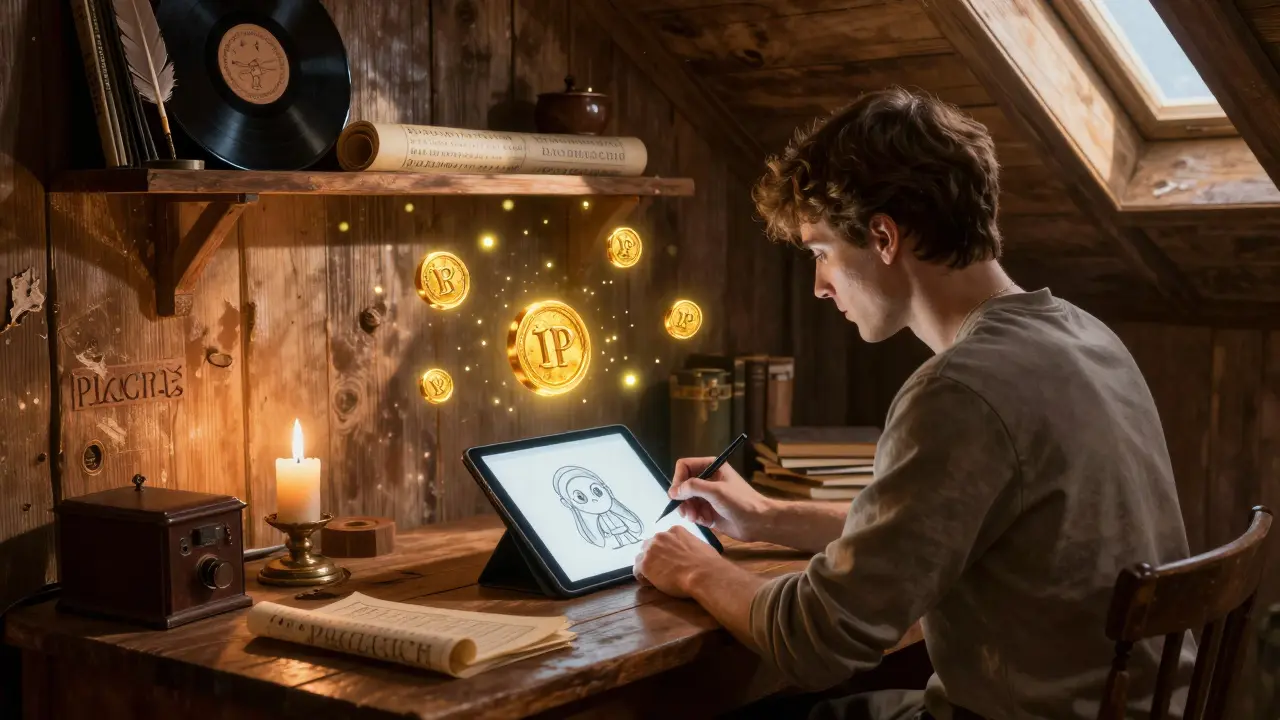
Most crypto exchanges let you trade Bitcoin, Ethereum, or meme coins. StoryHunt doesn’t do that. It’s not built for speculators or day traders. It’s built for creators-artists, musicians, writers, 3D designers-who want to turn their creative work into something that pays them every time it’s used. If you’ve ever sold a digital artwork and never saw another cent when someone else used it, StoryHunt is trying to fix that. And it’s doing it on a blockchain made just for intellectual property.
What Is StoryHunt, Really?
StoryHunt isn’t another Uniswap or PancakeSwap. It’s a decentralized exchange (DEX) that runs on the Story blockchain-a Layer 1 chain designed from the ground up to handle intellectual property (IP) as onchain assets. Unlike general DEXs that trade tokens, StoryHunt trades something called IP Assets. These aren’t just NFTs. They’re digital works-like a song, a character design, a 3D model, or a short film-that come with built-in rules. Want to know how much you earn every time your character appears in a video game? StoryHunt tracks it automatically. No lawyer. No middleman. Just code.
It launched in mid-2024 as the core trading platform for Story Protocol, a project backed by a16z. The idea is simple: if you create something, you should own it forever-and get paid every time it’s reused. That’s what IPFi (Intellectual Property Finance) means. And StoryHunt is the only DEX built for it.
How It Works: From Creation to Royalties
Here’s how it actually works in practice:
- You create something-a digital painting, a voice sample, a virtual outfit.
- You use a platform like Morphic or Bythen to mint it as an IP Asset on the Story blockchain.
- You set rules: 7% royalty on commercial use, allow remixing, restrict adult content.
- You list your IP Asset on StoryHunt to sell or trade.
- Someone buys it-or uses it in a game, app, or video-and you get paid automatically.
That last part is the magic. If your 3D character gets used in a metaverse event, your wallet gets paid. No invoices. No follow-ups. The blockchain handles it. According to users on Twitter and Reddit, creators have earned anywhere from $50 to $1,200 in royalties from single assets after just a few months.
StoryHunt doesn’t just trade IP Assets. It also supports standard tokens like $IP-the native token of the Story ecosystem. $IP is used for governance and paying gas fees, but the real value is in the IP itself. The exchange currently supports 17 trading pairs, mostly between $IP and various IP Assets. You won’t find BTC or SOL here. This isn’t for crypto traders. It’s for content owners.
Performance and Liquidity: Small but Specialized
Don’t look at StoryHunt’s numbers and expect to see Uniswap’s volume. As of early 2026, its 30-day trading volume sits at around $13.16 million. Compare that to Uniswap’s $28 billion, and it looks tiny. But that’s not the point.
StoryHunt’s $5.21 million in Total Value Locked (TVL) isn’t about speculation-it’s about locked creative value. Every dollar in TVL represents a piece of art, music, or design that someone believes has future earning potential. That’s a different kind of market.
Liquidity is thin for big trades. One user reported a 2.3% slippage on a $5,000 trade. That’s high compared to major DEXs, where slippage is often under 0.5%. If you’re trying to dump a large IP Asset, you’ll need to spread your trade over time. But for smaller creators trading $500-$2,000 worth of assets? It works fine.
And the spreads? Around 0.611% on average. That’s actually better than many niche NFT marketplaces. For a platform this new, that’s impressive.
Who Is This For? And Who Should Stay Away?
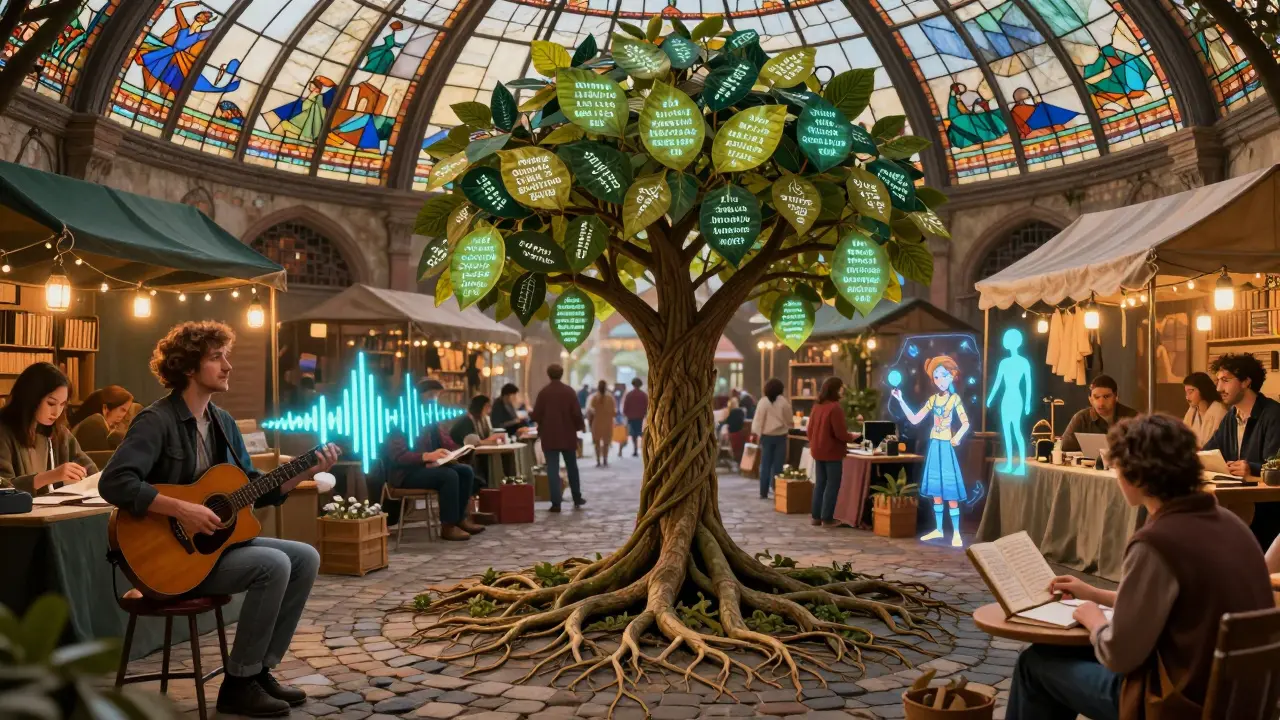
StoryHunt isn’t for everyone. Here’s who it’s made for:
- Independent creators who make digital art, music, or 3D assets and want ongoing income.
- Small studios building characters or worlds for games or VR experiences.
- Investors who believe in the future of creator-owned IP and want early access.
Here’s who should skip it:
- Crypto traders looking for quick flips on ETH or SOL. You won’t find those here.
- Beginners unfamiliar with wallets, gas fees, or blockchain basics. The learning curve is steep.
- People who want customer support. There’s no phone line. No live chat. Help comes from Discord and community forums.
According to ecosystem data, about 65% of StoryHunt users are creators. The rest are investors or developers. You won’t find retail traders here. That’s intentional.
How to Get Started
If you’re a creator and want to try it, here’s the step-by-step:
- Get a Web3 wallet that supports the Story blockchain-MetaMask, Rabby, or Trust Wallet (with custom RPC added).
- Go to a Story Protocol partner like Morphic or Bythen and mint your first IP Asset. Upload your file, set royalty terms, and pay a small fee.
- Once minted, your IP Asset appears in your wallet. Open StoryHunt (storyhunt.xyz) and connect your wallet.
- Click "Trade" and find your asset in the list. You can sell it outright or add it to a liquidity pool to earn fees.
- Wait for someone to use it. When they do, you’ll see a royalty payment appear in your wallet.
Most creators report spending 3-5 hours learning the system before feeling comfortable. The interface is clean, but the concepts aren’t obvious. You’re not just buying a token-you’re buying rights to a piece of intellectual property. That takes time to understand.
The Bigger Picture: Why This Matters
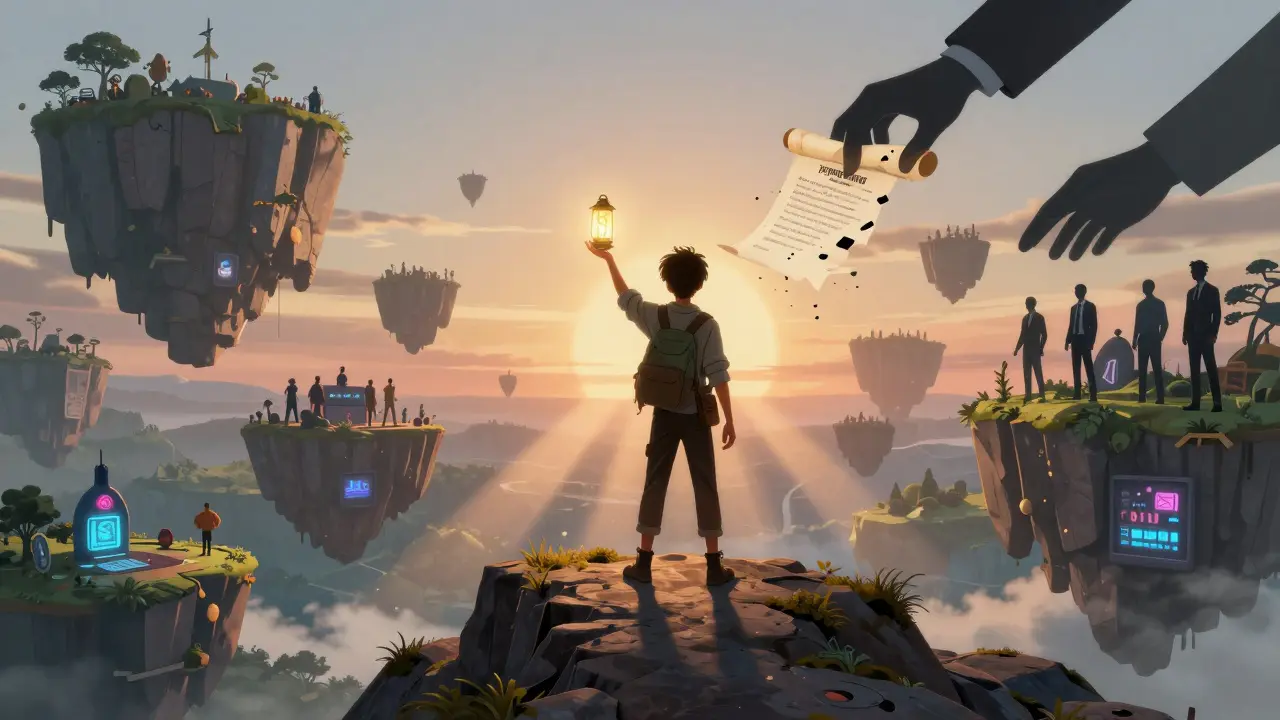
StoryHunt isn’t just a DEX. It’s a test case for the future of creativity. Right now, if you’re a musician and your song gets used in a TikTok video, you get nothing unless you’re signed to a label. If you’re a 3D artist and your model ends up in a game you didn’t authorize? No compensation. The system is broken.
Story Protocol and StoryHunt are trying to fix that. They’re building a world where every digital creation has a traceable history, clear ownership, and automated payments. It’s not perfect. Adoption is slow. But it’s happening.
Partnerships with platforms like Color Marketplace and StoryGo are making discovery easier. New tools like DaVinci-the first IPFi + DeFAI agent-are automating revenue splits for music and video. And with AI-generated content exploding, the need for clear IP rights is more urgent than ever. YouTube recently highlighted Story Protocol as a potential solution for compensating creators whose work is used to train AI models.
If this succeeds, StoryHunt could become the eBay for digital creativity. If it fails, it’ll be a footnote in crypto history. But right now, it’s the only place where creators can truly own their work-and profit from it, forever.
What’s Next for StoryHunt?
The roadmap is ambitious:
- Expanding to other blockchains beyond Story’s EVM-equivalent chain.
- Adding more IP licensing templates (e.g., for educational use, non-profits, commercial licensing).
- Integrating with AI tools to track how models use creator content.
- Building better educational tools for non-tech creators.
Right now, StoryHunt is a niche tool for a niche audience. But the audience is growing. And if even 1% of the global creator economy-estimated at $1.5 trillion-moves onchain, StoryHunt could become essential.
It’s not the fastest or biggest DEX. But it might be the most meaningful one.
Is StoryHunt safe to use?
Yes, as long as you follow basic Web3 safety rules. StoryHunt runs on the Story blockchain, which is audited and backed by a16z. The smart contracts are open-source. But like any DEX, you’re responsible for your own wallet security. Never share your seed phrase. Use a hardware wallet for large IP Assets. And always double-check contract addresses before trading.
Can I trade Bitcoin or Ethereum on StoryHunt?
No. StoryHunt only trades IP Assets and the native $IP token. It’s not designed for mainstream crypto trading. If you’re looking to swap BTC for ETH, use Uniswap, Coinbase, or Kraken. StoryHunt is for creators who want to trade digital work, not coins.
How do I value an IP Asset on StoryHunt?
Unlike regular tokens, IP Assets aren’t valued by speculation. Their price depends on potential usage. A character design used in 50 games will be worth more than one never used. Look at past sales of similar assets, check royalty history, and see how many platforms are integrating with Story Protocol. The community on Discord often shares valuation tips for new IP listings.
Do I need to pay gas fees on StoryHunt?
Yes, but they’re low. The Story blockchain uses $IP for gas, and fees are typically under $0.10 per transaction. That’s much cheaper than Ethereum. You’ll need a small amount of $IP in your wallet to pay for trades, minting, or transferring assets.
Can I earn passive income on StoryHunt?
Yes. You can add your IP Asset to a liquidity pool and earn trading fees whenever others swap it. You can also hold $IP and participate in governance to earn rewards. Some users report earning 5-10% APY from liquidity provision, but returns vary based on asset popularity and trading volume.
What happens if someone copies my IP Asset?
Nothing-because copying doesn’t work the same way here. Every IP Asset has a unique onchain ID and usage history. If someone tries to use your asset without permission, the royalty system won’t pay them. And if they mint a fake version, it won’t have your original royalty terms. The blockchain proves ownership and usage. You don’t need lawyers-you need proof.
Is StoryHunt only for artists?
No. Writers, game designers, musicians, coders, and even AI trainers are using it. If your work is digital and you want to control how it’s used, you’re a creator-and StoryHunt is for you. Even businesses are starting to use it to license internal assets like logos or templates.
How do I know if an IP Asset is legitimate?
Check the creator’s history. Look at their past IP Assets, royalty payouts, and community reputation. Legitimate creators often have a trail of successful listings. Avoid assets with no usage history or suspiciously low prices. StoryHunt doesn’t verify creators, but the ecosystem rewards transparency.
Can I use StoryHunt on my phone?
Yes, through mobile Web3 wallets like Trust Wallet or Rabby. The StoryHunt website is mobile-friendly, but the experience is smoother on desktop. For beginners, using a laptop or tablet is recommended until you’re comfortable with the process.
What’s the biggest risk of using StoryHunt?
The biggest risk is adoption. If Story Protocol doesn’t attract mainstream creators, StoryHunt will remain a small niche. There’s no guarantee your IP Asset will sell or earn royalties. You’re investing time and creativity into a system still proving itself. Only put in what you’re willing to lose.
Interesting take on IP as an asset class. I’ve been minting my photography as IP Assets for about 6 months now and have made $387 in royalties from stock agencies using my work. No invoices, no chasing clients. Just blockchain doing the math.
This is why America needs to lead in Web3, not let China or the EU steal our creative economy. If you’re not on StoryHunt, you’re letting your art get stolen by AI bots with no compensation. Wake up.
I started using StoryHunt after my digital illustrations kept showing up in ads without payment. Now I set 10% royalties on every asset and sleep better at night. It’s not perfect, but it’s the first system that actually respects creators. Keep going, StoryHunt.
Another crypto scam pretending to be a solution. 13 million in volume? That’s less than one day on Uniswap. You’re not building the future, you’re building a graveyard for overpriced PNGs.
Bro, I made a 3D model of a cat wearing a top hat last year. It got used in a VR museum exhibit in Berlin. I got paid $217 in $IP. No middleman. No lawyer. Just code. I cried. Not because of the money-though hey, free cash is nice-but because for the first time, my weird little art had value that couldn’t be taken away. This isn’t crypto. This is justice.
I’m a writer and I’ve been trying to figure out how to monetize my short stories since 2018. I tried Patreon I tried Gumroad I tried selling PDFs and everyone just downloads and shares. Then I found StoryHunt. I minted three stories as IP Assets with a 5% royalty on commercial adaptation. One got picked up by a podcast network for an audio drama. I made $412 last month. I didn’t even have to ask. The blockchain just sent it. I’m not techy. I don’t understand smart contracts. But I understand getting paid when my work is used. That’s all I needed to know.
Just got my first royalty payment 💸🎉 I made a sound pack of vinyl crackles and it got used in a TikTok trend. 14k views. $89.42 in $IP. I didn’t even know it was being used until I checked my wallet. Mind blown. This is the future. 🚀
As someone from India who makes digital art for global clients, this is the first platform that feels fair. No more ‘we’ll pay you in exposure’. I minted a character I designed for a game studio. They paid upfront, but now I get 7% every time it’s reused. Even if they sell the game on Steam. That’s huge.
Don’t sleep on the AI angle. YouTube just flagged Story Protocol as a potential solution for training data compensation. Imagine your artwork being used to train Midjourney and you get paid every time the model generates something similar. That’s not sci-fi-it’s coming. StoryHunt is the first to build the rails for it.
Imagine a world where your grandma’s handwritten recipe gets minted as an IP Asset and every time a restaurant uses it, she gets a penny. That’s not nostalgia. That’s legacy. This isn’t just about crypto. It’s about giving every human creation a voice that never fades.
LOL you guys are acting like this is the second coming. I’ve seen 10 ‘creator economy’ projects die since 2021. This has 17 trading pairs. 17. That’s less than one pair per week. If you think this scales beyond 5000 artists, you’re smoking something stronger than $IP. It’s a cute niche. Not a revolution.
They’re not wrong, but you’re missing the point. This isn’t about volume. It’s about dignity. I’m a musician. My song was sampled in 3 TikTok ads last month. Without StoryHunt, I’d have zero. With it? $187. I’m not here to beat Uniswap. I’m here to survive as an artist. And for the first time in 12 years, I feel like I can.
Just tried minting my first IP Asset-my doodle of a raccoon with glasses. Took me 4 hours to figure out the RPC settings. Felt like coding. But once it was live? I sold it for $200 and got 8% royalties on commercial use. My friend used it in his indie game. I got $12 last week. I’m hooked. This is the most chill crypto thing I’ve ever done. No hype. Just vibes. 🦝✨
For those asking if it’s safe: the contracts are audited. The team is transparent. But remember-you’re not buying a token. You’re buying rights. Read the license terms. Understand what ‘commercial use’ means. This isn’t a game. It’s a new legal layer for creativity. Treat it like one.