Nigeria Crypto Ban: What Really Happened and How Nigerians Keep Using Crypto
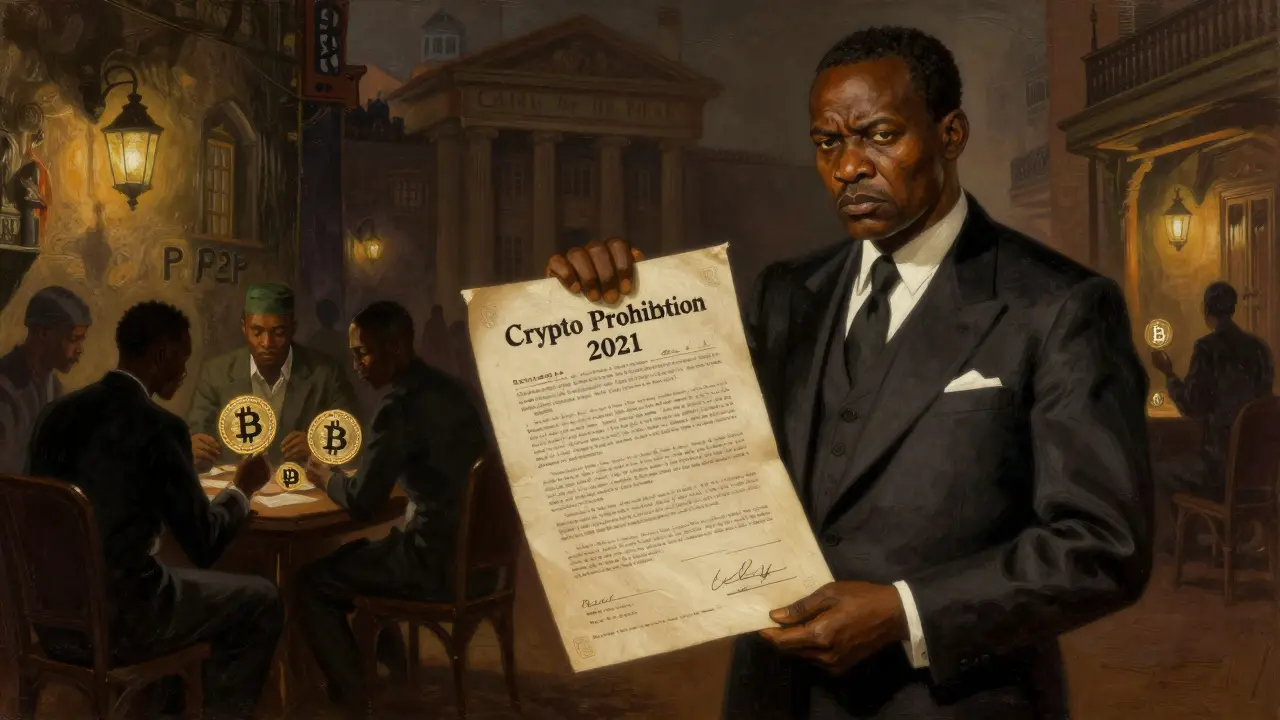
When the Nigeria crypto ban, a 2021 Central Bank of Nigeria directive that ordered banks to cut off services to crypto exchanges. Also known as crypto banking restrictions, it was meant to stop financial chaos—but it backfired hard. Instead of killing crypto, it turned Nigeria into the world’s most active crypto market.
Why? Because regular people had no other choice. Inflation was eating salaries, banks blocked transfers, and sending money home from abroad cost 15% in fees. So Nigerians turned to stablecoins, digital currencies pegged to the U.S. dollar, like USDT. These became the new cash—used to pay for food, rent, and even school fees. You won’t find a single bank in Lagos that still openly supports Binance or KuCoin, but you’ll find dozens of street vendors who take USDT in exchange for plantains. The ban didn’t stop crypto—it just pushed it underground, where it thrived.
The Nigerian crypto users, over 22 million strong, now use peer-to-peer platforms, mobile wallets, and local traders to move value without banks. Also known as P2P crypto networks, these systems bypass the ban entirely. They don’t need licenses. They don’t need approval. They just need a phone and a WhatsApp group. Meanwhile, the government keeps talking about regulation, but no one’s been arrested for holding Bitcoin. The real story isn’t about prohibition—it’s about survival.
What you’ll find below are real stories and deep dives into how crypto works in Nigeria—not the headlines, but the daily reality. From how traders avoid detection, to why USDT is more trusted than the naira, to how young Nigerians are building entire businesses on crypto. This isn’t theory. It’s life.