
Imagine logging into your favorite global crypto exchange, only to find a black screen and a message in Thai saying you’re banned. For millions of users in Southeast Asia, this wasn’t a glitch-it was policy. As of mid-2026, the landscape for cryptocurrency exchanges in Thailand has shifted dramatically. The days of unregulated offshore platforms operating freely are over. The Securities and Exchange Commission (SEC) of Thailand, under the updated Digital Asset Business Act, has drawn a hard line in the sand.
If you are an exchange operator looking to enter the market, or an investor trying to understand why your access changed, you need to know exactly how these rules work. This isn't just about compliance; it's about survival in one of Asia's most active digital asset markets. Let’s break down what the regulations actually mean for exchanges, what is strictly prohibited, and how the licensing process works today.
The Core Framework: Digital Asset Business Act
At the heart of Thailand’s regulatory regime is the Digital Asset Business Act. Originally enacted in 2018, this law underwent massive amendments effective April 13, 2025, via two Emergency Decrees. These changes were not minor tweaks; they were a complete overhaul designed to crush online fraud and money laundering while protecting local investors.
The primary goal, as stated by SEC Secretary-General Pornanong Budsaratragoon, was to stop scammers from exploiting loopholes. The result? A framework that requires any entity serving Thai customers to hold a specific license from the Thai SEC. There is no gray area anymore. If you serve Thai users, you play by Thai rules.
The definition of a "digital asset" here is broad, covering both cryptocurrencies like Bitcoin and Ethereum, and digital tokens issued through Initial Coin Offerings (ICOs). However, not all assets are treated equally. The SEC distinguishes between investment tokens, utility tokens, and payment tokens, with strict limits on how each can be traded.
How the SEC Defines "Serving Thai Users"
One of the biggest challenges for foreign exchanges was determining whether they were legally required to get a license. The SEC closed this loophole with a seven-point test. If a platform meets even one of these criteria, it is deemed to be providing services in Thailand and must be licensed:
- Language: The platform displays content in Thai, even partially.
- Domain Names: Using extensions like ".th" or ".ไทย" or other Thailand-specific names.
- Currency: Accepting payments in Thai Baht (THB) or via Thai electronic money accounts.
- Legal Jurisdiction: Specifying Thai law or Thai courts for dispute resolution.
- Marketing: Paying search engines to appear in results for Thai users.
- Physical Presence: Having offices or staff in Thailand to support users.
- Other Criteria: Any additional characteristics prescribed by SEC Notification.
This extraterritorial reach means you cannot simply host your servers in Singapore and ignore Thai laws if your interface is in Thai. Major foreign platforms like Bybit and OKX found themselves shut out of the market after failing to meet these new standards quickly enough.
Strict Operational Restrictions for Licensed Exchanges
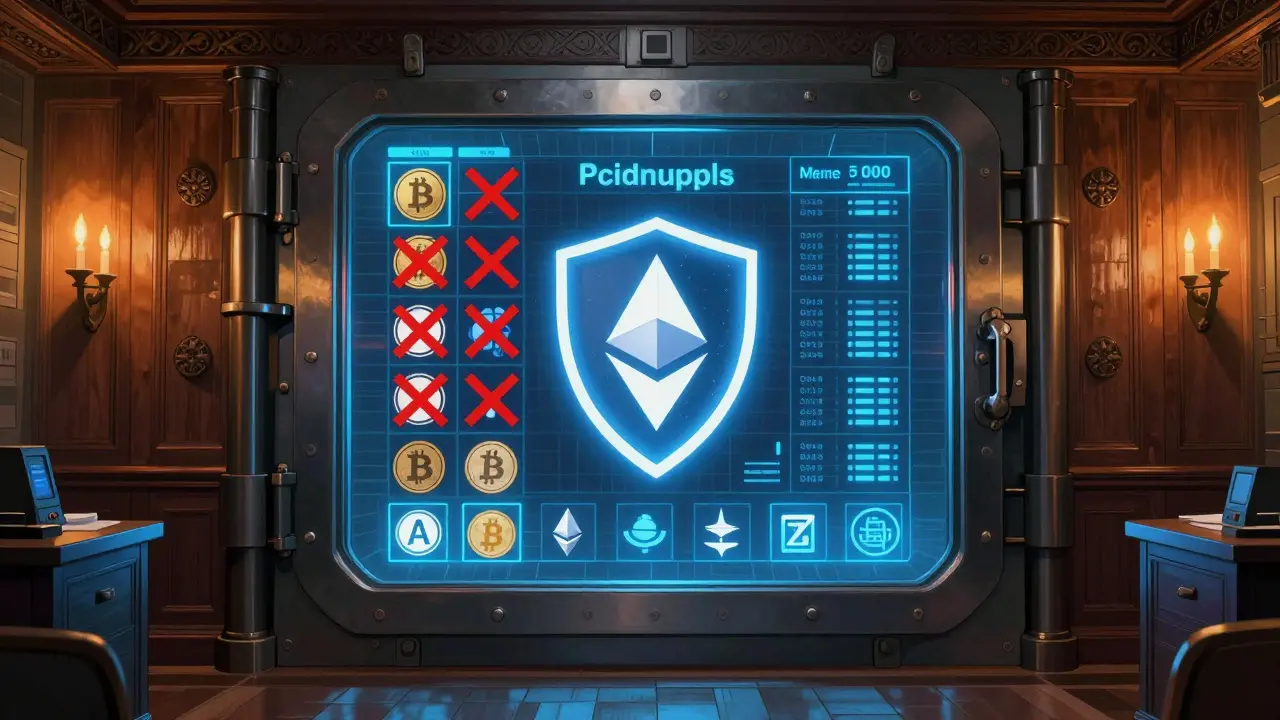
Getting a license doesn’t mean you can do whatever you want. The Thai SEC imposes some of the strictest operational constraints in the region. Even if you are fully licensed, you face significant limitations on what products you can offer.
| Restriction Category | Details | Rationale |
|---|---|---|
| Privacy Coins | Prohibited from listing or trading privacy-focused coins (e.g., Monero, Zcash). | Prevents money laundering and anonymous illicit transactions. |
| Payment Utility | Exchanges cannot promote digital assets as a medium of exchange for goods/services. | Protects the sovereignty of the Thai Baht and prevents inflation risks. |
| Lending & Staking | No deposit-taking or lending services with promised fixed returns. | Avoids systemic financial risk similar to traditional banking failures. |
| Meme & Fan Tokens | Banned from trading speculative meme coins and fan tokens. | Reduces retail investor exposure to high-volatility, low-value assets. |
| NFTs | Non-Fungible Tokens are currently prohibited on local exchanges. | Regulatory uncertainty and high fraud risk in the NFT sector. |
These restrictions explain why the coin selection on Thai exchanges feels limited compared to global giants. As of mid-2025, only about 35 tokens were approved for trading on local platforms, versus hundreds on international ones. While this frustrates traders seeking variety, regulators argue it protects the average citizen from volatile scams.
The Licensing Process: Costs and Timelines
For exchanges willing to comply, the path to licensing is clear but expensive. The application fee alone is ฿1,000,000 (approximately $27,400), with annual renewal fees of ฿500,000 ($13,700). But the real cost lies in the requirements.
You must prove you have at least ฿50 million ($1.37 million) in operational capital. You also need to demonstrate full Anti-Money Laundering (AML) and Counter-Financing of Terrorism (CFT) compliance meeting Financial Action Task Force (FATF) standards. This includes submitting source code audits from SEC-approved firms and implementing real-time transaction monitoring systems.
The timeline is another hurdle. Based on the nine entities currently licensed, the approval process takes 90 to 120 days. Bitkub, Thailand’s largest exchange, reported spending six months just to adapt their user interface and backend systems to meet these specifications. For smaller startups, this barrier to entry is formidable.

Impact on the Market: Fraud vs. Liquidity
Has the crackdown worked? The data suggests yes, but with trade-offs. According to the Royal Thai Police Cybercrime Investigation Division, crypto-related fraud reports dropped by 37% in Q2 2025 compared to Q1. Users on forums like Pantip.com praised the increased security, with 87% of positive reviews citing fewer scam attempts.
However, liquidity has suffered. With major foreign players exiting or blocking Thai IPs, spreads have widened, and transaction fees have risen. Average fees on local exchanges sit around 0.25%, compared to 0.1% on international platforms. Traders also face withdrawal limits, such as Bitkub’s cap of ฿500,000 ($13,700) per day, which restricts serious institutional activity.
Market share has flipped dramatically. In late 2024, 85% of volume came from foreign platforms. By Q2 2025, 78% of activity was on domestic licensed exchanges. Yet, Chainalysis estimates that 35% of Thai crypto activity has migrated offshore via VPNs, indicating that demand still outpaces local supply.
Future Outlook: DeFi and CBDCs
The regulatory roadmap for 2026 and beyond is evolving. The SEC plans to amend the Digital Asset Business Act in Q4 2025 to address Decentralized Finance (DeFi) platforms, which currently operate in a legal gray area. Additionally, a pilot project integrating Central Bank Digital Currency (CBDC) with licensed exchanges is expected in Q2 2026.
Investment products are also expanding. While only Bitcoin and Ethereum ETFs are currently allowed, altcoin ETFs are planned for 2026, potentially unlocking $3 billion in new investment capital. Binance has expanded its Thai hub operations, signaling confidence in the long-term stability of the regulated market.
Despite the strictness, Thailand remains a regional fintech hub. The National Blockchain Policy Office has allocated ฿2.1 billion for blockchain development projects through 2027. The message is clear: innovation is welcome, but only within a secure, transparent, and heavily supervised framework.
Can I use foreign exchanges like Bybit or OKX in Thailand?
No. Following the April 2025 regulatory updates, foreign peer-to-peer platforms like Bybit and OKX are prohibited from operating without a Thai SEC license. They have been blocked from serving Thai users, and accessing them may violate local regulations. You must use one of the nine licensed digital asset portals approved by the SEC.
What is the cost to get a crypto exchange license in Thailand?
The initial application fee is ฿1,000,000 (approx. $27,400), and the annual license renewal fee is ฿500,000 (approx. $13,700). Beyond fees, operators must maintain minimum operational capital of ฿50 million ($1.37 million) and invest significantly in compliance infrastructure, including AML systems and source code audits.
Are privacy coins like Monero legal in Thailand?
No. Licensed digital asset business operators in Thailand are explicitly prohibited from listing or providing services for privacy coins. This restriction is part of the SEC’s strategy to prevent money laundering and ensure transaction transparency.
How long does it take to get approved by the Thai SEC?
The average approval timeline is 90 to 120 days. However, full implementation of compliance measures, such as adapting user interfaces and installing real-time monitoring systems, can take up to six months, as seen with major players like Bitkub.
Will Thailand allow NFTs and Meme Coins in the future?
Currently, both NFTs and meme tokens are prohibited on local exchanges due to high fraud risk and lack of intrinsic value. While the regulatory framework is being updated for DeFi in late 2025, there is no immediate indication that these specific asset classes will be unbanned soon.
Is it safer to trade on local Thai exchanges now?
Yes, in terms of fraud protection. Crypto-related fraud reports dropped by 37% in early 2025 after the crackdown. However, traders face higher fees, lower liquidity, and stricter withdrawal limits compared to international platforms.