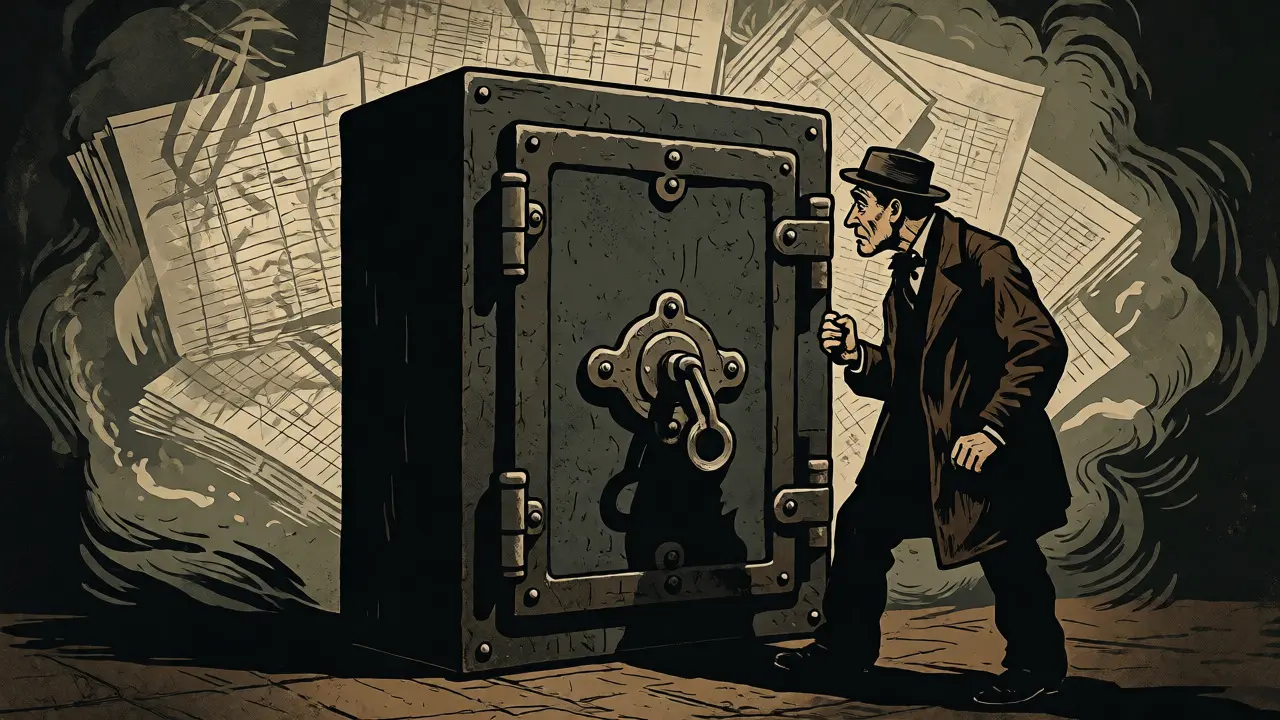
You send $100 to a charity. Six months later, you get a generic email saying "thank you for your support." But where did that money actually go? Did it buy supplies in the right region? Did administrative costs eat up half of it? For decades, this black box has been the biggest friction point in philanthropy. You trust the organization, but you can't verify the flow of funds in real-time.
Enter Blockchain a decentralized digital ledger technology that records transactions across many computers so that the record cannot be altered retroactively. It’s not just for buying Bitcoin anymore. Today, blockchain is reshaping how we track charitable donations, offering a level of visibility that traditional banking simply can't match. This isn't about replacing nonprofits; it's about giving donors and organizations a shared source of truth. If you've ever wondered if your donation actually made an impact, here is how the tech works, why it matters, and what the real-world challenges are.
The Core Problem: Why Traditional Charities Struggle with Trust
Think about the last time you donated. The process usually involves a credit card swipe, a receipt, and then silence until the annual report drops. That gap is filled with uncertainty. Traditional charitable systems rely on centralized accounting ledgers. These are private databases controlled by the organization. While most nonprofits are honest, the system itself is opaque. Audits happen once a year, often after the fact. By then, the money is long gone, spent or allocated in ways the donor never saw.
This opacity creates two major issues. First, donors feel disconnected from the outcome. They give blindly. Second, efficient nonprofits struggle to prove their efficiency against competitors who might have higher overheads but better marketing. In the pre-blockchain era, verifying where every cent went required manual document checks, which are slow, expensive, and prone to human error or even manipulation. We’ve all heard horror stories of funds disappearing into administrative black holes. Without a public, immutable record, "trust" becomes a leap of faith rather than a verifiable fact.
How Blockchain Solves the Transparency Gap
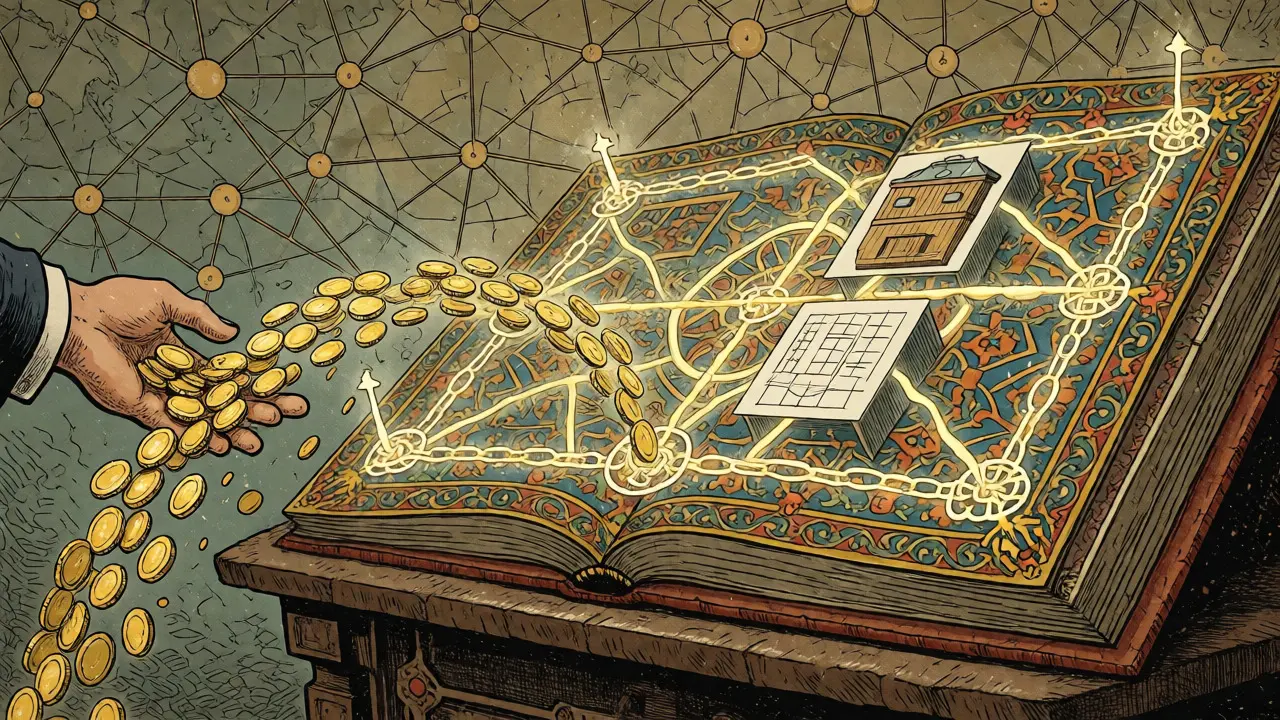
Blockchain changes the game by creating an unbroken chain of custody for every dollar. Imagine a digital trail that lights up every time money moves. When you donate via a blockchain-enabled platform, the transaction is recorded on a public ledger. This record is timestamped, cryptographically secured, and visible to anyone with the link. No one-not the charity, not the bank, not the government-can quietly delete or alter that entry without breaking the entire chain.
The magic ingredient here is the Smart Contract self-executing contracts with the terms of the agreement directly written into code. Unlike a standard contract that needs lawyers to enforce, a smart contract runs automatically when conditions are met. For charities, this means you can program rules into the donation itself. For example, a smart contract could stipulate that funds only release to the supplier when the recipient confirms delivery of goods. Or, it could trigger an automatic notification to the donor when a specific milestone, like "school construction completed," is logged on the ledger.
This automation eliminates the middleman delays. In traditional systems, funds might sit in a holding account for weeks before reaching the field. With blockchain, transfers are near-instantaneous. More importantly, they are traceable. Platforms like Firefly Giving a blockchain-based donation platform focusing on transparency and zero fees allow users to see exactly where their money goes, down to the penny, without paying transaction fees that would otherwise reduce the donation amount.
Real-World Implementation: From Theory to Practice
It’s easy to talk about theory, but how does this look in practice? Let’s look at the LUXARITY a case study involving luxury goods sales and blockchain-based fund tracking initiative. This project partnered with ConsenSys Social Impact to track donations from pre-owned luxury pop-up sales. Here’s the workflow: consumers buy an item, receive a unique PIN, and use that PIN to select a cause. The purchase triggers a blockchain entry. Then, as the non-profit spends those funds, each transaction is linked back to the original donation via smart contracts.
Another robust framework is the BECP Blockchain Enabled Charity Process Framework designed to register participants and authorize tracking. This system doesn’t just track money; it tracks documents. Every invoice, receipt, and delivery note is hashed and stored on the blockchain. If a document doesn’t match the others in the chain, the system flags it. This makes falsifying records incredibly difficult. You can’t just Photoshop a receipt and claim it was paid; the cryptographic hash won’t match the ledger entry.
| Feature | Traditional System | Blockchain System |
|---|---|---|
| Visibility | Limited; annual reports only | Real-time; public ledger access |
| Speed of Transfer | Days to weeks (banking delays) | Minutes to seconds (on-chain settlement) |
| Verification | Manual audits; sample-based | Automated; 100% transaction verification |
| Intermediaries | Banks, auditors, clearinghouses | Minimal; peer-to-peer network |
| User Experience | Familiar but opaque | New learning curve; high transparency |
The Donor Experience: What You Actually See
If you’re a regular person, not a crypto trader, what does this look like? You don’t need to understand hashing algorithms. Modern platforms abstract the complexity. You connect a digital wallet like MetaMask a browser extension used to interact with Ethereum-based applications, or some platforms now allow fiat currency integration that mimics a standard checkout. Once you donate, you get a transaction ID.
You can click that ID and see a dashboard. It shows the money leaving your wallet, arriving at the charity’s treasury, and then moving out again. Maybe it pays for medical supplies in Kenya. You see the date, the amount, and the recipient’s address. Some advanced platforms even attach images or GPS coordinates to these transactions. Did the truck actually arrive at the village? The driver uploads a photo, which is hashed and added to the block. You see it. Your neighbor sees it. The auditor sees it. Everyone sees the same thing.
Financial advisors are starting to recommend these platforms too. Why? Because the automated transaction history satisfies IRS requirements for charitable deductions instantly. There’s no waiting for a paper receipt. The blockchain record is the proof. This reduces administrative burden for both the donor and the accountant.
Challenges and Pitfalls to Avoid
Is blockchain a silver bullet? Not quite. There are hurdles. The biggest one is the "garbage in, garbage out" problem. Blockchain guarantees that the data on the ledger hasn’t been tampered with, but it doesn’t guarantee that the data entered was true in the first place. If a corrupt employee enters a fake invoice number, the blockchain will immutably record that lie. Therefore, the integrity of the physical world still relies on trusted oracles-people or sensors that input accurate data.
Then there’s the technical barrier. Setting up a digital wallet and understanding gas fees (transaction costs) can be intimidating for older donors or those less tech-savvy. While platforms are improving user interfaces, the learning curve exists. Most users report needing 2-4 weeks to feel comfortable managing their crypto wallets for charitable purposes.
Scalability is another concern. Public blockchains can get congested, leading to slower transactions and higher fees during peak times. However, newer solutions like Layer 2 scaling networks are addressing this, making micro-donations feasible. Also, regulatory clarity is still evolving. Tax laws in different jurisdictions vary on how they treat crypto-donations, so always check local regulations before donating large sums in cryptocurrency.

Key Takeaways for Nonprofits and Donors
- For Donors: Look for platforms that offer real-time dashboards. Verify that the organization uses a reputable blockchain explorer. Ask if they use smart contracts for milestone-based releases.
- For Nonprofits: Start small. Implement blockchain for specific campaigns first, like disaster relief, where speed and traceability are critical. Ensure your staff is trained on data entry accuracy, as errors are permanent.
- For Both: Education is key. Use infographics and simple videos to explain the tech. Don’t assume everyone knows what a "hash" is. Make the benefit clear: more trust, less waste.
Future Outlook: Where Is This Heading?
We are currently in the early adoption phase. Big players like ConsenSys are partnering with fashion conglomerates and major NGOs to pilot these systems. As mobile accessibility improves and onboarding gets simpler, expect to see blockchain tracking become a standard feature for top-tier charities within the next five years. The trend is toward interoperability-meaning different charity platforms will be able to talk to each other, allowing a donor to track a single donation across multiple organizations if needed.
AI is also entering the mix. Future systems may use AI to analyze spending patterns on the blockchain, flagging anomalies automatically. Imagine an AI alerting you if a charity suddenly spends 50% of its budget on travel instead of program services. This combination of blockchain’s immutability and AI’s analytical power could create the ultimate accountability engine for philanthropy.
Do I need to own cryptocurrency to donate via blockchain?
Not necessarily. Many modern platforms allow you to pay with credit cards or bank transfers. The platform converts your fiat currency into stablecoins or tokens behind the scenes to leverage the blockchain for tracking, while you experience a familiar payment interface. However, owning crypto can sometimes lower transaction fees and offer tax advantages.
Can a charity change the record after a transaction is made?
No, the core feature of blockchain is immutability. Once a transaction is confirmed on the ledger, it cannot be deleted or altered. If an error is made, a new transaction must be created to correct it, and both entries remain visible. This ensures a complete audit trail.
What happens if the internet goes down in the recipient area?
Most blockchain platforms allow for offline data collection. Field workers can record transactions locally on devices. Once connectivity is restored, the data syncs to the blockchain. The timestamp reflects when the event occurred, not when it was uploaded, preserving the chronological integrity of the aid distribution.
Are blockchain donations tax-deductible?
Generally, yes, provided the receiving organization is a registered 501(c)(3) or equivalent. The blockchain provides a robust, immutable receipt that serves as excellent documentation for tax purposes. Always consult a tax professional regarding specific valuations of crypto assets at the time of donation.
Why do some platforms charge fees if blockchain is supposed to be cheap?
While blockchain reduces intermediary costs, it doesn't eliminate them entirely. Network congestion can lead to higher gas fees. Additionally, platforms may charge a service fee for maintaining the user interface, customer support, and compliance checks. However, many specialized platforms aim for zero-fee models by leveraging sponsorships or tokenomics.